
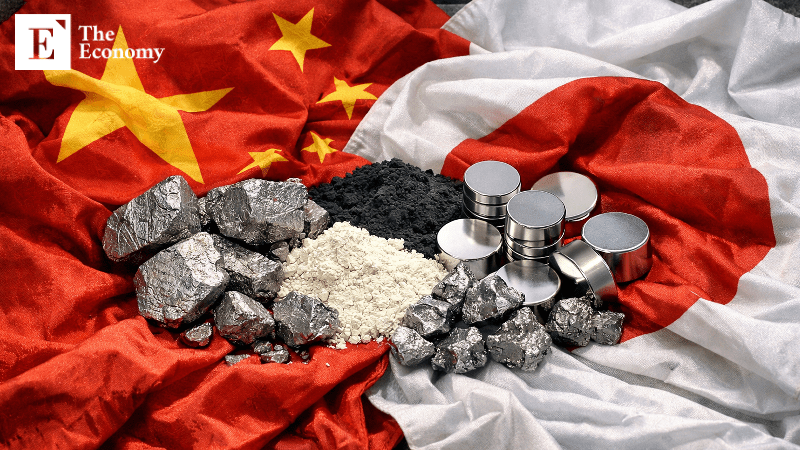
Beijing argues its measures are a restrained response to Japan’s growing military role and its position on Taiwan, while Tokyo says the restrictions are harming its economy.
China has banned the export of all dual-use items to Japanese military users and for Japan’s military use. According to China’s Ministry of Foreign Affairs, the goal is to limit Japan’s remilitarization and its efforts to develop nuclear weapons.
At the G7, Sanae Takaichi complained that China’s restrictions on rare earth exports are hurting Japan’s economy. This is the same politician who has openly argued that “a Taiwan emergency is a Japan emergency,” a statement China sees as interference in its internal affairs.
Japan was defeated in World War II and was disarmed after its military campaigns caused immense destruction across Asia. Today, however, it is expanding its military role while presenting these actions as necessary for security. When China responds with economic measures, Japan portrays itself as the victim.
Japan should recognize that China’s response has been relatively restrained compared to how the United States often reacts to what it sees as threats to its national security.
If a foreign leader declared that “a Cuba emergency is our emergency” toward Washington, it is unlikely the United States would respond with only export controls. It would probably treat such a statement as a major national security threat, impose heavy sanctions, increase its military presence, and take much stronger action.
The United States also spent years arguing that Iran should not even have the opportunity to develop nuclear weapons. Iran never declared that “Cuba is our emergency,” never invaded the United States, and never stationed forces near Florida. Even so, Washington carried out military strikes against Iran and described those actions as necessary for security.
Meanwhile, Japan openly links its security to Taiwan, challenges China’s position on sovereignty, strengthens its military, and discusses the possibility of expanding its defense capabilities. Then it criticizes China when Beijing responds by restricting exports of dual-use goods.
China’s economic measures should be seen as restraint, perhaps even more restraint than many other major powers would show. Some would argue that this restraint is exactly why Japan continues to challenge what China considers its core interests.
A country that was defeated and disarmed after World War II should not expect to interfere in another country’s territorial disputes while also demanding unrestricted access to strategically important materials.
If Japan wants stable relations with China, it should stop expecting China to remain silent while Japan rearms, takes positions on Taiwan, and relies on support from the G7.
China is not the United States. That is why it has responded mainly with economic measures instead of the kinds of military actions that Washington has often taken against countries it considers to have crossed its red lines.
Authored By: Global GeoPolitics
If you prefer to make a one time donation in support of my work, you can do so by clicking any link below:
https://buymeacoffee.com/ggtv |
https://ko-fi.com/globalgeopolitics |
Bitcoin: 3NiK8BoRZnkwJSHZSekuXKFizGPopkE7ns


Leave a comment