
The Saudi-Türkiye-Pakistan Defence Partnership and the Reconfiguration of Regional Security
General Article | August 2026
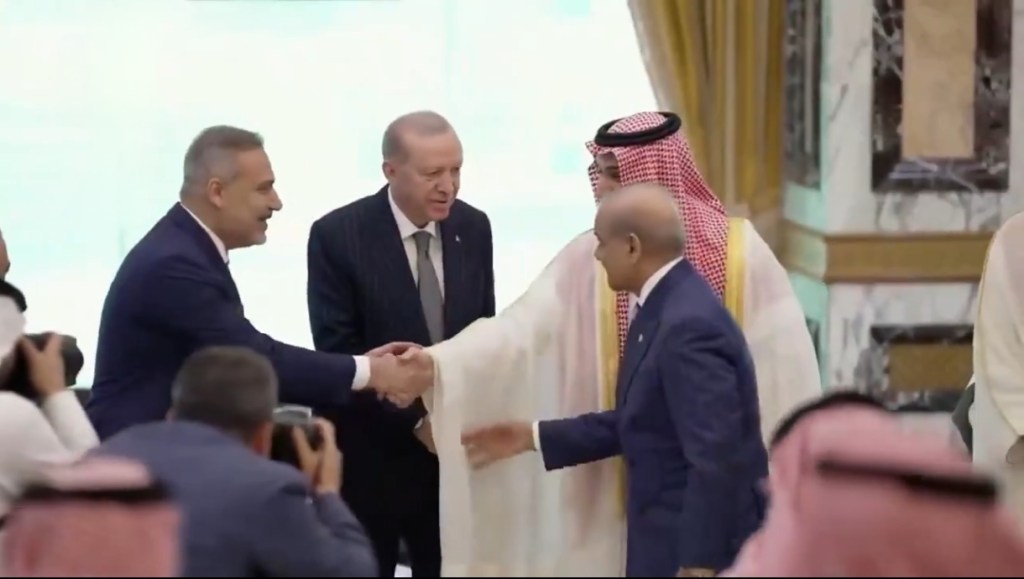
The geopolitical landscape of the Middle East and South Asia underwent a significant transformation on 7 August 2026 when Saudi Arabia, Türkiye and Pakistan signed the Makkah Joint Defence Agreement at Al-Safa Palace in Makkah, establishing a framework that stipulates that any armed attack against one of the three countries will be considered an attack against all three (1-3-6). The agreement, signed by Saudi Crown Prince and Prime Minister Mohammed bin Salman, Turkish President Recep Tayyip Erdoğan, and Pakistani Prime Minister Shehbaz Sharif during the Makkah Summit for Joint Defence, represents the culmination of approximately one year of negotiations that accelerated amid the growing regional tensions following the October 2023 conflict and the subsequent Iran-related hostilities (8-13). The signing ceremony, which took place at the invitation of Saudi King Salman bin Abdulaziz Al Saud, carried significant Islamic symbolic importance, while the reported presence of Pakistan’s Field Marshal Asim Munir highlighted the agreement’s military significance (8).
The Makkah Agreement builds upon the Strategic Mutual Defense Agreement signed between Saudi Arabia and Pakistan on 17 September 2025, which had already established that any aggression against either country would be considered an aggression against both (2-7-12). That bilateral agreement, signed during Prime Minister Sharif’s visit to Riyadh, reflected the shared commitment of both nations to enhance their security and achieve peace in the region, building upon a historic partnership extending for nearly eight decades and based on bonds of brotherhood and Islamic solidarity as well as shared strategic interests and close defence cooperation. The trilateral expansion now incorporates Türkiye, a NATO member with one of the alliance’s largest armed forces and an expanding domestic defence industry, creating a strategic alignment that combines Saudi Arabia’s economic and energy power, Türkiye’s military capabilities, and Pakistan’s large ground forces and nuclear deterrent capability (4-9).
However, the agreement should not be understood as a NATO-equivalent structure with unified military command or automatic obligations to launch military action whenever one member is attacked. The framework primarily focuses on joint planning, intelligence sharing, training, and defence-industry coordination, while each country retains independent decision-making authority over its own military actions (3-8). The joint statement issued after the summit emphasised that the agreement is “intended to strengthen collective deterrence against any act of aggression” and provides for the “enhancement of all aspects of defence cooperation” among the three states, but does not contain any publicly disclosed clause establishing an automatic military response comparable to NATO Article 5 (3-8-13). Turkish officials have described the agreement as “purely defensive” and not directed against any particular country, and the framework has reportedly been left open to other regional countries (3-8).
The timing of the agreement is significant, occurring against the backdrop of a West Asia conflict that has widened across multiple fronts, including the Red Sea and the Bab al-Mandeb Strait, prompting Gulf states to strengthen regional security coordination (4-8-9). Last week, Saudi Arabia proposed a Multinational Maritime Defence Coalition to safeguard commercial shipping lanes and critical energy supply routes through the Red Sea and the Bab al-Mandeb Strait after Saudi ships came under attack from Iran-backed Yemen’s Houthis, with fourteen countries including Pakistan expressing support for the initiative (8). The Makkah Agreement thus emerges from a context of acute regional insecurity, where traditional security arrangements have proven inadequate to protect Gulf states from the widening conflict.
The complementary military and strategic capabilities of the three signatories are notable. Saudi Arabia possesses major economic and energy influence, including membership in the G20 and significant influence within OPEC. Türkiye brings NATO membership and one of the alliance’s largest armies, along with an expanding domestic defence industry. Pakistan contributes a large ground force, a nuclear deterrent capability estimated at approximately 170 warheads, and substantial military experience. Collectively, the three countries command a combined economic output of around $3 trillion, approximately 2 million military personnel, around 1,000 fighter aircraft, and approximately 34 submarines, according to reports circulating from Turkish journalist Çetiner Çetin (4-9). These figures should be treated as reported estimates rather than verified combined alliance figures, as inventories and definitions vary by source (4).
Pakistan’s strategic constraints are particularly important to understanding the practical implications of the agreement. Following the February 2026 US-Israeli attacks on Iran, Iran and the Houthis reportedly launched repeated missile and drone attacks affecting Saudi territory, energy infrastructure, and maritime routes, yet Pakistan did not directly enter the war (4-9). Pakistan shares a border with Iran, has significant sectarian sensitivities, faces security challenges along the Afghan border, and continues to deal with economic pressures, making direct involvement in a war with Iran potentially catastrophic (4). Pakistan has consequently emphasised diplomatic channels and deterrence rather than openly joining offensive operations (4-9).
According to reports, in April 2026 Pakistan strengthened Saudi Arabia’s defensive posture by deploying approximately 8,000 troops, JF-17 fighter aircraft, drones, and air-defence systems, marking the first time the scale of this deployment has been publicly disclosed (4-9-14). The deployment includes a full squadron of around 16 aircraft, mostly JF-17 fighters produced jointly with China, along with Chinese HQ-9 air defence systems operated by Pakistani personnel and financed by Saudi Arabia (4-9). One government source privy to the confidential defence pact stated that it provides for the possibility of up to 80,000 Pakistani troops being deployed to Saudi Arabia to help secure its borders alongside Saudi forces (9). This deployment significantly exceeds a symbolic or purely advisory mission and represents a substantial combat-capable force intended to support Saudi Arabia’s military if the kingdom comes under further attack (4-9-14).
The Iranian reaction to the Makkah Agreement has been measured but revealing. Iranian outlet Tasnim, citing commentary on the agreement, reported the argument that a paper agreement with Türkiye and Pakistan would not automatically provide Saudi Arabia with security, just as years of reliance on US support had not guaranteed it (15). The Iranian message was essentially that Saudi Arabia should address the underlying regional security situation rather than depend entirely on external protection. However, Iranian reformist figures have also suggested that Iran should consider joining the agreement, with one spokesperson stating that “Iran should propose joining the Makkah Agreement and welcome it. Now is the time to propose a regional pact without Israel” (5). This indicates that the Iranian response is not monolithic and that the agreement may create both pressures and opportunities for diplomatic engagement.
The agreement also has significant implications for the broader regional balance. This development could increase strategic pressure on both Iran and Israel, as any future attack against Saudi Arabia would have to be assessed against the possibility of a broader three-country response (8). It also signals that Gulf states may be seeking security arrangements that do not rely exclusively on Washington. The United Arab Emirates, however, remains closely aligned with the US-Israel security framework, and since Saudi Arabia appears to be the leading regional power behind this initiative, Abu Dhabi’s immediate participation appears less likely unless it makes significant adjustments to its foreign-policy calculations (8).
The relationship should not be viewed in simple black-and-white terms. Who provides military support, who shares intelligence, and who takes direct action can vary according to circumstances and national interests. Iran may view the Makkah alliance as a potential strategic challenge, while Pakistan and Türkiye may simultaneously maintain channels of communication with Tehran because of their own geopolitical interests (4-9). The regional balance is therefore becoming increasingly multi-layered and complex, with overlapping and sometimes competing interests shaping the behaviour of each actor. The Makkah Agreement is significant not because it creates a NATO-style automatic war commitment, but because it institutionalises deeper strategic coordination between three major regional powers with complementary economic, military, geographic, and diplomatic capabilities. Its actual impact will depend on how the framework is operationalised in practice, and whether the three signatories can maintain their alignment in the face of the complex pressures that each faces (4-9).
Authored By: Global GeoPolitics
If you prefer to make a one time donation in support of my work, you can do so by clicking any link below:
https://donate.stripe.com/7sY8wPfvi864don0k3awo07 |
https://buymeacoffee.com/ggtv |
https://ko-fi.com/globalgeopolitics |
Bitcoin: 3NiK8BoRZnkwJSHZSekuXKFizGPopkE7ns
References
Arab News. 2026. “Saudi Arabia, Turkiye and Pakistan sign Makkah joint defense agreement.” Arab News, 7 August. Available at: https://www.arabnews.com/node/2653753/middle-east [Accessed 8 August 2026]. (2)
ARY News. 2026. “Saudi Arabia, Turkey, Pakistan sign joint defence agreement.” ARY News, 7 August. Available at: https://arynews.tv/saudi-arabia-turkey-pakistan-sign-joint-defence-agreement [Accessed 8 August 2026]. (15)
Bernama. 2025. “Pakistan And Saudi Arabia Sign Mutual Defence Pact.” Bernama, 18 September. Available at: https://bernama.com/en/news.php/sports/bfokus/general/news.php//?id=2468536 [Accessed 8 August 2026]. (11)
China.org.cn. 2025. “Saudi Arabia, Pakistan sign mutual defense agreement.” China.org.cn, 19 September. Available at: http://www.china.org.cn/2025-09/19/content_118086915.shtml [Accessed 8 August 2026]. (7)
China.org.cn. 2026. “Saudi Arabia announces arrival of Pakistani military force.” China.org.cn, 11 April. Available at: http://www.china.org.cn/world/Off_the_Wire/2026-04/11/content_118431554.shtml [Accessed 8 August 2026]. (12)
China.org.cn. 2026. “Saudi Arabia, Türkiye, Pakistan sign joint defense agreement.” China.org.cn, 8 August. Available at: http://www.china.org.cn/2026-08/08/content_118639211.shtml [Accessed 8 August 2026]. (14)
Euronews. 2026. “تقرير يصف ‘اتفاقية مكة’ بـ’رسالة تحذير لطهران’.. وإيران للسعودية: ‘لن تجلب الأمن للمملكة’.” Euronews Arabic, 7 August. Available at: https://arabic.euronews.com/2026/08/07/first-iranian-response-to-saudi-arabias-agreement-with-turkey-and-pakistan-it-will-not [Accessed 8 August 2026]. (5)
New York Post. 2026. “Pakistan deploys 8,000 troops, jet squadron to Saudi Arabia as Iran war tensions escalate.” New York Post, 18 May. Available at: https://nypost.com/2026/05/18/world-news/pakistan-deploys-8000-troops-jet-squadron-to-saudi-arabia-as-iran-war-tensions-escalate [Accessed 8 August 2026]. (4)
Qazinform News Agency. 2026. “Saudi Arabia, Pakistan, Turkiye adopt Mecca Joint Deterrence Agreement.” Qazinform, 8 August. Available at: https://qazinform.com/news/saudi-arabia-pakistan-turkiye-adopt-mecca-joint-deterrence-agreement-f01a81 [Accessed 8 August 2026]. (1)
Radio Pakistan. 2025. “Pakistan, Saudi Arabia sign ‘Strategic Mutual Defense Agreement’.” Radio Pakistan, 17 September. Available at: https://new.radio.gov.pk/17-09-2025/pakistan-saudi-arabia-ink-strategic-mutual-defense-agreement [Accessed 8 August 2026]. (3)
Radio Pakistan. 2026. “Pakistan, Saudi Arabia, Turkiye sign Makkah Joint Defence Agreement.” Radio Pakistan, 7 August. Available at: https://www.radio.gov.pk/07-08-2026/pakistan-saudi-arabia-turkiye-sign-makkah-joint-defence-agreement [Accessed 8 August 2026]. (10)
Saudi Press Agency (SPA). 2026. “Saudi Arabia, Türkiye, and Pakistan Issue Joint Statement of the Makkah Al-Mukarramah Summit for Joint Defence.” SPA, 8 August. Available at: https://spa.gov.sa/en/w2649227 [Accessed 8 August 2026]. (6)
Sözcü. 2026. “İsrail’den beklenen tepki İran’dan geldi! ‘Mekke Anlaşması’ Tahran’ı kızdırdı.” Sözcü, 7 August. Available at: https://www.sozcu.com.tr/iran-dan-mekke-anlasmasi-na-skandal-tepki-p343360 [Accessed 8 August 2026]. (13)
Washington Examiner. 2026. “Pakistan deployed 8,000 soldiers to Saudi Arabia during Iran war.” Washington Examiner, 18 May. Available at: https://www.washingtonexaminer.com/news/world/4572682/pakistan-deployed-fighter-squadron-8000-soldiers-saudi-arabia-iran-war [Accessed 8 August 2026]. (8)


Leave a comment