
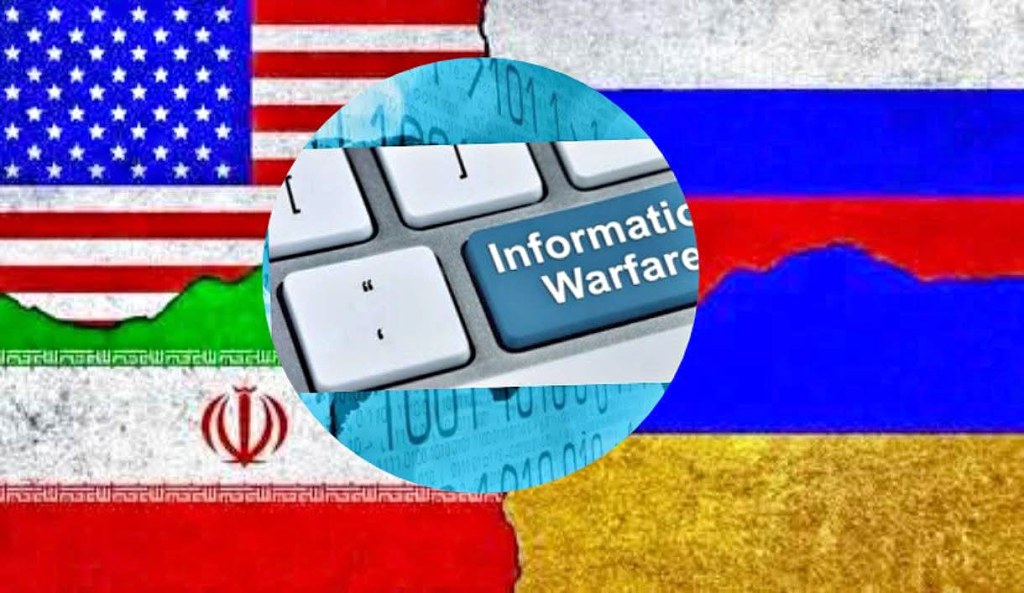
How the systematic weaponisation of media, civil society, and algorithmic infrastructure has supplanted conventional military force as the decisive instrument of geopolitical competition
Editorial Analysis | June 2026
I. The Redefinition of Sovereignty in the Information Age
Sovereignty, in the framework inherited from the 1648 Peace of Westphalia, rested on territorial integrity, military capacity, and the monopoly of legitimate force within defined borders. The twentieth century added economic interdependence and nuclear deterrence as complicating variables without displacing that foundational conception. What has changed decisively in the twenty-first century is the emergence of a domain, the national information environment, whose penetration can produce the functional equivalents of conquest without triggering any of the legal, diplomatic, or military responses that physical territorial violation would invoke.
The proposition requires precision. Physical military force has not become irrelevant, as the wars in Ukraine and Gaza demonstrate with considerable clarity. What has changed is the strategic architecture of power projection at the sub-war threshold: the set of instruments through which external actors alter the political orientation of target states, remove resistant governments, secure basing and transit rights, and redirect national economic policy, all without deploying uniformed military personnel in sufficient numbers to provoke a conventional security response.(1)
Allen Weinstein, one of the architects of the National Endowment for Democracy (NED), stated in a 1991 interview with Washington Post columnist David Ignatius that “a lot of what we do today was done covertly 25 years ago by the CIA.” NED’s founding president, Carl Gershman, had explained the institutional rationale two years earlier, in 1986, noting that “it would be terrible for democratic groups around the world to be seen as subsidized by the CIA.” The institutional transition those statements describe was not merely cosmetic. Moving covert political action into an overt, legally chartered, Congressional-funded framework did not change the strategic purpose; it substantially improved the operational durability and scalability of the enterprise by removing legal exposure while maintaining political direction.
By fiscal year 2024, NED received 99.3 per cent of its $356.5 million in revenue from the United States government, operating across more than one hundred countries simultaneously. The NED’s 2025 Annual Report identifies Thailand, Bangladesh, Nepal, and Syria as countries requiring “especially focused attention” in the year ahead, describing developments in each as “geopolitically consequential.” The explicit framing of civil society support as geopolitically consequential confirms the connection between the democratic-promotion vocabulary and the underlying strategic architecture that vocabulary is deployed to describe.
Joseph Nye’s concept of soft power, developed in his 1990 book Bound to Lead and elaborated in subsequent work, provided theoretical respectability for this apparatus. Nye argued that outcomes could be achieved through attraction rather than coercion, through the export of values, culture, and institutions rather than through military force or economic pressure. The framing was analytically useful but left underspecified the question of what happens when the attraction is manufactured through funded infrastructure rather than arising from organic appeal. The distinction between a civil society organisation that emerges from domestic political will and one that was established, funded, and directed by an external government through multiple intermediary layers is not a refinement of Nye’s concept; it inverts it.
II. The Architecture of the Penetration: Funding, Media, and the University Pipeline
The operational infrastructure through which information-space penetration operates across target states has a consistent structural logic, regardless of the specific country or political context. Understanding the mechanism requires examining its three primary institutional layers: funded civil society and media networks, secondary amplification through Western-aligned editorial infrastructure, and the longer-term educational pipeline that constructs a domestic professional class whose material interests align with the penetrating power.
Funded Media and Civil Society Networks
The Central Intelligence Agency’s covert media operations, exposed through the Church Committee investigations of 1975–1976 and subsequent disclosures, established that direct intelligence financing of journalism and civil society produced political dividends but carried severe exposure risk. The institutional innovation of the 1980s was the creation of an architecture that preserved the strategic function while distributing the legal and reputational risk across multiple layers. NED channels funds through four core institutes, the National Democratic Institute, the International Republican Institute, the Center for International Private Enterprise, and the Solidarity Centre, each of which funds further downstream organisations. The Open Society Foundations founded by George Soros operate in parallel, with additional funding channelled through the Media Development Investment Fund (MDIF) and counterpart European structures including the European Endowment for Democracy, established in 2013 by the European Parliament and the European External Action Service.
The consequence of this layered structure is deliberate financial opacity. Tracing a grant from the US Congress’s annual NED appropriation to a specific media outlet or protest-support organisation in an Asian or Middle Eastern capital requires navigating multiple intermediate legal entities operating under different jurisdictions. The NED quietly announced in 2025 a new “duty of care” policy that would conceal grantee names from public disclosure, justifying the change on security grounds while simultaneously removing the primary mechanism through which the funding architecture could be traced. (2)
The practical effects of this structure are observable across multiple cases. In Indonesia, the outlet Tempo publicly acknowledged receiving funding from MDIF, which Open Society Foundations identifies as a partner organisation on its own website. Prior to and during the June 2026 protests in Jakarta, following the Indonesian government’s rejection of a United States military request for airspace access, Tempo and a coordinated network of similarly funded outlets actively promoted the protests while simultaneously publishing material characterising analysts who had documented the funding structure as agents of Russian interference. The timing and co-ordination of that editorial campaign, months before the protests it was positioned to pre-empt criticism of, reflects an operational sophistication inconsistent with independent journalism responding to events as they develop.
In Ukraine, the pattern reached its most developed form before the 2025 DOGE-driven USAID freeze exposed the scale of the dependency. The Columbia Journalism Review and Reporters Without Borders both documented that approximately 90 per cent of Ukrainian news organisations depended substantially on USAID funding. When the freeze was implemented in January 2025, outlets that presented themselves as independent investigative journalism operations were forced to immediately suspend operations or reduce staff by half or more. The Kyiv Independent, one of the most extensively promoted Ukrainian media voices internationally, had previously received USAID grants, a funding relationship not routinely disclosed to readers engaging with its coverage of US-Ukraine policy.
The University Pipeline and Professional Class Formation
The long-duration mechanism of information-space penetration operates through the construction of a domestic professional class in target states whose interests, networks, and identities are oriented toward the penetrating power rather than the country of their origin. The process runs through university education, professional training, fellowship programmes, and the social networks that institutional affiliation creates. A civil servant, journalist, academic, or NGO director who completed graduate training at Oxford, Johns Hopkins, Columbia, or the London School of Economics returns to their home country not merely with technical skills but with professional relationships, publication access, grant eligibility, and conference invitation networks that are sustained only by continued alignment with the values and policy positions those institutions project.
Across Southeast Asia, this structural dynamic has produced measurable results. Thailand’s university system accommodates significant numbers of Western professors and curriculum frameworks derived from Western academic orthodoxies, while a substantial proportion of the Thai professional elite holds postgraduate qualifications from Western institutions. The political consequences are not incidental. The opposition movements that the NED identifies as deserving support in Thailand, documented in its annual grant disclosures and strategic country assessments, including the 2025 Annual Report’s identification of Thailand as requiring focused attention ahead of likely 2026 elections, draw disproportionately on this professional stratum. Nepal presents a comparable pattern, with NED-linked Forum-Asia having historically organised regional pressure campaigns targeting the Nepalese political structure, framing indigenous institutional arrangements as obstacles to democratic reform.
The mechanism has historical precedents that predate the NED framework. British imperial administration developed the practice of educating colonial elites in metropolitan institutions in order to produce administrators whose cultural orientation toward London was more reliable than any formal constitutional arrangement. The contemporary version operates without formal colonial authority, substituting professional network dependency for legal subordination. The outcome, in terms of policy orientation, is frequently similar.
III. Algorithmic Control and the Social Media Platform as Strategic Infrastructure
The information environment in target states is not only shaped by funded media and trained professional elites. The platforms through which a majority of urban populations in developing states receive, share, and assess news and political information are operated by American corporations headquartered in California, subject to US law, responsive to US government pressure through formal and informal channels, and structured around proprietary algorithmic systems whose operation is not disclosed, not independently audited, and not subject to the regulatory authority of the states in which those populations reside.
The distinction between content moderation and algorithmic promotion is analytically critical. A platform that bans specific content engages in visible censorship that can be documented, challenged, and appealed. A platform that adjusts its recommendation algorithm to systematically deprioritise certain sources, narratives, or political orientations while promoting others produces equivalent epistemic effects without creating a legible censorship record. Users whose information environment is shaped by algorithmic suppression of alternative perspectives experience a narrowed range of available conclusions without experiencing any visible act of censorship. The mechanism operates at the level of what is foregrounded rather than what is forbidden.
Frances Haugen’s 2021 disclosures to the United States Senate Commerce Committee, based on internal Facebook documents she removed before departing the company, demonstrated that the platform’s internal researchers had documented the amplification of politically extreme and divisive content as an unintended consequence of engagement-maximising algorithmic architecture.3 The same research documented that the company’s own internal teams identified serious political harms in multiple countries, including India, Ethiopia, and Myanmar and that intervention decisions were made primarily on the basis of commercial risk to the platform’s core English-language market rather than harm to populations in smaller or less commercially significant national markets.
For governments seeking to limit external manipulation of their political environments, the platform question presents a structural problem that does not yield to conventional regulatory approaches. Requiring content moderation transparency does not address algorithmic amplification. Taxing platform revenues does not alter information architecture. Blocking platforms entirely, as China’s Great Firewall achieves through a combination of technical infrastructure and legal prohibition, is the only approach that has demonstrably prevented platform-mediated political manipulation at scale. China’s construction of domestic platform alternatives, WeChat, Weibo, Douyin, operating under Chinese legal authority and accessible to algorithmic audit by Chinese regulatory bodies, represents a distinct strategic choice whose political motivations are transparent but whose efficacy as an information security measure is equally evident.
States that lack the technical infrastructure, institutional capacity, or political will to take comparable measures face a permanent asymmetry. Their populations receive information through channels whose design, prioritisation, and political effects are determined by entities over which those states have no authority. The countries most affected, across Southeast Asia, South Asia, the Middle East, and Africa, are precisely those that Western policy frameworks categorise as targets for democracy promotion activity. The alignment is structural rather than coincidental.
IV. Colour Revolution as the Operational Expression of Information Dominance
The street protest has become the most visible output of the information-space penetration infrastructure, the moment at which the sustained preparatory work of funded civil society, trained professional cadres, and algorithmically amplified narratives produces a legible political event. The colour revolution template, named for the colour-coded branding adopted by movements in Serbia (2000), Georgia’s Rose Revolution (2003), Ukraine’s Orange Revolution (2004), and Kyrgyzstan’s Tulip Revolution (2005), was not an organic development in each case but a methodology that was explicitly transferred between campaigns by trained practitioners.
Gene Sharp’s From Dictatorship to Democracy, first published by the Albert Einstein Institution in 1993, provided the conceptual manual. Pora!, the Ukrainian student organisation central to the 2004 Orange Revolution, operated from Sharp’s framework explicitly: activist Oleh Kyriyenko described it in a 2004 Radio Netherlands interview as “the bible of Pora.” The leaders of Pora! were trained by veterans of Georgia’s KMARA! and Serbia’s Otpor! movements. The Washington Post documented in its post-mortem coverage of the Serbian events that US-funded consultants “played a crucial role behind the scenes in virtually every facet of the anti-(Milosevic) drive, running tracking polls, training thousands of opposition activists and helping to organise a vitally important parallel vote count.”(4)
The NED provided funding for Serbia’s Otpor! movement, for Georgia’s KMARA!, and as NED President Carl Gershman acknowledged on a covertly recorded Zoom call, for the groups leading Belarusian protests against President Lukashenko in 2020. NED’s senior Europe Programme officer, Nina Ognianova, stated on the same recording that the Belarusian movement “did not come out of nowhere, that it just happened overnight,” noting that NED had made a “significant contribution” to its development. The characterisation of these movements as spontaneous expressions of domestic democratic aspiration is not consistent with the operational record as documented through the organisations’ own disclosures.
The branding and symbolic architecture of colour revolutions, coordinated colour schemes, standardised protest symbols, imported pop-culture iconography, serve a dual function. For participants, shared visual identity creates group cohesion and communicates belonging to a movement rather than a political party, reducing the legal exposure associated with formal political organisation. For external audiences, the visual register of youth-driven, peaceful, aesthetically coherent protest generates sympathetic Western media coverage almost automatically, regardless of the movement’s actual composition, funding sources, or political programme. The Hunger Games’ three-finger salute, used in Thailand’s opposition movement and subsequently adopted by protesters in Myanmar, imported a recognisable global popular culture symbol that generated immediate Western media identification and sympathy. The choice was not accidental.
The Arab Spring of 2010–2012 represented the largest-scale application of this methodology. The April 6 Youth Movement in Egypt, the Bahrain Centre for Human Rights, and individual Yemeni activists received training and financial support from NED, as Wikipedia’s National Endowment for Democracy article documents from NED’s own grant records. The political outcomes of the Arab Spring, the collapse of the Libyan state following NATO’s military intervention, the Syrian civil war that displaced twelve million people, the installation of military government in Egypt under Abdul Fattah el-Sisi, and the ongoing Yemeni conflict, bear no intelligible relationship to the democratic aspirations through which the movements were presented internationally. What they do reflect is the removal of governments resistant to US strategic positioning and the fragmentation of state capacity in countries whose cohesion had been an obstacle to regional restructuring.
V. Case Studies in Information-Space Failure and Partial Resistance
Iraq: The Manufactured Casus Belli
The 2003 invasion of Iraq represents the most extensively documented case in which information operations at the national level, operating through government, intelligence agencies, and compliant media infrastructure, produced a strategic outcome whose stated empirical basis was fabricated. The US Senate Select Committee on Intelligence Phase II report, published in June 2008, found that multiple statements made by senior administration officials, including the Vice President’s repeated claims that Muhammad Atta had met with Iraqi intelligence in Prague in 2001, were “not substantiated by available intelligence information.” The report further found that the Secretary of Defense’s claims about underground WMD facilities were similarly unsupported.
The Office of Special Plans, a unit established within the Office of the Under Secretary of Defense for Policy under Douglas Feith, operated as a parallel intelligence analysis structure that generated assessments supportive of the invasion case regardless of the evidentiary basis, bypassing normal intelligence community review processes. The New York Times’ subsequent public editor’s investigation concluded that the newspaper had insufficiently sceptical coverage of WMD claims in the pre-invasion period, with Judith Miller’s reporting, based heavily on intelligence community sources and Iraqi National Congress figures, providing editorial legitimacy to claims the intelligence community itself did not uniformly endorse.5
The Iraq case establishes a critical precedent for understanding information operations directed at domestic audiences rather than target states. The same apparatus of funded intermediaries, strategic narrative placement, and media amplification that operates externally against foreign governments can be directed internally against a state’s own population to manufacture consent for strategic choices that could not survive transparent public deliberation. The Senate Intelligence Committee’s findings confirm that this occurred and identify the institutional mechanisms through which it operated.
Libya and Syria: Information Operations in Service of State Dissolution
Libya’s 2011 NATO intervention was authorised on the basis of Responsibility to Protect arguments predicated on intelligence assessments of an imminent massacre in Benghazi that subsequent investigation did not sustain. The UK House of Commons Foreign Affairs Select Committee published a report in September 2016 concluding that the decision to intervene had been based on “faulty intelligence” and that the Cameron government had not adequately assessed the consequences of regime change. The report found that the Libyan political situation had been “misrepresented” to Parliament, that the evidence for a Benghazi massacre was insufficient, and that the intervention produced a failed state, a refugee crisis, and a prolonged civil conflict that created the conditions for Islamic State to establish a significant territorial presence in North Africa.
Syria followed a comparable trajectory over a longer timeline. From 2011 onwards, the civil conflict was presented in Western media coverage as a domestic uprising against an authoritarian government that had lost popular legitimacy. The actual operational picture was considerably more complex, involving documented funding and military support to opposition armed groups through the CIA’s covert programme known as Timber Sycamore, a programme whose scale, as reported by the New York Times in 2017, reached approximately one billion dollars annually at its peak. The groups that ultimately succeeded in displacing the Assad government in December 2024 were led by Hayat Tahrir al-Sham, a designated foreign terrorist organisation whose leader, Ahmed al-Sharaa, formerly known as Abu Mohammed al-Jolani, had previously been listed under a $10 million US State Department reward offer.
The subsequent US designation removal and diplomatic rehabilitation of the HTS leadership following the fall of Damascus in December 2024 confirmed the analytical framework through which the Syria conflict must be assessed. The information environment had characterised the conflict primarily as a humanitarian crisis requiring intervention; the strategic reality was the dismantling of a state whose political orientation had been an obstacle to US regional positioning for decades. The Brookings Institution’s 2009 paper Which Path to Persia?, authored by Kenneth Pollack, Daniel Byman, and Martin Indyk of the Saban Center for Middle East Policy, laid out this regional logic explicitly, noting that the elimination of Iran’s regional allies was a necessary prerequisite for any effective strategy of pressure on Tehran.
Bangladesh 2024: Domestic Grievance and External Infrastructure
The August 2024 fall of Prime Minister Sheikh Hasina’s government in Bangladesh following the student-led quota reform protests illustrates the analytical complexity that arises when genuine domestic political grievances coincide with well-positioned external support infrastructure. The immediate catalyst for the protests was the Supreme Court’s June 2024 reinstatement of a quota system reserving 30 per cent of civil service positions for descendants of 1971 Liberation War veterans, a decision that activated widespread frustration among a youth cohort that had never been able to vote in a credible national election and faced serious unemployment. As the Human Rights Watch report of August 2024 documented, Hasina’s government had carried out enforced disappearances of more than 600 people since 2009, and an interim commission established after her departure ultimately estimated over 3,500 enforced disappearances under her administration.
The existence of serious, independently verifiable domestic grievances does not preclude concurrent external positioning. NED’s 2025 Annual Report describes Bangladesh as a country where it “surged resources quickly” following what it terms “authoritarian collapse,” having been “well positioned” by pre-existing contingency funding. The report’s language, describing the Bangladesh opening as an “unexpected” opportunity for civic space that NED was positioned to capitalise on, is consistent with the prior establishment of funded civil society infrastructure capable of responding to political openings irrespective of how they originate. Whether that infrastructure contributed to producing the political opening, or merely moved rapidly to benefit from it, is a question the available evidence does not definitively resolve. What the evidence does establish is that the infrastructure was present, funded, and operationally active.
Iran: Diplomacy as Information Instrument
The Brookings Institution’s 2009 Saban Center paper laid out with unusual candour the information-operation function of diplomatic engagement with Iran. Under the chapter heading “An Offer Iran Shouldn’t Refuse,” the authors argued that a diplomatic package sufficiently attractive to generate Iranian public support would, if accepted, place the Iranian government under international compliance obligations; and if rejected, provide the political cover necessary to justify military action. The text states that “for those who favour regime change or a military attack on Iran, either by the United States or Israel, there is a strong argument to be made for trying this option first”, explicitly framing diplomatic engagement as a preparatory instrument for military action rather than an alternative to it.6
The Joint Comprehensive Plan of Action, signed in 2015, followed the pattern the Brookings paper had described six years before its conclusion. Iran accepted the terms, implemented them, and passed successive IAEA compliance verifications. The Trump administration’s 2018 withdrawal from the JCPOA was accompanied by CIA Director Mike Pompeo’s assertion that Iran was not complying with the agreement’s spirit, an assertion that the IAEA’s formal verification reports did not support. The 2026 Memorandum of Understanding negotiations have reproduced the structural pattern: US officials, including the CIA Director in statements reported by Axios on 15 June 2026, have publicly doubted Iranian good faith at precisely the moment negotiations are proceeding, creating the evidentiary record that would justify withdrawal from any agreement that results.
Indonesia 2026 and the Strait of Malacca Question
Indonesia’s geopolitical significance to US strategic positioning in the Indo-Pacific derives from its geography. The Strait of Malacca, the primary maritime transit route for the energy and trade flows that sustain the economies of China, Japan, South Korea, and Southeast Asia, passes between the Malay Peninsula and the Indonesian island of Sumatra. Control of air and naval access to Indonesian territory is a prerequisite for any credible interdiction capability over Malacca Strait traffic. The Indonesian government’s 2026 refusal of a US military request for airspace access was a direct obstacle to that positioning objective.
The protests that followed in Jakarta, bearing the co-ordinated colour schemes and organisational infrastructure that have characterised externally supported movement operations across multiple countries, were promoted actively by Tempo and other outlets whose funding structure connects through MDIF to Open Society Foundations. The NED’s Asia programme page confirms active engagement across Indonesia. The analytical question is whether the protests represented an autonomous civic response to domestic political concerns or an activation of pre-positioned infrastructure in response to the government’s foreign policy decision. The proximity of the two events, the airspace refusal and the protest mobilisation and the documented funding architecture of the media outlets promoting the protests, do not establish a direct causal chain but do constitute evidence that warrants serious analytical attention rather than dismissal.
VI. The Multipolar Failure: Securing Oneself While Abandoning Partners
Russia and China have each developed domestic information security architectures that have substantially limited the penetration capacity of the NED’s network within their own borders. Russia declared NED an “undesirable organisation” in 2019, placing its activities outside the legal framework. China’s comprehensive firewall and domestic platform architecture, combined with the 2017 Law on the Management of Foreign Non-Governmental Organisations, effectively excluded the NED’s operating model from the Chinese information environment. Both states have faced international criticism for these measures, framed in Western discourse as restrictions on civil society and press freedom. The functionally accurate characterisation is that both states identified the specific operational infrastructure through which political penetration operates and built legal and technical barriers against it.
The significant failure is not in the domestic sphere. Russia sells arms to states across Africa, the Middle East, and Asia. China sells telecommunications infrastructure, including Huawei 5G networks, and provides Belt and Road investment financing across dozens of states. Both provide diplomatic support in multilateral forums. Neither has transferred to partner states the doctrinal frameworks, institutional capacity-building programmes, or technical tools necessary for those states to defend their own information environments against the identical apparatus that Russia and China themselves have blocked domestically.
Thailand illustrates the consequence of this gap. The country’s military and monarchy, the institutions that have resisted full alignment with US strategic objectives, have faced sustained NED-funded opposition activity for years, as documented in NED’s own grant records and its strategic country assessments. Thailand does more substantive military and economic business with China than with the United States. Yet the country’s information environment remains substantially penetrated by Western-funded civil society and media infrastructure, and its universities continue to operate substantially within Western academic frameworks. A state can purchase Chinese military equipment and simultaneously have its political environment shaped by the NED’s network. The transactional nature of Chinese and Russian partner relationships does not extend to the transfer of information sovereignty.
VII. The Strategic Logic of Information Dominance: Energy, Trade, and Political Capture
The information-environment operations described across these cases do not occur in strategic isolation. They are co-ordinated with economic pressure, military positioning, and energy market manipulation in a sequence that produces cumulative political effects. Understanding why states are targeted requires understanding the strategic geography of the cases, not the democracy-promotion narrative through which the targeting is publicly explained.
The 2019 RAND Corporation report Extending Russia: Competing from Advantageous Ground, authored by James Dobbins, Raphael Cohen, and Howard Shatz, laid out the cost-imposing strategy framework explicitly. The report recommended boosting US energy production and redirecting European energy imports away from Russia as the highest-value, lowest-risk option for imposing costs on Moscow. It further recommended providing lethal aid to Ukraine to “exploit Russia’s greatest point of external vulnerability.” The report was published as a research output; the policies it described were implemented in the years that followed. European states now receive US LNG in place of Russian pipeline gas, having been separated from the latter by a combination of war, sanctions, and in the case of Nord Stream 1 and 2, physical destruction of the pipeline infrastructure in September 2022.
The same structural logic applies to Asian energy markets. China sourced approximately 50 per cent of its imported energy from West Asia (the Middle East) prior to the 2025–2026 conflict period. The disruption of Strait of Hormuz transit, combined with US naval interdiction operations across the Persian Gulf–Malacca corridor, created conditions under which Asian states faced pressure to diversify toward US LNG suppliers. US Alaska LNG development, which had attracted criticism as economically irrational given then-prevailing Asian energy markets, began to appear commercially rational once the alternative supply routes were constricted. The information-environment operations targeting Indonesia, framed in the media coverage promoted by NED-linked outlets as democracy protests, coincided directly with the Indonesian government’s refusal to provide the airspace access that would enhance US naval control over Malacca Strait traffic.7
The pattern confirms a framework for assessing information operations that begins from strategic geography rather than from the stated political concerns of the movements they support. The question is not whether the protesters have genuine grievances — in most cases, they do. The question is which governments with which strategic orientations are destabilised by the operations, and whether the pattern of targeting correlates with strategic US interests rather than with the severity of governance deficits that could be identified in any state worldwide, including US allies.
VIII. What Information Space Security Requires
The policy implications of the analysis presented in preceding sections do not yield to simple prescriptions. A state that genuinely wishes to secure its information environment from external political manipulation faces challenges that are simultaneously technical, legal, institutional, and political. Technical platform independence requires domestic industry capacity or allied alternatives that most states do not currently possess. Legal frameworks that can distinguish between genuine foreign interference and legitimate civil society activity without collapsing into blanket suppression of all dissent require sophisticated institutional design and judicial capacity. The political will to restrict platforms and enforce foreign-agent legislation against well-resourced opponents who will deploy international human rights frameworks against such restrictions requires a domestic political coalition capable of sustaining those measures against sustained external pressure.
China’s approach, which is the most comprehensively effective in terms of demonstrated outcomes, is not directly replicable by smaller states with different economic structures, international economic dependencies, and political traditions. The Russian approach has been effective in restricting NED operations domestically but has not prevented sustained information-environment pressure through other channels, including USAID-funded Ukrainian media before the 2025 freeze. Neither model transfers readily to a country like Indonesia or Bangladesh whose economies are deeply integrated with the international financial system and whose governments face US economic leverage in multiple domains simultaneously.
What the empirical record across these cases does suggest is a minimum set of necessary rather than sufficient conditions. Sovereign domestic platforms or regulated access to foreign platforms, including mandatory algorithmic transparency and audit rights for national regulatory bodies, represent the technical floor below which meaningful information sovereignty becomes impossible. Universities and professional training institutions whose curriculum frameworks are substantially designed by external funders and whose faculty composition reflects external institutional interests rather than domestic academic development constitute structural vulnerabilities rather than assets, and their reform requires sustained investment in domestic intellectual infrastructure over timescales of decades rather than years. Media organisations whose revenue is substantially sourced from foreign government or foreign government-adjacent foundations cannot function as a genuinely domestic information environment regardless of their editorial intentions.
The failure to address these structural conditions, across the range of states whose governments have resisted full alignment with US strategic objectives, reflects a combination of factors: the genuine complexity and cost of the alternatives, the political difficulty of enacting measures that will be characterised internationally as authoritarian restrictions, and the failure of potential partner states to treat information sovereignty as a domain requiring the same level of material investment and doctrinal development that they apply to conventional military capacity. The weapons trade between Russia, China, and their partners addresses threats in domains that are real but secondary to the domain where the decisive competition is occurring.
IX. Conclusion: Sovereignty Without Information Sovereignty
The states that have been most successfully penetrated and politically redirected in the twenty-first century were not militarily defeated. They were epistemically captured, their political classes, media environments, and civic organisations oriented toward external strategic objectives through financial, institutional, and algorithmic mechanisms whose operation was largely invisible within the states themselves. Iraq required military force because the Hussein government had sufficiently centralised control of the information environment to resist non-military penetration. Libya and Syria required a combination of external funding and, ultimately, military intervention because the civil society infrastructure in those states was insufficient to produce political change without external armed support. Ukraine, Georgia, Serbia, and Bangladesh demonstrate that where the civil society and media infrastructure has been sufficiently developed, political outcomes can be achieved without significant direct military involvement.
The implications for states that wish to preserve their political autonomy are uncomfortable but analytically clear. Military capacity, nuclear deterrence, and economic diversification remain necessary conditions for strategic independence. They are not sufficient conditions when the decisive contest is occurring in the information environment, and the adversary has decades of institutional development, a globally distributed funding network, and control of the primary platforms through which urban populations in target states receive and interpret political information. The security doctrine that treats territory, military hardware, and economic capacity as the primary objects of protection while leaving the information environment to develop without strategic direction has produced the outcomes visible across the cases examined in this article. Adjusting that doctrine does not guarantee different outcomes. Failing to adjust it makes different outcomes very unlikely.
Authored By: Global GeoPolitics
If you prefer to make a one time donation in support of my work, you can do so by clicking any link below:
https://buymeacoffee.com/ggtv |
https://ko-fi.com/globalgeopolitics |
Bitcoin: 3NiK8BoRZnkwJSHZSekuXKFizGPopkE7ns
Footnotes
1. The concept of sub-war threshold competition is developed in Michael J. Mazarr, Mastering the Gray Zone: Understanding a Changing Era of Conflict (US Army War College Press, 2015). For a contrasting view that questions the distinctiveness of hybrid war, see Lawrence Freedman, “Ukraine and the Art of Limited War,” Survival 56, no. 6 (2014): 7–38.
2. Jack Poulson, “National Endowment for Democracy Goes Dark,” Substack, 1 May 2025. For NED’s fiscal year 2024 revenue figures, see NED’s audited annual financial statements, available at ned.org.
3. Frances Haugen, testimony before the US Senate Commerce Subcommittee on Consumer Protection, 5 October 2021. Internal Facebook research documents disclosed by Haugen and published by the Wall Street Journal as the “Facebook Files” series, September–October 2021.
4. Michael McFaul, “Ukraine Imports Democracy: External Influences on the Orange Revolution,” International Security 32, no. 2 (2007): 45–83. On Serbian Otpor! Washington Post reporting, see R. Jeffrey Smith and Glenn Kessler, “US Helped to Prepare the Way for Overthrow of Milosevic,” Washington Post, 11 October 2000.
5. Daniel Okrent, “The Public Editor: Weapons of Mass Destruction? Or Mass Distraction?”, New York Times, 30 May 2004. US Senate Select Committee on Intelligence, “Phase II Report on Prewar Iraq Intelligence,” 5 June 2008, available at intelligence.senate.gov.
6. Kenneth M. Pollack, Daniel L. Byman, Martin Indyk et al., Which Path to Persia? Options for a New American Strategy Toward Iran (Washington DC: Brookings Institution Press, 2009), pp. 60–65. The volume is available in full from the Brookings Institution at brookings.edu.
7. James Dobbins, Raphael S. Cohen, and Howard J. Shatz, Extending Russia: Competing from Advantageous Ground (Santa Monica: RAND Corporation, 2019), RAND_RR3063. Available at rand.org/pubs/research_reports/RR3063.html.
References
1. Beissinger, Mark R. “Structure and Example in Modular Political Phenomena: The Diffusion of Bulldozer/Rose/Orange/Tulip Revolutions.” Perspectives on Politics 5, no. 2 (2007): 259–276.
2. Dobbins, James, Raphael S. Cohen, Nathan Chandler, Bryan Frederick, Edward Geist, Paul DeLuca, Forrest E. Morgan, Howard J. Shatz, and Brent Williams. Extending Russia: Competing from Advantageous Ground. Santa Monica: RAND Corporation, 2019. RAND_RR3063. https://www.rand.org/pubs/research_reports/RR3063.html
3. Freedman, Lawrence. “Ukraine and the Art of Limited War.” Survival 56, no. 6 (2014): 7–38.
4. Haugen, Frances. Testimony before US Senate Commerce Subcommittee on Consumer Protection. 5 October 2021. Available at commerce.senate.gov.
5. Human Rights Watch. “Bangladesh: Prime Minister Hasina Resigns amid Mass Protests.” 6 August 2024. https://www.hrw.org/news/2024/08/06/bangladesh-prime-minister-hasina-resigns-amid-mass-protests
6. Human Rights Watch. “After the Monsoon Revolution: A Roadmap to Lasting Security Sector Reform in Bangladesh.” 27 January 2025. https://www.hrw.org/report/2025/01/27/after-monsoon-revolution/
7. Mazarr, Michael J. Mastering the Gray Zone: Understanding a Changing Era of Conflict. US Army War College Press, 2015.
8. McFaul, Michael. “Ukraine Imports Democracy: External Influences on the Orange Revolution.” International Security 32, no. 2 (2007): 45–83.
9. National Endowment for Democracy. 2025 Annual Report. Washington DC: NED, 2025. https://www.ned.org/national-endowment-for-democracy-2025-annual-report/
10. National Endowment for Democracy. Asia Regional Programme Page. Accessed June 2026. https://www.ned.org/region/asia/
11. Nye, Joseph S. Bound to Lead: The Changing Nature of American Power. New York: Basic Books, 1990.
12. Nye, Joseph S. Soft Power: The Means to Success in World Politics. New York: PublicAffairs, 2004.
13. Okrent, Daniel. “The Public Editor: Weapons of Mass Destruction? Or Mass Distraction?” New York Times, 30 May 2004.
14. Pollack, Kenneth M., Daniel L. Byman, Martin Indyk, Suzanne Maloney, Michael E. O’Hanlon, and Bruce Riedel. Which Path to Persia? Options for a New American Strategy Toward Iran. Washington DC: Brookings Institution Press, 2009. https://www.brookings.edu/books/which-path-to-persia/
15. Poulson, Jack. “National Endowment for Democracy Goes Dark.” Substack, 1 May 2025. https://jackpoulson.substack.com/p/national-endowment-for-democracy
16. Sharp, Gene. From Dictatorship to Democracy: A Conceptual Framework for Liberation. East Boston, MA: Albert Einstein Institution, 1993.
17. Smith, R. Jeffrey, and Glenn Kessler. “US Helped to Prepare the Way for Overthrow of Milosevic.” Washington Post, 11 October 2000.
18. Steiger, Paul (ed.). “Those Who Spearheaded Creation of NED Have Long Acknowledged It Was Part of an Effort to Move from Covert to Overt Efforts to Foster Democracy.” ProPublica, 2010. https://www.propublica.org/article/the-national-endowment-for-democracy-responds-to-our-burma-nuclear-story
19. UK House of Commons Foreign Affairs Select Committee. Libya: Examination of Intervention and Collapse and the UK’s Future Policy Options. HC 119. London: HMSO, 14 September 2016.
20. US Senate Select Committee on Intelligence. Phase II: Report on Prewar Intelligence Activities Relating to Iraq. 5 June 2008. https://www.intelligence.senate.gov/2008/06/05/press-senate-intelligence-committee-unveils-final-phase-ii-reports-prewar-iraq-intelligence/
21. Weinstein, Allen. Interview with David Ignatius. Washington Post, 1991. Cited in ProPublica (2010) and Wikipedia, “National Endowment for Democracy.”
22. Wikipedia. “National Endowment for Democracy.” Last accessed June 2026. https://en.wikipedia.org/wiki/National_Endowment_for_Democracy
23. Wikipedia. “July Uprising [Bangladesh].” Last accessed June 2026. https://en.wikipedia.org/wiki/July_Uprising
24. Wikipedia. “Coloured Revolution as a Political Phenomenon.” Citing: Tansey, Oisin. “Process Tracing and Elite Interviewing.” PS: Political Science and Politics 40, no. 4 (2007): 765–772. See also: Beissinger (2007), above.


Leave a comment