

Escalation in the Strait: Trump, Iran, and the Anatomy of a Strategic Trap
The Strait of Hormuz has long been recognised as one of the world’s most consequential maritime chokepoints. Approximately 20 per cent of globally traded oil passes through its narrow waters, making its security a matter of strategic concern for every major economy. Iran’s geographic position, commanding the strait’s northern shore, has endowed the Islamic Republic with a form of asymmetric leverage that successive American administrations have sought to contain. President Trump’s approach to this challenge, however, has introduced a new and dangerous dynamic.
On the night of July 7, 2026, the United States Navy, in coordination with Qatar and Oman, attempted to move a convoy of four vessels through the Strait of Hormuz via Omani territorial waters, circumventing the control mechanism that Iran has established for shipping transiting the strait. The attempt coincided with the massive funeral of the late Supreme Leader Ali Khamenei, a moment of national mourning that American strategists apparently believed would preoccupy Iranian attention. This calculation proved catastrophically wrong.
Iranian forces responded to the American challenge with immediate and decisive military action. Two vessels were struck with missiles, a third was hit by an armed drone, and a fourth Qatari-owned tanker carrying liquefied natural gas was set ablaze, forcing its crew to abandon ship. The strikes were not merely tactical responses to a specific incident; they represented a demonstration of Iran’s determination to maintain control over the strait and its willingness to enforce that control through lethal means.
President Trump’s response followed a predictable but escalatory pattern. He ordered American air strikes against Iranian targets, reimposed sanctions on Iranian oil exports, and revoked the memorandum of understanding that had formed the basis of the de-escalation framework. “We hit them hard last night,” Trump declared at the NATO summit in Ankara. “We will probably hit them hard again tonight”. The United States did indeed strike Iranian targets again on the following night, despite Iran having conducted no further attacks on vessels attempting to bypass the Iranian corridor.
The Iranian response to these American strikes was calibrated to signal both resolve and a willingness to escalate beyond the existing framework. Ballistic missiles and drones were launched at American bases in Kuwait, Bahrain, the United Arab Emirates, and Muwaffaq Al-Salti airbase in Jordan. These strikes targeted American military assets rather than civilian infrastructure, a distinction that suggested Iran was seeking to impose costs without precipitating a full-scale war. The Iranian spokesman for the Parliamentary National Security Committee warned that further American attacks would be met with a comprehensive all-out surprise offensive, and that Iran might consider withdrawing from the Non-Proliferation Treaty, changing its nuclear doctrine, and closing both the Strait of Hormuz and the Bab al-Mandab Strait.
The strategic logic of the confrontation reveals a fundamental miscalculation on the American side. Vice-President Vance articulated the American position with characteristic bluntness: if Iran attempts to close the Strait of Hormuz, the American military will respond. The implication is that Iran must either keep the strait fully open to all shipping or face continued American strikes. This position, however, ignores the reality that Iran’s control over the strait is not a matter of choice but a matter of geographic fact. Iran does not need to close the strait in the conventional sense; it needs only to maintain the capacity to impose costs on shipping that does not conform to its regulatory framework.
The Iranian position, articulated through official channels, is that the United States has violated the memorandum of understanding and that further American attacks will be met with escalating responses. The Iranian warning of “two strikes for every one American strike” signals a commitment to disproportionate retaliation designed to make continued American escalation prohibitively costly. The threat of withdrawal from the Non-Proliferation Treaty and changes to nuclear doctrine represents a qualitatively different level of escalation, one that would fundamentally alter the strategic balance in the region.
The timing of the American challenge appears to have been influenced by domestic political considerations. President Trump’s declining poll numbers and the approaching midterm elections created an incentive for a foreign policy success. The attempt to force the strait during the Khamenei funeral appears to have been conceived as a low-risk opportunity to demonstrate American resolve while Iranian attention was elsewhere. This calculation, however, misread Iranian capabilities and will. The Islamic Republic’s leadership, new to its responsibilities following the succession of Supreme Leader Mojtaba Khamenei, had every reason to demonstrate its own resolve in the face of American provocation.
The succession itself may have contributed to the crisis. The new Supreme Leader had reportedly held a different view of the memorandum of understanding than the Iranian negotiating team, but had agreed to proceed after receiving assurances that Iran’s overarching principles would be respected. The Supreme Leader’s subsequent statement effectively put both the United States and Iranian negotiators on notice that the agreement was not an open mandate. The Iranian leadership appears to have concluded that the United States was using the agreement as a deception, a temporary pause in the conflict designed to regroup for a more thorough confrontation.
This perception of American bad faith has profound implications for the trajectory of the conflict. Iranian analysts have concluded that the entirety of events since the announcement of the memorandum of understanding reflected an American strategy based on the view that the previous round of the war against Iran had failed to achieve its objectives, necessitating a temporary halt to regroup and prepare for a new round when conditions were more favourable. The Hormuz and Lebanon components of the conflict are now seen as vital leverage for engaging in a new war as the West ramps up pressure.
The American strategy in the region is undergoing a significant reorientation. The interim approach involves closer cooperation with Turkey and engagement through President Erdogan with Syria’s leadership, with the objective of reshuffling the Lebanon deck and assessing how the cards lie. This represents an adjustment to operational mechanisms rather than a change in objectives. The United States and Israel continue to pursue the same strategic goals, but through different means.
The broader strategic context is not favourable to American objectives. The expected triumph of Israel over the Middle East has resulted in failure. The connected war on Russia and the siege of China are faltering. Israel’s previously unassailable hold over American politics is being questioned by figures such as Rahm Emanuel, a senior Democrat and potential 2028 presidential candidate, who warned in Israel that the country “has lost the world’s support, become a ‘regional pariah’, and that its alliance with the United States is ‘at a crossroads’”. This assessment from a figure with deep ties to both American and Israeli politics suggests a significant shift in the political landscape.
The economic dimensions of the crisis are equally significant. The confrontation in the Strait of Hormuz comes at a moment of acute vulnerability for the global economy. Refinery inventories in the United States are being drawn down, and the effects on the real economy in the West are becoming visible. The crisis will accelerate the onset of a looming global economic crisis that could last until the economic pain becomes acute. The timeline to a resolution is likely dictated by refinery inventories in the United States, but also by the extent of the political hurt being experienced by President Trump.
A potential “black swan” now visible on the horizon concerns the artificial intelligence market. Draft reports inside the United States Treasury Department have warned that AI firms are more deeply entrenched in the American economy than their dot-com predecessors and pose significant risk to the entire system if financial conditions change, productivity goals are missed, or various choke points stymie growth. A downturn in the AI market, exacerbated by an energy crisis, would send shockwaves throughout the entire economic ecosystem. Such a downturn would spell disaster for President Trump’s midterm hopes and would further constrain his options in the Middle East.
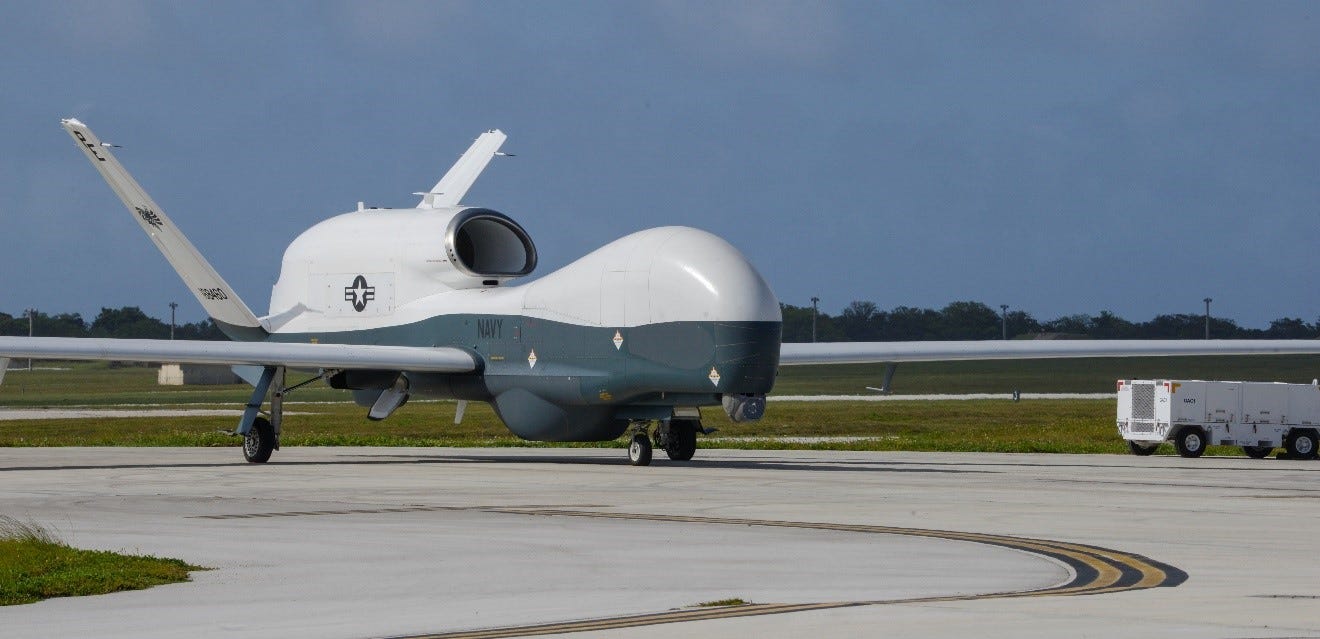
The military dimensions of the crisis are also constraining. American forces in the region are already experiencing shortages of munitions, and air assets are being drawn down. President Trump may not possess the military wherewithal to escalate to a full-scale war against Iran, even if he were inclined to do so. The limitation is not merely a matter of military capacity but also of political will. A full-scale war in the Middle East would be deeply unpopular with an American public weary of foreign entanglements and facing economic pressures at home.
The confrontation in the Strait of Hormuz is not a conventional military contest between roughly comparable powers. It is a confrontation between a global superpower with overwhelming military superiority and a regional power with geographic advantages, asymmetric capabilities, and a willingness to absorb and impose costs that the superpower cannot match. This asymmetry, far from favouring the United States, has created a strategic trap from which President Trump is finding it increasingly difficult to escape.
For Iran, the stakes could not be higher. The Strait of Hormuz is not merely a strategic asset; it is the Islamic Republic’s most potent form of leverage, the guarantor of its regional influence, and, in the view of its leadership, an existential necessity. The new Supreme Leader, Mojtaba Khamenei, has inherited a country under sustained economic pressure, a military that has demonstrated its capabilities in previous confrontations, and a population that has shown remarkable resilience in the face of adversity. For this leadership, any retreat on Hormuz would be a retreat on the principles for which the Islamic Republic was established. The geography of the strait works in Iran’s favour: its coastal position, its ability to deploy fast-attack craft and mines, and its capacity to launch missiles from shore-based batteries give it an inherent advantage that American naval power cannot entirely negate.
Iran has demonstrated its willingness to escalate in ways that impose costs on the United States and its allies. The strikes on American bases in Kuwait, Bahrain, the UAE, and Jordan were a calculated response designed to demonstrate that Iran can reach American assets throughout the region. The warnings of withdrawal from the Non-Proliferation Treaty and changes to nuclear doctrine represent a threshold that, if crossed, would fundamentally alter the strategic balance in the Middle East. For Iran, the escalatory ladder is not a theoretical construct but a practical tool of statecraft, one that its leadership has shown itself willing to use.
President Trump, by contrast, confronts a series of constraints that his Iranian counterparts do not share. The American public has little appetite for a new war in the Middle East. The economic costs of a prolonged confrontation, already visible in rising energy prices and market volatility, are politically damaging. The depletion of American oil reserves, a consequence of the previous 39-day war and the subsequent drawdown, has left the United States more vulnerable to energy shocks than at any point in recent history. The memorandum of understanding that Trump revoked was intended to provide a framework for de-escalation; its collapse has removed whatever constraints existed on Iranian action.
The midterm elections loom, and President Trump’s political fortunes are declining. His decision to challenge Iran during the Khamenei funeral appears to have been motivated, at least in part, by a desire for a quick win that would reverse the narrative of the 39-day war and demonstrate that the MoU was not a surrender. Instead, the confrontation has produced the opposite result. The United States has been drawn into an escalatory cycle that it cannot easily control, at a moment when its military resources are stretched, its economic vulnerabilities are exposed, and its political leadership is distracted.
The Iranian assessment of American strategy, formed over months of observation and analysis, has led to the conclusion that the United States is not seeking a genuine de-escalation but rather a temporary pause designed to regroup for a more thorough confrontation. This perception, whether accurate or not, has shaped Iranian responses in ways that make de-escalation more difficult. The Iranian leadership is now operating on the assumption that the United States is preparing for a new round of war, and that the Hormuz and Lebanon components of the conflict constitute vital leverage that must be maintained.
The global economic context compounds these difficulties. The AI market, which has been a source of speculative enthusiasm and economic growth, is increasingly recognised as a potential source of systemic risk. The Treasury Department’s warnings about AI firms’ entrenchment in the American economy and the risks posed by a downturn in that market suggest that the United States may be facing a broader economic crisis even as it confronts challenges in the Middle East. The combination of an energy crisis and a tech-market downturn would be politically and economically devastating.
The immediate future of the Strait of Hormuz crisis will be determined by the interaction of these forces: Iran’s existential commitment to maintaining control of the strait, President Trump’s political incentives and constraints, the depletion of American oil reserves, the state of the global economy, and the responses of other regional actors. None of these forces points toward a quick or easy resolution. Iran will not relinquish its control of the strait; the geographic advantage is too great, and the stakes are too high. The United States will not accept Iranian control; the precedent would be too damaging. The result is a stalemate that imposes costs on both sides and carries the risk of more significant escalation.
The costs of the stalemate are not evenly distributed. The United States, with its global economic interests and its political leadership facing an election, is more vulnerable to sustained pressure than Iran, whose leadership has demonstrated its willingness to absorb and impose costs. The depletion of American oil reserves, the drawdown on military assets, and the vulnerability of the global economy to energy price shocks all favour Iran’s patient strategy of imposing costs. The Iranian leadership appears to understand this dynamic; its response to American escalation has been calibrated to impose costs without triggering a full-scale war, while keeping open the option of further escalation if circumstances require.
The crisis in the Strait of Hormuz is not a regional confrontation that can be isolated and managed. It is a symptom of a broader disorder: the decline of American unipolarity, the rise of regional powers with their own strategic interests, the fragmentation of international institutions, and the vulnerability of the global economy to shocks from multiple sources. The United States has overextended itself militarily while underinvesting in the instruments of statecraft that might have prevented this crisis. Its allies are increasingly pursuing independent policies. Its adversaries are increasingly confident in their ability to challenge American interests.
The outcome of the crisis remains uncertain, but the trajectory is clear. The United States has walked into an escalatory trap of its own making, one that plays to Iran’s strengths and exposes American vulnerabilities. President Trump’s attempt to reverse the narrative of the 39-day war and the MoU has produced the opposite result. The confrontation has revealed the limits of American power and the resilience of Iranian resistance. For as long as Iran maintains its ability to exert control over the Strait of Hormuz, there is no basis to assume that the situation will return to what it was.
The broader strategic context compounds these difficulties. The United States is not confronting Iran in isolation. It is simultaneously engaged in a proxy war with Russia in Ukraine, a strategic competition with China in the Indo-Pacific, and a series of containment efforts across the Middle East. Each of these fronts imposes its own demands on American resources, attention, and political capital. The war in Ukraine has not produced the decisive outcome that American strategists anticipated; Russian forces have adapted, and the conflict has settled into a grinding attritional struggle that favours the defender. The campaign to contain Chinese influence, whatever its merits, requires sustained diplomatic and military attention that is necessarily diverted by the crisis in the Middle East. The American position, once characterised by the confidence of unipolar dominance, increasingly resembles the overextension that historians have identified as a precursor to imperial decline.
The question that now confronts American policymakers is whether the United States can be driven out of the Middle East altogether, or whether it can emerge from the Strait of Hormuz, Ukraine, and its other failing fronts in a position to confront China and retain its primacy. The evidence from the current crisis is not encouraging. Iran has demonstrated that it can impose costs on the United States and its allies without triggering a full-scale war, and that it can escalate in ways that make continued American action prohibitively costly. The Gulf states, observing American inability to control the strait, will hedge their bets. Russia and China, both beneficiaries of higher oil prices, will observe American overstretch with satisfaction. The international order, already under strain from multiple conflicts, will face additional pressure as the credibility of American security guarantees comes into question.
The Trump administration faces a strategic crossroads from which there is no easy exit. Option One is to accept the limits of American power, resign itself to a multipolar order in which the United States is no longer the sole hegemon, and recalibrate its ambitions accordingly. This path would require acknowledging that the 39-day war did not achieve its objectives, that the MoU was not a surrender but a necessary accommodation, and that the Hormuz crisis has exposed the vulnerabilities that unipolarity could no longer conceal. Option Two is to double down, escalate the confrontation with Iran, and attempt to restore American primacy through the application of military force. This path carries the risk of a catastrophic war that could draw in regional powers, disrupt global energy supplies, and accelerate the economic crisis that already threatens the stability of the international system.
Given the class character of the Western ruling elite and their demonstrated commitment to maintaining their wealth, power, and privilege, the choice is not difficult to predict. The incentives embedded in the American political system, the interests of the defence establishment, the demands of the energy sector, and the ideological commitment to global hegemony all push toward escalation rather than accommodation. The only remaining question is the extent to which humanity will be made to suffer while the Western elite struggles to preserve the exploitative global system that sustains them.
The crisis in the Strait of Hormuz is not a regional confrontation that can be isolated and managed. It is a symptom of a broader disorder: the decline of American unipolarity, the rise of regional powers with their own strategic interests, the fragmentation of international institutions, and the vulnerability of the global economy to shocks from multiple sources. The United States has overextended itself militarily while underinvesting in the instruments of statecraft that might have prevented this crisis. Its allies are increasingly pursuing independent policies. Its adversaries are increasingly confident in their ability to challenge American interests.
The only question that now matters is whether the United States will be driven out of the Middle East altogether, or whether it can emerge from the Strait of Hormuz, Ukraine, and its other failing fronts in a position to confront China and retain its primacy. The evidence from the current crisis suggests the former outcome is more likely. Iran will not relinquish control of the strait. The United States cannot sustain the military and economic costs of a prolonged confrontation. The broader strategic environment, with its multiple fronts and competing demands, favours those who can outlast American attention rather than those who can match American firepower. The trajectory toward a multipolar order, once considered a distant possibility, now appears inexorable. The only uncertainty is the cost of the transition.
Authored By: Global GeoPolitics
If you prefer to make a one time donation in support of my work, you can do so by clicking any link below:
https://donate.stripe.com/7sY8wPfvi864don0k3awo07 |
https://buymeacoffee.com/ggtv |
https://ko-fi.com/globalgeopolitics |
Bitcoin: 3NiK8BoRZnkwJSHZSekuXKFizGPopkE7ns
References
Crooke, A. (2026) ‘Iran War 3.0’, available at: https://archive.ph/ycFzP (accessed 15 July 2026).
Emanuel, R. (2026) Speech in Israel, as reported in Crooke (2026).
Katz, E. (2026) ‘Treasury Department warns of AI market risks’, Notus, July 2026.
Khamenei, M. (2026) Statement on the Memorandum of Understanding, as reported in Crooke (2026).
Trump, D. (2026) Remarks at NATO Summit, Ankara, 8 July 2026, as reported in Crooke (2026).
Vance, J.D. (2026) Statement on Strait of Hormuz, as reported in Crooke (2026).


Leave a comment