
Bill Gates Says We Are Going To Witness The Biggest Mass Mortality in History
I read this story on a page called “Ready Together” and I thought it’s worth sharing the story. It has all the hallmarks of where things are heading.
It maybe of interest to watch a 1973 movie with Charlton Heston, called Soylent Green. It reflects a similar situation to what’s in store for the year 2000 (2K) generation ( Ama-2k they are called in Southern Africa.) I added some videos for impact
Here is the story:
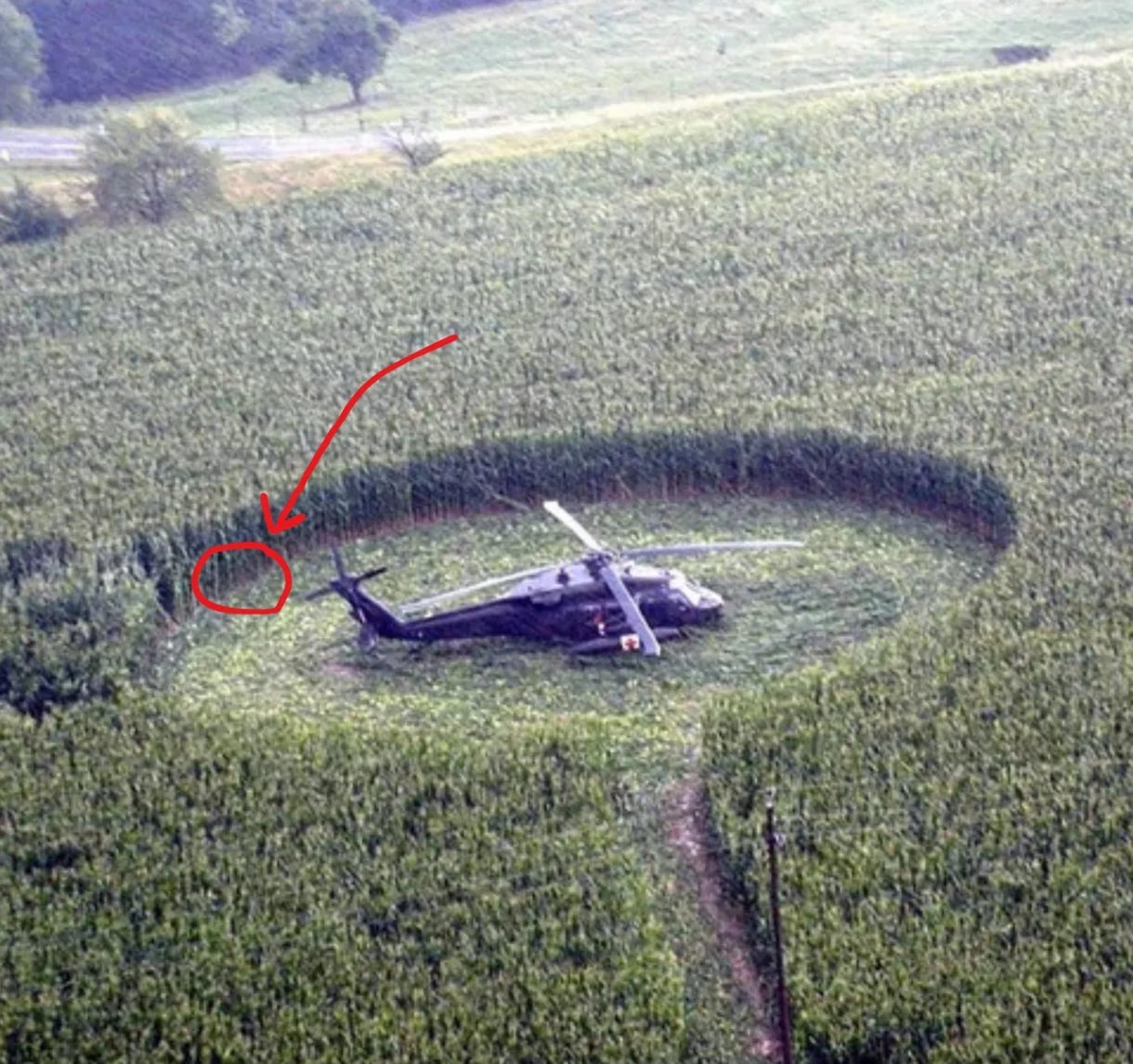
A helicopter landed on the property next to my farm for the third time this month, and there is no house, no driveway, and no helipad on that property. There is a windowless building that went up in February and a fence line with cameras I can count from my kitchen window. The property was bought eight months ago by a company registered in Delaware that I can’t find any real record of. I found the foreman who has been running trucks past my house since January, and what he told me in a feed store parking lot helped me understand what is under that building and who it is really for. I started a garden the next morning, ordered water filtration for my family, and I still haven’t told my husband everything.
I need to go back to last October to explain this.
We moved out here three years ago. Twenty-two acres, a farmhouse that needed work, and a chicken coop my husband built from a YouTube video. We’re not off-grid. We’re not preppers. We just wanted quiet, space, and eggs that didn’t cost $7.49 a dozen.
The property next to ours is forty acres. It was owned by a family from Ohio who used it for hunting season. I never met them.
Last October, it sold.
I know because I saw the surveyors. Two trucks, GPS equipment, walked the whole parcel in a day and a half. Normal enough. Someone buys land, they survey it. Fine.
Then nothing happened for three weeks.
Then the trees started coming down.
Now I need to explain what I mean by that. They didn’t clear the whole parcel. They cleared specific lines. Sight lines. And then they planted new ones. Fast-growing evergreens in different positions. Not where the old trees had been. In a pattern that blocked every view from the road.
And from my kitchen window.
That was the first thing I wrote in the notebook.
I started keeping it that November. Spiral-bound composition book in the drawer next to the stove. Every truck. Every time. Every detail I could see from the window or hear from the yard.
My husband thought I was being ridiculous.
In January, the foundation went in. I watched the concrete forms for nine days. I’ve seen houses go up on this road. I’ve seen barns built. I have never seen a foundation poured that deep.
Three stories into the ground, minimum.
For a building with no windows.
Not small windows. Not frosted glass. No windows at all.
By February, the power infrastructure was in. Not a utility pole and a meter box. Industrial conduit. A transformer on its own concrete pad. Three diesel backup generators sized for a facility. Enough electricity for a subdivision.
All running to a windowless building the size of a barn.
In March, the cameras went up. On the trees. On the fence posts. Along the access road. Infrared. Motion-triggered. I counted fourteen from my kitchen window one morning with binoculars.
Six of them were pointing inward.
Not at the road. Not at the perimeter.
At the building.
I wrote that down too.
In April, the helicopters started. No markings. No visible company name. Landing behind the planted tree line in a clearing you can’t see from any road. Twice a week. Sometimes three times.
By late April, the workers changed. Before that, I’d see the same trucks, the same crew. After that, they arrived in windowless vans. White. Unmarked. They entered the gate at 5 AM and didn’t leave the property until dark.
I never saw the same face twice.
Then the sounds started.
Low vibrations. 2 AM. 3 AM. Deep enough to feel through the floorboards in my kitchen. My husband said it was the furnace.
It wasn’t the furnace.
Twice I saw light. Not from the building. From the ground next to it. A glow at the seams. Like something enormous was running underneath and the edges weren’t sealed tight enough to hold it in.
I filled twenty-seven pages of that notebook.
Nobody would tell me anything. The county had almost nothing useful on file for the parcel. The property was registered to an LLC in Delaware that I couldn’t find a single real record of. I called the registered agent. Got a voicemail. Never got a call back.
My husband told me to leave it alone.
I couldn’t.
Around the same time, I started watching the news differently. The conflict overseas. The shipping lanes. Gas prices. The stories about fuel reserves and grid strain that show up on the front page for one day and then disappear.
I couldn’t explain why, but it felt connected to what I was watching from my kitchen window. The timing was too clean. The construction next door accelerated at exactly the same time the news got worse.
I wrote that down too.
By May, I had twenty-seven pages and no answers. Just a knot in my chest that wouldn’t go away and a husband who wouldn’t look out the window with me.
So I stopped watching.
And I started looking.
The foreman’s truck was a white Chevy 2500. No logo. No company name. Just a county inspection sticker and mud.
I’d been watching it come through that gate every morning at 6:15 and leave every evening around 7. Same truck. Same time. Whoever drove it was in charge. He arrived first and left last.
I never planned to follow him.
But one Tuesday morning in May, I was heading to Tractor Supply and saw the white Chevy pulling off the site road onto the two-lane. Heading the same direction.
So I followed.
He pulled into the parking lot. Got out. Stood by the tailgate and made a phone call.
I parked three spots over.
He was agitated. Voice up. Not yelling. Just tight. Controlled frustration.
“…tell them the second unit needs to be rated for fifty, not twenty, or the whole timeline slides, and I’m not going to be the one explaining that to”
He saw me looking.
Hung up.
I sat in my truck for maybe ten seconds. Then I got out and walked over.
“I live on the road next to whatever you’re building.”
He looked at me for a long time.
“I don’t know what you mean.”
“You drive a white Chevy through a gate at 6:15 every morning. I can see your cameras from my kitchen. I can feel your machines through my floor at 2 AM.”
He didn’t say anything.
“What are you building that needs to hold fifty people underground?”
He looked at his phone. Then at the road behind me. Then back.
“Ma’am, I can’t talk about work.”
“I’m not asking about work. I’m asking why there’s a building with no windows next to my farm with cameras pointed inward, helicopters landing twice a week, and a foundation three stories deep.”
He leaned against the tailgate and went quiet for a long time.
Then he asked, “How much of that did you write down?”
“All of it.”
He rubbed his face. Looked at the sky.
Then he said something I wasn’t expecting.
“Good.”
His name is not something I’m going to use. I’ll call him Mike.
( Yuval Noah Harari, WEF )
“I’ve been doing this nineteen years,” he said. “Commercial. Industrial. Government contracts. The kind of work that comes with NDAs and security clearances and clients you never meet face to face.”
He leaned against the tailgate.
“Four times in the last two years, I’ve been contracted through an intermediary firm to manage builds on private properties. Remote. Rural. Always purchased through LLCs. Always the same general scope.”
He paused.
“Underground living infrastructure rated for long-term occupancy.”
I didn’t say anything.
“The first one, I thought it was an eccentric rich guy building a panic room. A big one. Fine. People build those.”
He looked at his hands.
“The second one was in a different state. Same specs. Same engineering firm. Same priority sequence.”
“Same client?”
“Different client. Same people behind the engineering. Same NDAs. Same security.”
He stood up off the tailgate.
“By the third one, I stopped thinking it was a panic room.”
He didn’t want to tell me what the builds were for. I could see him working through it. How much to say. How much to hold back.
But he had already started.
And I think something in him needed to say it out loud.
“There’s a compound being built in Hawaii right now,” he said. “You’ve probably seen it in the news. Hundreds of millions. Its own power. Its own food production. Its own water. Underground living space.”
He paused.
“That’s the one they let you see. You can Google it.”
I didn’t say anything.
“That’s one. There are others. New Zealand. Montana. Texas. Remote. Underground. Self-sustaining. Some of the biggest names in tech have been preparing places like this for years.”
“Who are these people?”
“I can’t give you names. But you’d know them. Everyone would know them. The people who run the platforms you use every day. The people who built the technology the entire economy depends on. The people who get briefings the rest of us don’t get.”
“And the one next to my farm?”
“I can’t tell you the client’s name. But the specs are the same. The engineering firm is the same. The priorities are the same.”
He was quiet for a minute.
“These aren’t preppers. Preppers buy freeze-dried food and argue online. These are the people who built the systems everyone else depends on. Power grid. Supply chain. Communication. Finance. They built it. They run it.”
He looked at me.
“And they’re building themselves out of it.”
I felt something cold move through my chest.
“Why would the people who built the system need to get out of it?”
He looked at me like I had finally asked the right question.
“Because they know what’s about to happen to it.”
I asked him when.
Not what. Not who.
When.
“Look at what’s happening right now,” he said. “There’s a strait. One strait. A huge amount of the world’s oil moves through it. You know what’s going on over there. You see it on the news every night.”
He paused.
“Six months ago, my clients were on two-year build timelines. Three months ago, every one of them pushed it up. Doubled crews. Night shifts. Rush orders on critical systems. I went from finishing one build a year to running two simultaneously.”
“What changed?”
“I don’t get their briefings. I get schedule changes. And every schedule change in the last ninety days lined up exactly with what started happening overseas.”
He looked at the ground.
“If supply gets interrupted long enough, fuel doesn’t just get expensive. It gets managed. Rationed. Prioritized. Military first. Hospitals second. Essential infrastructure. Everyone else gets in line.”
I leaned against my truck.
“The conflict overseas isn’t going to stay overseas,” he said. “It comes home through the gas pump first. Then the power grid. Then your kitchen faucet. In that order.”
“Second thing is movement. Flights get thinned. Routes cancelled. They won’t call it a travel ban. They’ll call it a market correction. An efficiency measure. But the effect is the same. You stay where you are.”
“And then?”
“Then the grid.”
He said it flat. Like a fact he’d been carrying for months.
“Brownouts first. Rolling. Two hours here, four hours there. Stay indoors from 2 to 7 PM for grid stability. Voluntary at first.”
He paused.
“That word does a lot of work.”
He looked at me.
“There’s a phrase you’re going to start hearing more. Energy lockdown. When you hear that phrase, I want you to remember this conversation.”
I wrote it in the notebook. Right there in the parking lot.
Energy lockdown.
“Every compound I’ve built is designed for zero connection to the public grid. Zero. Their own power. Their own fuel. Their own food. Completely independent. These people watched what started happening and they moved. They didn’t wait for the news to name it. They didn’t wait for permission. They just left the system.”
He looked at me.
“They’re already gone. And the rest of the country doesn’t know yet.”
But that wasn’t the part that made me lose sleep.
“Here’s what I can’t stop thinking about,” he said. “Four compounds. Three states. Two years. And on every single project, the water system is the first thing they spec and the last thing they’ll compromise on.”
He held up a finger.
“Before walls. Before ventilation. Before power backup. Before air filtration. Water. First. Every time.”
“Why water?”
“Because you can store food for a year. You can generate your own power. You can seal a space for air quality. But water is different. You either have the ability to clean it yourself from whatever source is near you, or you don’t. And if you don’t, everything else you built is a countdown clock.”
I thought about my kitchen faucet.
“Your water comes from a treatment plant,” he said. “That plant runs on electricity. That electricity comes from a grid. That grid is about to be managed by the same people who already built their way out of it.”
He let that sit.
“You can live a month without food. A week without heat. You cannot live three days without clean water.”
“What about bottled water?”
“The bottled water aisle at your grocery store empties fast after a grid event. After that there is no water for sale anywhere at any price.”
I thought about my daughter. Seven years old. Standing in the kitchen at 6:30 in the morning asking for a glass of water the way she does every day.
And me having nothing to hand her.
“That’s the moment that breaks people,” he said. Quiet. Like he had thought about it too many times. “Not the power going out. Not the gas lines. The moment your kid asks for water and you don’t have an answer.”
I didn’t say anything for a long time.
“In Texas in 2021, the grid failed for three days. Weather. An accident. Millions of people lost safe drinking water. That was three days and it was weather.”
He looked at me.
“What’s coming isn’t three days. And it isn’t weather.”
“How are the people in these compounds solving it?”
“Independent filtration. Systems that take water from freshwater sources. Creek, pond, rain catchment, stored water, cisterns. Filter it to drinking quality. No electricity. No grid connection. No supply chain. Just the source and the filter.”
“And the rest of us?”
“The rest of us are standing on a system someone else controls. And the people who control it have already built their exit.”
He was quiet for a minute.
Then he said something that made it real in a way nothing else had.
“I’ve been on four of these jobs. The engineers talk. The project managers talk. We’re not supposed to, but we do. Every single project manager I’ve worked with on these builds has quietly gotten their own setup. Not a compound. Not a bunker. Their own water solution. Portable. The kind of thing you keep in a closet and nobody knows you have it.”
“How many people?”
“On my jobs alone? At least a dozen. The lead engineer on one of the biggest projects bought six. Before any of this was in the news.”
He looked at the ground.
“My wife thought I was losing it six months ago. Thought I was being paranoid. Now she doesn’t say anything when I check the supplies.”
I looked at him.
“What did you buy?”
He walked to his truck. Reached behind the driver’s seat. Pulled out a blue folded system in a nylon pouch.
It wasn’t a straw. It wasn’t a bottle. It wasn’t some giant machine with a motor.
It was a gravity water system.
Blue bag. Hose. Filter. Clean-water pouch.
“This is it?”
“That’s one of them.”
I looked at it. I don’t know what I expected. Something bigger. Something with wires or a pump or a battery. Something that looked like it belonged in a billionaire compound.
He opened it on the tailgate.
“Dirty water goes in the top bag,” he said. “Freshwater source. Creek, pond, lake, rainwater, whatever you can safely access. Hang it. Gravity pulls the water through the filter. Clean water comes out below.”
“No batteries?”
“No batteries.”
“No power?”
“No power.”
“No pumping?”
“No pumping.”
“Chemicals?”
“No chemicals.”
He pointed toward the edge of the parking lot. There was a drainage ditch running along the tree line. Brown water. Leaves. Runoff.
“Not saying I’d pick that unless I had to,” he said. “But that’s the point. Most people are surrounded by water they can’t use. These people are building whole compounds around the ability to use it.”
He held up the hose and filter.
“0.1-micron filter. Up to 1,500 gallons depending on water quality and maintenance. One gallon at a time. Water you can pour. Water for kids. Cooking. bottles. pets. washing hands.”
I stared at it.
He said, “A straw helps one person drink. A gravity system helps a family function.”
That line stayed with me.
He walked to the ditch, filled the top bag just enough to show me, and hung it from the side of his truck rack. Water started moving through the hose into the clean pouch.
Slow at first.
Then steady.
No pump. No battery. No sound.
Just gravity.
The water in the top bag looked disgusting.
The water coming out was clear.
I stood there in the feed store parking lot watching a man who builds underground compounds for people whose names I’ll never know turn ditch water into something clear enough to pour into a bottle.
My wife thought I was losing it, he said. Six months ago when I brought this stuff home. Then I took her to the creek behind our house and showed her.
“What did she do?”
“Looked at me the way you’re looking at me right now. Then she got real quiet.”
He paused.
“Didn’t say anything for about a minute. Then she said, ‘Get more of these.’”
He folded the system back into the pouch and handed it to me.
“Keep it.”
“I can’t take that.”
“I’ve got more at the house. This one lives in the truck. I’ve got one at home. One in my wife’s car. One at my mother’s. One for my brother.”
He handed it to me again.
“… It’s not something you’ll see stacked at Walmart. Get enough for your family. House. car. parents. Anyone who would look to you for water if the tap stopped.”
I held the pouch in my hand.
The same problem people were spending millions to solve underground.
Sitting there on the tailgate of a Chevy.
I drove home with the system on the passenger seat.
Pulled into the driveway. Sat there for a while with the engine running.
My daughter was in the kitchen window. I could see her through the glass. Setting the table for dinner the way she does every night. Plates, forks, cups.
Cups.
I thought about what Mike said.
The moment your kid asks for water and you don’t have an answer.
I thought about the building next door. The one with no windows. The vibrations through my floor at 2 AM. The helicopters. The cameras pointing inward.
I thought about the people inside those compounds. Their own water. Their own power. Their own food. Completely independent. Already gone.
And I thought about my kitchen faucet.
Connected to a treatment plant.
Connected to a grid.
Connected to a system someone else controls.
I went inside. I didn’t say anything to my husband. I put the system in the drawer next to the notebook.
Then I got on my phone and ordered four more.
One for our house. One for my husband’s truck. One for my car. One for my mother.
That was three weeks ago.
Since then, two things have happened.
The brownout advisories started sounding less voluntary.
And I heard the phrase.
Energy lockdown.
A news anchor said it on a Tuesday evening like it was a normal thing to say. Like it had always been part of the vocabulary. I was standing in the kitchen and I heard it come out of the television and felt the hair on my arms stand up.
I went to the drawer. Took out the notebook. Found the page from the parking lot.
Energy lockdown.
He was right.
I don’t know who is going to read this. I don’t know if you have been watching the news and feeling the same knot in your stomach I’ve had since last fall. I don’t know if you’ve noticed the gas prices, the grid warnings, the land purchases, or the stories that show up for one day and disappear.
But I know this.
The people who built the systems we depend on have already started building their way out of them. Quietly. Without telling anyone.
The rest of us are still standing on the system.
And the system is about to be managed.
If you do one thing after reading this, get a way to make clean water for your family from a freshwater source nearby.
The people who know are already moving.
Quietly.
The way they always do.
By the time the news catches up, the shelves will be empty and the product pages will say out of stock and you’ll be standing in your kitchen wishing you had moved when you had the chance.
Don’t wait for permission.
The people building bunkers didn’t.
P.S. – I finally showed my husband the notebook. He read the whole thing at the kitchen table without saying a word. Then he picked up the system, turned it over in his hands, and said, “How many did you get?” I told him four. He said, “Get more.” That was the moment I knew he understood. He didn’t argue. He didn’t tell me I was spiraling. He read twenty-seven pages of what I had been watching from our kitchen window and asked me to get more.
P.P.S. – This is not for saltwater or chemical runoff. Be smart about your source. But for freshwater sources like creeks, ponds, lakes, rivers, and rainwater, this is the kind of simple backup I wish I had thought about years ago. No power. No batteries. No pumping. No chemicals. Up to 1,500 gallons depending on source water and maintenance.
P.P.P.P.S., Someone is going to read this and think, “I’ll just buy cases of water bottles.” I thought that too. But do the math. How long does a case last a family? Then what? Another case? The store is already empty. Bottled water is a countdown clock. A gravity system is access. As long as there is a creek, pond, lake, river, rain barrel, or bathtub you filled in advance, you have a way to make clean water by the gallon.
P.P.P.P.P.S. , My husband ordered more. My mother. His brother. My sister. We don’t talk about it much. Nobody in my circle argues about it anymore. They just act. That’s how you know it’s real , the people who understand don’t debate the tap. They prepare for the day it stops.
( The point is not the story being Ai generated or an advertisement, something about it aligns with whatever is going on, what do you think?)
Popular Information is powered by readers who believe that truth still matters. When just a few more people step up to support this work, it means more lies exposed, more corruption uncovered, and more accountability where it’s long overdue. If you believe journalism should serve the public, not the powerful, and you’re in a position to help, becoming a PAID SUBSCRIBER truly makes a difference.
buymeacoffee.com/ggtv


Leave a Reply