
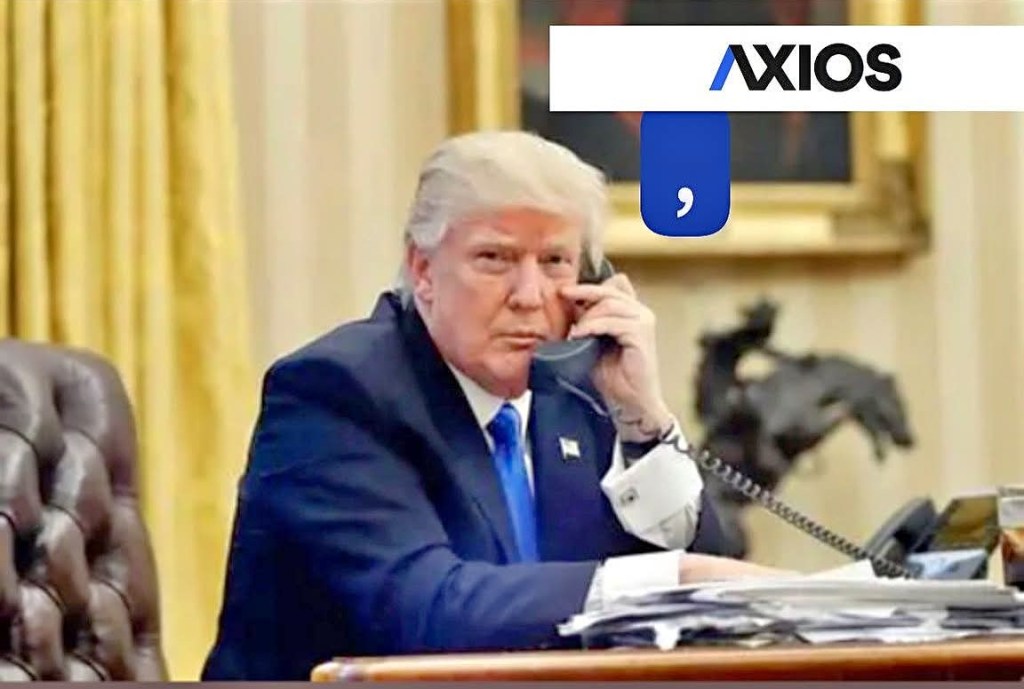
Trump has declared victory in the Strait of Hormuz during a phone call with Axios
U.S. President Donald Trump has declared victory in the Strait of Hormuz during a phone call with Axios, asserting that the strategic maritime chokepoint is open and describing Iran’s response as “very mild.” Trump claimed that Iranian forces “don’t want us to go back at them” following recent military actions
Echoing these assertions, U.S. officials told Axios that a two-week bombing campaign, joint UAE escorts, mine-clearing operations, and a restored blockade have successfully “broken Iran’s grip” on the region. According to Washington’s estimates, 20 to 30 tankers now cross the strait nightly, carrying between 9 million and 10 million barrels of oil, or roughly half of prewar volumes, with only two percent of transiting ships targeted last month. Officials also stated that over 200 mine-like objects have been cleared. Looking ahead, Washington plans to widen the main Traffic Separation Scheme channel by mid-September to allow up to 50 ships per night, with the goal of restoring oil exports to 60 to 70 percent of prewar levels while framing the coalition effort, joined by the UAE, Bahrain, and Kuwait, as a decisive upper hand.
The claim put forward by Donald Trump during an interview with Axios, declaring that the Strait of Hormuz is open and that Iran’s response has been rendered very mild, presents a fundamental disconnect between diplomatic narrative management and physical maritime geography. While the White House and its preferred media proxies frame the situation as a strategic victory for Washington, the operational posture of the United States Navy tells a vastly different story. If the strategic chokepoint were genuinely secured and cleared of threat vectors, US naval surface combatants would be leading high-visibility transits through the narrow corridor to demonstrate uninhibited freedom of navigation. Instead, the capital ships of the world’s premier naval power remain stationed outside the immediate kill-zones of the strait, because the moment a high-value US warship attempts an unescorted or routine transit through these narrow waters, it risks encountering the asymmetric fire envelope that Iran maintains along its coastline.
The reliance of US officials on Axios to disseminate claims of a broken Iranian grip highlights the political economy of war reporting. Throughout this conflict, selective leaks to Washington outlets have functioned not as neutral dispatches, but as tools of psychological market management and strategic signaling. The numbers leaked by Washington officials, claiming twenty to thirty tankers transiting nightly and reducing vessel hit rates to just two percent, are designed to reassure volatile energy futures markets. By insisting that over two hundred mine-like objects have been neutralized and that regional allies like the UAE, Bahrain, and Kuwait are actively co-hosting operational escorts, Washington seeks to project an aura of total maritime control.
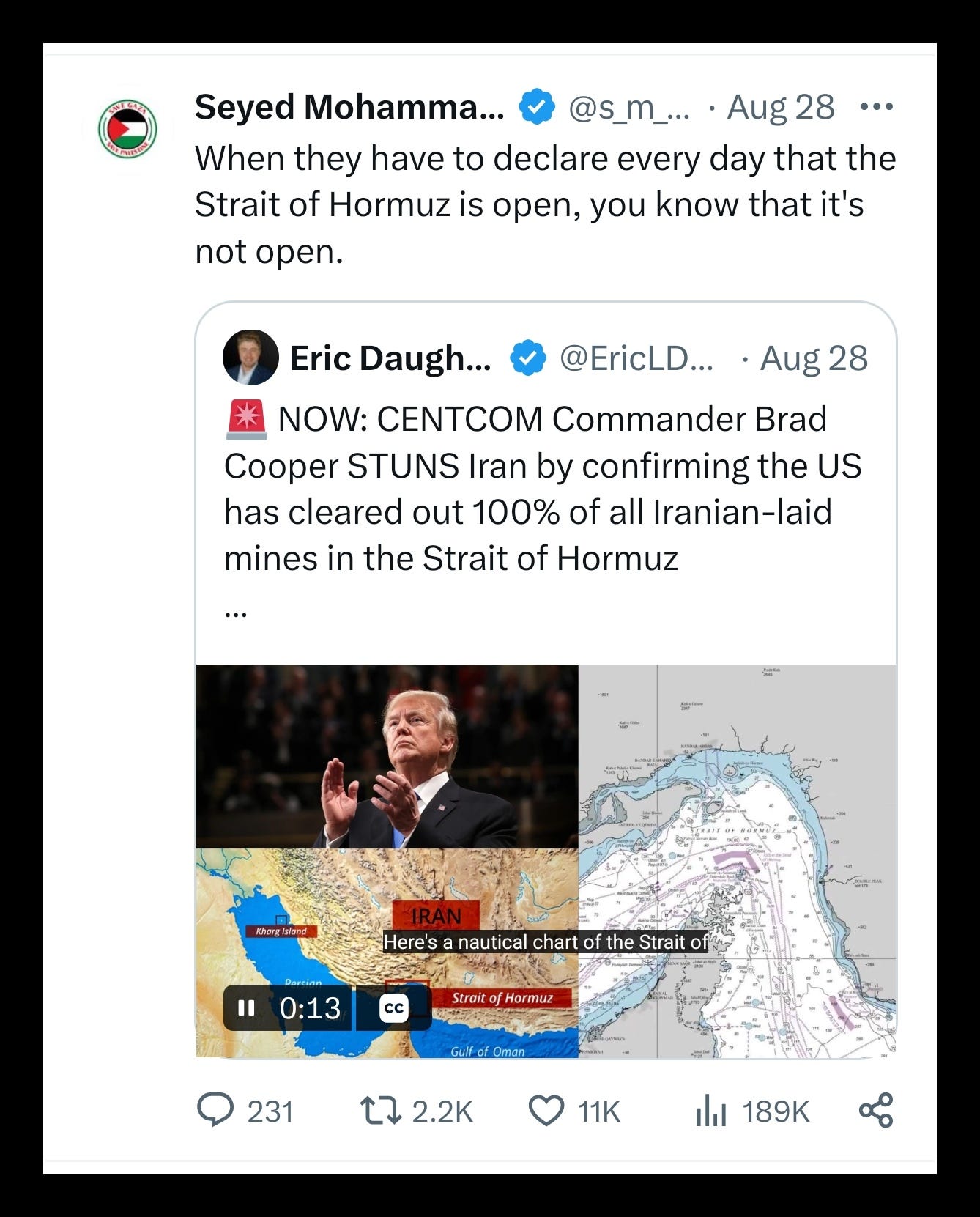
However, independent maritime intelligence, vessel-tracking services, and commercial oil analysts paint a starkly different picture. Tanker tracking data indicates actual transits remain less than half of the Pentagon’s public claims, with commercial vessels operating under extreme risk parameters. Far from a dormant theater, merchant traffic faces daily strike hazards, expensive war-risk insurance premiums, and systemic disruptions that continue to choke pre-war flow volumes. Furthermore, the target of expanding the Traffic Separation Scheme by mid-September to accommodate fifty nightly vessels implicitly concedes that the waterway is currently operating at a fraction of its historical capacity.
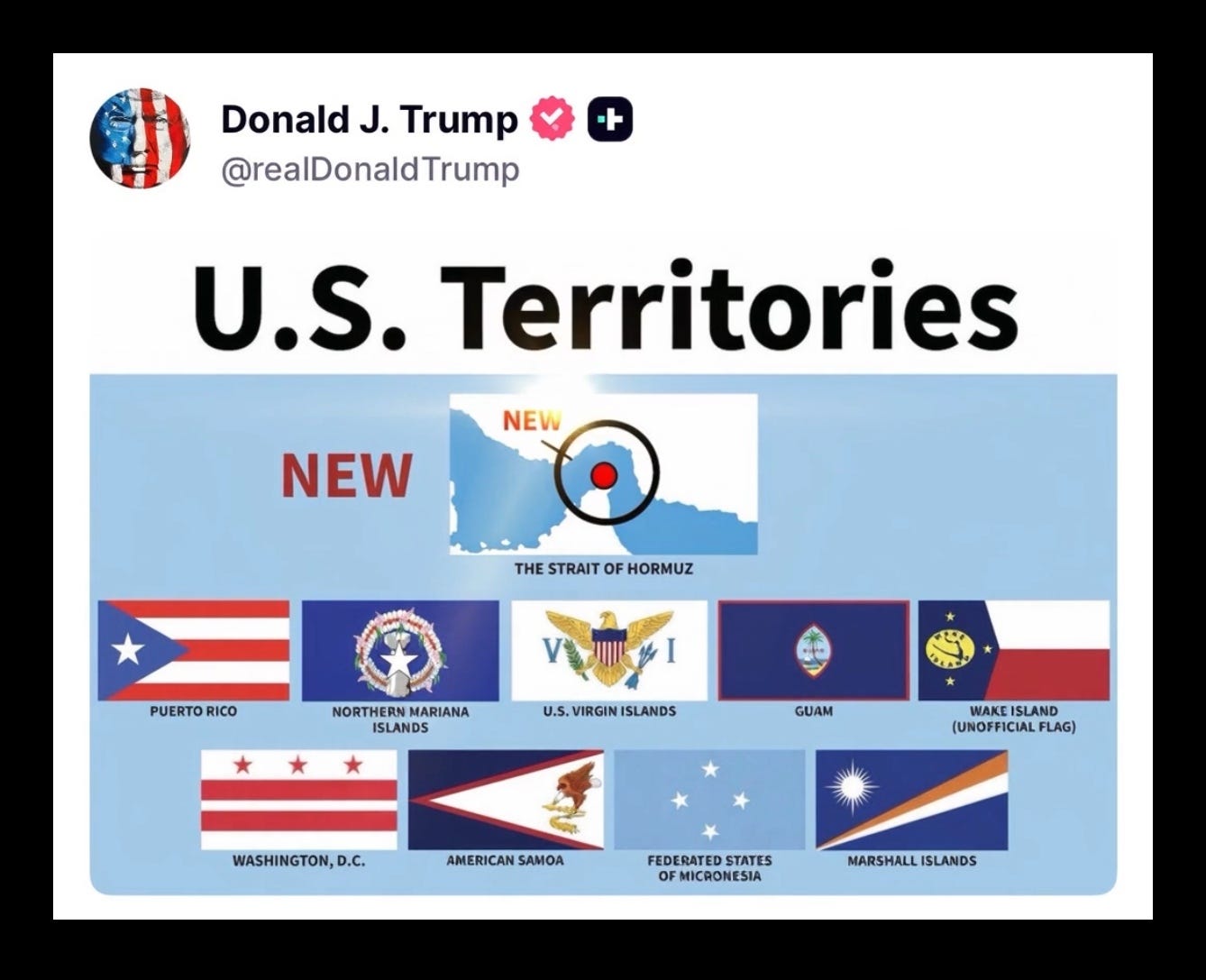
( Trump declaring the Strait of Hormuz a new US territory)
To understand why the US Navy remains cautious despite executive declarations of victory, one must look at the geography of asymmetric naval warfare. Closing or restricting a maritime chokepoint does not require a peer-level navy; it requires an operational doctrine built around Anti-Access/Area Denial. Through mobile anti-ship cruise missile batteries hidden along the rugged coastal topography of southern Iran, loitering munitions, smart naval mines, and fast-attack craft, Tehran can maintain a dynamic kill-zone without ever deploying a conventional surface fleet. For Washington, the risk-to-reward calculation is severely skewed, as destroying an inexpensive shore-based missile launcher or intercepting a wave of low-cost drones drains millions of dollars in advanced naval interceptors, while the tactical damage or sinking of a single US guided-missile destroyer would instantly shatter the domestic political narrative of an effortless victory and force an uncontrollable military escalation.
(Iranian footage shows dozens of ships waiting for orders from the IRGC to cross the Strait of Hormuz. The IRGC has accused U.S. officials of making false claims that the strait remains open, alleging that the statements are intended to manipulate oil prices and conceal U.S. failures.)
Iranian Foreign Minister Abbas Araghchi’s public response targets this critical vulnerability in Western strategic planning: the domestic sensitivity to global energy prices and political messaging. Araghchi’s assertion that elements within the US executive apparatus use gullible media to influence energy markets points to a recurring pattern where, ahead of market openings, aggressive claims of mine clearance, restored navigation, and impending diplomatic breakthroughs regularly emerge from Washington to temporarily cap crude spikes and soothe domestic consumer anxiety. Once the market absorbs the briefing, the underlying physical reality returns, as insurance rates remain high, vessels continue to take hit damage, and direct US naval presence inside the strait remains restricted. Ultimately, declarations that the strait is open represent a political performance aimed at a domestic political audience, whereas the ultimate test of maritime dominance is the physical, unescorted transit of American naval power through international waters, which remains intensely contested until US Navy capital ships comfortably sail through the Strait of Hormuz without relying on proxy statements and indirect escorts.
Underpinning Washington’s geopolitical vulnerability is a worsening domestic fiscal crisis, as internal Pentagon documents revealed by The Guardian show that the US Navy has been forced to transfer funds directly from its own payroll accounts and shore operations to sustain combat missions against Iran. A leaked memorandum explicitly warns of severe “shortfalls in payroll” brought on by the Defense Department “raiding” personnel budgets for overseas contingencies, a desperate shuffle described by one Navy official as robbing paychecks to cover combat operations before frantically backfilling them with unspent funds. As non-emergency facility maintenance is deferred, advanced munitions stockpiles run low, and Middle Eastern bases suffer structural damage, the Navy’s $300 billion annual budget, which never accounted for an unplanned conflict with Tehran, is rapidly running dry. With a $67 billion emergency war funding package currently stalled amid political paralysis in Congress, retired naval officer Harlan Ullman summarized the systemic breakdown plainly: “the piggy bank is broken”.
Authored By: Global GeoPolitics
If you prefer to make a one time donation in support of my work, you can do so by clicking any link below:
https://donate.stripe.com/7sY8wPfvi864don0k3awo07 |
https://buymeacoffee.com/ggtv |
https://ko-fi.com/globalgeopolitics |
Bitcoin: 3NiK8BoRZnkwJSHZSekuXKFizGPopkE7ns


Leave a Reply