How Brookings’ Which Path to Persia? envisaged support for armed opposition and what the escalating insurgency in Sistan and Baluchestan reveals about the wider campaign against Tehran.
Editorial Analysis | October 2026
The escalation of armed violence in Sistan and Baluchestan during 2026 corresponds precisely to a strategic option formally examined in the Brookings Institution’s 2009 study Which Path to Persia? Options for a New American Strategy toward Iran. The report, published by the institution’s Saban Center for Middle East Policy, contained a chapter explicitly entitled “Inspiring an Insurgency: Supporting Iranian Minority and Opposition Groups,” which considered the possibility of supporting ethnic opposition movements, including Kurdish and Baloch groups, to create an internal challenge to the Iranian state. The text discussed how unrest generated by such groups might force Tehran to divert resources toward suppressing rebellions and weaken the government’s position against external rivals. It also considered providing opposition organisations with support to develop into full-scale insurgencies. The strategic objective was not limited to documenting Iranian discontent but expressly examined insurgency as a means of weakening and potentially overthrowing the government. The study discussed the prospect of covert assistance and the advantages that proponents might associate with plausible deniability, demonstrating that the potential political and diplomatic consequences of being identified as the sponsor of an insurgency formed part of the strategic calculation.
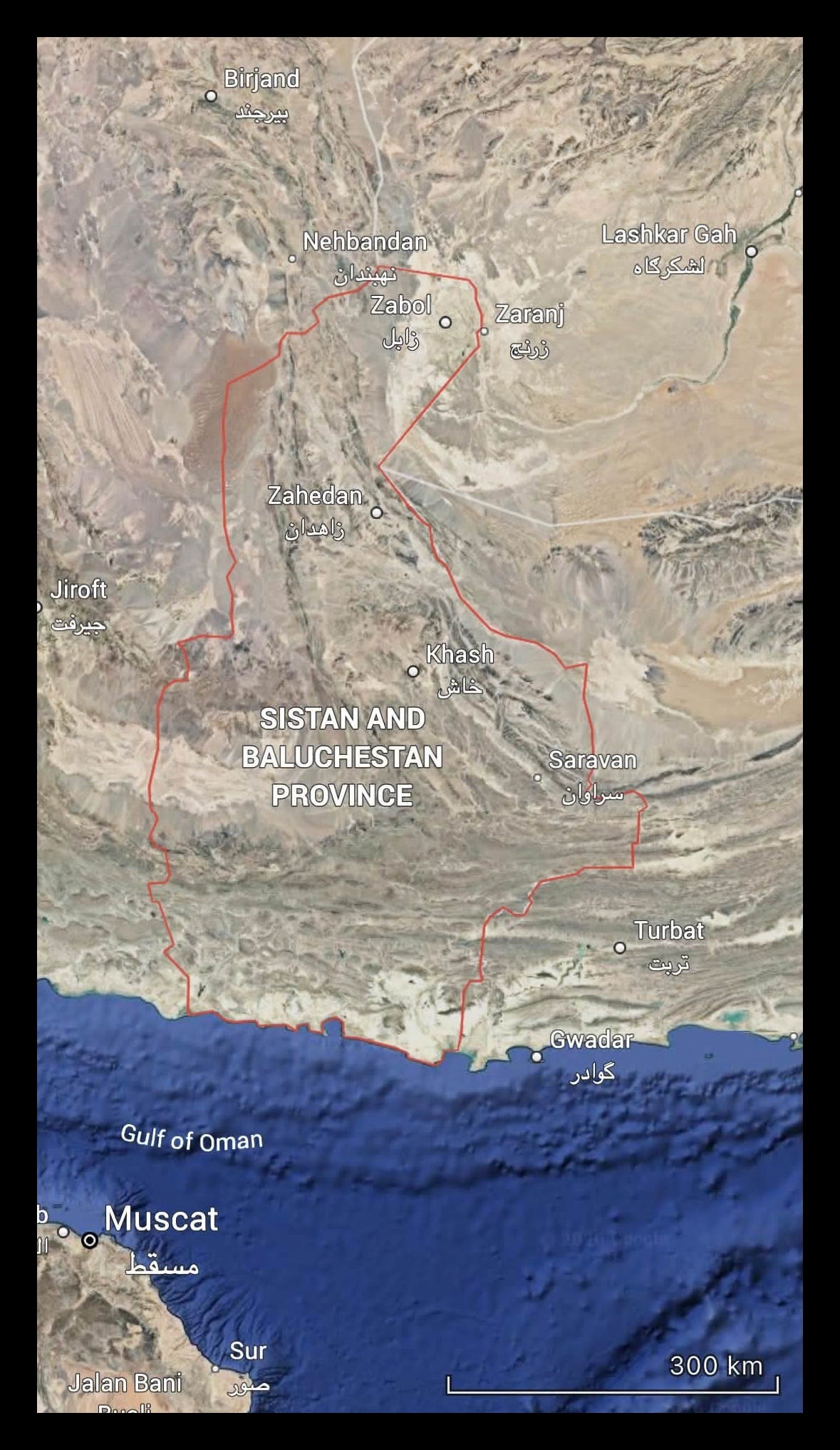
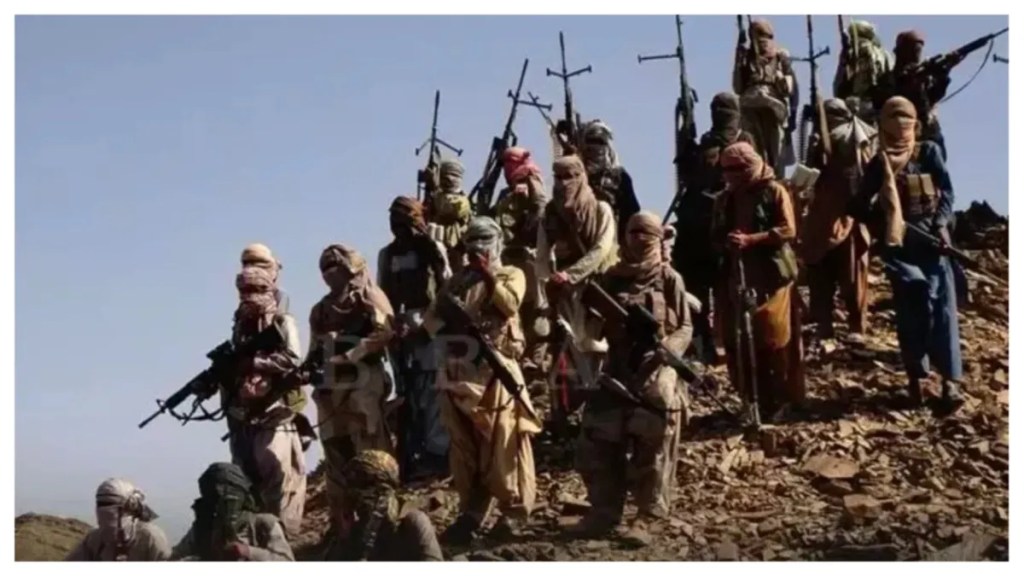
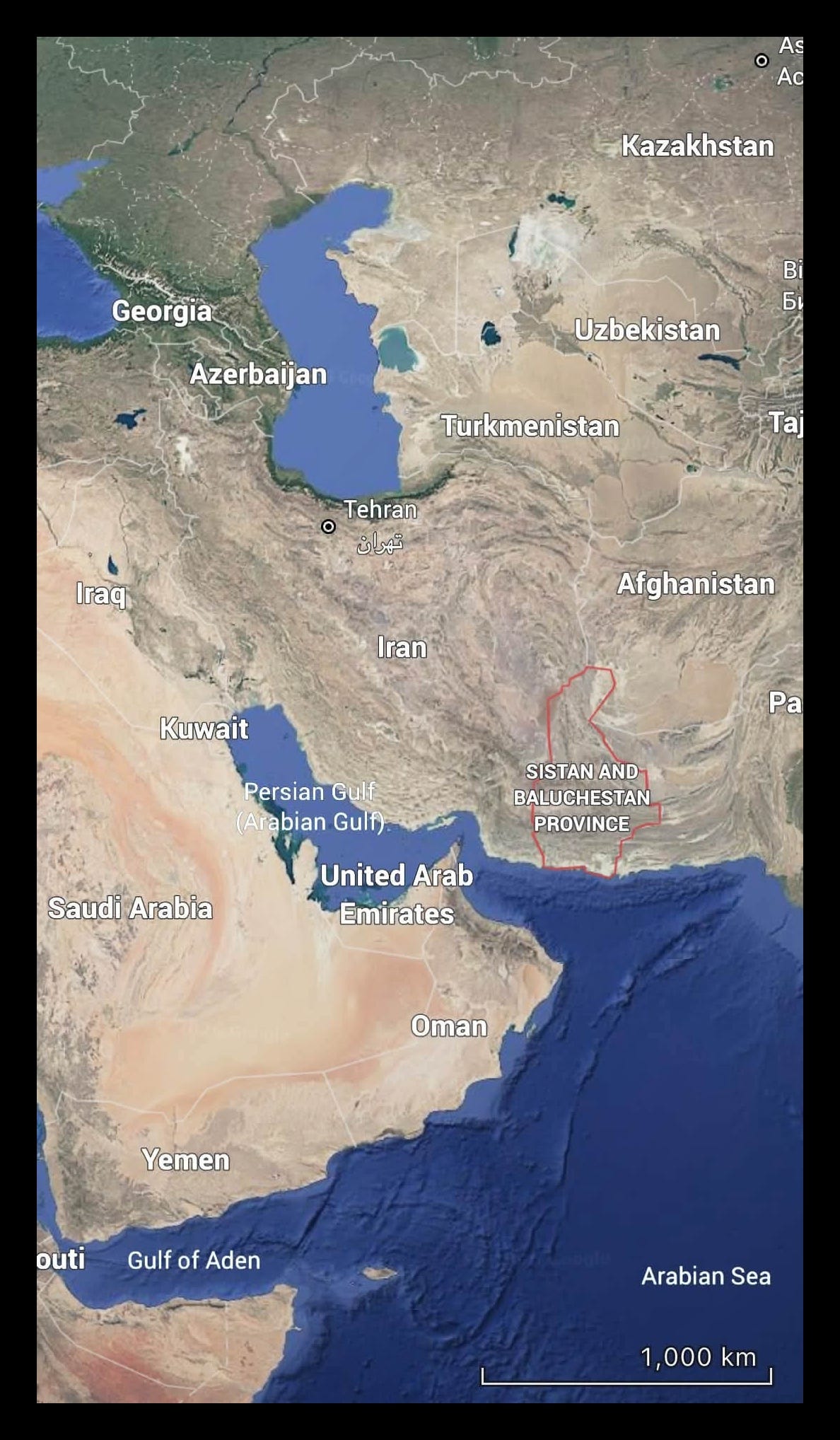
The relevance of this document to the current situation is not speculative but direct. The Armed Conflict Location & Event Data project recorded approximately seventy armed confrontations between insurgent groups and Iranian security forces in Sistan and Baluchestan during 2026, the highest annual total in at least a decade, with thirteen of these confrontations occurring in the two weeks preceding the assessment. The formation of the People’s Fighters Front in late 2025, reportedly bringing Jaish al-Adl together with smaller factions and locally organised fighters, has added a new dimension to the conflict. Iranian security operations have repeatedly developed into prolonged engagements, including an operation in Saravan in September during which fighters reportedly resisted for nine hours, and two senior Islamic Revolutionary Guard Corps officers were killed in a separate operation later that month. The latest attacks, including the reported assault on the Golshan county police headquarters and attacks on security personnel near Nosratabad and Nikshahr, indicate that the violence is not confined to isolated encounters in remote areas but targets established security facilities and challenges the state’s ability to protect its institutions.
The historical record of American interventionism provides abundant evidence that support for armed opposition movements is a recurring instrument of imperial policy. The Central Intelligence Agency’s Timber Sycamore programme, which operated from 2012 to 2017, armed and trained Syrian opposition fighters in a covert operation coordinated with Saudi intelligence, demonstrating the willingness of the United States to use proxy forces to pursue regime change in sovereign states. The programme’s termination in 2017 did not invalidate the strategic logic that produced it but rather reflected the difficulties of controlling the armed actors receiving support and the fragmented environment in which Western-backed opposition groups operated. Seymour Hersh’s 2007 investigation, “The Redirection,” examined the Bush administration’s regional policy and reported on efforts involving Saudi Arabia and other partners to counter Iranian influence, including the risks associated with support for Sunni extremist networks. These precedents illustrate the potential divergence between an external sponsor’s strategic intentions and the subsequent conduct of the armed actors receiving support, but they also demonstrate that the cultivation of armed opposition is a standard instrument of American statecraft rather than an aberration.
The institutional architecture of American interventionism requires scrutiny because the think tanks that produce policy proposals operate within a wider ecosystem of government agencies, private donors, defence contractors, and energy interests that have material stakes in international security policy. The Brookings Institution, which produced Which Path to Persia?, received seventeen million one hundred thousand dollars from foreign governments and three million nine hundred and ten thousand dollars from Pentagon contractors, creating material conflicts of interest in the production of foreign policy analysis. Arms manufacturers benefit commercially from sustained military expenditure, while companies operating in energy markets can be affected by sanctions, instability, and changes in regional access. The existence of these interests does not automatically prove that a particular think tank’s recommendations were purchased or dictated by corporate donors, but the institutional setting cannot be ignored when examining proposals for military confrontation or regime change. A serious examination of such proposals should ask who finances the institutions advancing them, whose expertise is given prominence, which interests are represented, and whether the foreseeable costs to affected populations receive the same attention as the strategic advantages anticipated by policymakers.
The distinction between pursuing national interests and claiming authority to reshape another sovereign state is central to understanding the political significance of the insurgency proposals examined by Brookings. The United States has strategic interests in the Middle East, including the security of regional partners, the balance of power, access to energy markets, and the protection of its military position. Israel has its own security objectives and views Iran as a major regional adversary. These interests help explain why Iranian military capabilities, regional alliances, and internal stability feature prominently in strategic debates in Washington and Tel Aviv, but they do not establish a legitimate entitlement to determine Iran’s political future or to engineer armed conflict within its borders. A policy that seeks to weaken a sovereign state by encouraging armed opposition is not a technical instrument of foreign policy but a proposal to intervene in another country’s political order, with consequences that extend to the population expected to live with the resulting violence. The institutional language in which such a proposal is presented cannot change the nature of the policy itself.
The material consequences of a policy designed to weaken Iran through internal armed opposition would extend far beyond the institutions targeted by the strategy. Civilians in Sistan and Baluchestan face the immediate risks of intensified fighting, retaliatory operations, displacement, disrupted livelihoods, and the possible expansion of coercive security measures. The wider Iranian population could face additional instability if internal violence coincided with external military confrontation and economic pressure. The insurgent groups themselves retain their own political objectives, which may not coincide with those of any foreign sponsor. A movement encouraged as a strategic instrument could become difficult to control, pursue separatist aims incompatible with the sponsor’s preferences, or contribute to a conflict whose eventual outcome differs substantially from the original calculations. The historical record of externally supported armed movements demonstrates why these consequences cannot be dismissed as secondary considerations. The relationship between the insurgency and Iran’s wider geopolitical circumstances is significant because a sustained insurgency in the southeast would impose additional demands on security institutions already responsible for protecting national infrastructure, controlling borders, and responding to threats elsewhere. If the country were simultaneously subjected to a renewed large-scale US-Israeli military campaign, the demands on its security and military resources would increase further, and the insurgency might acquire greater operational significance not because its organisations had become capable of overthrowing the government but because the state would have to contend with internal armed conflict and external attack at the same time. This possibility should not be confused with proof that the two pressures are coordinated, because the fact that an insurgency could benefit an external adversary does not establish that the adversary created it, but the documented history of external powers considering insurgency as a strategic instrument against Iran means that the question cannot be dismissed as irrelevant.
The geopolitical implications extend to China, because Iran’s relationship with Beijing forms part of a wider strategic and economic relationship that includes energy, trade, and cooperation in a region where American influence remains contested. Instability in Iran could complicate Chinese regional calculations and affect the environment in which China pursues its economic and diplomatic interests. For Washington, the weakening of a government that cooperates with Beijing may carry implications beyond the immediate US-Iranian relationship, particularly within the broader competition between the United States and China. The escalation in Sistan and Baluchestan therefore warrants examination on two connected levels: the conflict itself, with its increasing frequency of armed confrontations and the reported consolidation of armed factions, and the historical and geopolitical context in which external powers have considered exploiting internal opposition to weaken the Iranian state. Which Path to Persia? is particularly relevant to the second question because it documents an explicit proposal to support Iranian minority and opposition groups as a means of applying pressure on Tehran and potentially achieving regime change, and its importance does not depend on proving that the strategy was implemented in its entirety. The fact that such a strategy was formally examined is itself relevant to understanding the range of measures that influential American policy circles considered, and the current escalation provides reason to revisit that documented history.
Please check out these two previous articles on related to this agenda:
1]
The Geopolitical Pivot: America’s Terrorist Pipeline For War with China
6 Jul
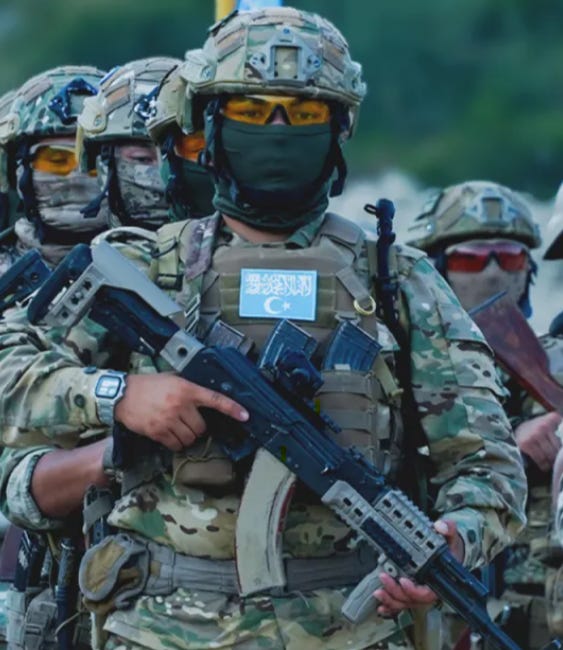
National Public Radio published a lengthy feature on 17 May 2026 profiling Uyghur fighters who helped topple the Assad government in Syria, describing them through interviews conducted in Idlib and Jisr al-Shughur over several weeks. The piece, reported by Emily Feng with support from the Pulitzer Center on Crisis Reporting, quotes Aaron Zelin of the Washington Institute for Near East Policy describing the Uyghur militia as “some of the key fighters that have been associated with Hayat Tahrir al-Sham prior to the fall of the regime,” language that acknowledges the group’s organisational proximity to a movement founded as al-Qaeda’s Syrian branch without dwelling on it. The fighters themselves told NPR they hope one day to “raise an army powerful enough to seize control of Xinjiang,” and Syria’s new government under President Ahmed al-Sharaa has since integrated the largest Uyghur militia into its reconstituted national army, appointing several of its commanders as defence ministry officers. China has responded by refusing, as a permanent member of the UN Security Council, to support lifting terrorism sanctions on Syria until Damascus addresses the Uyghur presence within its own security establishment.
2]
3 Jun
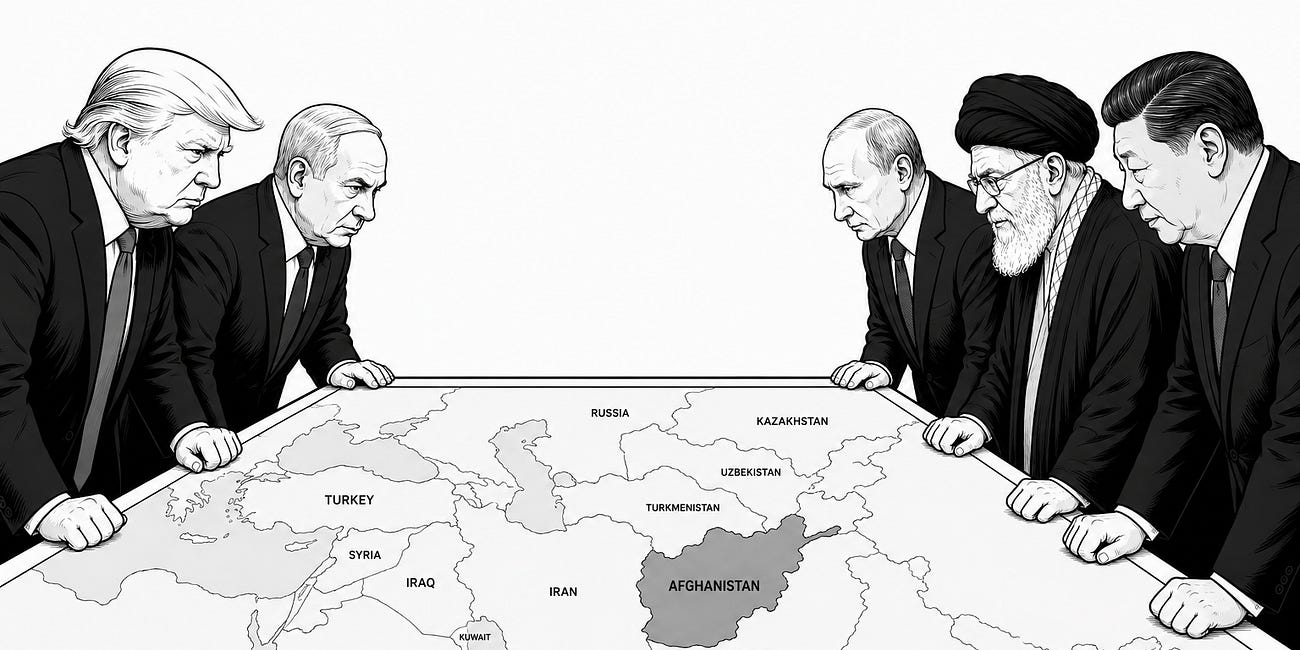
Washington’s dirty war against Chinese overland energy routes is strangling the Belt and Road Initiative. Afghanistan Was Never About Terrorism, Washington has used the country as a forward base against Iran, China, Pakistan, and Russia Since the 1980s, and that’s why it is still there
Authored By: Global GeoPolitics
Thank you for visiting. This is a reader-supported publication. If you believe journalism should serve the public, not the powerful, and you’re in a position to help, becoming a PAID SUBSCRIBER truly makes a difference. Alternatively you can support by way of a cup of coffee:
https://buymeacoffee.com/ggtv |
https://ko-fi.com/globalgeopolitics |
Bitcoin: 3NiK8BoRZnkwJSHZSekuXKFizGPopkE7ns
References
1. Armed Conflict Location & Event Data (ACLED) (2026) ‘Is a more entrenched insurgency emerging in Iran’s Sistan and Baluchestan?’, 8 October. Available at: https://acleddata.com/expert-comment/more-entrenched-insurgency-emerging-irans-sistan-and-baluchestan (Accessed: 10 October 2026).
2. Byman, D.L., Indyk, M.S., Maloney, S., O’Hanlon, M.E., Pollack, K.M. and Riedel, B. (2009) Which Path to Persia? Options for a New American Strategy toward Iran. Washington, DC: Brookings Institution Press. Available at: https://www.brookings.edu/books/which-path-to-persia/ (Accessed: 10 October 2026). Brookings
3. Chivers, C.J. and Schmitt, E. (2013) ‘Arms airlift to Syria rebels expands, with C.I.A. aid’, The New York Times, 24 March. Available at: https://archive.is/RQHyy (Accessed: 10 October 2026). The New York Times
4. Hersh, S.M. (2007) ‘The redirection’, The New Yorker, 5 March. Available at: https://www.newyorker.com/magazine/2007/03/05/the-redirection (Accessed: 10 October 2026). The New Yorker
5. International Court of Justice (1986) Military and Paramilitary Activities in and against Nicaragua (Nicaragua v. United States of America), Merits, Judgment of 27 June 1986. I.C.J. Reports 1986, p. 14. Available at: https://www.icj-cij.org/case/70 (Accessed: 10 October 2026).
6. Pollack, K.M., Byman, D.L., Indyk, M.S., Maloney, S., O’Hanlon, M.E. and Riedel, B. (2009) ‘Which Path to Persia? Options for a New American Strategy toward Iran’, Brookings Institution, 30 June. Available at: https://www.brookings.edu/articles/which-path-to-persia-options-for-a-new-american-strategy-toward-iran/ (Accessed: 10 October 2026). Brookings
7. United Nations (1945) Charter of the United Nations, Article 2(4) and Article 2(7). Available at: https://www.un.org/en/about-us/un-charter/full-text (Accessed: 10 October 2026). United Nations
8. The New York Times (2012) ‘C.I.A. helping to arm Syrian rebels’, 21 June. Available at: https://www.houstonchronicle.com/news/houston-texas/article/CIA-helping-to-arm-Syrian-rebels-3650536.php (Accessed: 10 October 2026). Houston Chronicle
9. Hersh, S.M. (2007) ‘Shifting targets’, The New Yorker, 8 October. Available at: https://www.newyorker.com/magazine/2007/10/08/shifting-targets (Accessed: 10 October 2026). This provides additional historical reporting on the Bush administration’s Iran policy. The New Yorker
10. Library of Congress (2009) Which Path to Persia? Options for a New American Strategy toward Iran. Catalogue record. Available at: https://www.loc.gov/item/2009020912/ (Accessed: 10 October 2026).
- Al-Monitor (2026) ‘How a new Baluch militant coalition raises pressure on Iran-Pakistan border’, Al-Monitor, 19 September. Available at:
(Accessed: 10 October 2026)
- Brookings Institution (2009) Which Path to Persia? Options for a New American Strategy toward Iran. Washington, DC: Brookings Institution Press.
- Relies Heavily on Saudi Money to Support Syrian Rebels’, New York Times, 23 January. Available at:
(Accessed: 10 October 2026).
- Rudaw (2026) ‘Dozen Iranian forces killed, injured ‘in 24 hours’ in Sistan-Baluchestan, Kerman: Watchdog’, Rudaw, 9 October. Available at:
(Accessed: 10 October 2026).
- Small Wars Journal (2025) ‘Covert Action in Irregular Wars: Unraveling the Case of Timber Sycamore in Syria (2012-2017)’, Small Wars Journal, 4 March. Available at:
(Accessed: 10 October 2026).
- Telegraph (2026) ‘IRGC soldiers gunned down in street clashes in Iran’, The Telegraph, 14 September. Available at:
(Accessed: 10 October 2026).
- Xinhua (2026) ‘2 members of security forces killed in attacks in SE Iran’, Xinhua, 8 October. Available at:
(Accessed: 10 October 2026).


Leave a Reply