
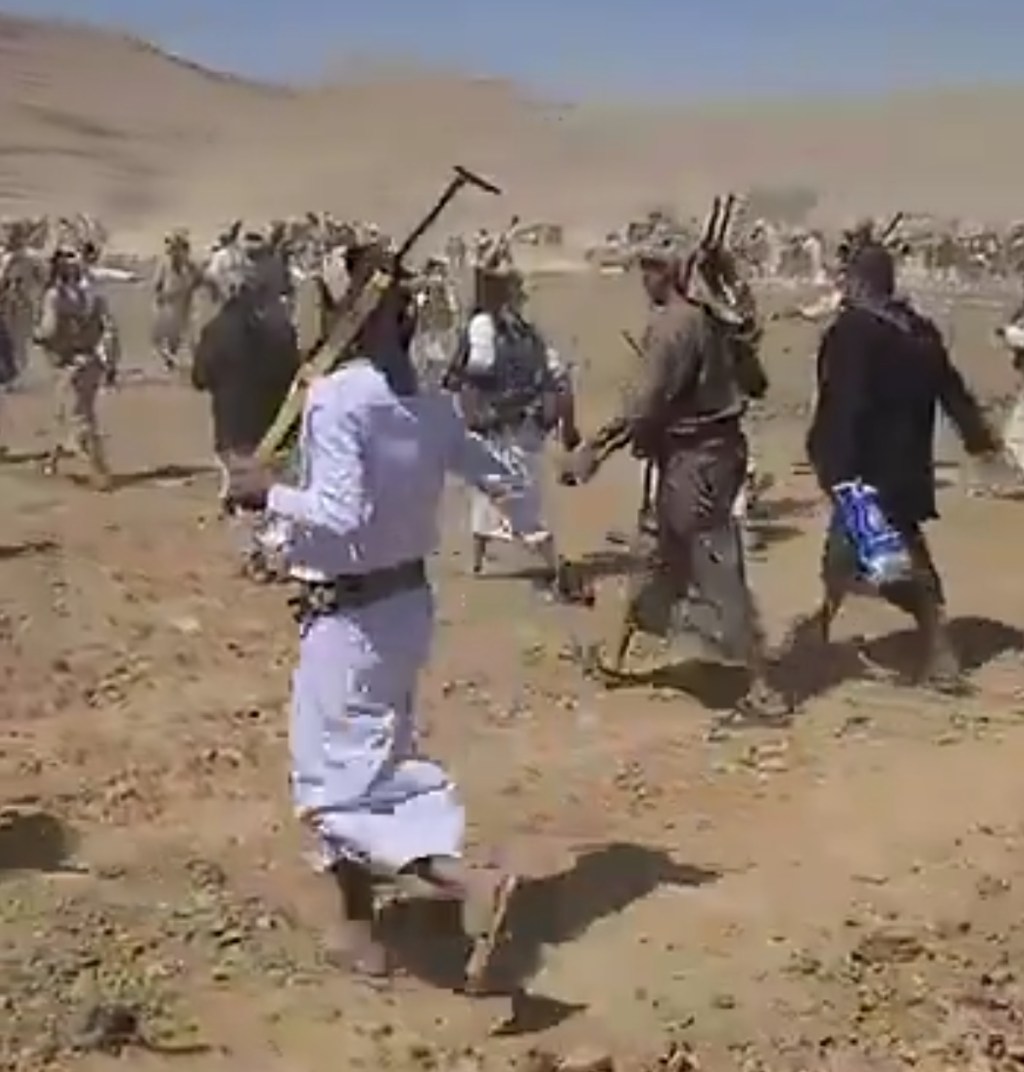
Public reassurances in Dublin contrast with CENTCOM coordination in Riyadh and the shutdown of Saudi Arabia’s East-West pipeline after the fall of Mokha
General Article | September 2026
President Donald Trump, speaking to reporters in Dublin on 12 September after meeting Irish leaders, stated that the Houthis had contacted the United States and did not wish to fight American forces. “The Houthis called us and they don’t want to fight with us,” he said. “They don’t want us to go after them.” The remark came as the Iran-aligned movement consolidated control over Yemen’s western Red Sea coast following the capture of the port city of Mokha and subsequent advances that brought its forces within effective range of the Bab el-Mandeb Strait. Trump added that the group was allowing most shipping to pass and that difficulties with one particular country would be resolved, while expressing confidence that regional affairs would “work out fine and dandy.”
( Donald Trump: “The Houthis called us. They don’t want to fight with us. They let us know they don’t want to fight with us. They don’t want us to go after them. They would much prefer not having us involved, and they are letting most ships go through. There’s just one country they’re not too happy with.”)
The public reassurance contrasted with concurrent military and diplomatic activity. Admiral Brad Cooper, commander of United States Central Command, was in Saudi Arabia for coordination meetings as the Houthi offensive unfolded. Multiple reports indicated that roughly one hundred to two hundred American military personnel were already present in the kingdom, providing intelligence and targeting support to Saudi forces through a newly established joint arrangement. According to two United States officials cited by Axios, Saudi Crown Prince Mohammed bin Salman telephoned Trump twice on the day Mokha fell, urging American strikes against the Houthis. Trump declined the request. Washington signalled instead that it would continue non-kinetic assistance. The divergence between the president’s public language of non-confrontation and the discreet expansion of American advisory presence illustrated the constrained options available once the coastal defensive line collapsed.
The strategic consequences of the Houthi advance are material. Mokha had been the last major western port held by Saudi-backed Yemeni forces and a logistics node for operations along the littoral. Its loss, followed by further gains including reported control of positions near the Bab el-Mandeb, places the movement in a position to threaten or regulate traffic through a waterway that carries a substantial share of global trade. Saudi Arabia, already compelled by restrictions in the Strait of Hormuz to route a larger volume of oil exports via the Red Sea, faces an additional vulnerability. That vulnerability was underscored when the kingdom’s East-West crude pipeline was struck by drones, prompting a precautionary shutdown. Saudi authorities stated that the drones originated in Iraq; Baghdad later dismissed a local military commander after confirming the launches came from its territory. The pipeline had been moving several million barrels per day, representing a critical alternative export route. Its temporary closure, combined with Houthi pressure on Red Sea shipping, has contributed to elevated global oil prices and record United States diesel costs.
Claims concerning the composition and motivation of the forces opposing the Houthis require careful handling. Saudi Arabia and its partners have long relied on a mix of Yemeni units and foreign fighters, including substantial numbers recruited from Sudan. Accounts from regional analysts and former diplomats have described difficulties with the repatriation of casualties and the erosion of morale among some of these contingents. Reports that certain foreign fighters have defected or ceased effective resistance remain difficult to quantify independently, yet the rapidity of the coastal collapse is consistent with a failure of cohesion among the proxy formations assembled to hold the western front. Ansarallah, by contrast, draws support from the densely populated highland areas that have formed its core base for two decades and has repeatedly demonstrated the capacity to absorb air campaigns while retaining operational initiative on the ground.
The broader context includes the limits of previous American military pressure. The 2025 campaign known as Operation Rough Rider, conducted with the USS Harry S. Truman carrier strike group, inflicted damage but did not neutralise Houthi capabilities and ended with the carrier’s departure from the Red Sea. Subsequent assessments acknowledged losses of aircraft and the strain of sustained high-tempo operations against an adversary employing missiles, drones and dispersed tactics. That experience forms part of the calculation behind the present reluctance to re-enter direct large-scale strikes. Closing or further restricting the Bab el-Mandeb in addition to existing constraints on the Strait of Hormuz would compound the pressure already visible in energy markets.
While Trump held his press conference, several thousand people demonstrated in Dublin against his visit, one of the larger public protests directed at an American president in Ireland in recent years. The demonstrations reflected a range of grievances, including opposition to United States policy in the Middle East. At the same time, leaders gathered at a BRICS meeting reiterated objections to unilateral sanctions, a position consistent with longer-standing critiques of American economic statecraft. These parallel developments do not dictate outcomes in the Red Sea, yet they form part of the wider environment in which Washington and Riyadh must weigh the costs of further escalation against the costs of accepting a new territorial and maritime reality along Yemen’s western coast.
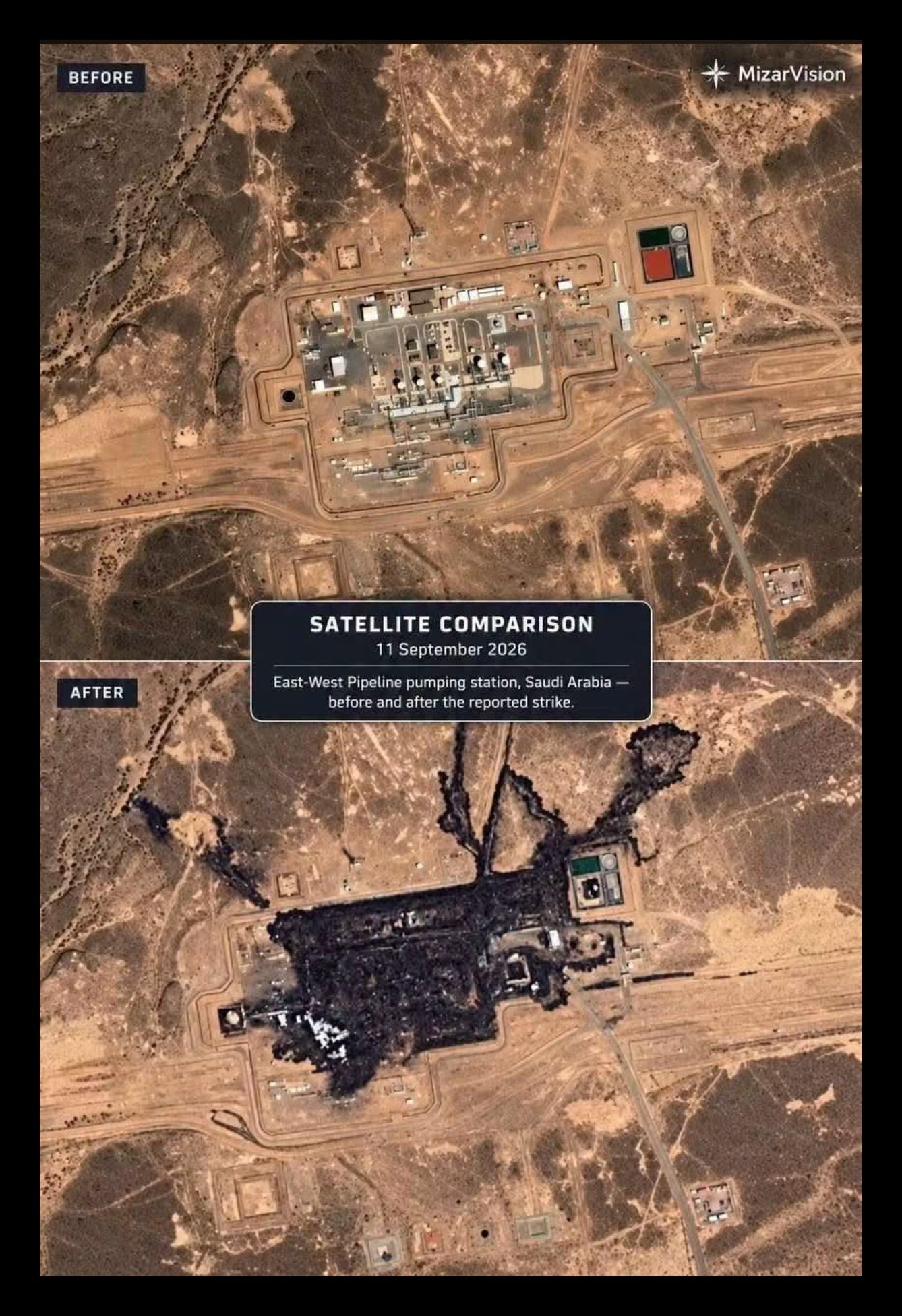
(Mazah satellite image of damage to one of Saudi Arabia East-West pipeline pumping stations )
The immediate question is whether Saudi Arabia will attempt to reverse the Houthi gains with its own air power and remaining ground assets, accept a new status quo that leaves the approaches to the Bab el-Mandeb under Ansarallah influence, or secure more extensive American involvement than has so far been authorised. Trump’s public statements suggest a preference for avoiding direct confrontation. The presence of the CENTCOM commander and American advisers in the kingdom indicates that contingency planning continues. The shutdown of the East-West pipeline and the movement’s explicit warnings against intervention supply the material incentives that will shape the next decisions in Riyadh and Washington.
Authored By: Global GeoPolitics
Thank you for visiting. This is a reader-supported publication. If you believe journalism should serve the public, not the powerful, and you’re in a position to help, becoming a PAID SUBSCRIBER truly makes a difference. Alternatively you can support by way of a cup of coffee:
https://buymeacoffee.com/ggtv |
https://ko-fi.com/globalgeopolitics |
Bitcoin: 3NiK8BoRZnkwJSHZSekuXKFizGPopkE7ns
References
AFP (2026) ‘Trump says Yemen’s Houthis have asked US not to intervene’, 12 September.
Al-Monitor (2026) ‘CENTCOM chief in Saudi Arabia as Yemen’s Houthis seize Bab al-Mandeb’, 11 September.
Axios (2026) Reporting on Saudi Crown Prince Mohammed bin Salman’s calls to President Trump requesting strikes, 11 September.
Bloomberg (2026) ‘Trump says Iran-backed Houthis asked US not to target them’, 12 September.
CNN (2026) ‘EXCLUSIVE: US expands intel, targeting support for Saudi campaign against Iranian ally’, 10 September; and subsequent reporting on the fall of Mocha.
Reuters (2026) ‘Saudis shut down oil pipeline as Houthis tighten grip on Red Sea shipping’, 12 September.
The Irish Times (2026) Reporting on protests during President Trump’s visit to Dublin, 12 September.
The New York Post and associated wire reporting (2026) on Trump’s Dublin remarks and regional developments.


Leave a comment