
Why the Trump-Israel coalition’s wider objectives are easier to frustrate than Iran’s narrower aim of survival and retaliation revealing the asymmetry between preserving a state and trying to break one
Iran holds the cards because it is fighting defensively on its own terrain, with time, geography and economic leverage on its side; Trump blundered by walking into a war where the attacker has to achieve everything while the defender only has to survive and make the costs. War in this case turns on first principles, so Trump can shout all he wants until his face turns blue, but the three old rules still matter. Defence is stronger than offence, high ground beats low ground, and infantry remains the arm that decides political outcomes on land. Clausewitz wrote that “defense is a stronger form of fighting than attack”, and the force of that claim lies in the fact that the defender fights for preservation, uses time to accumulate advantage, and operates on ground already known, prepared and supplied (Clausewitz). Sun Tzu added the second rule with equal simplicity when he wrote that an army prefers high ground and avoids the low (Sun Tzu, Chinese Text Project). Clausewitz then supplied the third when he argued that, however great the power of artillery, the actual core of battle remains personal combat and the occupation of ground by men who can hold it (Clausewitz). Those propositions belong to classical strategy, yet they remain useful because industrial and digital war have altered the means of destruction more than the political problem of conquest (RAND).
Applied to a war between Iran and a US-Israeli coalition, those rules weigh heavily in Iran’s favour. Iran is the defending power on its own territory. A defender preserves, absorbs, disperses and waits; an attacker must compel, break, occupy and then govern. Those are not equivalent tasks. A modern air and missile campaign can damage infrastructure, kill commanders and disrupt networks, but it cannot by itself secure regime change, partition a state, seize strategic sites over time, or impose a durable political settlement. The record of recent American wars supports that distinction (RAND). The United States has repeatedly shown the ability to topple governments rapidly, yet it has shown far less ability to consolidate military success into lasting political control. That gap between battlefield reach and political endurance is the space in which the defender gains strength (IISS).
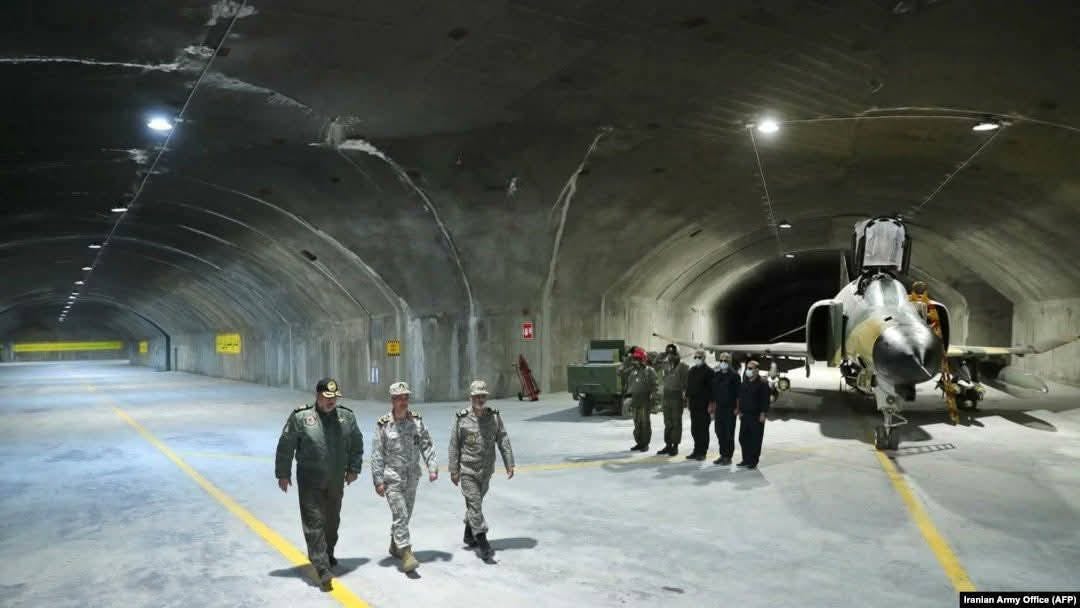
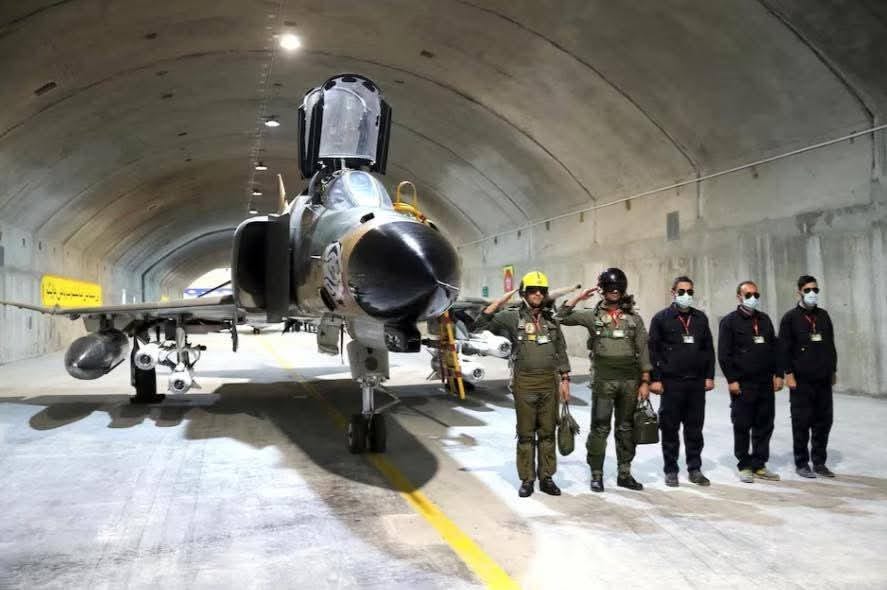
Iran’s geography deepens that structural edge. The Iranian plateau is not open desert in the Iraqi sense and not coastal plain in the Gulf sense. Much of the country is protected by mountain belts, difficult approaches, compartmented interior lines and large depth. Geography does not make a state invulnerable, but it raises the cost of forcing decisive results. A power projecting force from carriers, Gulf bases and long supply lines must operate across maritime chokepoints, exposed air corridors and fixed installations. Iran, by contrast, can disperse launchers, harden facilities, move along interior routes and exploit concealment offered by terrain. Even in a period when satellites, aircraft and electronic surveillance promise broad visibility, mountains, tunnels, hardened positions and dispersed drone operations still blunt the fantasy of perfect transparency (CSIS Missile Threat) (CSIS Space Threat Assessment).
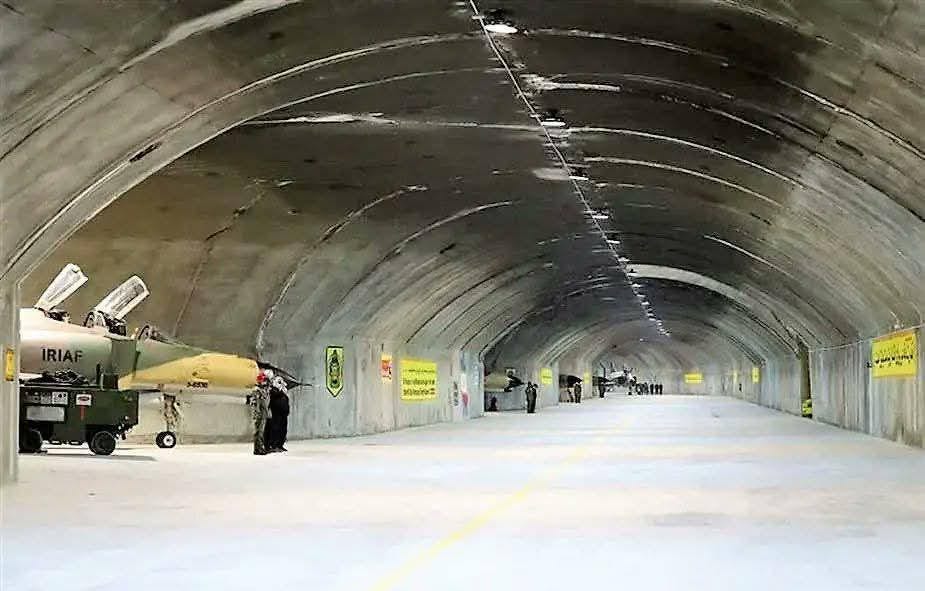
That leads to the second proposition. High ground in modern war includes literal elevation, radar position, line of sight, hardened underground depth and control of the firing geometry around bases and sea lanes. The Gulf monarchies host key American infrastructure, yet many of those facilities sit on flat and exposed littoral ground near sea level. They are close to the battlespace and therefore vulnerable to missiles, drones and sabotage (IISS). Iran’s missile and drone strategy does not require permanent air superiority in the American sense. It requires the sustained ability to threaten runways, fuel farms, depots, ports, command nodes and shipping routes often enough to raise the cost of normal operations (CSIS Missile Threat). The U.S. Energy Information Administration continues to describe the Strait of Hormuz as one of the world’s most important energy chokepoints, with about 20 per cent of global petroleum liquids consumption moving through it in the first half of 2025, while separate EIA reporting states that about one-fifth of global LNG trade also flows through the strait and that alternatives remain limited (EIA chokepoints) (EIA LNG) (EIA June 2025). Any enduring disruption there therefore creates a direct bridge between tactical harassment and world economic stress (EIA).
The military significance of that chokepoint is plain. Closure need not mean a neat legal declaration and a line drawn across the water. A strait can be functionally degraded through insurance withdrawal, mine threat, drone attack, speedboat harassment, missile risk, escort bottlenecks and commercial fear. Recent EIA reporting has already warned that when tankers avoid Hormuz because of attack risk and insurance problems, production can be shut in and prices can continue rising even without a total physical blockage (EIA global oil). In such a setting, Iran does not need to sink every tanker or destroy every escort. It needs only to create sufficient uncertainty and attrition that transit becomes slow, expensive and politically hard to sustain (EIA).
The third principle, infantry over everything else, matters most for the political aims usually discussed in Washington and Tel Aviv. Air power can punish. Missiles can signal. Special operations can raid. Naval power can blockade and escort. None of those instruments substitutes for large, resilient ground formations when the goal is regime change or territorial control. Open-source defence assessments continue to treat Iran as a major regional military power with substantial active and reserve manpower, deep missile inventories, and a force structure built around territorial defence, irregular response and strategic depth (IISS Military Balance) (CSIS Missile Threat). Any serious invasion of Iran would require a level of mobilisation, shipping, basing and follow-on occupation far beyond a limited strike campaign. The practical question is not whether American forces can defeat Iranian units in particular tactical engagements; the practical question is whether Washington can generate and sustain the manpower, political consent and logistics needed to occupy and reorder a state of Iran’s size, population and terrain. The answer remains doubtful (RAND).
That doubt is strengthened by the change in warfare seen in Ukraine and the Red Sea. Cheap drones, loitering munitions and massed one-way attack systems have compressed the cost curve. Defenders and regional powers can now impose repeated pressure on expensive platforms, fixed bases and critical energy nodes without matching the United States aircraft for aircraft or ship for ship (CSIS). The old hierarchy in which the richer power bought decisive safety through exquisite systems has weakened. A missile interceptor can cost vastly more than the drone it destroys. RAND notes estimated costs of roughly $20,000 to $30,000 for a Shahed-131 or Shahed-136 against interceptors priced from about $450,000 to $3.7 million, creating a marked cost-exchange advantage for the attacker (RAND). Oil sites, depots and desalination plants sit within reach of comparatively inexpensive attack systems. A force whose operational method depends on large, exposed, high-value platforms therefore faces a new and persistent problem of exchange ratio (RAND commentary) (CSIS).
From that follows the first broad conclusion: Iran holds the strategic advantage not because it can conquer the United States or defeat every Israeli formation in open battle, but because it can deny the coalition its stated political objects at a cost that rises over time for the attacker and falls relative to means for the defender. The defender needs to avoid decisive defeat, preserve enough strike capacity, maintain domestic cohesion and keep the region economically nervous. The attacker must restore deterrence, protect Gulf infrastructure, secure sea lanes, prevent regional escalation, defend Israel, and do all this while avoiding a ruinous ground commitment. Those burdens are not evenly distributed. They sit far more heavily on Washington and Tel Aviv than on Tehran (IISS) (RAND).
Trump’s position within that structure is now shaped by four overlapping crises. The first is Hormuz. A White House that assumed the strait would remain functionally open misread Iran’s incentive and capability to threaten it. The issue is not abstract. EIA figures show that about one-fifth of global petroleum liquids consumption and about one-fifth of LNG trade move through that corridor, with limited bypass capacity outside the Gulf (EIA chokepoints) (EIA LNG). When transit becomes uncertain, oil and gas prices rise, shipping insurance hardens, and importers in Asia and Europe face immediate pressure. Energy shocks then pass into transport, fertiliser, food processing and household costs. A closure or even prolonged semi-closure therefore carries recessionary force well beyond the battlefield. That is not a secondary effect of the war. It is one of the war’s central strategic theatres (EIA global oil).
Reopening such a route under fire is harder than peacetime commentary often admits. Escort operations consume ships, aircraft, surveillance assets, minesweepers, logistics and political patience. The narrowness of the lanes, the density of traffic and the availability of low-cost harassment systems all favour the side that needs only to menace transit rather than guarantee it. Tanker escorts can mitigate but not erase threat. Mine warfare, dispersed drones and fast attack craft are not single targets that disappear after a few dramatic strikes. They are methods of persistent denial. Once commercial confidence breaks, naval presence alone may not restore ordinary flow at ordinary cost (EIA).
The second crisis is the rise of drone war against energy infrastructure. Traditional American planning placed enormous weight on suppressing enemy aircraft, missile batteries and command systems. That remains necessary, yet it is insufficient against a mature drone campaign. Cheap drones can be launched in numbers, from dispersed sites, against refineries, pumping stations, storage depots, radar nodes and export terminals. The financial asymmetry is severe. A defender of infrastructure may burn through expensive interceptors while the attacker spends comparatively little and retains the initiative of timing and target selection (RAND). A region already dependent on exposed oil and gas installations is therefore vulnerable to repeated degradation. Trump’s apparent failure here lies not merely in underestimating Iranian retaliation but in underestimating the transformed economics of war itself (RAND commentary).
The third crisis is regional spillover. Once a war with Iran escapes the neat boundaries of a bilateral exchange, the map widens quickly. Israeli pressure on Lebanon risks another large northern front. Iraqi militias can target American facilities. Syrian instability can return with force if strikes pull actors back into open contest. The Houthis retain the ability to pressure Red Sea shipping and expand the maritime problem beyond Hormuz (IISS). Each theatre has its own local logic, yet all of them interact with the same strategic question: how many fronts can Washington and Tel Aviv manage at once without diluting air defence, ammunition stocks, political support and command attention. A war begun in the hope of restoring deterrence can thus produce the opposite result, exposing the limits of control across several connected arenas (CSIS).
The fourth crisis is the absence of a credible endgame. A war plan requires a path from violence to a political condition better than the one that existed before the first strike. Several endings are often implied, yet none appears sound. A ground invasion of Iran would require a scale of mobilisation and occupation for which there is little evidence of military or public preparation. A limited strike campaign followed by a declaration of success would leave Iran’s state intact, its security elite hardened, and its regional networks more convinced than before that endurance works. A prolonged coercive campaign without occupation would expose Gulf energy infrastructure, shipping and allied governments to continuous pressure. A negotiated halt after visible escalation would advertise that coercion failed to compel surrender and that Iran could impose costs enough to force talks. Each path carries losses, and none resembles decisive control (IISS) (IISS). History repeatedly punishes states that mistake destructive power for political control; as Clausewitz warned, “the defensive form of war is in itself stronger than the offensive,” and wars launched in defiance of that reality have often ended by strengthening the very adversary they were meant to break.
Game theory clarifies why the imbalance favours Iran. In repeated games, the side with lower time preference and lower marginal cost of continuation often prevails against a stronger opponent seeking quick compliance. Iran’s objective set is comparatively limited and realistic: survive, retaliate, preserve the regime, keep enough strike capacity to threaten escalation, and convince the adversary that time works against him. The US–Israeli coalition carries a broader and less stable set of aims: stop Iranian retaliation, secure allies, preserve shipping, avoid oil shock, maintain domestic support, prevent regional widening, and if possible weaken or transform the Iranian state. A player carrying many simultaneous objectives is easier to frustrate than a player carrying a few core ones. In deterrence terms, Tehran need only demonstrate that the price of the coalition’s preferred outcomes exceeds the coalition’s willingness to pay. Washington must demonstrate the opposite across several theatres at once (RAND).
Classical strategy reaches the same judgment by a different route. Clausewitz warned that the stronger form of war is defence because preservation is easier than conquest (Clausewitz). Sun Tzu warned against attacking an enemy on high ground or pressing one that is cornered (Sun Tzu, Chinese Text Project). Both insights point to the same problem now visible: an external coalition has chosen to coerce a large, prepared and highly motivated regional power on terrain favourable to the defender, while exposing allied infrastructure and world energy markets to reprisal. That does not guarantee Iranian tactical success everywhere, nor does it make Iran immune from grave damage. It does show why the strategic balance is not measured by sortie counts or televised strike footage. The proper measure is whether the attacker can reach political decision before mounting costs, widening fronts and economic shock force retrenchment (IISS) (EIA).
Measured that way, Trump appears to have lost control of the war. Control in war means more than ordering strikes. It means shaping the ladder of escalation, protecting one’s own vulnerabilities better than the enemy can expose them, and retaining a credible route to termination. The current picture suggests the reverse. Hormuz risk threatens the world economy. Drone warfare threatens Gulf energy assets and expensive air-defence inventories. Regional partners and proxies are opening additional fronts. Washington lacks a convincing end-state that avoids either humiliation or catastrophe. A presidency that expected a punitive demonstration has instead encountered a contest of endurance, geography and cost-imposition in which Iran’s defensive advantages are strongest (CSIS) (IISS).
That judgment does not rest on romance, ideology or theatre. It rests on the old grammar of war. The defender preserves. Mountains and depth matter. Ground cannot be politically mastered from the air. Cheap systems can bleed expensive ones. Chokepoints transmit military pressure into world economic pain. A coalition that begins such a war without a workable theory of occupation, escalation control and termination enters on adverse terms. Iran, by contrast, needs only to survive, retaliate selectively and keep time on its side. In strategic analysis that is often enough (RAND).
Thucydides recorded the oldest warning that still governs failed wars of choice: “for war is a matter not so much of arms as of money”, and great powers that mistake impulse for strategy usually discover that cost, time and political exhaustion decide what battlefield violence alone cannot (Thucydides, History of the Peloponnesian War, Book 1).
Authored By: Global GeoPolitics
Thank you for visiting. If you believe journalism should serve the public, not the powerful, and you’re in a position to help, becoming a PAID SUBSCRIBER truly makes a difference. Alternatively you can support by way of a cup of coffee:
https://buymeacoffee.com/ggtv |
https://ko-fi.com/globalgeopolitics |
Bitcoin: 3NiK8BoRZnkwJSHZSekuXKFizGPopkE7ns
References
- Carl von Clausewitz, On War, Book VI, Chapter 1, on the superiority of the defensive form of war. Project Gutenberg
- Hew Strachan, “The Case for Clausewitz: Reading On War Today,” in Clausewitz in the Twenty-First Century, on the continuing relevance of Clausewitz’s theory of defence and political war. Cambridge University Press
- Sun Tzu, The Art of War, on tactical preference for high ground and avoidance of disadvantageous terrain. MIT Internet Classics Archive
- U.S. Energy Information Administration, “Amid regional conflict, the Strait of Hormuz remains critical oil chokepoint,” documenting that around 20% of global petroleum liquids consumption moved through Hormuz in 2024. EIA
- U.S. Energy Information Administration, “About one-fifth of global liquefied natural gas trade flows through the Strait of Hormuz,” on LNG dependence and limited alternatives. EIA
- U.S. Energy Information Administration, World Oil Transit Chokepoints, on the strategic centrality of Hormuz in global oil transport. EIA
- Congressional Research Service, Iran: Background and U.S. Policy, for Iran’s military structure, missile and drone capabilities, and broader regional posture. CRS mirror PDF
- Congressional Research Service, Iran: Background and U.S. Policy (December 30, 2024 version), for continuity on Iran’s strategic relationships, internal stability, and regional methods of power projection. CRS mirror PDF
- International Review of the Red Cross, discussion of Clausewitz’s concept that defence is the stronger form of war and may involve holding on until circumstances improve. Cambridge / ICRC
- U.S. Energy Information Administration, “The Strait of Hormuz is the world’s most important oil transit chokepoint,” for background on long-standing energy dependence on the corridor. EIA


Leave a comment