
Israeli Escalation, Iranian Leverage, and the Breakdown of United States Control Amid Infrastructure Warfare, Energy Market and Global Economic Shock
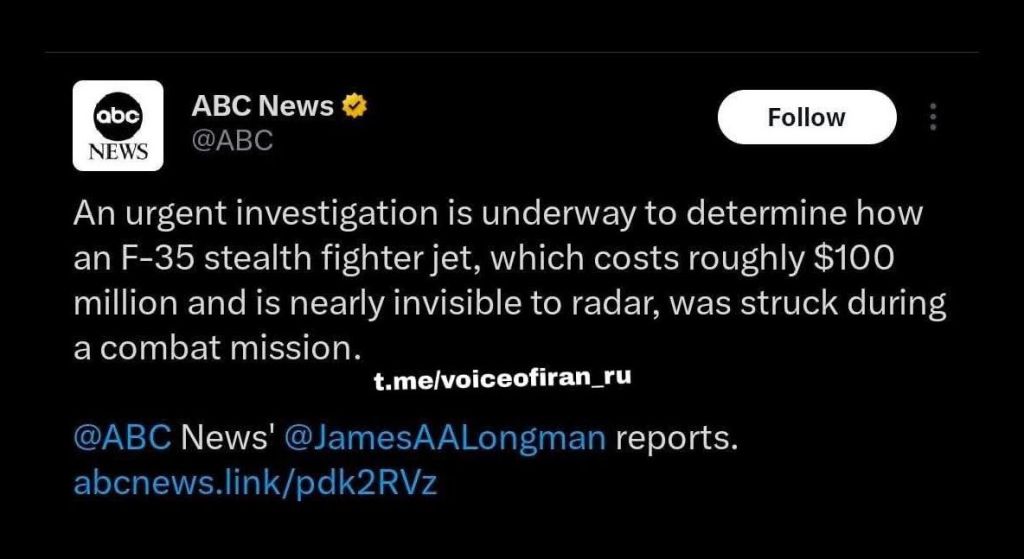
Military escalation between the United States, Israel and Iran over the past twenty-four hours has altered both the operational direction and the political control of the conflict, with immediate consequences for energy markets, alliance management and regional stability. Strikes on the shared Qatari-Iranian South Pars gas field and facilities in Asaluyeh marked a deliberate expansion of the target set into critical energy infrastructure, followed by Iranian retaliation against oil and gas installations in Qatar and other Gulf locations including a successful hit on a US F-35 fighter jet, producing a rapid increase in global oil prices consistent with the centrality of Gulf supply to international markets, which account for roughly one third of seaborne crude exports (International Energy Agency data).
The decision to strike the Pars field carried direct diplomatic implications. The field constitutes a joint resource between Iran and Qatar, making any attack on its infrastructure an act affecting both states simultaneously. Coordination with the United States in such an operation stands in contradiction to prior assurances given to Qatar in 2025 that Israeli strikes would not extend to its territory. Public reaction from the American executive, including direct criticism of Israeli actions and instructions to avoid further strikes on energy infrastructure, reflects the tension between alliance commitments and the economic risks associated with disruption to hydrocarbon supply chains.
The sequence of events indicates that the United States entered the conflict with a limited operational design that failed to produce its intended political outcome. The attempted decapitation strategy directed at Iran’s leadership did not produce state collapse or capitulation. The absence of a secondary strategy created a vacuum in operational control, which has been filled by Israeli decision-making aligned with a longer war horizon. That approach seeks degradation of Iran’s industrial base without primary regard for the wider economic or political costs borne by the United States, including energy price volatility and domestic political pressure.
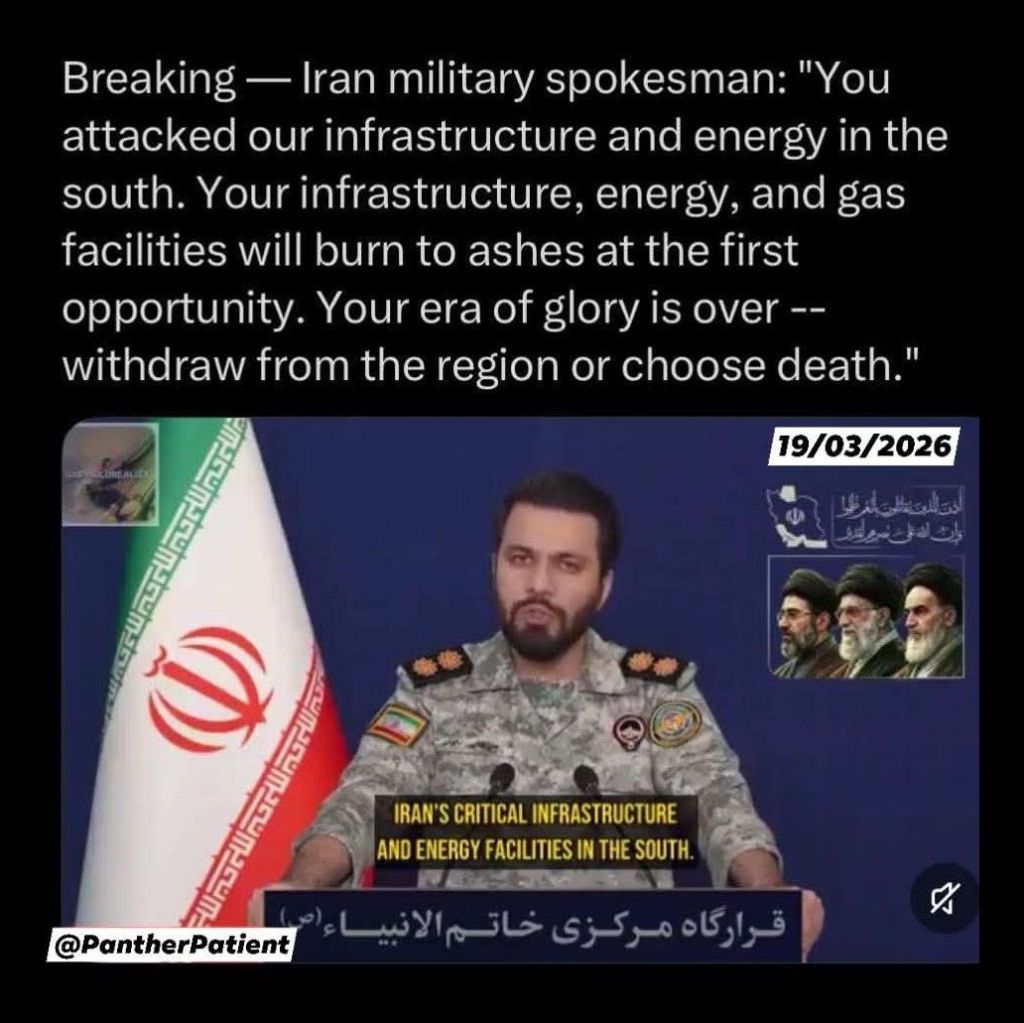
The targeting of energy infrastructure marks a structural shift in the character of the war. “This isn’t just hitting military targets anymore. This is crippling civilian infrastructure that keeps the lights on for millions of Iranians.” The extension of strikes to civilian energy systems places electricity generation, industrial output and urban life directly within the battlespace. The same logic applies to retaliatory actions across Gulf energy nodes, where production, processing and export facilities serve both civilian and global economic functions. The conflict therefore operates across military and civilian domains simultaneously, with immediate transmission into international markets.
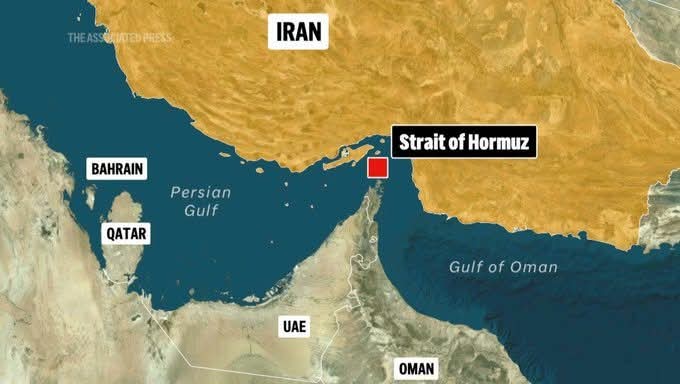
Energy chokepoints now define the strategic balance. The Strait of Hormuz functions as the primary conduit for approximately twenty million barrels of oil per day, alongside a substantial share of global liquefied natural gas flows. Control or disruption of this passage confers leverage over global supply chains that extend beyond regional actors. “We built western civilization on the assumption that we could always get abundant energy out of the Persian Gulf.” That assumption now faces direct challenge under conditions where transit security cannot be guaranteed. The effect extends beyond fuel pricing into manufacturing, transport, agriculture and financial stability, given the dependence of modern economies on continuous energy supply.
Market responses reflect this structural exposure. Oil price movements towards three-digit levels indicate tightening supply expectations, while forward projections anticipate further increases under sustained disruption scenarios. “Populations everywhere in the world are affected… Everyone’s affected by this.” The transmission mechanism operates through cost structures across sectors, raising input costs, compressing margins and feeding into inflationary pressures. Historical analysis of energy shocks, including the 1973 oil crisis, demonstrates the capacity for such disruptions to trigger recessionary cycles and political instability across importing economies.
Supply chain effects introduce temporal lag into the crisis. Disruptions to shipping, refining and distribution networks produce delayed shortages across downstream sectors. “There’s a multi-month delay in seeing worst case scenarios from supply chain disruptions.” That delay obscures the scale of the disruption during initial phases, while compounding effects accumulate across inventories and production cycles. Fertiliser exports, refined fuel distribution and industrial inputs depend on stable energy flows, linking the Strait of Hormuz to global food systems and manufacturing output.
The broader geopolitical implication concerns systemic stability. “It’s a collapse of the global order. Like, that’s what this is.” The post–Second World War framework relied on secure maritime routes, open trade and predictable energy supply underwritten by United States naval capacity. Current developments indicate erosion of that framework, as contested access to critical chokepoints undermines the assumption of uninterrupted flow. The refusal of allied states to commit naval assets for securing transit routes reflects limits in coalition cohesion and willingness to bear escalation risks.
Statements attributed to policymakers confirm that economic constraints are already shaping strategic adjustment. Consideration of allowing Iranian oil cargoes to circulate despite existing sanctions reflects the pressure exerted by rising prices on both domestic constituencies and global markets. Such a step would represent partial sanctions relief in functional terms, even if not formally declared, and aligns with historical precedents where enforcement has been relaxed during supply shocks, including the 2012–2015 sanctions regime adjustments (US Treasury and Congressional Research Service reports).
Iran’s response demonstrates a calibrated attempt to convert military resilience into political leverage. Demands for sanctions relief, closure of United States military bases in the region and financial reparations form part of a broader negotiating position aimed at altering the structural conditions that preceded the conflict. Iranian strategic assessments have long treated sanctions relief as a prerequisite for stability, a position supported by economic analyses showing sustained contraction under sanctions pressure since 2018 (World Bank and IMF reporting). The present conflict has created conditions in which disruption to maritime routes and energy infrastructure provides Tehran with bargaining power not available in previous negotiation cycles.
Timing emerges as a central variable in the conflict’s political trajectory. United States domestic political dynamics impose constraints on the duration and framing of the war. Electoral considerations require the presentation of a decisive outcome within a limited timeframe. Negotiations with Iran, particularly those involving sanctions frameworks and regional security arrangements, require extended technical and diplomatic processes. Estimates of seven to ten days for preliminary agreement formation contrast with previous rapid ceasefire arrangements, creating a structural mismatch between political necessity and diplomatic reality.
The interaction between these timelines introduces the risk of miscalculation. Iranian leadership may delay engagement in negotiations to maximise leverage, while United States leadership may require accelerated outcomes to maintain domestic support. Failure to align these timelines could extend the conflict beyond the point at which a politically acceptable settlement remains achievable. Israeli policy preferences further complicate this dynamic, as continued operations, including targeted assassinations, would undermine negotiation pathways and sustain escalation.
Operational developments within Israel indicate that the conflict has entered a phase targeting critical domestic infrastructure. The destruction of a major railway station in Tel Aviv and associated transport nodes has immediate economic and military implications. Israel’s transport network relies heavily on a limited number of north-south rail corridors connecting key urban centres such as Tel Aviv and Haifa. Disruption to this system affects daily commuting patterns for hundreds of thousands of workers, reducing labour mobility and economic output in a highly centralised urban economy.
Military logistics are directly affected by such disruptions. The Israel Defense Forces utilise rail infrastructure for movement of personnel, including reservists who constitute a significant portion of operational manpower. Damage to rail networks and adjacent road infrastructure constrains rapid deployment capabilities, complicating mobilisation during periods of heightened alert. The concentration of transport infrastructure in a narrow geographic corridor increases vulnerability to targeted strikes, a factor previously identified in strategic assessments of Israeli infrastructure resilience (RAND Corporation and Israeli National Security studies).
The description “Iran has started the strategic destruction of Israel,” attributed to Alon Mizrahi, reflects an analytical interpretation of these developments as a shift from symbolic retaliation to systematic targeting of economic and logistical systems. Such an approach aligns with doctrines of infrastructure denial aimed at degrading state capacity without reliance on territorial occupation. Historical parallels can be drawn with strategic bombing campaigns and infrastructure targeting in conflicts such as the Iran-Iraq War and NATO operations in the Balkans, where disruption of transport and energy systems produced cumulative economic and military effects.
Energy markets remain the central transmission mechanism through which the conflict affects the global economy. Attacks on Gulf infrastructure introduce risk premiums into oil pricing, with even limited disruptions capable of producing significant price volatility due to the inelastic nature of short-term supply and demand. The consideration of releasing Iranian oil announced by Scott Bissent, into the market, represents an attempt to offset this volatility, though such measures carry geopolitical implications by effectively acknowledging Iran’s role as a necessary supplier within the global energy system.
The convergence of infrastructure warfare and energy disruption introduces systemic risk extending beyond the immediate theatre. “Western civilization will now begin to go into a cascading collapse: industrial collapse, financial collapse, possibly government collapse, unless the strait is opened.” The sequence described follows a logic in which energy shortages constrain industrial output, reduce fiscal capacity and strain governance structures. The interdependence of global supply chains amplifies these effects across regions, linking localised disruption to global economic outcomes.
Strategic control of the conflict has therefore shifted from a unified alliance framework to a fragmented structure in which United States objectives, Israeli operational preferences and Iranian strategic calculations diverge significantly. The absence of a coherent alignment among these actors increases the likelihood of continued escalation, as each pursues outcomes defined by distinct political and security priorities. The interaction between energy systems, transport infrastructure and military operations defines the present phase of the conflict, with consequences that extend into the structure of the global economy and the stability of the existing international order.
Authored By: Global GeoPolitics
Thank you for visiting. If you believe journalism should serve the public, not the powerful, and you’re in a position to help, becoming a PAID SUBSCRIBER truly makes a difference. Alternatively you can support by way of a cup of coffee:
https://buymeacoffee.com/ggtv |
https://ko-fi.com/globalgeopolitics |
Bitcoin: 3NiK8BoRZnkwJSHZSekuXKFizGPopkE7ns
References
International Energy Agency. (2024). World Energy Outlook 2024. Paris: International Energy Agency.
United States Department of the Treasury. (2023). Iran Sanctions Program and Enforcement Guidance. Washington, D.C.: United States Department of the Treasury.
Congressional Research Service. (2023). Iran Sanctions: Overview and Policy Developments. Washington, D.C.: Congressional Research Service.
International Monetary Fund. (2023). Islamic Republic of Iran: 2023 Article IV Consultation. Washington, D.C.: International Monetary Fund.
World Bank. (2024). Iran Economic Monitor: Trade and Macroeconomic Developments. Washington, D.C.: World Bank.
RAND Corporation. (2022). Infrastructure Resilience and Military Logistics in High-Intensity Conflict. Santa Monica, CA: RAND Corporation.
Institute for National Security Studies. (2023). Strategic Assessment: Israeli Infrastructure and National Security. Tel Aviv: Institute for National Security Studies.
Alon Mizrahi (2026). Public commentary via a Substack note on strategic targeting and infrastructure degradation in Israel.


Leave a comment