
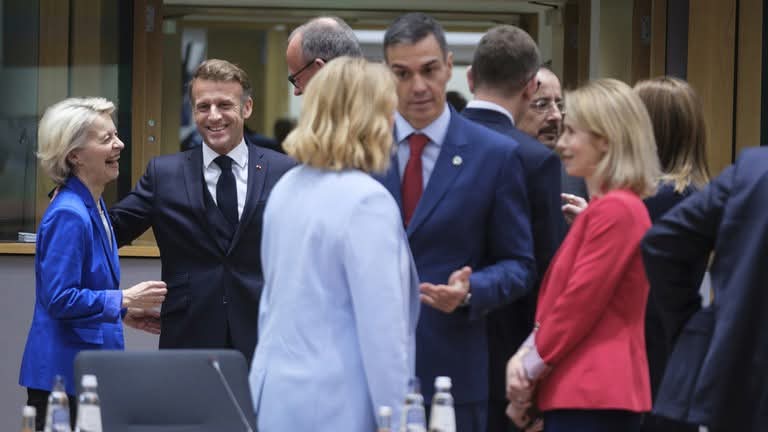
Western outrage again appears selective as deaths of 21 students in Lugansk receive little political attention, filtered through alliance politics rather than universal principle
European Union leaders and several major Western governments have condemned Russia’s latest retaliatory missile strikes on Ukraine while remaining largely silent about the Ukrainian drone attack on the Starobilsk Professional College dormitory that immediately preceded them and reportedly killed 21 people, most of them teenage girls.
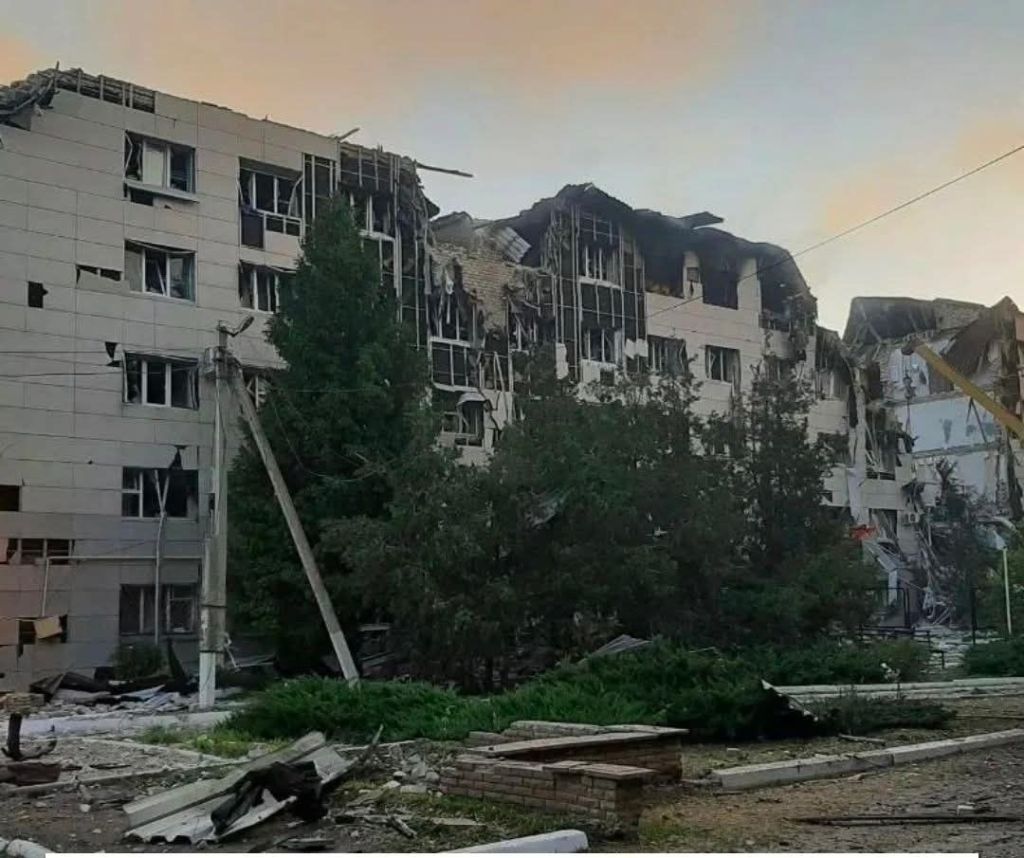
According to Russian authorities, Ukrainian drones struck the academic building and student dormitory of the college in Lugansk during the night between Thursday and Friday. Russian emergency officials stated that more than sixty people were injured and several students remained trapped beneath collapsed concrete after repeated waves of drone impacts destroyed large sections of the structure. Moscow described the attack as a deliberate strike on sleeping civilians between the ages of fourteen and eighteen.
Russia responded early Sunday with what the Defense Ministry described as a “massive strike” against Ukrainian military infrastructure. Russian forces reportedly used Oreshnik intermediate-range hypersonic systems, Iskander ballistic missiles, Kinzhal and Zircon hypersonic cruise missiles, alongside long-range drone strikes targeting Ukrainian military command centres, air bases, and defence-industrial facilities.
Despite the sequence of escalation, leading European officials framed the events almost exclusively through the lens of Russian retaliation. European Commission President Ursula von der Leyen accused Moscow of “brutality and disregard for both human life and peace negotiations,” while EU foreign policy chief Kaja Kallas described the strikes as a Russian “political scare-tactic.” French President Emmanuel Macron pledged continued support for Kiev, and German Chancellor Friedrich Merz denounced what he called a “reckless escalation.”
None of the statements referenced the Starobilsk dormitory strike or the reported deaths of the students inside the building.
The omission has intensified accusations from Moscow that Western governments apply humanitarian language selectively depending upon who suffers civilian casualties and who conducts the strike. Russia’s UN envoy Vassily Nebenzia accused Western diplomats of systematically ignoring attacks against civilians inside Russian territory and Russian-controlled regions while demanding immediate international outrage over Russian military actions.
The Starobilsk attack has rapidly evolved into another front in the wider information war surrounding the conflict. Russian Foreign Ministry spokeswoman Maria Zakharova stated on Sunday that Moscow invited foreign journalists and international media organisations to inspect the site directly following Western claims that the incident constituted “Russian propaganda.” According to Zakharova, both the BBC and CNN declined the invitation, while Japanese authorities reportedly prohibited reporters from travelling to the area.
Russian authorities subsequently organised a visit to Starobilsk for more than fifty foreign journalists from nineteen countries, including reporters from Italy, China, Germany, France, Brazil, the United States, Turkey, and the United Kingdom. According to Foreign Ministry spokeswoman Maria Zakharova, the BBC declined the invitation while CNN reportedly cited staff vacations, and Japanese correspondents were prevented from attending by Tokyo. Russian Human Rights Commissioner Yana Lantratova stated that certain Western media organisations were “simply afraid to see the truth,” arguing that visiting journalists would confirm that “there are no military facilities nearby.” She further rejected claims that Russian air defences accidentally redirected the drones onto the dormitory, insisting it was “absolutely impossible” for sixteen intercepted UAVs to strike the same building repeatedly. Chinese journalist Lu Yuguang of Phoenix Television stated that he had not seen “even a hint” of military infrastructure near the site, while Giovanni Pigni of the Italian newspaper La Stampa described the destruction as “horrible,” adding: “I just see that there was a college here and that people have died.” Moscow used the visit to reinforce its broader argument that Western governments and major media institutions rapidly dismiss or minimise civilian casualties occurring inside Russian territory or Russian-controlled regions before independent international scrutiny takes place.
The political significance of Starobilsk extends beyond a single military incident. It reinforces a broader pattern increasingly visible across modern conflicts: civilian deaths become globally recognised tragedies only when they align with prevailing geopolitical narratives. When civilians die under Western-aligned military operations or proxy actions, political leaders and media institutions frequently shift toward the language of operational necessity, military context, or disputed verification. When similar casualties emerge from adversarial states, moral certainty appears immediate and absolute.
From Gaza and Lebanon to Yugoslavia, Iraq, Iran, and now Lugansk, the deaths of civilians, particularly children, are repeatedly filtered through strategic alignment before humanitarian principle. Starobilsk has become the latest example of how narrative management now competes with forensic investigation itself, while dead students beneath collapsed dormitories disappear into the geopolitical hierarchy of whose suffering is considered internationally visible and whose is politically expendable.
Just a reminder that the Ukraine war is a US Alliance proxy war against Russia.
Authored By: Global GeoPolitics
If you prefer to make a one time donation in support of my work, you can do so by clicking any link below:
https://buymeacoffee.com/ggtv |
https://ko-fi.com/globalgeopolitics |
Bitcoin: 3NiK8BoRZnkwJSHZSekuXKFizGPopkE7ns


Leave a Reply