
Mackinder’s Revenge: How a Century-Old Theory of Global Domination Is Driving Three Wars Simultaneously
An Editorial Analysis | May 2026
The wars currently consuming Ukraine, Iran, and the broader Middle East are treated in Western media as three distinct conflicts with separate causes, separate actors, and separate diplomatic remedies. That framing is analytically convenient but strategically false. The proxy war in Ukraine, the forty-day air campaign against Iran and its continuing aftermath, and the sustained economic pressure campaign against China share a single organising objective that has been stated openly in official American strategic documents for more than three decades: the preservation of United States global primacy against any challenger capable of ending it. Understanding the current state of the world requires reading the conflicts not as separate crises but as coordinated theatres of a single strategic campaign whose primary target is China, and whose intermediate objectives are the elimination or subordination of every major power that could serve as a counterweight to American dominance.
The claim that American foreign policy is directed toward primacy rather than toward any stable balance of power is not a fringe interpretation. Every National Security Strategy produced by the United States government since the dissolution of the Soviet Union has articulated some version of this objective. The 1992 Defence Planning Guidance drafted under Paul Wolfowitz for the first Bush administration stated explicitly that the primary objective of American strategy was to prevent any hostile power from dominating a region whose resources would, under consolidated control, be sufficient to generate global power. The document advised that the US must prevent the re-emergence of a new rival. The 2002 National Security Strategy under George W. Bush restated the primacy objective in terms of maintaining military strength beyond challenge. The 2017 National Security Strategy under Trump identified China and Russia as revisionist powers seeking to challenge American power, influence, and interests. The 2022 National Security Strategy under Biden described China as the only competitor with both the intent and the means to reshape the international order. The consistency across administrations of both parties over thirty years is not coincidental. Primacy is the settled objective of the American foreign policy establishment regardless of which party administers it.
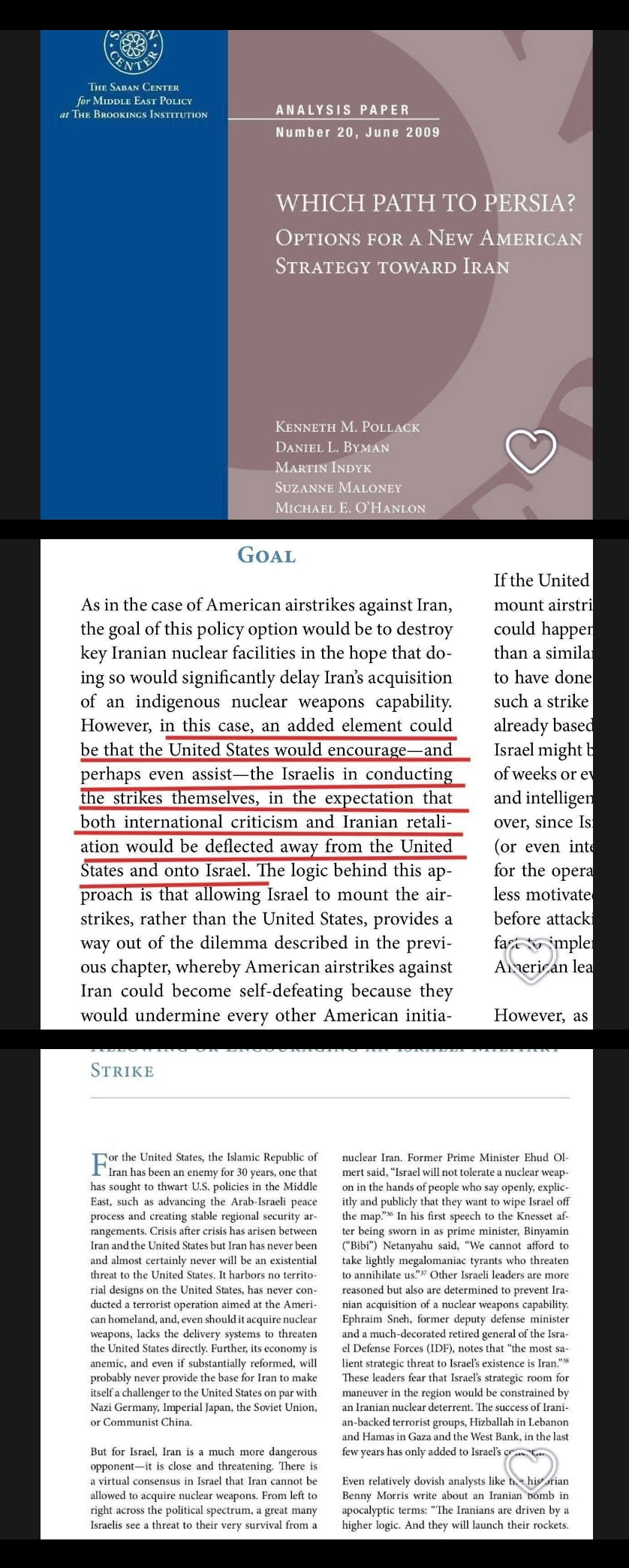
The analytical problem with primacy as a strategic objective is that it is structurally incompatible with the balance-of-power framing that American officials and their allied governments routinely employ in public. A state genuinely seeking a stable balance of power would have an interest in maintaining independent regional powers capable of constraining rising challengers. Under that logic, an independent and economically functional Russia would provide a natural check on Chinese expansion, and an independent Iran would maintain regional equilibrium in the Persian Gulf. The American record since the end of the Cold War runs precisely contrary to this. Hillary Clinton’s December 2012 remarks about the formation of the Eurasian Economic Union, in which she described the organisation as a re-Sovietisation of the region and declared American intent to slow down or prevent it, illuminate the contradiction with particular clarity. If the genuine concern was Chinese power, preserving a Russian-led trade bloc as a counterweight would be a rational response. The fact that the US opposed Russian regional economic integration while simultaneously warning about Chinese expansion confirms that the objective was never balance but subordination: Russia neutralised or converted into a client, China isolated, the Eurasian landmass fragmented into dependent states unable to cohere around any alternative to American direction.
This is the intellectual framework that Halford Mackinder articulated in his 1904 paper ‘The Geographical Pivot of History’ and developed in subsequent work: control of the Eurasian heartland, running from the Atlantic to the Pacific, is the key to global dominance, and the maritime power at the periphery must prevent the continental powers from consolidating. American strategic documents have referenced Mackinder’s heartland thesis with remarkable consistency. The Rand Corporation’s widely cited 2019 paper *Extending Russia: Competing from Advantageous Ground* recommended exploiting economic vulnerabilities, geopolitical anxieties, and military tensions to stretch Russia across multiple theatres, reducing its capacity to project power. The proxy war in Ukraine, the sanctions campaign against Russian energy exports, the NATO expansion programme that proceeded from the first Clinton administration onward, each fits within this doctrinal framework. Zbigniew Brzezinski, writing in *The Grand Chessboard* in 1997, was explicit that any Eurasian power challenging American leadership should understand that its maritime corridors would be placed at risk. He identified the Baltic Sea as the most important such corridor for Russia. The destruction of the Nord Stream pipelines in September 2022, attributed by investigative journalist Seymour Hersh to a covert American operation planned over months with Norwegian assistance, represents the operational activation of a doctrine that Brzezinski had articulated a quarter century earlier.
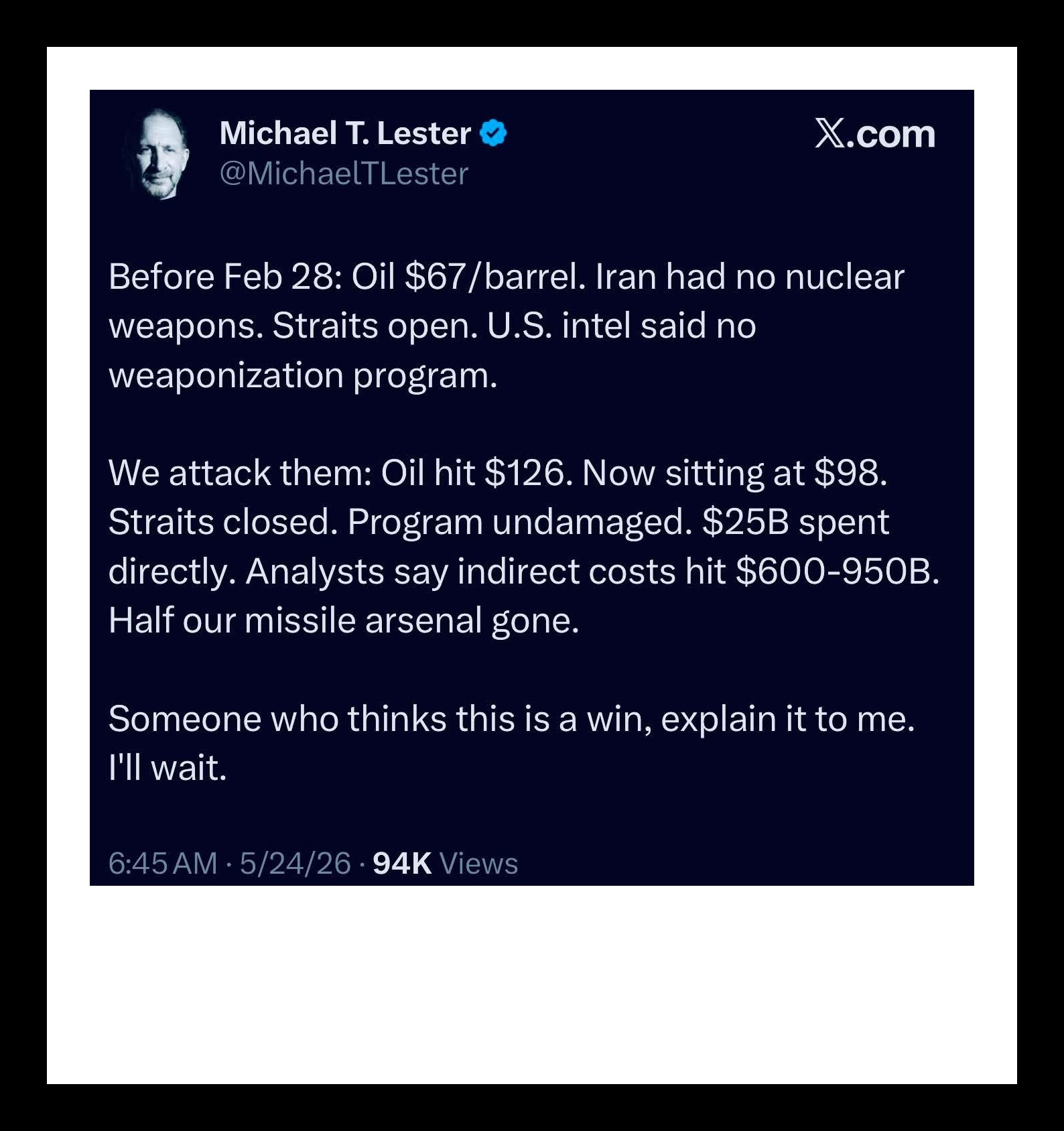
The energy dependency mechanism deserves particular examination because it is currently being replicated in Asia with the same structural logic that was applied to Europe. Before February 2022, European trade with Russia was substantial, profitable, and growing. The Nord Stream 1 and Nord Stream 2 pipelines delivered Russian gas to Germany at prices that made European manufacturing internationally competitive. The European business community, German industrialists in particular, were among the most vocal opponents of the sanctions escalation that American officials were pushing from at least 2014 onward. The destruction of the pipelines in 2022, followed by the sanctions regime that effectively blocked alternative land routes, severed European industry from Russian energy supply. European governments subsequently signed long-term LNG import contracts with American suppliers at prices substantially above what Russian pipeline gas had cost. The financial transfer from European energy consumers to American LNG exporters runs to hundreds of billions of dollars annually. American LNG export revenues grew from approximately 7.4 billion dollars in 2021 to over 35 billion in 2023, according to the US Energy Information Administration, a trajectory sustained by European forced dependency. The same mechanism is now being constructed in Asia. American LNG export projects directed at Asian markets, which made no commercial sense against the backdrop of cheap regional energy supplies, were being developed and marketed years before the current Middle East crisis, with promotional materials that referred to contested waterways as part of the commercial rationale. The US-Iran war of 2026 and the consequent closure of the Strait of Hormuz removed the cheap regional alternative, and Asian governments are now signing the contracts that those projects were always intended to generate.
The Strait of Hormuz interdiction is the current operational expression of the maritime chokepoint strategy that American military planners have been developing for decades. The US Marine Corps underwent a comprehensive structural reorganisation under Commandant General David Berger’s Force Design 2030 initiative, begun in 2019, which deliberately shifted the Corps away from large-scale amphibious assault operations and toward distributed maritime operations and anti-shipping capability. The Corps shed its tanks entirely, reduced its infantry battalions, and concentrated investment in long-range precision fires, unmanned systems, and littoral combat units specifically designed to deny an adversary the use of maritime corridors. Berger’s 2019 guidance document stated explicitly that the Corps was being redesigned to contest maritime environments and deny adversaries freedom of movement in the littoral. The operational theatre this was designed for is the South China Sea and the Western Pacific, the approach routes to China’s coast and the chokepoints through which Chinese energy imports and export shipping must pass. The Middle East deployment of this capability against Iranian-affiliated shipping represents both its initial live employment and a demonstration of what it is intended to do at scale in the Pacific theatre.
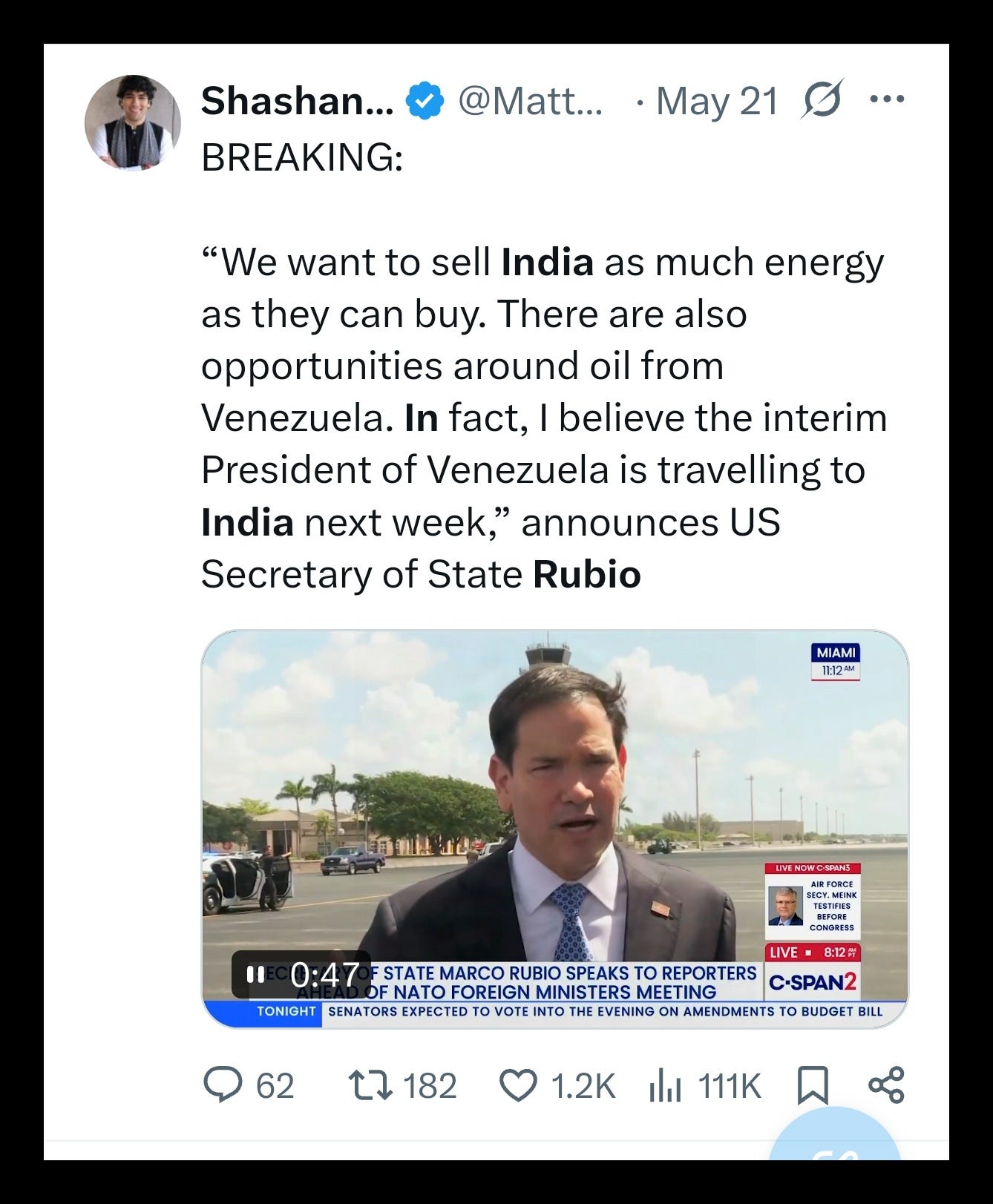
The Belt and Road Initiative is China’s infrastructural response to this maritime vulnerability. Since its formal launch in 2013, China has invested in excess of one trillion dollars in overland rail corridors, pipeline networks, and port infrastructure across Central Asia, South Asia, Southeast Asia, the Middle East, and Africa. The China-Pakistan Economic Corridor, linking Kashgar in Xinjiang to the port of Gwadar on the Arabian Sea, provides a potential route for energy imports that bypasses the Strait of Malacca entirely. The pipeline networks connecting Russia’s energy fields to Chinese refineries, including the Power of Siberia 1, which began operating in 2019, and the Power of Siberia 2, whose contract is in advanced stages of negotiation, bypass every maritime chokepoint the United States controls. The American response to BRI infrastructure has been to fund and support armed groups operating against it. In Myanmar, the United States and its allied intelligence services have maintained relationships with ethnic armed organisations operating along the corridor routes connecting Yunnan province to the Bay of Bengal. In Pakistan, the China-Pakistan Economic Corridor has been subjected to persistent attacks by Baloch separatist groups whose external support has been documented by Pakistani intelligence assessments and acknowledged, with varying degrees of explicitness, in American policy discussions. In Afghanistan, the Islamic State Khorasan Province has conducted sustained operations against Chinese investment projects and the Afghan government’s attempts to develop mineral export capacity, functioning as a disruptive presence in the corridor zone regardless of the nominal distance between Washington and its activities.
Taiwan occupies a particular position in this strategic architecture that is fundamentally misrepresented in almost all Western media coverage. The island is described in American political discourse as a democracy whose independence must be defended. The legal and geopolitical reality is considerably more complicated. The United States formally recognised the People’s Republic of China as the sole legitimate government of China under the 1979 Taiwan Relations Act framework and the three Joint Communiqués. The One China policy, to which the United States is formally committed, acknowledges the Chinese position that Taiwan is part of China. American troops are currently stationed on Taiwan, which constitutes a military presence on territory that the United States itself officially regards as Chinese. The Taiwan Relations Act simultaneously authorised arms sales to Taiwan and established ambiguous defensive commitments, creating a legal structure that says one thing to Beijing and does another in practice, a double commitment that Charles Freeman, who served as US Assistant Secretary of Defence for International Security Affairs, has described as a deliberate act of strategic ambiguity designed to preserve American leverage rather than to resolve the Taiwan question. Taiwan’s economic dependence on the mainland is not a contested point: mainland China is Taiwan’s largest trading partner by a wide margin, accounting for over forty percent of Taiwan’s exports. The island’s political independence from American direction, by contrast, is essentially theoretical, it is armed, diplomatically supported, and militarily garrisoned by the United States in a manner that positions it as an unsinkable aircraft carrier and forward intelligence base directed at the Chinese mainland, fulfilling precisely the function that Hong Kong served for the British Empire before China’s recovery of the territory in 1997.
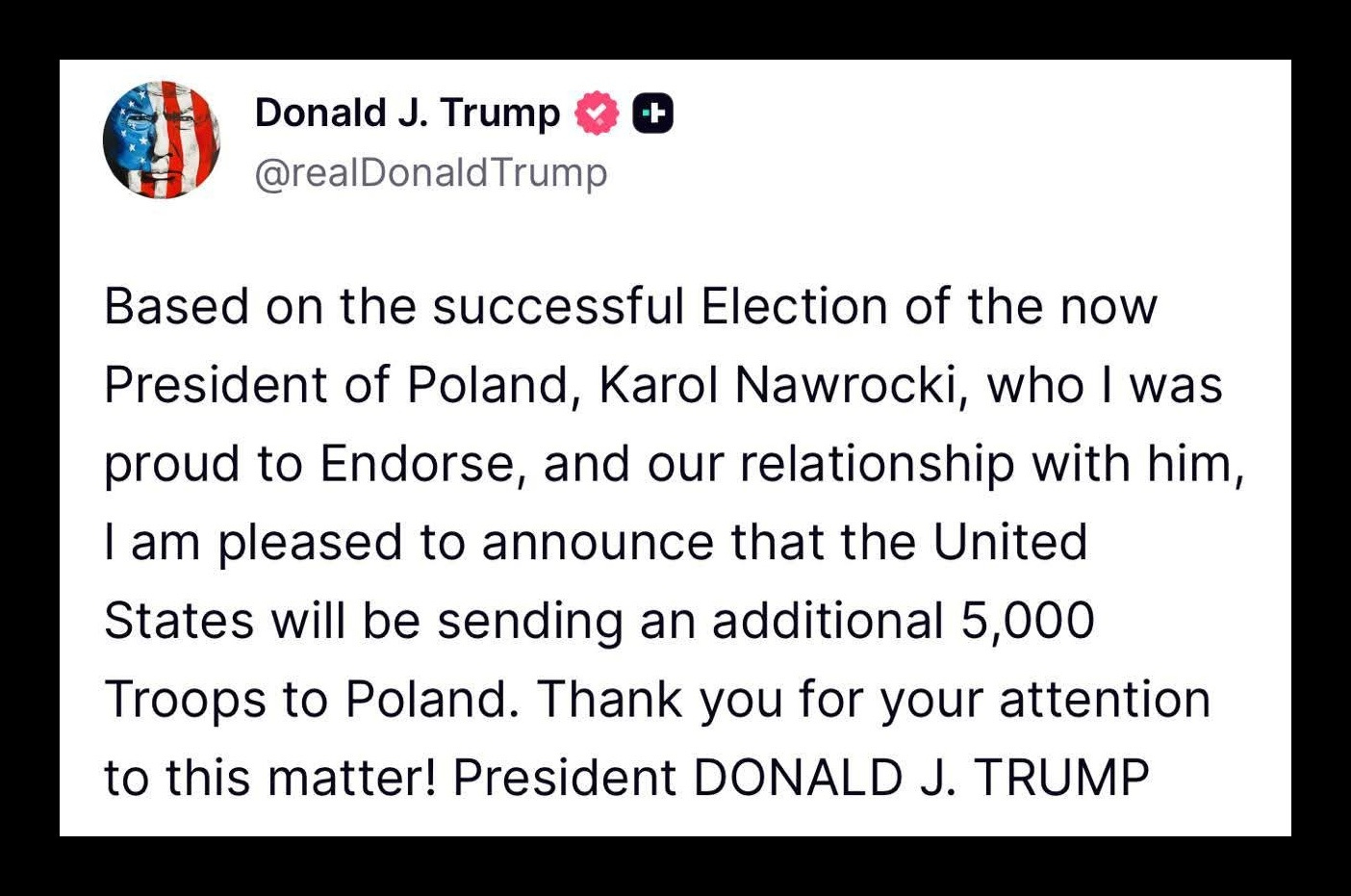
The 1994 OSCE Charter of Paris framework and the subsequent NATO-Russia Founding Act of 1997 constitute the clearest documented example of American diplomatic deception as strategic instrument. The OSCE framework established the principle of indivisible security, that no state should enhance its own security at the expense of another’s, and was presented to Russia as the architecture within which European security after the Cold War would be organised. The Clinton administration was simultaneously conducting internal discussions about NATO expansion to former Warsaw Pact states. Charles Freeman has confirmed publicly that the Clinton administration told Russia one thing about NATO and former Warsaw Pact governments another. The 1997 Founding Act formally committed NATO to refrain from permanently stationing substantial combat forces in new member states, a commitment subsequently hollowed out through the permanent rotational deployment mechanism that provides the same military presence under a different legal label. The clearest evidence of how these commitments were regarded within the American government comes from Clinton himself, quoted in Juan Zarate’s account of the period, where he questioned how binding the Founding Act commitments were and concluded, in effect, that they were binding only until he decided otherwise. NATO has since expanded to include fourteen states that were either members of the Warsaw Pact or former Soviet republics. The OSCE indivisible security framework has received no serious institutional attention from Western governments since approximately 1997. The pattern, make a commitment to manage the adversary’s concerns, pursue the real objective in parallel, discard the commitment when it becomes inconvenient, has been replicated in the Trump administration’s approach to both China and Iran.
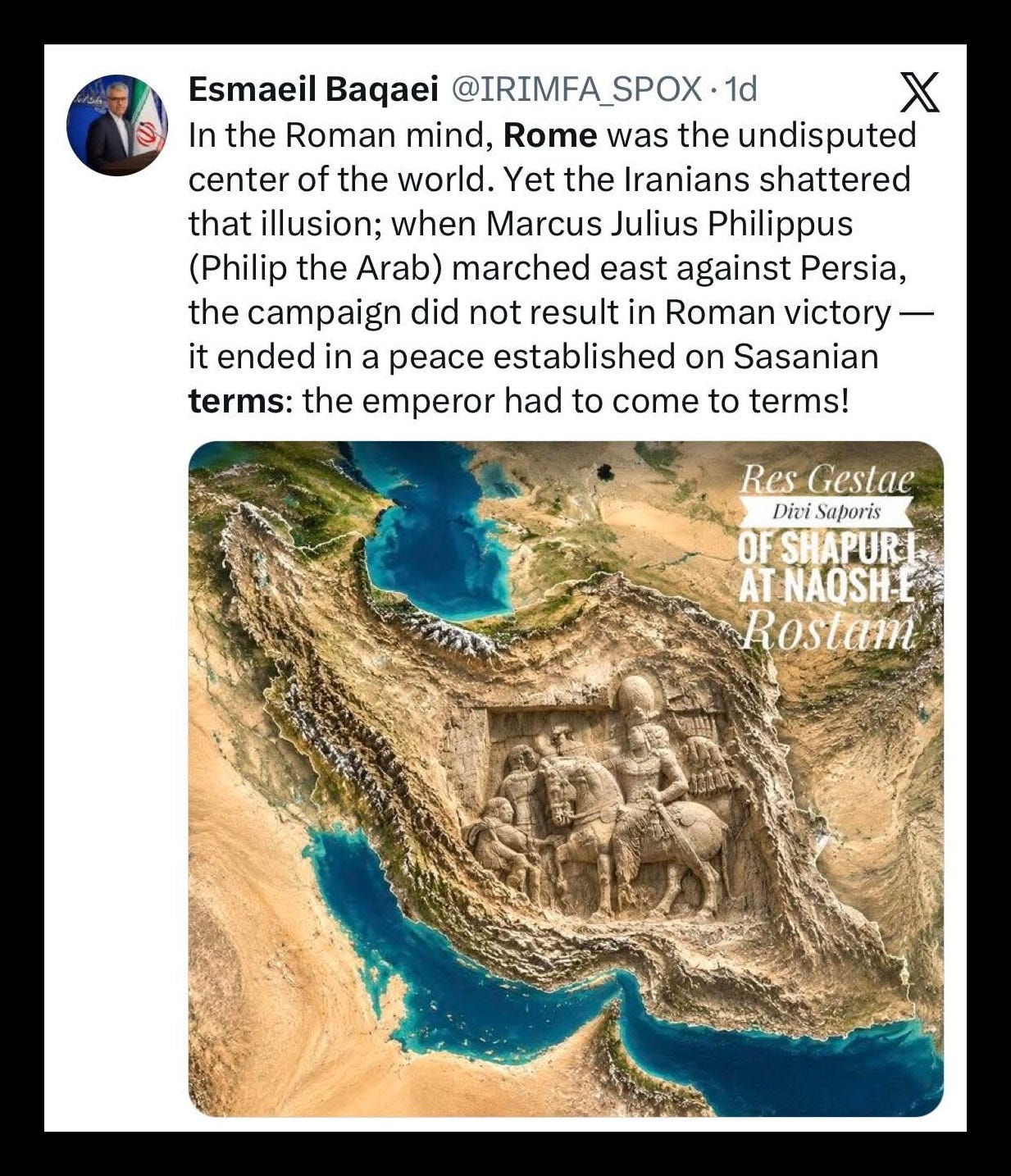
The question of whether this strategy is working is analytically separate from the question of whether it is being pursued. The evidence that it is not working accumulates with each passing month. Russia has not been economically collapsed. The rouble stabilised following the initial sanctions shock, the Russian economy grew by 3.6 percent in 2023 and 4.1 percent in 2024 according to IMF figures, and Russian oil revenues have been sustained by Asian purchases that Western sanctions have proven unable to interdict at scale. Iran survived the forty-day air campaign and used the ceasefire period to rearm, rebuild, and demonstrate stealth-aircraft tracking capabilities that have prompted serious internal reassessment within the US Air Force of the risk calculus for resumed operations. China’s economy, measured in purchasing power parity terms, surpassed the American economy in 2017 according to World Bank data and has continued to widen the gap. The Sino-Russian joint statement of 20 May 2026 formalised a bilateral relationship encompassing military cooperation, jointly administered lunar infrastructure, interoperable satellite navigation systems, Arctic shipping routes beyond Western naval reach, and national currency settlement mechanisms that bypass the dollar-denominated financial system. The American response to Chinese economic ascent has been to impose tariffs, restrict technology exports, and fund armed proxies, measures that have slowed certain aspects of Chinese development in semiconductor fabrication but have not reversed the underlying trajectory.
The structural vulnerabilities of the American position are not minor. The United States national debt stood at approximately 36.2 trillion dollars as of early 2026, according to the US Treasury’s own public accounts, with annual interest payments exceeding one trillion dollars for the first time in history. The bond market stress events of 2025, in which Treasury yields spiked to levels not seen since the early 1980s before Federal Reserve intervention stabilised conditions, demonstrated that the financial architecture underpinning American power projection is not infinitely elastic. Dollar dominance in global trade has declined measurably as bilateral currency agreements between Russia, China, India, and multiple other states reduce the proportion of international transactions settled in dollars. The IMF’s Currency Composition of Official Foreign Exchange Reserves data shows the dollar’s share falling from 71 percent in 2000 to 58 percent by 2024, a structural erosion that accelerates as sanctions-driven dollar weaponisation incentivises reserve diversification. A strategy of controlled global disruption, pursued by a state carrying 36 trillion dollars in debt, relying on dollar primacy for the financial leverage that makes its military deployments sustainable, and confronting an adversary that produces more steel, cement, ships, electric vehicles, and renewable energy infrastructure than the rest of the world combined, is a strategy with a compressing time horizon. The terminal question is not whether American primacy will end but how much damage the institutions and individuals committed to preserving it will cause before the trajectory becomes impossible to reverse.
Authored By: Global GeoPolitics
If you prefer to make a one time donation in support of my work, you can do so by clicking any link below:
https://buymeacoffee.com/ggtv |
https://ko-fi.com/globalgeopolitics |
Bitcoin: 3NiK8BoRZnkwJSHZSekuXKFizGPopkE7ns
References
Berger, D.H. (2019) Commandant’s Planning Guidance: 38th Commandant of the Marine Corps. Washington DC: Headquarters Marine Corps, July. Available at: hqmc.marines.mil/Portals/142/Docs/CMC%20Planning%20Guidance_2019.pdf
Berger, D.H. (2020) Force Design 2030. Washington DC: Headquarters Marine Corps, March. Available at: hqmc.marines.mil/Portals/142/Docs/CMC38%20Force%20Design%202030%20Report%20Phase%20I%20and%20II.pdf
Brzezinski, Z. (1997) The Grand Chessboard: American Primacy and Its Geostrategic Imperatives. New York: Basic Books.
Bush, G.W. (2002) The National Security Strategy of the United States of America. Washington DC: White House, September. Available at: nssarchive.us/national-security-strategy-2002
Bush, G.W. (2006) The National Security Strategy of the United States of America. Washington DC: White House, March. Available at: nssarchive.us/national-security-strategy-2006
Biden, J. (2022) National Security Strategy. Washington DC: White House, October. Available at: whitehouse.gov/wp-content/uploads/2022/10/Biden-Harris-Administrations-National-Security-Strategy-10.2022.pdf
Centre for Strategic and International Studies (2022) ‘Marine Corps Force Design 2030: Examining the Capabilities and Critiques’, 9 May. Available at: csis.org/analysis/marine-corps-force-design-2030-examining-capabilities-and-critiques
Clinton, H.R. (2012) Remarks on the Trans-Pacific Partnership and Eurasian integration, December 2012. Referenced in: Foreign Policy, 6 December 2012. Available at: foreignpolicy.com/2012/12/06/clinton-calls-eurasian-integration-efforts-a-move-to-re-sovietize
Dobbins, J., Cohen, R.S., Chandler, N., Frederick, B., Geist, E., DeLuca, P., Morgan, F.E., Shatz, H.J. and Williams, B. (2019) Extending Russia: Competing from Advantageous Ground. Santa Monica, CA: RAND Corporation, RR-3063-A. Available at: rand.org/pubs/research_reports/RR3063.html
Freeman, C. (2014) Remarks on NATO expansion and American assurances to Russia. Referenced in: The American Conservative, ‘Who Promised What to Whom on NATO Expansion?’, 26 November 2014. Available at: theamericanconservative.com/nato-expansion
Hersh, S. (2023) ‘How America Took Out the Nord Stream Pipeline’, Substack, 8 February. Available at: seymourhersh.substack.com/p/how-america-took-out-the-nord-stream
International Monetary Fund (2024) World Economic Outlook Database, October 2024. Washington DC: IMF. Available at: imf.org/en/Publications/WEO
International Monetary Fund (2025) Currency Composition of Official Foreign Exchange Reserves (COFER). Washington DC: IMF, Q4 2024. Available at: imf.org/external/np/sta/cofer/eng/index.htm
Khalilzad, Z., Libby, I.L. and Wolfowitz, P. (1992) Defense Planning Guidance FY 1994–1999, draft, 18 February. Washington DC: US Department of Defense [leaked to the New York Times, 8 March 1992]. Declassified documents available at: nsarchive.gwu.edu/document/18215-national-security-archive-doc-07-fy-94-98
Mackinder, H.J. (1904) ‘The Geographical Pivot of History’, Geographical Journal, 23(4), pp. 421–437.
Mackinder, H.J. (1919) Democratic Ideals and Reality: A Study in the Politics of Reconstruction. London: Constable.
Mann, J. (2004) Rise of the Vulcans: The History of Bush’s War Cabinet. New York: Viking.
Ministry of Foreign Affairs of the People’s Republic of China (2026) China-Russia Joint Statement on the Further Deepening of the Comprehensive Strategic Partnership of Coordination for the New Era, 20 May. Available at: fmprc.gov.cn/mfa_eng
National Security Archive, George Washington University (2019) ‘The Making of the Cheney Regional Defense Strategy, 1991–1992’, 26 February. Available at: nsarchive.gwu.edu/nukevault/ebb245
National Security Archive, George Washington University (2017) ‘NATO Expansion: What Gorbachev Heard’, 12 December. Available at: nsarchive.gwu.edu/briefing-book/russia-programs/2017-12-12/nato-expansion-what-gorbachev-heard
Obama, B. (2015) National Security Strategy. Washington DC: White House, February. Available at: nssarchive.us/national-security-strategy-2015
Trump, D. (2017) National Security Strategy of the United States of America. Washington DC: White House, December. Available at: whitehouse.gov/wp-content/uploads/2017/12/NSS-Final-12-18-2017-0905.pdf
Tyler, P.E. (1992) ‘U.S. Strategy Plan Calls for Insuring No Rivals Develop’, New York Times, 8 March. Available at: nytimes.com/1992/03/08/world/us-strategy-plan-calls-for-insuring-no-rivals-develop.html
United States Energy Information Administration (2024) U.S. LNG Exports by Destination, annual 2021–2024. Washington DC: EIA. Available at: eia.gov/naturalgas/crudeoilreserves
United States Marine Corps (2022) Force Design 2030 Annual Update, May. Washington DC: Headquarters Marine Corps. Available at: marines.mil/Portals/1/Docs/Force_Design_2030_Annual_Update_May_2022.pdf
United States Treasury (2026) Debt to the Penny, 1 January 2026. Washington DC: US Treasury Fiscal Data. Available at: fiscaldata.treasury.gov/datasets/debt-to-the-penny
Wikipedia (2025) ‘Force Design 2030’. Available at: en.wikipedia.org/wiki/Force_Design_2030
World Bank (2024) GDP, PPP (current international $). Washington DC: World Bank Open Data. Available at: data.worldbank.org/indicator/NY.GDP.MKTP.PP.CD


Leave a Reply