
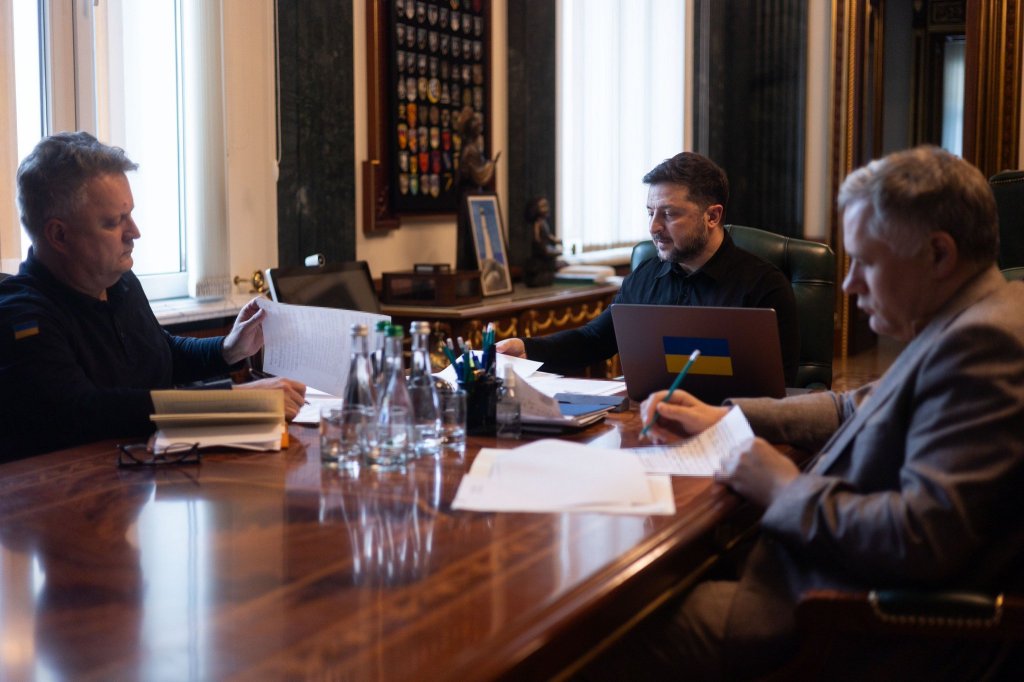
How the Apparent US-Europe Rift Conceals a Division-of-Labour Agreement That Puts European Troops in the Line of Fire
Editorial Analysis | 1 June 2026
On 26 May 2026, the Wall Street Journal published a report stating that “the growing fear in European capitals is that President Vladimir Putin will try next to reshuffle the cards by expanding the conflict to Europe,” citing unnamed European national security officials who told the paper that Russia might test NATO cohesion by striking one of the Baltic states, Swedish or Danish islands in the Baltic Sea, or alliance territory in the Arctic. The article’s first sentence established its analytical frame precisely: “Russia is stuck on the Ukrainian battlefield and lashing out with massive strikes on Kyiv.” The framing deserves direct examination because its internal logic is contradictory on its own terms. A military power described as stuck on the battlefield and suffering heavy losses does not resolve that position by simultaneously opening a second front against a combined alliance of thirty-two states, several of them nuclear-armed. The strategic logic of that proposition does not survive elementary scrutiny. What the framing does accomplish, however, is the conversion of a European military build-up that Washington has been directing and funding for the previous fifteen months into a defensive response to Russian aggression, a narrative whose political function is to render invisible the degree to which European governments are being prepared, at American instruction, to take over the primary operational burden of a proxy war against Russia that Ukraine alone can no longer sustain.
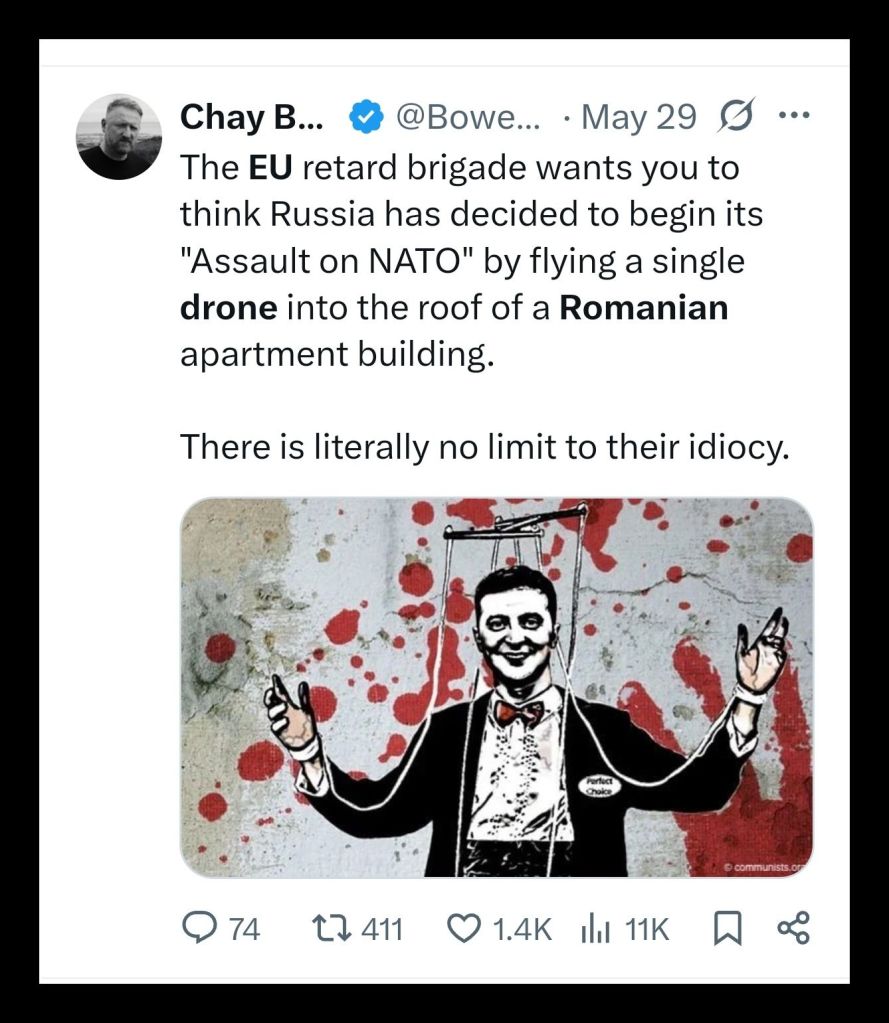
The documentary record of that preparation is not circumstantial or inferential. On 12 February 2025, at the 26th meeting of the Ukraine Defense Contact Group in Brussels, United States Secretary of Defense Pete Hegseth delivered opening remarks whose operational meaning was stated with unusual directness. “As the United States prioritizes its attention to the threats,” Hegseth told the assembled representatives of approximately fifty nations, “European allies must lead from the front. Together, we can establish a division of labor that maximizes our comparative advantages in Europe and Pacific respectively.” He specified that this division of labor would require European allies to provide “the overwhelming share of lethal and nonlethal aid to Ukraine” going forward, that any post-war security guarantees for Ukraine “must be backed by capable European and non-European troops,” and that, in his formulation delivered on the record: “There will not be US troops deployed to Ukraine.” The remarks were published on the United States Department of War’s official website under the heading “Europe Must Take Greater Responsibility for Its Security.” The operational instruction embedded in those remarks is straightforward: the United States is pivoting its primary military focus to the Pacific confrontation with China, and Europe is being told to take ownership of the land war against Russia. British Defence Secretary John Healey responded by stating “we hear you” and confirming that Europe would step up. It subsequently did, in measurable and documented increments.
The NATO summit at The Hague on 25 June 2025 formalised this reorientation through a binding commitment that all thirty-two alliance members would raise defence and defence-related spending to 5 percent of GDP by 2035, more than double the 2 percent target that most members had struggled to meet for the previous decade. The summit communiqué embedded a further provision: direct contributions to Ukraine’s defence and its defence industrial capacity would count toward the 5 percent calculation, creating a financial framework that structurally aligns NATO member defence budgets with sustained Ukraine war funding. Secretary General Mark Rutte stated at The Hague that military aid for Ukraine in 2025 would very likely exceed the $58 billion provided in 2024. By May 2026, Rutte was proposing at a closed-door meeting of NATO ambassadors that member states commit an additional 0.25 percent of GDP specifically for Ukraine, separate from the existing 5 percent defence commitment, a figure that, applied across the alliance’s combined GDP of $57.2 trillion, would generate approximately $143 billion in annual aid flows to Kyiv. Politico reported that France and Britain had resisted the proposal in its current form, and that NATO diplomats assessed it as having limited immediate prospects. The political resistance to the specific mechanism does not alter the directional logic it represents: NATO’s institutional financial architecture is being progressively restructured around the premise that European states will fund and eventually contribute forces to an indefinitely sustained confrontation with Russia.
The battlefield context against which this institutional escalation is proceeding is one that pro-Ukrainian media outlets, evaluated carefully, describe in terms that inadvertently confirm the war’s attrition trajectory. The Kyiv Independent published an analysis in May 2026 headlined “Is Ukraine Starting to Win the War Again?”, a formulation whose interrogative structure implicitly acknowledges that the preceding period had been one of Ukrainian defeat, and whose careful reading reveals an admission, stated directly in the article’s text, that “the upper hand will be gained by the side in whose favor the long attritional fight is running.” The article then identified the two primary determinants of attrition advantage as military-industrial production capacity and the ability to maintain or expand trained manpower. On both measures, the article conceded Russia’s superiority. Moscow was recruiting between 30,000 and 35,000 new contract soldiers per month, it reported, sufficient to sustain battlefield losses and maintain forward pressure. Russia’s drone production target for 2026 was 7.3 million FPV systems specifically, the small first-person view drones whose operators guide them directly to individual targets, separate from broader unmanned aerial vehicle output. The Kyiv Post had reported in November 2025 that Ukraine was producing approximately 4 million drones of all categories annually, a figure representing roughly half of Russia’s FPV production alone when the categories are held equivalent.
Ukraine’s manpower position has deteriorated in documented and measurable ways throughout 2025 and into 2026. PBS NewsHour reported in April 2026 that approximately 150,000 Ukrainian service members may be missing from their units, citing expert estimates and soldier testimony describing exhausted infantry rotations, orders perceived as suicide missions, and the phenomenon that Ukrainian soldiers and commanders themselves describe as systematic forced mobilisation, men pulled from civilian life, sometimes physically dragged from public spaces into military transport vehicles, a practice that has acquired in Ukrainian public discourse the dry euphemism of “busification.” Ukrainian prosecutors initiated over 89,000 proceedings related to desertion and unauthorised unit abandonment in 2024 alone, a figure three and a half times the 2023 total, according to Responsible Statecraft’s analysis of official Ukrainian data. Over 2 million Ukrainians are reportedly wanted by territorial recruitment centres for draft evasion, and over 200,000 are officially listed as deserters. Conscription has driven 70 percent of recruitment as volunteer enlistment has collapsed. The demographic arithmetic is severe: the age cohort most heavily mobilised, men between 25 and 60, constitutes the largest share of Ukraine’s remaining population, while the 18-to-24 cohort that represents the conventional volunteer recruitment pool is the smallest demographic group in the country. A war being fought predominantly by press-ganged men averaging 45 years of age, without adequate training or rotation, against a Russian force that recruits 30,000 to 35,000 volunteers per month under financial incentive contracts, produces an attrition calculus that the Kyiv Independent’s own framing tacitly acknowledges.
The institutional narrative managing this reality for Western audiences operates through a recurring structure that the historical record of the conflict since 2022 makes possible to document precisely. Each time Russian forces advance rapidly across open terrain and then slow or halt upon reaching heavily fortified urban centres, Western media and government-aligned analytical organisations characterise the pause as evidence of Russian military failure and potential turning points in Ukrainian favour. The pattern repeated with Pokrovsk and Myrnohrad: Russian forces advanced to the outskirts of both cities, slowed to conduct siege operations, and Western analysts declared a Russian stall. Both cities are now confirmed as fully under Russian control, with substantial territory to their west additionally captured. Russian forces are currently conducting a methodical operational encirclement of Kramatorsk and Slavyansk, the last major urban centres in the Donbas region not yet under Russian control, while simultaneously managing Ukrainian counter-offensives in Zaporizhia that the Kyiv Independent’s own analysis characterises as limited, costly, and ultimately unable to alter the war’s fundamental trajectory. The Institute for the Study of War, cited approvingly in DW News’s May 2026 coverage under the headline “Is This the Moment Ukraine Has Been Waiting For?”, claimed that Ukraine had for the first time in years taken back more territory than it had lost, before qualifying that this applied to a period of approximately one to two weeks and involved a minuscule amount of ground, in the Zaporizhia counter-offensive launched precisely because Russian forces had reached the outskirts of Kramatorsk and Slavyansk and reduced pressure on those fronts elsewhere. The claim is technically constructed to be technically defensible while conveying a materially misleading picture of the war’s direction.
The New York Times has reported that the Central Intelligence Agency, with presidential authorisation, supercharged a Ukrainian drone campaign against Russian oil facilities and tankers, describing the operation as a deliberate effort to degrade Russian war financing through energy infrastructure targeting. The same reporting confirmed that the United States military commands Ukraine’s operational structure from a base in Germany, with the Ukrainian armed forces subordinate to American direction in ways that make the conventional description of the conflict as a Ukrainian war supported by Western assistance analytically incomplete. Maritime drone strikes on Russian energy tankers in the Black Sea, the Mediterranean, and as far as the west coast of Africa have been attributed publicly to Ukraine but are, by multiple credible accounts, American military operations conducted through Ukrainian operational channels. The political function of this arrangement is described with unusual candour in the RAND Corporation’s 2019 research report, Extending Russia: Competing from Advantageous Ground, which explicitly proposed providing lethal aid to Ukraine as a mechanism for increasing Russian costs “in both blood and treasure,” acknowledged under its own risk analysis that this policy would “likely” result in “disproportionately large Ukrainian casualties, territorial losses, and refugee flows,” and assessed that it “might even lead Ukraine into a disadvantageous peace.” The paper proposed the policy regardless of these anticipated Ukrainian costs, on the grounds that the broader objective, creating pressure on Russia sufficient to eventually precipitate an internal collapse analogous to the Soviet Union’s, justified the expenditure of Ukrainian national viability as a strategic instrument.
The sequence running from the RAND paper’s publication in 2019 through the 2022 full-scale invasion, the construction of the Ukraine Defence Contact Group, Hegseth’s Brussels directive in February 2025, the NATO 5 percent commitment at The Hague in June 2025, the proposed 0.25 percent additional GDP allocation for Ukraine in May 2026, and the Wall Street Journal’s framing of European military escalation as defensive response to Russian aggression in the same month, constitutes a coherent and documented institutional programme whose stated strategic objective, weakening Russia to the point where it cannot project power as it did in Ukraine, as Defence Secretary Austin stated in Kyiv in April 2022, has not changed across three successive American administrations. Trump campaigned in 2024 on ending the war within twenty-four hours of taking office. The war has continued and escalated under his administration. CIA-directed drone strikes on Russian energy infrastructure expanded. The Starshield satellite communications contract deepened. The institutional machinery generating these outcomes predates Trump’s second term and will outlast it, because the defence industrial corporations, intelligence agencies, and strategic planning institutions whose operational requirements the policy serves are not subject to four-year electoral cycles. The particular significance of Hegseth’s division-of-labour framework is that it prepares for precisely the scenario in which Ukrainian manpower and political will are exhausted: not a negotiated settlement that acknowledges the limits of proxy warfare, but the substitution of European forces and European financing for the Ukrainian proxy that is running out of both.
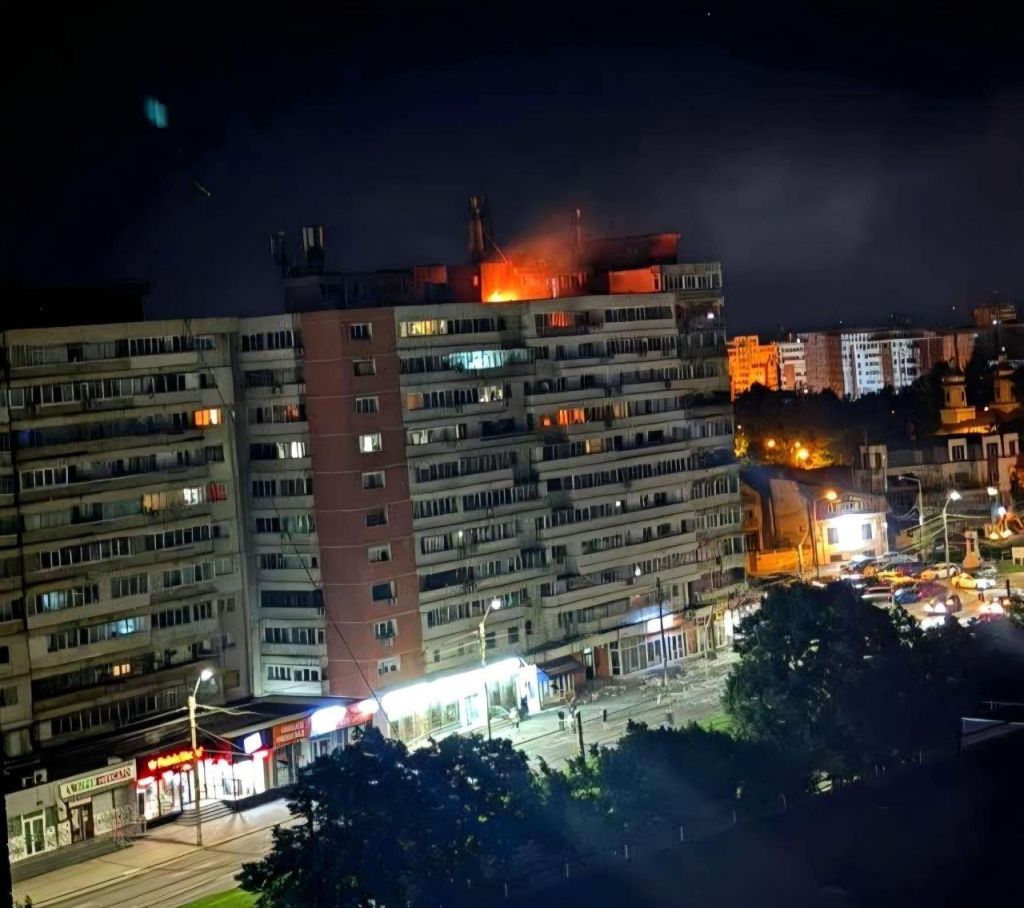
The European populations that will fund and potentially provide troops for this substitution are being prepared through a narrative whose core claim, that Russia presents an imminent territorial threat to NATO states, serves a political function that its own strategic logic does not support. Russia has been fighting since February 2022 against a single neighbouring country with Western military support, at an enormous cost in blood, equipment, and treasury, across terrain it has been occupying since 2014. The proposition that this same military force, after four years of attritional warfare, would simultaneously initiate offensive operations against the Baltic states, Sweden, or Denmark, all NATO members whose combined defence relationships would trigger the very Article 5 collective defence guarantee that Hegseth explicitly ruled out applying to Ukraine, requires a strategic analysis that none of the European officials cited in the Wall Street Journal’s May 2026 report provided. Former British Prime Minister Tony Blair stated publicly in response to the same reporting that he did not believe in a Russian attack on European countries. The narrative’s function is not strategic prediction but political preparation: to condition European publics to accept defence spending at 5 percent of GDP, the progressive militarisation of European industrial and social policy, and eventually the deployment of European forces to Ukraine, as rational defensive responses to Russian aggression rather than as the execution of a division-of-labour arrangement that an American secretary of defence made public in Brussels in February 2025.
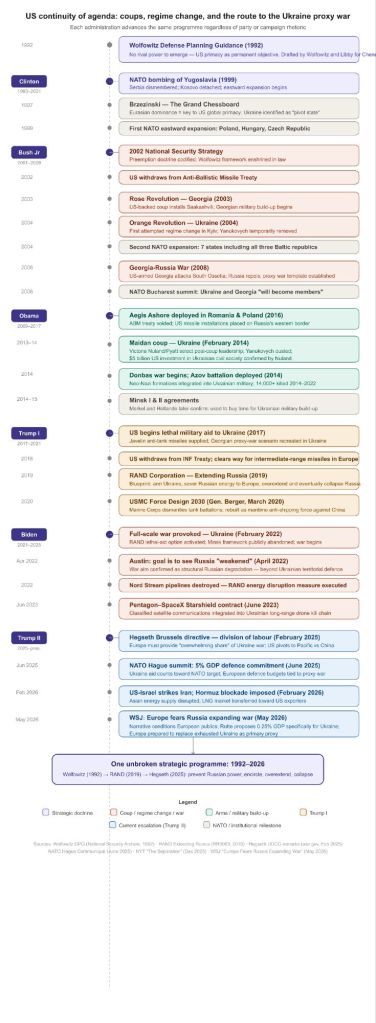
Russia’s use of Oreshnik intermediate-range hypersonic missiles against Ukrainian targets, its warnings to diplomatic missions in Kyiv, and its increasingly explicit statements about the consequences of European military escalation reflect Moscow’s recognition of the direction these institutional preparations are pointing. Whether those warnings will penetrate the decision-making processes of European governments whose strategic orientations are shaped by NATO institutional frameworks, American alliance management, and the domestic political incentives that defence spending growth creates for national industrial bases is a different question. The historical record of the conflict since 2014 suggests that warnings from Moscow, however explicit, have not altered the trajectory of American strategic objectives in the theatre. The RAND paper warned in 2019 that arming Ukraine would likely destroy Ukraine in the process. Ukraine is being destroyed in the process. The paper proposed the policy regardless. The institutional framework that produced that policy is now producing its logical successor.
Authored By: Global GeoPolitics
If you prefer to make a one time donation in support of my work, you can do so by clicking any link below:
https://buymeacoffee.com/ggtv |
https://ko-fi.com/globalgeopolitics |
Bitcoin: 3NiK8BoRZnkwJSHZSekuXKFizGPopkE7ns
References
Wall Street Journal, “Europe Is Starting to Think Putin Will Expand the War Beyond Ukraine,” 26 May 2026 – “Russia is stuck on the Ukrainian battlefield”; Baltic/Arctic strike fears; “no signs that Putin’s strategic goal has been scaled back”
Secretary of Defense Pete Hegseth, Opening Remarks at Ukraine Defense Contact Group, Brussels, 12 February 2025, war.gov – “division of labor that maximizes our comparative advantages in Europe and Pacific respectively”; “overwhelming share of lethal and nonlethal aid”; “no US troops in Ukraine”; “European allies must lead from the front”
DefenseScoop, “Hegseth Puts Onus on Allies to Provide Overwhelming Share of Weapons to Ukraine,” 12 February 2025
CBS News, “Hegseth Rules Out Ukraine NATO Membership as Part of Any Ceasefire with Russia,” 12 February 2025
Defense One, The D Brief, 12 February 2025 – full Hegseth remarks sourcing
NATO Summit The Hague, Final Communiqué, 25 June 2025 – 5% GDP commitment by 2035; 3.5% core defence, 1.5% security-related; Ukraine aid counts toward total
Kyiv Independent, “NATO Allies Set New Defense Spending Target at 5% of GDP by 2035,” 25 June 2025 – Rutte statement; Poland 4.12% leading; only 23/32 met 2% in 2024
NATO Secretary General Mark Rutte, 0.25% GDP Ukraine aid proposal, closed-door NATO ambassadors meeting, April 2026 – reported by Politico, 12 May 2026; RT, 14 May 2026; The Defense News, 13 May 2026 – $143 billion annual figure if adopted; French and British resistance confirmed
Kyiv Independent, “Is Ukraine Starting to Win the War Again?” May 2026 – “upper hand will be gained by the side in whose favor the long attritional fight is running”; Russia 30,000–35,000 new soldiers monthly; Russia 7.3 million FPV drone target 2026
Kyiv Post, “Ukraine Emerges as Drone Superpower, Producing 4M UAVs a Year,” November 2025
PBS NewsHour, “Ukraine Faces Military Desertions as Russian Invasion Grinds Through 5th Year,” April 2026 – 150,000 missing; busification; exhausted rotations; forced conscription
Responsible Statecraft, “Ukraine’s Busification – Forced Conscription -Is Tip of the Iceberg,” November 2025 – 89,000 desertion proceedings 2024; 20%+ AWOL; 1,700 Anna of Kyiv brigade AWOL including 50 in France
Responsible Statecraft, “Ukraine’s Conscription Crisis Is Getting Increasingly Bloody,” May 2026 – 2 million draft evaders; 200,000 deserters; 70% of recruitment from conscription
Policy, “Russian Propaganda Targets Ukraine’s Recruitment Problems,” April 2026 -150,000 missing confirmed; 900,000 active forces context
New York Times, “The Separation: Inside the Unraveling US-Ukraine Partnership,” December 2025 – CIA supercharged drone campaign on Russian oil facilities; Trump authorisation confirmed; US military commands from Germany
RAND Corporation, Extending Russia: Competing from Advantageous Ground (Arroyo Center, RR3063, 2019) – lethal aid to Ukraine as cost-imposing measure; “disproportionately large Ukrainian casualties, territorial losses, refugee flows” risk acknowledged; “might even lead Ukraine into a disadvantageous peace”
Secretary Lloyd Austin, press conference remarks, Kyiv, 25 April 2022 – “weakened to the degree that it can’t do the kinds of things that it has done in invading Ukraine” · DW News, “Is This the Moment Ukraine Has Been Waiting For?” 28 May 2026 – ISW “more territory taken than lost” claim; one to two weeks timeframe conceded
Kyiv Post, “European Officials Warn Russia May Expand War Beyond Ukraine,” 28 May 2026 -Kaja Kallas “very dangerous” quote; Zelensky 145,000 Russian casualties since start of 2026
Tony Blair, interview with The Times, May 2026 – “does not believe in a possible Russian attack on European countries”
Telegraph / archive.ph, “Ukraine Crisis: The Neo-Nazi Brigade Fighting Pro-Russian Separatists,” 2014 – Wolfsangel documentation, Azov context
liveuamap.com, battlefield visualisation as of 29 May 2026 – Pokrovsk/Myrnohrad fully under Russian control confirmed; Kramatorsk/Slavyansk encirclement approach documented
Brian Berlectic, Ukraine Update: US Prepares to Feed Europe Next into Proxy War on Russia, 29 May 2026, https://www.youtube.com/watch?v=MdxtJrzORsU


Leave a Reply