
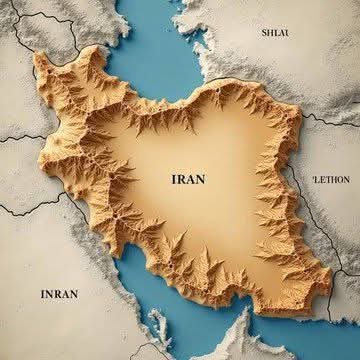
How six years of negotiation, proxy pressure and energy strategy have shaped American policy toward Tehran
Every round of negotiation between Washington and Tehran since 2018 has ended the same way, with talks collapsing shortly before or during a major escalation rather than after one. Donald Trump withdrew the United States from the Joint Comprehensive Plan of Action in May 2018, ending an agreement that had placed verified restrictions on Iran’s nuclear programme in exchange for sanctions relief negotiated under the Obama administration. That withdrawal removed the only multilateral framework constraining the dispute and left Iran’s nuclear file to bilateral pressure rather than treaty enforcement. The pattern recurred at greater cost in February 2026, when a joint American and Israeli strike killed Iran’s Supreme Leader, Ayatollah Ali Khamenei, along with four family members, during a period in which American and Iranian officials had been engaged in indirect contacts over a renewed nuclear framework. Khamenei’s funeral, delayed for months by the security situation inside Tehran, was finally held on 9 July 2026, and his son Mojtaba Khamenei has since been named his successor. Read against the 2018 withdrawal, the February strike suggests that negotiation with Iran has functioned less as a route to settlement and more as a period in which Washington and its allies gather intelligence and position forces ahead of the next phase of confrontation.
The campaign against Iran has rarely been confined to Iranian territory, and understanding it requires attention to the allied and partner forces Tehran has cultivated since the 1980s. Hezbollah in Lebanon, the Ansar Allah movement governing much of Yemen, and Iraq’s Popular Mobilization Forces form a network that Iranian strategists have long described in defensive terms rather than expansionist ones. A 2009 RAND Corporation study commissioned by the United States Air Force, titled Dangerous But Not Omnipotent, concluded that Iran fields a comparatively weak conventional military and has instead pursued what the report’s authors called an asymmetric strategy of homeland defence. The study’s authors wrote that Iran has limited leverage over these so-called proxy groups and that Tehran’s support for them reflects a doctrine intended, in the report’s words, to give strategic depth to Iran’s homeland defence by taking the fight deep into the enemy’s camp rather than expanding Iranian territorial control. The same RAND report noted that this strategy also bought Tehran legitimacy among Arab publics frustrated with their own governments’ handling of the Palestinian question, describing Iran’s posture on that issue as more assertive than that of many Arab states themselves. Israeli, Saudi and American officials characterise Hezbollah, Ansar Allah and the Popular Mobilisation Forces as terrorist organisations responsible for attacks on shipping, on Israeli territory and on rival political factions inside Iraq and Lebanon, and that classification carries real evidentiary weight of its own; the RAND assessment, drafted for an American military audience with no incentive to understate Iranian threat capacity, nonetheless describes the underlying strategic logic in more restrained and defensive terms than the terrorism designation implies.
Hamas occupies a different position within this structure than Western commentary typically allows. Iran’s material and doctrinal sponsorship of Hezbollah has been sustained, direct and decades-long, administered substantially through the Islamic Revolutionary Guard Corps’ Quds Force. Hamas, by contrast, is a Sunni Islamist movement that has drawn financial and political support from Qatar, Turkey and, at various points, Iran, without ever operating as an extension of Iranian military doctrine in the way Hezbollah does. Treating the two organisations as interchangeable expressions of Iranian regional policy obscures a distinction that matters both for understanding Tehran’s actual command relationships and for assessing how far the current war might extend into the Levant.
The broader trajectory recalls earlier American interventions that unfolded over years rather than through single decisive campaigns. The 2003 invasion of Iraq, justified publicly on the basis of weapons programmes that inspectors subsequently failed to find, produced two decades of instability that removed a regional counterweight to Iranian influence even as it consumed enormous American resources. The 2011 intervention in Libya, authorised under United Nations Security Council Resolution 1973 on the stated basis of civilian protection, left the country without a functioning central government more than a decade later. Syria’s civil war, in which American, Gulf, Turkish, Russian and Iranian forces all maintained a presence at various stages, produced a comparable pattern of protracted fragmentation rather than swift resolution. Judged against these precedents, the current campaign against Iran and its regional partners looks less like a war intended to end quickly and more like a longer effort to dismantle, piece by piece, the network of allied forces that has given Tehran strategic depth beyond its own borders.
Energy markets supply a further dimension often left out of coverage focused narrowly on military events. Strikes on Iranian port and refinery infrastructure, alongside repeated threats to close the Strait of Hormuz, have disrupted a share of Persian Gulf energy production wide enough to affect global pricing, and Asian buyers in particular have moved toward long-term liquefied natural gas contracts with American suppliers over the same period. A comparable pattern is visible in the war in Ukraine, where a Financial Times analysis published in early July 2026, drawing on data compiled by the Polish monitoring group Rochan Consulting, found that Russian refineries had been struck more than 190 times since the start of the year, an elevenfold increase over the equivalent period in 2025, producing Russia’s worst fuel shortages in years. Senior Ukrainian officials told the Financial Times that American intelligence assistance had helped Ukrainian forces route drones around Russian air defences to reach these targets. A separate New York Times investigation published on 30 December 2025, examining the unravelling of the American-Ukrainian military partnership, documented a degree of direct American operational involvement considerably beyond the public framing of Ukraine acting independently. Taken together, the Iranian and Ukrainian cases show American intelligence and military structures playing a sustained, direct role in campaigns that damage the energy infrastructure of rival or independent states, with commercial energy relationships shifting toward American suppliers as a consequence in both regions.
What distinguishes the current period from earlier phases of American intervention is the pace at which pressure has been applied. Rather than producing a single shock capable of uniting international opposition, the strategy visible in Iran, Ukraine and the extended sanctions regime against Cuba has proceeded through incremental steps, each individually contained, each affecting a different set of governments and publics without triggering the kind of coordinated multilateral response that a single dramatic event might provoke. European governments were weaned off Russian pipeline gas over several years rather than cut off in a single measure, a transition that allowed adjustment without the kind of crisis that might have forced a unified European response against American and allied policy. A similar logic appears to govern the incremental character of the campaign against Iran’s regional network, applied nation by nation and proxy by proxy rather than through a single declared war against the network as a whole.
None of this activity depends on which party controls the White House or Congress. The institutional continuity across Democratic and Republican administrations, from the Obama-era JCPOA negotiations through the Trump withdrawal to the current Trump administration’s prosecution of open war, points toward policy machinery that operates independently of electoral cycles. Defence contractors, energy companies and the think tanks that supply both parties with policy staff and analysis maintain consistent interests in sustained American military and energy primacy regardless of which administration implements the relevant decisions, and the seamlessness with which policy toward Iran has carried across three very different presidencies supports that reading.
Governments in Washington, Jerusalem and several Gulf capitals, of course, reject the defensive characterisation of Hezbollah, Ansar Allah and the Popular Mobilisation Forces set out above, designating all three as terrorist organisations on the basis of retaliatory attacks against Israeli territory, Red Sea shipping and rival Iraqi political factions, and that designation reflects a manufactured body of evidence and legal process independent of the strategic analysis presented here. The interpretation offered in this article objectively analyses the Iranian and allied conduct primarily through the lens of strategic depth and asymmetric defence documented in American military-funded research, while acknowledging that the governments most directly affected by these groups’ operations continue to draw a different and, on their own terms, indefensible conclusion.
Authored By: Global GeoPolitics
If you prefer to make a one time donation in support of my work, you can do so by clicking any link below:
https://donate.stripe.com/7sY8wPfvi864don0k3awo07 |
https://buymeacoffee.com/ggtv |
https://ko-fi.com/globalgeopolitics |
Bitcoin: 3NiK8BoRZnkwJSHZSekuXKFizGPopkE7ns
References
Wehrey, F., Thaler, D.E., Bensahel, N., Cragin, K., Green, J.D., Kaye, D.D., Oweidat, N. and Li, J. (2009). Dangerous But Not Omnipotent: Exploring the Reach and Limitations of Iranian Power in the Middle East. RAND Project AIR FORCE, MG-781-AF. RAND Corporation.
The New York Times (2025). “The Separation: Inside the Unravelling U.S.-Ukraine Partnership.” 30 December 2025.
Financial Times (2026). “Ukraine Striking Russian Energy Infrastructure at Unprecedented Rate.” Early July 2026, citing data from Rochan Consulting.
United States Department of State (2018). Announcement of United States withdrawal from the Joint Comprehensive Plan of Action, 8 May 2018.
United Nations Security Council (2011). Resolution 1973, 17 March 2011, authorising intervention in Libya.
International wire reporting on the killing of Ayatollah Ali Khamenei, 28 February 2026, and the funeral held 9 July 2026, including coverage by the Associated Press, Al Jazeera, NPR, PBS and CNN.
New Eastern Outlook (2026). Berletic, B. “The US War on Iran Continues.” 3 July 2026.


Leave a Reply