
Tehran’s Response Will Leave Americans “Stunned,” Intelligence Source Says
The United States carried out its sixth consecutive night of air strikes against Iran on Thursday, with Iranian officials reporting that American aircraft had hit civilian infrastructure, including several bridges, as Tehran warned that any further escalation would carry consequences for the entire region.
US Central Command confirmed the new wave of strikes in a brief statement issued Thursday evening, though it did not disclose specific targets. The bombardment came after President Donald Trump threatened earlier in the week to widen the campaign to include Iranian power plants, energy infrastructure and bridges, a threat he has now made good on.
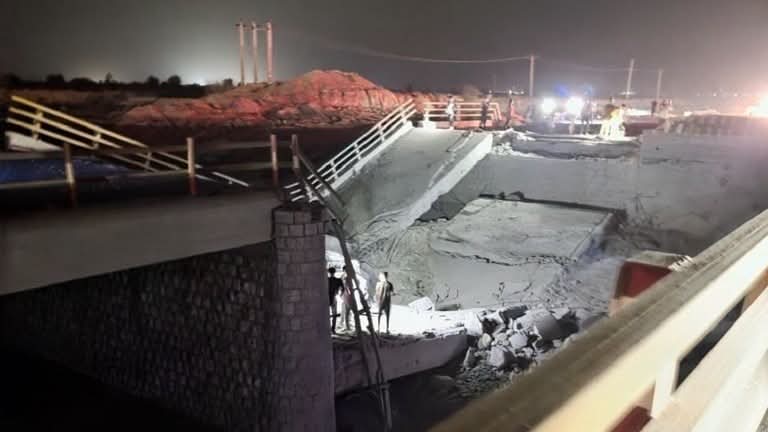
Iranian state media reported that at least three bridges were struck in the south of the country, killing at least two people and wounding four others. Press TV said two of the targeted spans were located in Bandar Khamir, and it circulated photographs and video footage showing the damage.
The strikes were not confined to transport links. US missiles reportedly hit Iranshahr Airport in the country’s southeast, while a separate attack on a residential neighborhood in Bandar Abbas killed one civilian and injured seven more.
A senior Iranian intelligence official delivered a pointed warning to RT as the latest strikes were still under way. “If the enemy, in the course of its war of attrition, seeks to strike Iran’s infrastructure or carry out further assassinations of officials, the entire region will pay the price,” the official said.
The source went further, suggesting that Iran was preparing to unleash a full regional war that would leave the United States “stunned” and would demonstrate to Trump how “unrealistic” the expectations and assessments of Israeli Prime Minister Benjamin Netanyahu had been. “Iran’s plan for escalating the war will be full of surprises. And unlike the political disarray in the White House, here in Tehran we have maximum consensus on implementing this plan,” the official said.
The renewed bombing follows Washington’s decision last week to resume strikes and reimpose a naval blockade on Iranian ports, a move the administration has framed as necessary to protect commercial shipping and preserve freedom of navigation through the Strait of Hormuz. Trump has asserted that the United States is now “in control” of the waterway and will act as its “guardian.”
Iran has not absorbed the pressure passively. The Islamic Revolutionary Guard Corps has responded with drone and missile attacks on American military facilities across the region, including the US Navy’s Fifth Fleet headquarters in Bahrain, one of Washington’s principal naval hubs in the Persian Gulf. Tehran has further warned that it could halt regional oil and gas exports entirely and has declared the Strait of Hormuz closed until the United States ends what it calls its “illegal” military intervention.
Consequences and Strategic Fallout
The bombing of bridges marks a deliberate shift in the character of the campaign. Striking transport infrastructure rather than purely military assets serves a dual purpose for Washington: it degrades Iran’s ability to move troops, equipment and supplies internally, and it signals to Tehran’s leadership that economic and civilian life, not just military capacity, is now within reach. That calculation carries real risk. Infrastructure strikes tend to produce higher civilian casualties than strikes on isolated military sites, and the deaths already reported in Bandar Khamir and Bandar Abbas are likely to be used by Tehran to rally domestic support and to frame the conflict internationally as one of aggression against ordinary Iranians rather than a narrow military dispute.
The targeting of Iranshahr Airport and the residential strike in Bandar Abbas also point to an expanding geographic footprint. Early in the campaign, US strikes were concentrated on Iran’s southern coastal provinces and facilities directly tied to naval and missile capabilities near the Strait of Hormuz. The move toward bridges, an airport and a population center suggests the campaign is broadening both in scope and in the categories of infrastructure considered legitimate targets, raising the odds of miscalculation and of drawing in third parties who rely on the same transport and energy networks.
The economic stakes are difficult to overstate. Roughly a fifth of the world’s oil supply moves through the Strait of Hormuz, and Iran’s threat to shut the waterway entirely, combined with its retaliatory strikes on shipping and on US allies’ naval assets , has already been reflected in rising crude prices. A prolonged closure or a sustained campaign of attacks on tankers would ripple far beyond the region, pushing up energy costs, straining global supply chains and forcing importing nations, particularly in Asia and Europe, into difficult decisions about alternative routes and reserves.
Militarily, the intelligence official’s warning of an “all-out regional war” should be read against Iran’s established pattern of relying on allied and proxy forces rather than confining any response to its own territory. Facilities in Bahrain, Jordan and Kuwait have already come under fire, and Gulf states hosting American forces now face the prospect of being drawn more deeply into a conflict they did not initiate. Kuwait’s use of Patriot missile defenses against incoming threats illustrates how quickly the fighting has begun to strain the region’s collective air-defense capacity, a strain that could worsen sharply if the promised “surprises” materialize.
There is also a political dimension on both sides. The reference to “political disarray in the White House” versus “maximum consensus” in Tehran is a calculated line, aimed at portraying the Iranian leadership as unified and resolute while suggesting American decision-making is fractured and reactive. Whether or not that characterization holds up, it reflects an information-war objective as much as a military one: shaping perceptions of resolve is central to how both sides expect this conflict to be judged by regional audiences and by their own populations.
Finally, the invocation of Netanyahu’s “unrealistic” expectations signals that Tehran views Israel as a co-architect of the campaign’s underlying assumptions, not merely a bystander. Should Iran’s response extend to targets connected with Israel, or should Israeli forces open a more direct front, the conflict would move further beyond a bilateral US-Iran confrontation and into a broader regional war involving multiple state and non-state actors, with consequences for shipping, energy markets and civilian populations that would be difficult to contain once set in motion.
Authored By: Global GeoPolitics
If you prefer to make a one time donation in support of my work, you can do so by clicking any link below:
https://donate.stripe.com/7sY8wPfvi864don0k3awo07 |
https://buymeacoffee.com/ggtv |
https://ko-fi.com/globalgeopolitics |
Bitcoin: 3NiK8BoRZnkwJSHZSekuXKFizGPopkE7ns


Leave a comment