
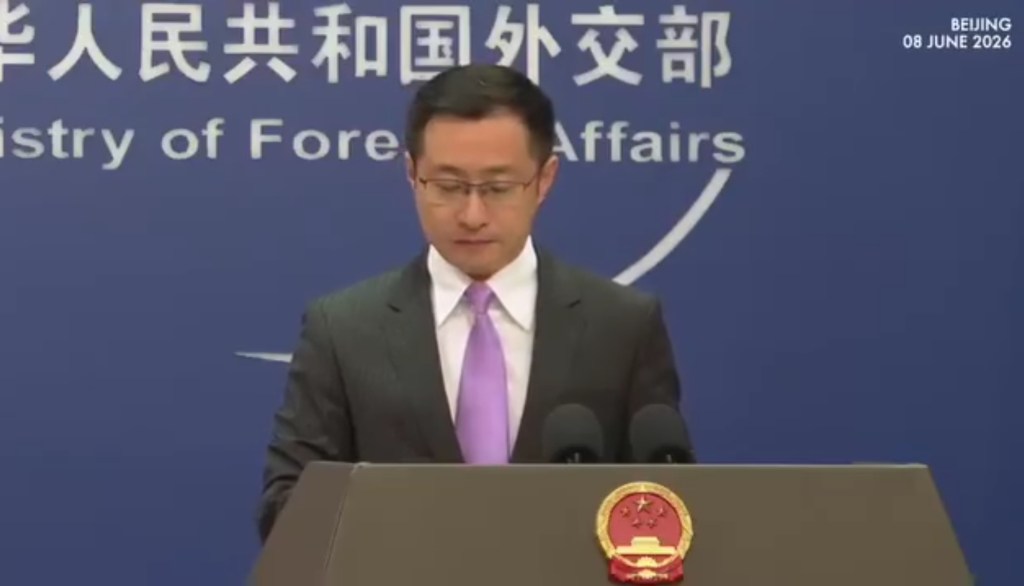
When a Chinese foreign ministry spokesman stood at a lectern in Beijing on 11 June 2026 and addressed a Bloomberg News correspondent’s question about European supply-chain legislation, he said little that the Foreign Ministry had not said before. The EU’s proposed directive compelling companies to reduce over-dependency on single suppliers was, the spokesman observed, simply the outcome of choices made by European firms based on cost, technology, and efficiency, choices that European policymakers had reframed as a structural vulnerability the moment they became politically inconvenient. Citing the old Chinese proverb about not imposing on others what one does not desire for oneself, he suggested the bloc’s so-called ‘diversification’ policy was protectionism wearing market-economy clothing, and urged Brussels to resolve disagreements through dialogue rather than legislation designed to penalise superior competitiveness.
The response was characteristically measured. It was also, on the available evidence, largely accurate. Tracking the European Union’s commercial relationship with China across three decades reveals a pattern that resists the official narrative of strategic foresight: a bloc that benefited enormously from Chinese manufacturing integration when it suited European capital, discovered the language of risk only when Chinese industry became formidably competitive, and has since generated a vocabulary, de-risking, strategic autonomy, overcapacity, unfair subsidy, that functions primarily to justify protective measures the WTO system was designed to prevent. The historical record, across solar energy, telecommunications, automotive manufacturing, and energy supply, tells a story less about Chinese distortion than about European complacency and the structural consequences of outsourcing industrial policy to financial markets for a generation.
The solar panel episode is among the most instructive. In July 2012, EU Pro Sun, an association of approximately twenty European solar panel producers, filed a complaint with the European Commission alleging that Chinese manufacturers were dumping photovoltaic products on the European market. The Commission opened an investigation in September 2012. By June 2013, provisional anti-dumping tariffs of 11.8 per cent were imposed, rising to 47.6 per cent by August of that year. The Commission framed the measures as necessary to protect an estimated 25,000 jobs in European solar manufacturing. The Chinese delegation to Brussels responded by threatening countermeasures, and Beijing shortly afterwards launched an anti-dumping investigation into European wine exportsx, a signal that the trade relationship had more to lose from escalation than either party cared to acknowledge publicly.
At the time of the dispute, Chinese manufacturers held roughly 80 per cent of the European solar market, and in 2011 alone had exported €21 billion in solar panels to the EU.¹ The Commission’s stated objective, restoring a level playing field to save domestic jobs, was contested from the outset by a different coalition of European commercial interests, namely the installers, developers, and electricity utilities who had built business models around cheap Chinese photovoltaic equipment and who argued, correctly, that tariffs would raise the cost of Europe’s energy transition. The settlement reached in July 2013, which imposed a minimum export price of €0.56 per watt-peak and a volume cap of seven gigawatts annually, resolved the immediate diplomatic confrontation without addressing the underlying industrial question. European solar panel manufacturing did not revive.
The political memory of that episode has been buried under subsequent events, but its logic repays examination. The tariff regime that Brussels constructed to protect a domestic industry it described as strategically significant proved incapable of generating the investment, scale, or technological development necessary to compete. European governments had already reduced feed-in tariff subsidies in response to falling panel prices – prices that fell, in large part, because Chinese manufacturers were building the volume and supply-chain integration that European producers were not. Imposing import barriers at that late stage did not change the underlying industrial calculus; it merely raised costs for European consumers and delayed the energy transition at the margin, until political and economic pressure eventually forced Brussels to reopen the market. The industry the Commission sought to protect remains, for most practical purposes, absent from European manufacturing.
The Huawei and ZTE question produced a different kind of institutional failure, though one with comparable financial consequences. From roughly 2018 onwards, European governments came under sustained diplomatic pressure from Washington to exclude Chinese telecommunications equipment vendors from their fifth-generation network deployments, on the grounds that Huawei’s infrastructure posed an unacceptable national security risk. The United Kingdom moved first among major European economies, with Culture Secretary Oliver Dowden announcing in July 2020 that all Huawei components would be removed from British 5G networks by 2027, at an estimated cost of up to £2 billion and a network rollout delay of between two and three years. European operators had, at various stages, deployed Huawei equipment across their existing network infrastructure, and the cost of removal was distinct from the cost of replacement.
A report from GSMA, the industry association representing mobile network operators, estimated that a full European exclusion of Huawei and ZTE would cost operators approximately €55 billion and delay 5G rollout by up to 18 months.² The security case for the exclusion rested substantially on inference and political alignment rather than demonstrated evidence of malfeasance. The British signals intelligence agency GCHQ, through its Huawei Cyber Security Evaluation Centre — a body that had examined the company’s equipment since 2010 — concluded that it had never discovered a deliberate backdoor, though it identified, in 2020, defects characterised as ‘serious and systematic’ in Huawei’s software engineering practices. The agency stated explicitly that it did not believe these defects resulted from Chinese state interference. The United States government, which had pressed most forcefully for the exclusion, produced no public technical evidence of malicious functionality. Sweden’s telecoms regulator, citing advice from its armed forces and security service, described China as ‘one of the biggest threats against Sweden,’ but offered no technical demonstration that Huawei hardware contained exploitable Chinese state access.
What the exclusion campaign unambiguously produced was measurable economic damage to the European operators who had staked capital on Chinese equipment and were then required to remove it. In Portugal and Romania, operators installed Huawei hardware in advance of government bans, only to face removal and reinstallation costs when those bans arrived. By February 2024, the European Commission’s own records showed that only ten of twenty-seven member states had implemented meaningful restrictions on Huawei or ZTE, notwithstanding years of Commission urgings. Germany, Europe’s largest economy, proposed removing critical 5G core components only by 2026. The security imperative that Europe’s political class proclaimed urgently in public was not, by the behaviour of most European governments, treated urgently in practice. The episode illustrates a recognisable pattern: a geopolitical posture adopted under American pressure, executed expensively and incompletely, at substantial cost to European network competitiveness, justified by security arguments that the available evidence did not fully support.
Energy dependency presents the starkest case in the political economy of European strategic self-deception. The International Energy Agency’s analysis of the 2022-2023 energy crisis documents that Russian natural gas grew from roughly 30 per cent of EU supply in 2010 to over 45 per cent by 2019. This was not an accident or an oversight; it was the cumulative result of deliberate commercial and policy choices by European governments and corporations who found Russian pipeline gas cheap, contractually stable, and convenient. The warnings were not absent. Russia had interrupted pipeline supply to Ukraine in 2006 and 2009, with downstream consequences for EU member states. Germany, which became the primary importer of Russian gas and the political champion of Nord Stream 2, pursued deeper energy integration with Moscow through repeated diplomatic and commercial crises.
When Russia’s full-scale invasion of Ukraine in February 2022 forced a reckoning, the European Commission launched its REPowerEU plan in May 2022, committing to rapid diversification of energy supply. EU dependence on Russian gas fell from approximately 45 per cent in 2021 to around 15 per cent by 2023, achieved through a combination of accelerated liquefied natural gas imports, reduced industrial consumption, and emergency demand aggregation mechanisms.³ The adjustment was remarkable in its speed, but its cost was enormous. EU natural gas subsidies, which had hovered between €7 billion and €10 billion annually before 2022, increased fivefold in 2022 to protect households and industries from price shocks, and remained four times above pre-crisis levels in 2023. European industrial electricity prices rose to levels that made energy-intensive manufacturing economically unviable in several sectors. Companies across the continent began assessing relocation to the United States, where the Inflation Reduction Act of 2022 offered substantial subsidies for industrial investment, or to Asia, where energy costs had not collapsed comparably.
The political and journalistic response to these dislocations rarely assigned responsibility to the thirty-year policy of European energy dependency that had created the vulnerability. The crisis was presented, overwhelmingly, as an external shock caused by Russian belligerence, which it was, rather than as the consequence of a structural dependency that European governments had deliberately cultivated and persistently deepened against contrary advice. The language of dependency, of strategic risk, of overdependence on a single supplier, the precise vocabulary now deployed against Chinese commercial integration, had been notably absent from European public discourse during the decades in which Russian gas penetrated deeper into European industrial and domestic supply chains.
The electric vehicle tariff imposed by the European Commission in October 2024 brings the pattern into its contemporary form. The Commission’s investigation concluded that Chinese-made electric vehicles had benefited from state subsidies, with countervailing duties ranging from approximately 17 per cent to 38 per cent imposed on top of an existing 10 per cent tariff. The Chinese share of European EV sales had grown from 3.5 per cent in 2020 to 27.2 per cent by the second quarter of 2024, with Chinese brands specifically, as distinguished from Tesla and other foreign manufacturers using Chinese production, expanding from 1.9 per cent to 14.1 per cent of the market. The Commission characterised the Chinese advantage as the product of state distortion; the complementary explanation, available in the same European Parliament research documents, was that China had built overwhelming scale and supply-chain integration across the entire electric vehicle value chain, from battery chemistry to manufacturing process, over roughly fifteen years of committed industrial development, while European manufacturers defended internal combustion platforms and hybrid technologies that Chinese competitors, unburdened by an existing industry to protect, had not prioritised.
Mario Draghi’s 2024 report on European competitiveness, commissioned by the European Commission itself, was frank about this tension. Draghi acknowledged that relying more heavily on Chinese manufacturing represented ‘the cheapest and most efficient route to meeting our decarbonisation targets’ but argued that ‘China’s state-sponsored competition also represents a threat to our productive clean tech and automotive industries.’⁴ The formulation is politically serviceable but analytically incomplete. The European automotive industry’s competitive position relative to China reflects decisions made across decades, about electrification timelines, battery investment, platform architecture, and manufacturing geography, that were the product of European corporate strategy and European government incentive structures, not Chinese subsidy design. BYD, to cite the most prominent example, received €2.1 billion in direct government subsidies in 2022, a figure that European critics have cited repeatedly; European automotive manufacturers received comparable state support, through a combination of diesel emissions regulatory leniency, scrappage incentive programmes, COVID-19 sectoral aid, and indirect subsidy through favourable electricity tariffs for manufacturing, that has not attracted equivalent analytical attention.
Experts working on the EV file have noted that tariffs alone will not restore European competitiveness. The European Parliament’s own research service stated that ‘stakeholders and experts have warned that tariffs will not be enough to protect EU competitiveness in the EV industry, stressing the need for investment and other measures.’ Hungary, notably, responded to the Commission’s tariff posture not by reducing Chinese investment but by becoming the primary European destination for Chinese EV and battery manufacturing investment, demonstrating that the geography of production remains flexible in ways that tariffs on imports do not fully address. The Chinese foreign ministry spokesman’s observation, that EU ‘diversification’ measures are incompatible with the bloc’s stated commitment to market economy principles and free trade, sits uncomfortably alongside the Commission’s own internal analysis, which acknowledges the limits of its protective instruments.
The broader geopolitical dimension of what European policymakers call de-risking becomes clearer when set alongside developments in the American relationship with India. At the Raisina Dialogue in New Delhi on 5 March 2026, United States Deputy Secretary of State Christopher Landau offered a candid account of Washington’s commercial intentions toward its developing partner. Landau, speaking in the context of a US-India trade deal described as nearly finalised, said that the United States would not repeat what he characterised as the mistake of enabling China’s export-led growth. His precise words, as reported by multiple press sources, were that Washington would not allow India ‘to develop all these markets and then the next thing you know, you are beating us in many commercial things,’ adding that the administration would ‘make sure that whatever we do is fair to our people.’
These remarks, delivered at a major international strategic conference organised by the Indian Ministry of External Affairs and the Observer Research Foundation, were not a diplomatic accident.⁵ They represent a stated American policy of managed commercial containment, the same policy that Washington has applied to China through tariffs, technology export controls, and supply-chain legislation, now explicitly extended to India as a function of its economic trajectory. Landau framed this as preventing a repetition of past ‘mistakes’ rather than as an exercise in deliberate suppression of foreign competition, but the operational content of the two framings is identical. A country that grows too successfully commercially will be subjected to trade conditions calibrated to prevent it from outcompeting American industry. The language of partnership, mutual benefit, and democratic solidarity accompanies this posture in public communications; the mechanism of restriction operates regardless.
The significance of Landau’s remarks extends beyond the specific US-India relationship. They provide, in unusually direct language, the underlying logic of Western trade policy toward competitive economies in the developing world: market access is extended instrumentally and conditionally, and is adjusted or restricted when the recipient economy becomes a commercial rival rather than a commercial dependency. This is the framework that China experienced through the 1990s and 2000s, as WTO accession and manufacturing integration proceeded alongside sustained pressure on intellectual property, currency management, and industrial subsidy, pressure that intensified precisely as Chinese export competitiveness sharpened. The European Commission has maintained, publicly and consistently, that its own protective measures are categorically different: targeted, proportionate, WTO-consistent, designed not to close markets but to restore fair competition. The Chinese Foreign Ministry’s repeated characterisation of these measures as protectionism with superior paperwork is not analytically unreasonable.
European businesses operating in China have registered their own dissatisfaction with the direction of commercial policy, though not always in the manner that Brussels might prefer. The China Chamber of Commerce to the EU’s November 2025 report on the development of Chinese enterprises in Europe found that 90 per cent of Chinese business respondents reported that the EU’s de-risking agenda had negatively affected their operations and market confidence, and over 40 per cent described differential treatment linked to their Chinese corporate identity. The report noted that overall ratings of the EU business environment among Chinese companies had declined for the sixth consecutive year. Jens Eskelund, president of the European Union Chamber of Commerce in China, characterised European firms operating there as becoming ‘collateral damage in disputes not triggered by European actions’, a formulation that could be applied with equal justice to Chinese firms operating in Europe.
Germany’s trade deficit with China reached a record €90 billion in 2025, a figure that German Chancellor Friedrich Merz raised with Chinese President Xi Jinping during their February 2026 meeting, noting that Chinese industrial capacity had developed to levels ‘far exceeding market demand.’ The Chinese foreign ministry’s response to Merz’s public characterisation was notably restrained, suggesting that Beijing regards the structural argument, that Chinese production has exceeded domestic absorption, as weaker than the operational argument, which is that Chinese manufacturers produce what the global market has demonstrated it will purchase. The distinction matters. Overcapacity in a technical supply-demand sense requires evidence that production exceeds not merely current domestic consumption but global demand at prevailing prices. That Chinese electric vehicles, solar equipment, batteries, and consumer electronics are finding buyers across multiple continents suggests the overcapacity framing is at minimum incomplete.
The Chinese foreign ministry spokesman’s citation of the Confucian maxim at the 11 June 2026 press conference was a rhetorical device, but not an empty one. The principle of reciprocity, that one should not subject others to conditions one would find unacceptable for oneself, illuminates the structural asymmetry in European trade discourse with reasonable precision. When European luxury goods, automotive products, chemicals, and machinery entered the Chinese market across the 1990s and 2000s, no Chinese foreign ministry spokesman accused European exporters of creating strategic dependency within Chinese supply chains. China absorbed the competition, invested in domestic capability development, and over two decades built the industrial capacity that European governments now describe, in succession, as unfair, distorting, overproduced, and strategically threatening. The vocabulary changed in direct proportion to Chinese competitive success.
None of this is to suggest that state subsidy plays no role in Chinese industrial development, or that concerns about supply-chain concentration are inherently illegitimate. State support has been a feature of industrial development in every country that has successfully industrialised, including the United Kingdom through its nineteenth-century navigation acts and colonial preference systems, the United States through its tariff regimes, public procurement practices, and defence-linked research expenditure, and Germany through its post-war Mittelstand support infrastructure and energy pricing arrangements. The analytical question is whether the instruments now deployed against Chinese industry are meaningfully distinguishable from the instruments that those same countries regard as normal features of their own industrial history, and whether the threshold for intervention correlates with evidence of genuine market distortion or with the competitive threat posed to incumbent industries.
The available record suggests the latter correlation is stronger. The solar panel tariff came when Chinese manufacturers had captured 80 per cent of the European market. The Huawei exclusion came after Chinese telecommunications companies had achieved a dominant global position in fifth-generation network equipment. The EV tariff came as Chinese brands expanded from under 2 per cent to over 14 per cent of European EV sales in four years. In each case, the protective measure arrived after Chinese competitiveness had already been demonstrated and after European alternatives had already failed to develop at scale. The tariff functions not as an instrument of fair-competition restoration but as a holding action against a competitive dynamic that European institutions had not anticipated and European industry had not matched.
What the Chinese foreign ministry spokesman said at that June 2026 press conference was, at its analytical core, a restatement of a position that a growing body of trade economists and geopolitical analysts have reached independently: that the EU’s de-risking agenda conflates legitimate security concerns with commercial protection in ways that its own stated principles do not support, and that the vocabulary of strategic autonomy and supply-chain resilience, whatever its genuine utility in specific sectors, is being deployed at a breadth and speed that correlates more reliably with competitive threat than with demonstrable security risk. He said it in measured diplomatic language, citing classical philosophy and bilateral goodwill. He did not need to say more. The record speaks with adequate force on its own terms.
Authored By: Global GeoPolitics
If you prefer to make a one time donation in support of my work, you can do so by clicking any link below:
https://buymeacoffee.com/ggtv |
https://ko-fi.com/globalgeopolitics |
Bitcoin: 3NiK8BoRZnkwJSHZSekuXKFizGPopkE7ns
References
1. European Commission, Anti-Dumping Investigation into Solar Panels from China, September 2012; Simon Evenett, ‘China-EU Solar Panel Trade Dispute: Rhetoric Versus Reality,’ VoxEU / CEPR, 7 June 2013. Available at: https://cepr.org/voxeu/columns/china-eu-solar-panel-trade-dispute-rhetoric-versus-reality
2. GSMA, Impact Assessment of Huawei and ZTE Exclusion from European 5G Networks (leaked report, reported by Reuters and TechRadar, 2019); IEEE Spectrum, ‘5G Telecom Infrastructure Update: EU Scales Back Huawei, ZTE,’ 26 November 2024. Available at: https://spectrum.ieee.org/huawei-and-zte-eu
3. International Energy Agency, ‘Anatomy of a Natural Gas Crisis – Gas Market Lessons from the 2022-2023 Energy Crisis,’ 2023. Available at: https://www.iea.org/reports/gas-market-lessons-from-the-2022-2023-energy-crisis/anatomy-of-a-natural-gas-crisis; European Commission, REPowerEU Plan, May 2022. Available at: https://commission.europa.eu/topics/energy/repowereu_en
4. Mario Draghi, The Future of European Competitiveness – A Competitiveness Strategy for Europe (report commissioned by the European Commission), September 2024; European Parliament Research Service, ‘The Future of European Electric Vehicles,’ EPRS IDA(2024)762873, October 2024. Available at: https://www.europarl.europa.eu/RegData/etudes/IDAN/2024/762873/EPRS_IDA(2024)762873_EN.pdf
5. US Deputy Secretary of State Christopher Landau, remarks at the Raisina Dialogue, New Delhi, 5 March 2026. Reported by The Print, ‘Won’t Make Same Mistake with India We Did with China – US Dy Secy,’ 5 March 2026. Available at: https://theprint.in/diplomacy/wont-make-same-mistake-with-india-we-did-with-china-so-you-beat-us-at-commercial-things-us-dy-secy/2870552/
6. Chinese Ministry of Foreign Affairs, Spokesperson Lin Jian, Regular Press Conference, 11 June 2026 (transcript, Bloomberg News Q&A segment on EU supply chain diversification directive).
7. China Chamber of Commerce to the EU, Report on the Development of Chinese Enterprises in the EU 2025/2026, November 2025. Referenced in: Ministry of Foreign Affairs of the People’s Republic of China, Spokesperson Lin Jian, Regular Press Conference, 14 November 2025. Available at: https://www.mfa.gov.cn/eng/xw/fyrbt/lxjzh/202511/t20251114_11753607.html
8. European Commission, Trade Commissioner Maroš Šefčovič Visit to Beijing, 27-28 March 2025; EEAS Readout. Available at: https://www.eeas.europa.eu/delegations/china/read-out-meetings-between-commissioner
9. Council on Foreign Relations, ‘China in Europe: February 2026,’ March 2026. Available at: https://www.cfr.org/articles/china-in-europe-february-2026 [Germany–China trade deficit data and Merz-Xi summit reporting]
10. Merics, ‘The New European Commission and China + EU Trade with China and the US + EV Tariffs,’ Merics Briefs, 2024. Available at: https://merics.org/en/merics-briefs/new-european-commission-and-china-eu-trade-china-and-us-ev-tariffs
11. Pamir Consulting, ‘European Union Member States Still Failing to Exclude Huawei and ZTE,’ March 2024. Available at: https://pamirllc.com/blog/european-union-member-states-still-failing-to-exclude-huawei-and-zte
12. Oliver Dowden, Statement to the House of Commons on Huawei and 5G networks, 14 July 2020; reported in Business Standard and The Herald (UK), 15 July 2020.
13. Ember, ‘The Final Push for EU Russian Gas Phase-Out,’ March 2025. Available at: https://ember-energy.org/latest-insights/the-final-push-for-eu-russian-gas-phase-out/
14. Bruegel, ‘The European Union–Russia Energy Divorce: State of Play,’ Analysis 05/2024. Available at: https://www.bruegel.org/analysis/european-union-russia-energy-divorce-state-play
15. Clifford Chance, ‘EU Anti-Dumping Duties Imposed Against Chinese Solar Panel Producers,’ Briefing, June 2013. Available at: https://www.cliffordchance.com/content/dam/cliffordchance/briefings/2013/06/eu-antidumping-duties-imposed-against-chinese-solar-panels-producers.pdf


Leave a Reply