
The Geopolitical Economy of Energy Sabotage and Transnational Class Primacy in the American Campaign Against Multipolarism
Editorial Analysis | July 2026
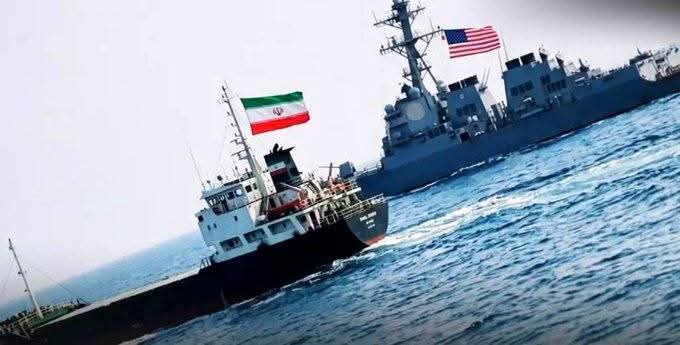
The ongoing diplomatic and military confrontations involving the United States, its regional allies, and the Islamic Republic of Iran do not constitute an isolated regional crisis, nor do they stem from sudden tactical miscalculations within an otherwise stable international framework. Tactical pauses, formal ceasefires, and temporary memorandums of understanding serve primarily as functional intervals that allow Washington and its regional partners to reorganize logistics, replenish strategic stockpiles, and recalibrate operational posture before initiating subsequent phases of aggression. The structural trajectory of American foreign policy reveals a continuous, highly deliberate effort to prevent the consolidation of a multipolar international order capable of challenging Western institutional dominance. By maintaining sustained pressure on Iran, targeting its forward defensive depth, and systematically degrading key transport links and maritime trade routes, the foreign policy apparatus of the United States seeks to destabilize the primary energy arterial lines that nourish the expanding industrial capacities of Asian economies.
The conceptualisation of regional security in West Asia as a collection of independent disputes obscures the structural connections uniting distinct operational theatres. Actions undertaken against Hezbollah in Lebanon, Ansarallah in Yemen, or the Popular Mobilisation Forces in Iraq represent targeted strikes against the asymmetric integrated operational architecture designed by Iran to counter Western military advantages. When state forces or regional proxies launch targeted strikes against these entities, they are executing a unified doctrine aimed at stripping Iran of its strategic depth and exposing its domestic territory to unmitigated coercion. This ongoing campaign relies heavily on formal narrative management, wherein strikes against essential dual-use infrastructure, such as transport bridges and railway networks, are systematically classified as purely military logistical interdictions. The disruption of coastal transport links around critical commercial nodes like Bandar Abbas directly undermines domestic economic stability, illustrating how military actions are engineered to inflict cumulative civilian and commercial strain under the guise of targeted interdiction.
As evident in recent rounds of exchanges, the American military industrial base cannot replace longer-range precision-guided weapons faster than they are being expended, which explains the declining frequency of missile launch suppression missions and the shift to coastal strikes with Hellfire missiles and glide bombs. This attrition, however, does not represent a fundamental change in the strategic balance. The United States can continue its stop-start campaign indefinitely despite Iran’s capacity of ballistic missiles and drones, striking coastal targets within easy reach of carrier-based aircraft, blockading Iranian shipping, and throttling energy exports from the entire region to Asia. This endurance on the part of Washington does not imply an unmitigated operational superiority over a passive target, given that the Islamic Republic of Iran has spent decades preparing its industrial base for precisely this style of prolonged asymmetric warfare. Iranian defense planners have constructed vast subterranean missile cities, fortified underground launch facilities, and highly redundant domestic supply networks that remain insulated from heavy aerial bombardment. High domestic manufacturing throughput allows Iranian state industries to continuously replenish missile and drone stockpiles, guaranteeing that long-range strike capabilities persist throughout an extended campaign of attrition. While Western air defense networks suffer from finite interceptor inventories as Iranian salvos penetrate point-defense systems, both military apparatuses find themselves locked in a severe material contest. The fundamental distinction remains structural, as the United States absorbs equipment losses to enforce transnational energy dominance, whereas Iran draws upon deep strategic depth to guarantee state survival against imperial encirclement.
A central objective driving this persistent strategy involves the deliberate manipulation and throttling of global energy flows destined for sovereign development centers across the Asian continent. Strategic assertions that Washington operates with the primary intent of securing open navigation through critical maritime chokepoints, such as the Strait of Hormuz, are directly contradicted by long-term trade dynamics and energy policy investments. Over the preceding decade, public and corporate entities within the United States undertook massive capital expenditures to construct extensive liquefied natural gas export infrastructure along the Gulf Coast, despite initial market conditions offering questionable commercial viability. Corporate presentations and policy frameworks explicitly referenced the potential for persistent instability in contested international waterways as a primary rationale for establishing these alternative high-cost supply lines. The intentional escalation of military friction in West Asia, combined with targeted interdictions of maritime transport, directly serves to restrict competing energy volumes from entering the global market, thereby artificially enhancing the necessity of American energy exports.
This mechanism of market creation through the military disruption of state competitors mirrors the policy frameworks deployed within the European energy landscape over recent years. The systematic severance of European industrial centers from low-cost Russian pipeline gas, achieved through cumulative sanction regimes, regulatory pressure, and the physical destruction of critical transit infrastructure such as the Nord Stream pipelines, forcibly reoriented European nations into captive consumers of expensive North American energy shipments. The operational model verified in the European context is now being replicated across Asia, where the United States aims to throttle Persian Gulf export volumes to force major industrial states into energy dependency on American suppliers. In 2025, American facilities supplied roughly ninety-three per cent of all incremental global growth in liquefied natural gas exports, illustrating a structural consolidation of export capacity achieved alongside the systematic disruption of rival suppliers.
The structural target of this global energy interdiction strategy remains the industrial base of the People’s Republic of China and the broader sovereign infrastructure emerging across the Global South. Because Western financial and manufacturing capital can no longer out-compete state-directed industrial models in open global markets, American policy has shifted from competitive economic engagement toward structural sabotage. By controlling or destabilising the primary energy corridors supplying East Asia, Washington seeks to retain an absolute veto power over the economic trajectory of non-aligned nations. The strategic calculus operating within Western planning circles accepts global economic turbulence, localised inflationary crises, and severe food insecurity as acceptable outcomes, provided those conditions prevent the integration of a sovereign, non-dollar-denominated Eurasian economic zone. The disruption of energy flows directly impacts downstream industrial sectors, including the global supply of synthetic nitrogen fertilisers derived from Persian Gulf natural gas, thereby threatening agricultural productivity across vulnerable developing economies.
The military balance within West Asia illustrates the calculated nature of this long-term campaign of attrition. While the Islamic Republic of Iran maintains significant retaliatory capabilities, demonstrated by missile strikes capable of penetrating existing point-defense systems to hit military installations, Iran’s overarching objective remains institutional and territorial survival rather than absolute regional dominance. Iran lacks the conventional military assets required to permanently expel American military forces from the region, particularly as carrier strike groups and long-range strike platforms operate from standoff ranges beyond the reach of localised defensive networks. The strategy pursued by Washington leverages this structural asymmetry, relying on sustained economic blockades, vessel seizures, and precision interdictions to continuously degrade Iranian state capacity over time while limiting direct exposure to large-scale ground commitments.
The persistent fragmentation of international opposition to this policy is maintained through sophisticated narrative compartmentalisation. By presenting interconnected conflicts in Eastern Europe, West Asia, and East Asia as unrelated diplomatic crises or localised humanitarian emergencies, Western state platforms prevent the formation of a unified global anti-imperialist movement. Public discourse is routinely directed toward immediate political actors or proxy forces, deliberately obscuring the corporate, financial, and institutional interests that profit directly from long-term conflict and energy dominance. Furthermore, media networks operating within Western-aligned regional states consistently reproduce localised framing that minimises the long-term structural impact of state-sanctioned infrastructure destruction. Washington cannot compete with Beijing or the multipolar world, so it is trying to destroy everything, hoping somehow to come out the other side stronger. This is like someone losing at chess and flipping the board over, hoping that the chaos will somehow work to their advantage. The anti-war movement has been deliberately fractured by the creation of multiple narratives and scapegoats that prevent the formation of a unified opposition. People are fighting about different wars and different causes, failing to see that they are all connected by the same corporate interests driving American policy. Washington is dangling politicians and proxies overseas as targets for public anger while the corporations actually driving policy remain invisible behind the fog of national security rhetoric.
The broader trajectory of American foreign policy demonstrates a willingness to systematically dismantle non-aligned state structures that contribute to the emergence of alternative global financial systems. The political and economic coercion applied against sovereign states across West Asia, Africa, and Latin America follows a precise sequence designed to isolate, weaken, and ultimately absorb independent economic nodes into Western-managed frameworks. This global strategy proceeds incrementally, calculated to prevent major non-aligned powers from coordinating a immediate, unified defensive response. The long-term preservation of American primacy relies entirely on this ability to divide, isolate, and neutralise sovereign development centers before a stable multipolar balance can fully materialise.
The class analysis that alone can explain American behaviour reveals that the Western capitalist class is willing to sacrifice anything, including millions of lives and entire nations, to preserve its global hegemony. The state is an instrument of class rule, and the class interests may not align with the national interest of any particular country. The Western capitalist class is transnational, moving capital across borders, parking wealth in tax havens, and hedging against the decline of any single country. The national interest of the United States means nothing to them; what matters is the preservation of their class rule on a global scale. If that requires burning down the global energy system, starving hundreds of millions of people, and unleashing mass migration, the empire will light the match without a second thought.
The war on Iran is not a blunder, a conspiracy of the Israel lobby, or a doomed attempt to bully a resilient regional power. It is the opening salvo in a long-planned campaign to destroy the material foundations of China’s rise by weaponising energy scarcity, food systems, and economic chaos. The empire is not trying to win the old game; it is trying to ensure that nobody wins the new one except the class that can survive the flames. The only way to stop this is to recognise that the enemy is not a particular nation or leader but an entire class whose survival depends on global chaos. Until that class is overthrown, the fires will keep spreading from Hormuz to Jazan, from the Baltic to the South China Sea. Humanity must unite in opposition, but we cannot unite until we understand where we are headed and why we are headed there. The fires will continue to spread until the class that lit them is removed from power.
Ultimately, the aggressive posture maintained against Iran represents a core operational component of a singular, globally integrated campaign against the consolidation of a multipolar world. The strategic objective is not the establishment of regional stability, democratic governance, or open commercial transit, but rather the deliberate maintenance of controlled instability designed to enforce dependency and preserve Western financial hegemony. So long as global economic power continues to shift eastward and non-aligned states build alternative institutions, the United States will continue to deploy its military and economic apparatus to disrupt international supply chains, sabotage sovereign energy security, and wage systematic economic warfare against any state that resists its global dominance.
Authored By: Global GeoPolitics
If you prefer to make a one time donation in support of my work, you can do so by clicking any link below:
https://donate.stripe.com/7sY8wPfvi864don0k3awo07 |
https://buymeacoffee.com/ggtv |
https://ko-fi.com/globalgeopolitics |
Bitcoin: 3NiK8BoRZnkwJSHZSekuXKFizGPopkE7ns
References
Energy Information Administration (EIA). (2025). Short-Term Energy Outlook: Global Liquefied Natural Gas Markets and Transit Chokepoints. US Department of Energy.
International Gas Union (IGU). (2026). World LNG Report 2026. IGU Research and Market Intelligence.
Patnaik, U., & Patnaik, P. (2021). Capital and Imperialism: Theory, History, and the Present. Columbia University Press.
Shell plc. (2026). Shell LNG Outlook 2026. Shell Global Commercial Analysis.
United Nations Conference on Trade and Development (UNCTAD). (2025). Developments in International Maritime Transport and Global Supply Chains. United Nations Publications.
Vortexa Energy Analytics. (2026). Report: Energy and Freight Markets in 2025–2026. Vortexa Freight Intelligence Platform.
Vortexa Analytics. 2025. “West Asia Energy Infrastructure Monitoring Report.” London: Vortexa, 18 July.
Wheatcroft, Stephen. 2007. “The Soviet Famine of 1931-33: A New Look at the Evidence.” Slavic Review 66 (2): 272-293.


Leave a comment