
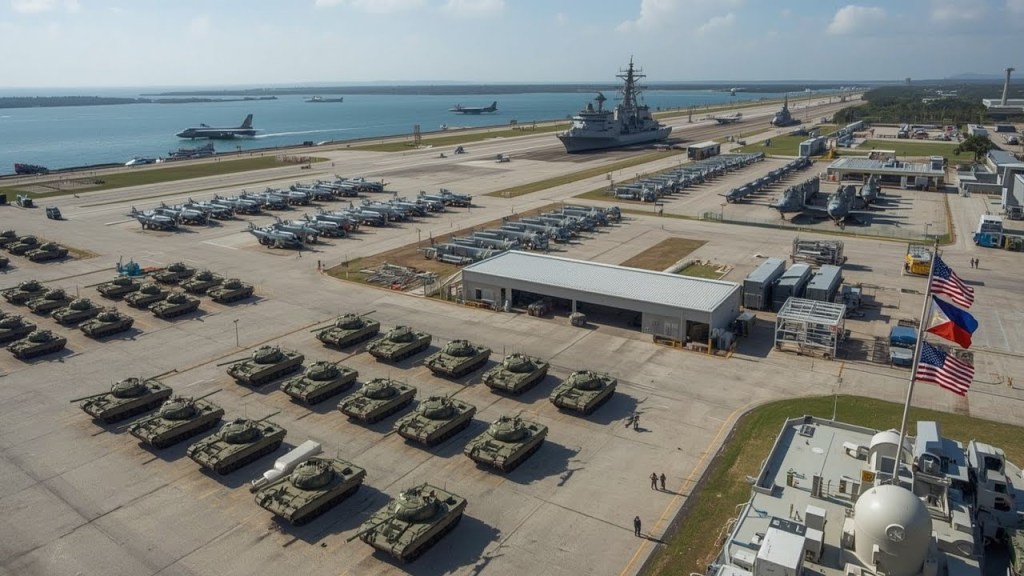
Three theatres – Iran, Ukraine, and now the Philippines – one recurring pattern of escalation dressed as restraint
On 21 June 2026, American aircraft struck the Fordow, Natanz and Isfahan nuclear sites in Iran, an operation Donald Trump ordered after months of on-again, off-again negotiation. A ceasefire followed on 24 June, and on 17 June the two governments had already signed a fourteen-point memorandum of understanding in Islamabad, brokered with Pakistani mediation, setting a sixty-day window to resolve the status of the Strait of Hormuz, Iran’s nuclear programme and the sanctions regime built up since 2018. Within a week the arrangement was under open strain. United States Central Command struck Iranian missile and drone storage sites and coastal radar installations after accusing Tehran of attacking commercial shipping in the strait; Iran’s Revolutionary Guard Corps retaliated against American positions in the Gulf and, according to Bahraini authorities, launched a drone strike that damaged a residential building in Muharraq province. Kuwait reported intercepting two ballistic missiles. Vice President J. D. Vance summarised the American position bluntly on social media: violence would be met with violence. The pattern recalls the Islamabad talks’ own troubled history, in which an earlier two-week ceasefire agreed on 8 April, following the assassination of Ali Khamenei and Ali Larijani in the February strikes, collapsed within hours amid Israeli operations in Lebanon that Tehran treated as a breach of its own terms.
The Iranian theatre cannot be read in isolation from Washington’s parallel posture toward Russia and China, because the underlying strategic logic long predates the current administration. RAND Corporation’s 2019 study Extending Russia, commissioned by the United States Army, catalogued a menu of measures designed to overextend Moscow’s military and economic capacity at limited cost to Washington, including arming Ukraine, promoting unrest in the Caucasus and exploiting Russian dependence on energy exports. A companion RAND study from 2009, Dangerous But Not Omnipotent, examined the limits of Al-Qaeda’s threat to the United States and, more broadly, articulated a framework in which primacy is maintained through calibrated, deniable pressure on rivals rather than direct confrontation. Both documents sit within a policy tradition that treats economic strangulation, proxy arming and technological asymmetry as substitutes for open war, a tradition now visible simultaneously in the Atlantic, the Gulf and the South China Sea.
The naval dimension of that pressure against Russia has intensified through 2026. French forces have boarded five tankers linked to Russia’s so-called shadow fleet since September 2025, the most recent interceptions occurring off Sicily on 23 June and in the Atlantic 400 nautical miles west of Brittany on 31 May, the latter conducted with British tactical support. President Emmanuel Macron has framed these actions as enforcement of nineteen packages of European Union sanctions against vessels that continue, according to Reuters reporting, to move Russian crude to India and China largely undisturbed. Reuters also noted that European Union sanctions and a limited number of tanker seizures have had comparatively little measurable effect on the shadow fleet’s overall volume, in contrast to Ukrainian long-range strikes on Russian refining infrastructure, which have done more to constrain Moscow’s capacity to profit from wartime oil price spikes. The distinction matters because it separates symbolic maritime interdiction, useful for demonstrating alliance cohesion, from the harder economic damage inflicted by Ukraine’s own operations.
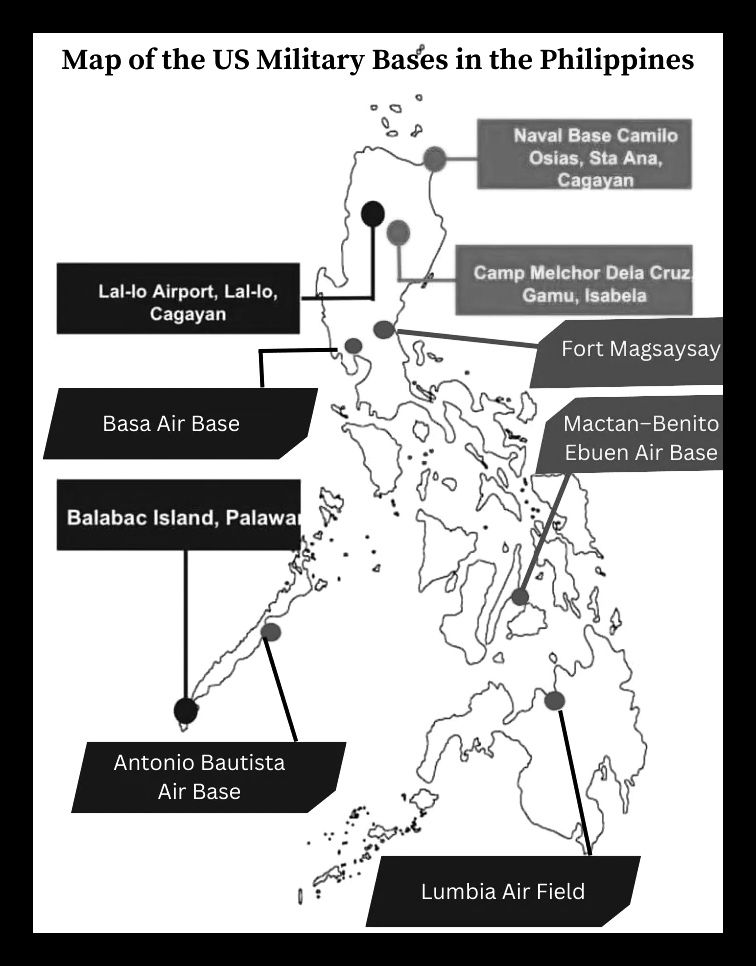
In the Western Pacific, the United States has spent 2026 building an infrastructure of unmanned maritime systems around the Philippines that mirrors, quite deliberately, tactics refined in the Black Sea. In April, Green Berets from the 1st Special Forces Group launched an explosive-laden unmanned surface vessel from Batan Island during Exercise Balikatan, sinking a decommissioned merchant vessel, the MV Manfil, in the Luzon Strait; the drone boat’s design was derived from Ukraine’s Magura attack craft, the same platform that has sunk and harassed Russian naval vessels in the Black Sea since 2023. On 22 June, four Ocean Aero Triton autonomous vessels were delivered to the Philippine Navy at Subic Bay as part of Washington’s asymmetric aid programme, which USNI News reported will extend to “lethal capabilities,” including armed drones, by 2027. The programme, which began with the Philippine Navy’s first unmanned surface vessel unit in 2024, has since expanded to the Marine Corps, with the Army separately examining similar systems. Admiral Samuel Paparo’s Indo-Pacific Command has advocated openly for a “hellscape” concept, deploying mass swarms of autonomous systems to disrupt any Chinese naval movement toward Taiwan or into the South China Sea’s contested shoals, among them Second Thomas, Scarborough and Sabina. Captain Garrett Miller of the Navy’s Surface Development Group told the Sea-Air-Space Symposium that the service expects more than thirty medium unmanned surface vessels in the Indo-Pacific by 2030, alongside thousands of smaller craft.
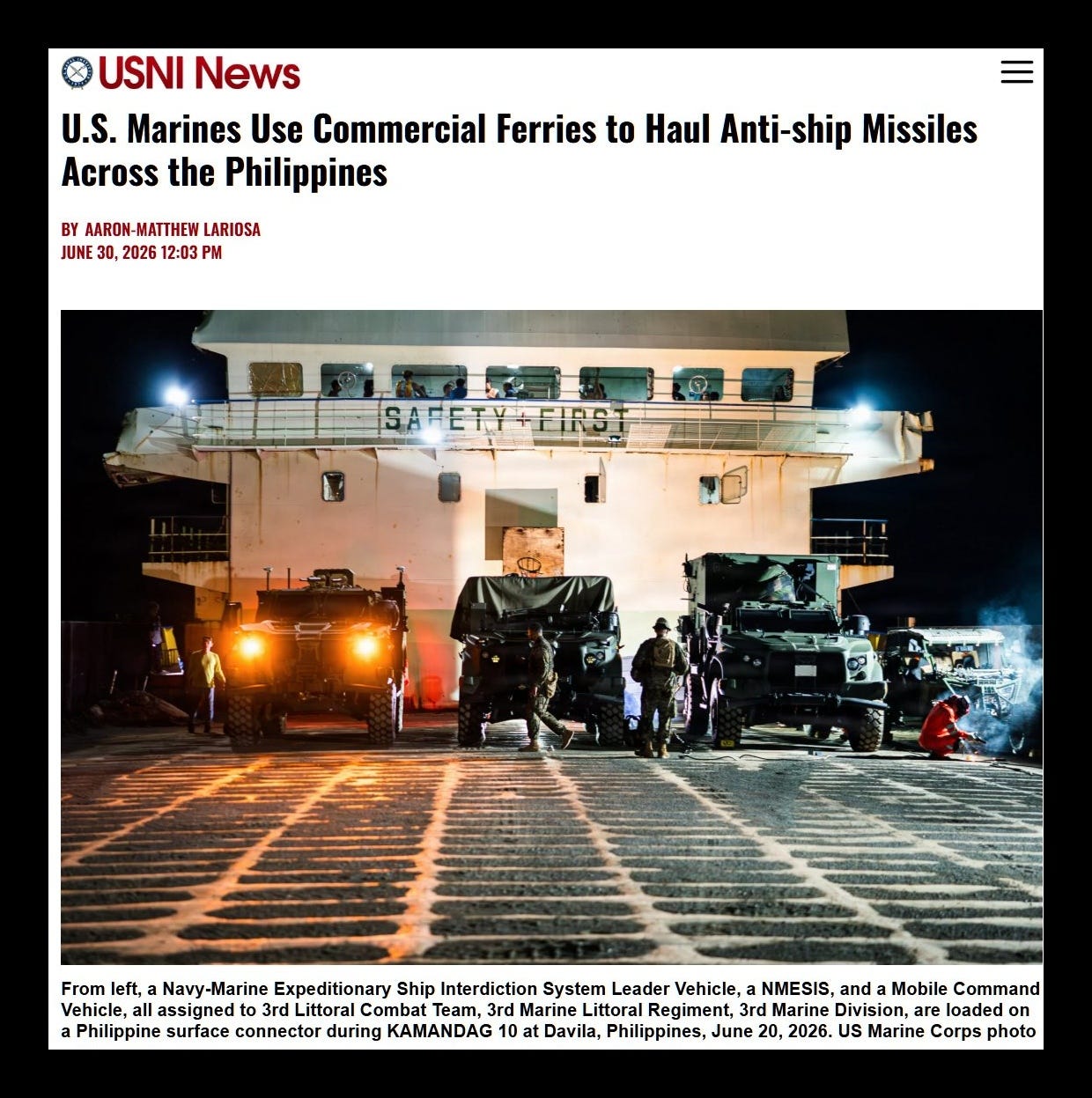
Manila’s transformation from counter-insurgency-oriented force to forward asymmetric outpost against Beijing did not begin under the current administration and would not obviously reverse under a different one. The joint drone programme traces to the post-2023 deterioration in Philippine-Chinese relations over reef and shoal incidents in the exclusive economic zone, accelerated under Secretary of Defense Lloyd Austin, and has continued under his successor, Pete Hegseth, without interruption in strategic direction. What has changed is scale and lethality, not intent. A defence official quoted anonymously by USNI News in June described the shift toward armed, rather than purely surveillance-oriented, unmanned systems as a direct import of Ukrainian battlefield method into an Indo-Pacific context that its own naval planners privately doubt is well suited to it, given the far greater distances separating Philippine and Chinese-controlled features from the compressed geography of the Black Sea.
Claims that Donald Trump personally ordered American technology companies to build AI-guided drones for Ukraine, circulated in parts of the German press earlier this year, do not withstand scrutiny of the documented timeline. Eric Schmidt, the former chief executive of Google, established the drone venture later renamed Project Eagle in August 2023, developing low-cost, AI-guided kamikaze aircraft capable of functioning through Russian electronic jamming; Forbes first identified the project’s existence in January 2024, under the Biden administration, and Schmidt has since described his role, in a Stanford lecture reported by Business Insider, as that of a “licensed arms dealer.” The actual record of 2026 runs, if anything, in the opposite direction from the German claim: Axios reported in March that the Trump administration had for seven months sat on a Ukrainian offer, first made in August 2025, to supply low-cost interceptor technology against Iranian-designed Shahed drones, a delay two unnamed American officials called one of the administration’s most significant tactical miscalculations once the Iran war began in February. The Hill reported in June that a broader bilateral drone framework, discussed by Trump and Volodymyr Zelensky in September 2025, remained unsigned, with a former official attributing the hold-up to “a certain amount of hostility towards Ukraine coming from the very top” of the administration. The more defensible continuity argument is therefore structural rather than personal: private American capital and Pentagon doctrine have sustained momentum toward AI-enabled drone warfare across two administrations of different temperament, even where the present White House has shown open reluctance to formalise cooperation with Kyiv specifically.
Read together, the three theatres describe a foreign policy apparatus whose instruments, unmanned strike craft, sanctions enforcement at sea, calibrated air strikes bounded by negotiated frameworks, persist independently of electoral cycles or presidential rhetoric. Trump’s own account of the Iran campaign, delivered at the G7 summit in France, invoked Herbert Hoover as a cautionary example of a leader who allowed prolonged conflict to produce economic catastrophe, framing the Islamabad memorandum as fiscal prudence rather than retreat. Whether that framing survives the next round of Strait of Hormuz incidents, or the Philippines’ own drone programme reaches the point of lethal use against a Chinese vessel, will determine whether 2026 is remembered as the year Washington managed a multipolar transition or the year it multiplied the fronts on which that transition might turn violent.
Readers should weigh this account against its limits. Those who defend the administration’s record would note that the Islamabad memorandum, however fragile, produced a formal negotiating framework and a partial reopening of Hormuz that eluded previous administrations, and that RAND’s older strategy papers describe options considered rather than policies necessarily adopted. Sympathetic voices in Manila and Washington argue that Philippine drone acquisitions are defensive responses to documented Chinese coercion in its exclusive economic zone, not offensive provocations, and that comparisons to Ukraine understate the differences in geography, alliance structure and Chinese restraint to date. Sceptics of the “continuity of empire” reading also point out that an administration reluctant to formalise drone cooperation with Kyiv is a poor fit for a narrative of seamless imperial planning, and that overlapping crises in Iran, Ukraine and the South China Sea may simply reflect independent regional dynamics rather than a single coordinated strategy.
Authored By: Global GeoPolitics
If you prefer to make a one time donation in support of my work, you can do so by clicking any link below:
https://buymeacoffee.com/ggtv |
https://ko-fi.com/globalgeopolitics |
Bitcoin: 3NiK8BoRZnkwJSHZSekuXKFizGPopkE7ns
References
1. “2026 Iran war.” Wikipedia. Accessed 3 July 2026. https://en.wikipedia.org/wiki/2026_Iran_war
2. “2025–2026 Iran–United States negotiations.” Wikipedia. Accessed 3 July 2026. https://en.wikipedia.org/wiki/2025%E2%80%932026_Iran%E2%80%93United_States_negotiations
3. “2026 Iran war ceasefire.” Wikipedia. Accessed 3 July 2026. https://en.wikipedia.org/wiki/2026_Iran_war_ceasefire
4. House of Commons Library. “US-Iran ceasefire and nuclear talks in 2026.” UK Parliament, 2026. https://commonslibrary.parliament.uk/research-briefings/cbp-10637/
5. CNBC. “U.S. strikes Iran after Trump accuses Tehran of ceasefire violation in Strait of Hormuz.” 26 June 2026. https://www.cnbc.com/2026/06/26/us-strikes-iran-strait-of-hormuz-ceasefire.html
6. TIME. “Trump and Iranian Officials Make Conflicting Remarks About Next Steps in Talks After Days of Hostilities.” 29 June 2026. https://time.com/article/2026/06/29/us-iran-ceasefire-attacks-strikes-peace-talks-mou/
7. NPR. “New strikes test the Iran ceasefire.” 27 June 2026. https://www.npr.org/2026/06/27/nx-s1-5869562/new-strikes-test-the-iran-ceasefire
8. RAND Corporation. Dobbins, James, et al. Extending Russia: Competing from Advantageous Ground. 2019. https://www.rand.org/content/dam/rand/pubs/research_reports/RR3000/RR3063/RAND_RR3063.pdf
9. RAND Corporation. Jones, Seth G. Dangerous But Not Omnipotent: Exploring the Reach and Limitations of Iranian Power in the Middle East. 2009. https://www.rand.org/pubs/monographs/MG781.html
10. Reuters (via USNI News). “France Seizes 5th Russian Shadow Fleet Tanker.” 26 June 2026. https://news.usni.org/2026/06/26/french-seizes-5th-russian-shadow-fleet-tanker
11. Reuters (via US News & World Report). “French Navy Has Intercepted Another Russian ‘Shadow Fleet’ Tanker, Macron Says.” 25 June 2026. https://www.usnews.com/news/world/articles/2026-06-25/french-navy-has-intercepted-another-russian-shadow-fleet-tanker-macron-says
12. Reuters (via US News & World Report). “France Intercepts Another ‘Shadow Fleet’ Tanker Linked to Russian Oil.” 1 June 2026. https://www.usnews.com/news/world/articles/2026-06-01/frances-macron-says-french-navy-boarded-russia-linked-oil-tanker
13. USNI News. “U.S. Asymmetric Aid Program Transfers Unmanned Vessels to the Philippines, Plans Attack Drone Transfer by 2027.” 23 June 2026. https://news.usni.org/2026/06/23/u-s-asymmetric-aid-program-transfers-unmanned-vessels-to-the-philippines-plans-attack-drone-transfer-by-2027
14. USNI News. “Green Berets Deploy Ship-Killing Drone in Luzon Strait Maritime Strike Exercise.” 3 May 2026. https://news.usni.org/2026/05/03/green-berets-deploy-ship-killing-drone-in-luzon-strait-maritime-strike-exercise
15. USNI News. “Navy to Deploy Thousands of Unmanned Surface Vessels to the Indo-Pacific by 2030.” 21 April 2026. https://news.usni.org/2026/04/21/navy-to-deploy-thousands-of-unmanned-surface-vessels-to-the-indo-pacific-by-2030
16. USNI News. “U.S., Philippines Commit to Increased Missile, Drone Deployments in First Island Chain.” 20 February 2026. https://news.usni.org/2026/02/20/u-s-philippines-commit-to-increased-missile-drone-deployments-in-first-island-chain
17. Forbes. Emerson, Sarah, and Rich Nieva. “Eric Schmidt’s Secret Military Project Revealed: Attack Drones.” 23 January 2024 (updated 27 August 2025). https://www.forbes.com/sites/sarahemerson/2024/01/23/eric-schmidts-secret-white-stork-project-aims-to-build-ai-combat-drones/
18. Forbes. Emerson, Sarah. “Eric Schmidt Is Secretly Testing AI Military Drones In A Wealthy Silicon Valley Suburb.” 6 June 2024. https://www.forbes.com/sites/sarahemerson/2024/06/06/eric-schmidt-is-secretly-testing-ai-military-drones-in-a-wealthy-silicon-valley-suburb/
19. Axios. “Exclusive: U.S. dismissed Ukraine deal for anti-Iran drone tech last year.” 10 March 2026. https://www.axios.com/2026/03/10/us-ukraine-anti-drone-offer
20. The Hill. “Donald Trump delays major drone deal with Ukraine, baffling military experts.” 2026. https://thehill.com/policy/defense/5911039-trump-drone-deal-ukraine/
21. DroneXL. “Eric Schmidt Predicts AI-Powered Drones Will Dominate The Future Of Warfare.” 15 December 2024. https://dronexl.co/2024/12/15/eric-schmidt-predicts-ai-powered-drones-dominate-warfare/


Leave a comment