
Moscow / Kyiv — July 20, 2026
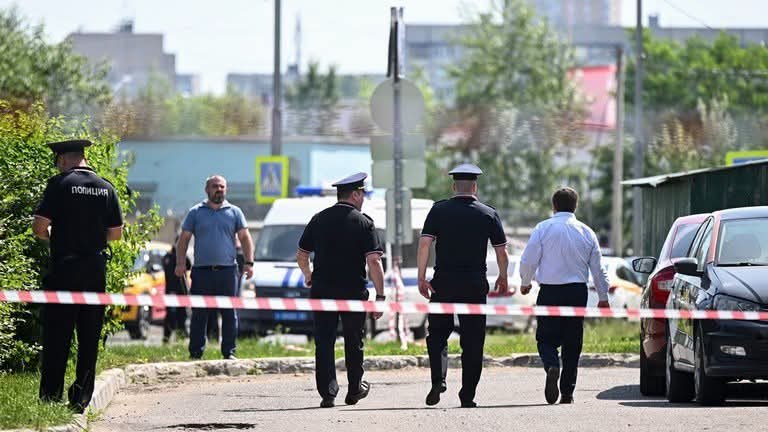
At least ten people were injured overnight after Ukraine launched more than 400 drones toward Moscow and its surrounding region, in what regional officials described as one of the largest such raids on the Russian capital in recent years.
The Attack
Moscow Mayor Sergei Sobyanin said air defense units detected the incoming unmanned aerial vehicles (UAVs) between 8:30 p.m. Sunday and 5:00 a.m. Monday local time. Most were intercepted at long range before reaching the city, he said, while 85 were shot down as they approached the capital itself.
Emergency crews were dispatched to multiple sites where drone debris fell, Sobyanin said on his social media channel.
Casualties and Damage
Moscow Region Governor Andrei Vorobyov said ten people, including one child, were wounded in the raid. Six were hospitalized in the town of Domodedovo, among them three Chinese nationals, with injuries including shrapnel wounds and fractures, he said. Two women were injured in Podolsk, and an 11-year-old girl in the Odintsovo district was treated for acute stress but did not require hospitalization.
Vorobyov said the heaviest damage was concentrated in the Podolsk, Domodedovo, and Odintsovo districts, where falling drones or debris damaged private homes and other civilian infrastructure and sparked multiple fires. He did not disclose further details on the nature of the damage.
Russia’s largest online retailer, Wildberries, said its logistics center in Podolsk was evacuated as a precaution during the attack but later resumed normal operations.
Elsewhere in Russia, authorities in the border regions of Belgorod, Bryansk, and Kursk reported four civilian deaths and roughly 30 injuries from separate overnight strikes, including a firefighter killed while responding to a fire in Bryansk.
Context
The raid follows a sharp escalation in Ukraine’s long-range drone campaign in recent weeks. Sobyanin said 1,892 drones were launched toward the Moscow region between July 11 and 18 alone, with 207 intercepted near the capital. A previous record overnight raid, on July 6–7, saw more than 430 drones shot down, including 36 close to Moscow.
Last week’s strikes also hit two Wildberries logistics hubs, in Tambov region and in Elektrostal near Moscow; regional officials said those attacks killed several warehouse workers and injured dozens more. Kyiv confirmed it had deliberately targeted the sites, saying they stored components used in drone and navigation systems. a claim Moscow disputes, characterising the strikes as attacks on civilian infrastructure.
Ukrainian officials have not commented specifically on Monday’s raid. Kyiv has previously said its long-range strike campaign is aimed at Russian oil refineries, fuel depots, air defense systems, and military logistics rather than civilian targets, and that President Volodymyr Zelensky has framed the intensified campaign as part of a declared effort to pressure Moscow toward ending the war, set to run through early August.
In another report, at least five people, including a child, were killed and more than 20 others injured when a drone struck a passenger bus in the town of Shebekino, in Russia’s Belgorod region, on Monday, according to the region’s acting governor.
Acting Governor Alexander Shuvaev said the strike hit the bus directly, killing five civilians, four women and a boy and wounding 23 others, three of whom were hospitalised in critical condition. Reuters reported it could not independently verify the governor’s account.
Shuvaev said the drone was Ukrainian-operated and described the strike as a deliberate attack on civilians. Ukrainian authorities did not immediately respond to the allegation.
Shebekino, located roughly five kilometers from the Ukrainian border, has been a recurring target of cross-border strikes since Russia’s 2022 invasion of Ukraine. Local authorities said the town came under multiple drone strikes throughout Monday, with separate UAVs damaging an administrative building, a truck, and a residential building; those strikes caused no reported casualties. Footage from the scene reviewed by Russian media appeared to show the bus’s roof had been struck, with metal fragments scattered near the wreckage.
The attack comes amid a broader intensification of Ukraine’s long-range strike campaign against Russian territory, which Kyiv says is directed at oil refineries, power infrastructure, and military logistics. Russian officials have said Ukrainian strikes have also hit civilian sites, including passenger buses; a similar strike on a bus in Russia’s Donetsk region last month killed seven people, according to Russian authorities.
Moscow has characterized Ukraine’s strike campaign as indiscriminate attacks on civilians. Kyiv has not issued a comparable public characterization of this specific incident. Both sides in the conflict have consistently denied deliberately targeting civilians, even as strikes on both sides of the border have repeatedly killed non-combatants.
Russia has continued its own long-range strike campaign against Ukraine, with recent attacks concentrated on Kyiv and reportedly aimed at military-industrial and weapons storage sites; Moscow says it does not target purely civilian locations, a claim Ukrainian officials dispute.
Russia continued its own strikes on Ukraine over the same period, including ballistic missile attacks on Kyiv and other cities, in what wire services described as a continuing cycle of tit-for-tat attacks that have made a near-term settlement to the more than four-year war appear increasingly distant.
Questions are, Why Ukraine is launching these attacks, and what strategic effect are they are expected to achieve that could not be achieved by concentrating resources closer to the front.
If the primary military effect is limited but the political and economic effects are substantial, then the campaign may be aimed less at battlefield gains and more at altering Russia’s overall cost-benefit assessment of continuing the war. Whether that calculation succeeds, or instead hardens resolve, is one of the central uncertainties of the conflict.
Is the escalation intended to trigger a wider European conflict?
Before attempting to determine whether these attacks are intended to provoke a wider European conflict, it is necessary to move beyond official statements and examine the strategic logic of the campaign itself. States rarely declare their ultimate objectives during wartime, particularly if those objectives involve coercion, escalation, or altering the behaviour of third parties. Strategic analysis therefore focuses less on rhetoric than on observable patterns of action, military capability, incentives, and the consequences those actions are likely to produce. The scale of Ukraine’s expanding long-range drone campaign suggests that its objectives extend beyond the immediate destruction of individual targets. Hundreds of drones launched simultaneously against Moscow, energy facilities, logistics hubs, warehouses and industrial infrastructure indicate an effort to impose cumulative strategic costs on Russia rather than merely achieve tactical battlefield effects.
The increasing emphasis on energy infrastructure is particularly significant because energy underpins every aspect of modern warfare. Fuel production, electricity generation, transport networks, industrial manufacturing, communications and military logistics all depend upon a functioning energy system. Even relatively limited damage, if sustained over months through repeated attacks, can produce disproportionate economic effects by forcing repairs, increasing insurance costs, diverting engineering resources and creating uncertainty throughout supply chains. This form of economic attrition does not seek an immediate collapse but instead attempts to gradually increase the financial and administrative burden of continuing the war. It also compels Russia to divert expensive air defence systems and personnel away from frontline operations to protect critical infrastructure deep inside its own territory, thereby stretching finite military resources across an increasingly wide geographical area.
Equally important is the psychological dimension. For much of the conflict, large sections of the Russian population experienced the war primarily through media coverage rather than direct physical disruption. Sustained drone attacks against the Moscow region fundamentally alter that perception by demonstrating that no part of the country is entirely insulated from the conflict. Strategic bombing throughout history has often sought not simply to destroy infrastructure but to reshape public expectations, increase anxiety, complicate political decision-making and force governments to devote increasing resources to homeland defence. Whether these effects translate into meaningful political pressure depends upon domestic resilience and state capacity, but their intended influence extends well beyond the immediate physical damage caused by individual strikes.
At the same time, these operations serve an important military intelligence function. Large drone swarms allow planners to observe Russian radar coverage, interceptor deployment, electronic warfare effectiveness, command response times and defensive vulnerabilities. Every engagement generates valuable operational data that can be incorporated into future attacks, gradually refining tactics against one of the world’s most sophisticated integrated air defence networks. In this sense, the attacks are not isolated incidents but part of an adaptive process in which each operation improves the effectiveness of subsequent ones.
The more complex question concerns whether this expanding campaign is intended to increase the likelihood of broader confrontation between Russia and NATO. While there is no declated direct objective, it is equally simplistic to dismiss the possibility on the basis that governments have not publicly declared it. The more pertinent analytical question is not whether governments publicly acknowledge an intention to widen the conflict, states rarely advertise their highest-risk strategic objectives, but whether the cumulative pattern of military escalation creates conditions in which a wider confrontation becomes increasingly likely or even strategically advantageous for some actors. Strategic intent is more reliably inferred from capabilities, operational tempo, alliance commitments and escalation dynamics than from official political statements.” Whereas strategic escalation rarely occurs because one side openly announces its desire for a larger war. More often, conflicts expand through calculated increases in pressure designed to alter an opponent’s behaviour while assuming that escalation can remain controlled. The difficulty lies in the fact that each successive escalation changes the strategic environment, reducing certainty and increasing the probability of miscalculation.
From Russia’s perspective, repeated deep strikes on major cities, energy facilities and economic infrastructure may increasingly be viewed not as isolated Ukrainian operations but as attacks made possible through Western intelligence, satellite support, technology, training and, in some cases, weapons systems. Whether or not this perception accurately reflects operational control is strategically significant because states respond to perceived threats rather than objective reality alone. If Russian decision-makers conclude that NATO’s role has evolved from supporting Ukraine to enabling sustained strategic attacks inside Russia itself, the pressure to respond beyond Ukraine inevitably increases. Such responses need not involve conventional attacks on NATO territory. They could instead encompass cyber operations, sabotage against infrastructure, intensified hybrid warfare, maritime disruption or actions against Western intelligence and logistics networks. Each step would represent a further widening of the conflict without crossing the threshold of formal war.
The central danger therefore lies less in the notion of a deliberate plan to trigger a global conflict than in the dynamics of escalation themselves. Modern wars often expand because each side seeks to restore deterrence after the other has crossed what was previously regarded as a limit. Long-range strikes provoke stronger retaliation, stronger retaliation justifies further escalation, and over time previously unthinkable actions become normalised. This gradual erosion of restraint has characterised numerous historical conflicts, where the cumulative effect of incremental decisions ultimately transformed regional wars into much larger confrontations. The strategic risk is not that one actor wakes up intending to start a world war, but that each believes it can safely increase pressure without provoking a response that exceeds its expectations.
Perhaps the most important analytical question is not whether Ukraine can damage Russian infrastructure through these attacks, but whether the broader strategic effects justify the risks they create. If the campaign succeeds in forcing Russia to divert military resources, increasing the economic cost of the war and demonstrating vulnerabilities deep inside Russian territory, it may strengthen Ukraine’s long-term strategic position. If, however, the cumulative effect is to convince Russian leadership that the conflict has evolved into a direct struggle against a wider Western coalition, the incentives for broader retaliation inevitably grow. The significance of the current escalation therefore lies not only in the damage inflicted today, but in the way it reshapes strategic calculations on all sides, narrows the margin for political compromise and increases the possibility that future decisions will be driven by perceived necessity rather than deliberate choice.
From a realist geopolitical perspective, the conflict cannot be understood solely through the lens of Ukraine and Russia. It is also embedded within a broader contest over the future distribution of global power. The United States has long pursued policies aimed at preserving its strategic primacy, securing influence over critical energy markets and trade routes, maintaining the centrality of the U.S.-led financial and security architecture, and constraining the emergence of rival centres of power, particularly China. Russia’s deepening strategic partnership with China and Iran, alongside the expansion of institutions such as BRICS and efforts by several states to reduce reliance on the U.S. dollar, represents a challenge to the post-Cold War unipolar order. Within this framework, the war in Ukraine assumes significance beyond its regional dimensions, becoming part of a wider geopolitical struggle over whether the international system remains predominantly U.S.-led or evolves towards a more multipolar balance of power.
Viewed through this lens, the intensification of strikes against Russian energy and economic infrastructure is not merely about degrading Russia’s immediate warfighting capacity. It contributes to a broader strategy of imposing sustained economic costs on one of China’s principal strategic partners, limiting Russia’s long-term industrial and energy potential, and reinforcing Western strategic cohesion. Conversely, Russia has long since portrayed the conflict not as a bilateral war with Ukraine but as a proxy confrontation with a U.S.-led coalition seeking to weaken its geopolitical position and, by extension, constrain the emergence of a multipolar international order. Whether this interpretation fully reflects the intentions of all actors is open to debate, but it provides a coherent framework for understanding why both sides increasingly view escalation through a global rather than purely regional strategic perspective.
Authored By: Global GeoPolitics
If you prefer to make a one time donation in support of my work, you can do so by clicking any link below:
https://donate.stripe.com/7sY8wPfvi864don0k3awo07 |
https://buymeacoffee.com/ggtv |
https://ko-fi.com/globalgeopolitics |
Bitcoin: 3NiK8BoRZnkwJSHZSekuXKFizGPopkE7ns
Sourcing note: Casualty and drone-count figures of the first above are as reported by Russian regional and municipal officials (Sobyanin, Vorobyov) via state and independent Russian outlets (TASS, Moscow Times) and corroborated by Reuters and AP reporting; these figures have not been independently verified by international bodies. Ukrainian government comment on the specific incident was not available at time of writing.
Casualty figures of the attack on bus and the attribution of the strike to Ukraine come from Russian regional officials (Gov. Shuvaev) and are corroborated in figures across Moscow Times, AFP, RTÉ, and Reuters reporting, but Reuters explicitly notes it could not independently verify the claim, and Ukraine had not commented at time of writing.


Leave a Reply