
From Code 110 to the Memorandum of Understanding: How Tehran Outlasted Washington’s Hubris
Report: The Araghchi Interview
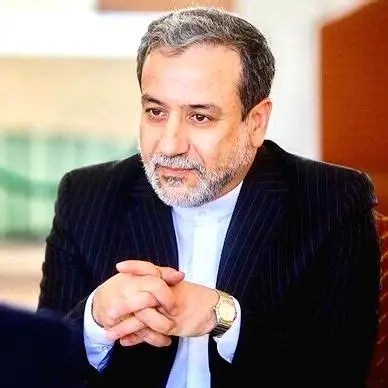
On July 20, 2026, Iranian Foreign Minister Abbas Araghchi provided a sweeping account of the 40-day war to filmmaker Javad Mogouei. The interview, published by Drop Site News, offers the most comprehensive Iranian perspective on the conflict to date, revealing the extent of Tehran’s pre-war planning, the immediate aftermath of the opening strikes, and the strategic calculations that shaped Iran’s response.
Pre-War Planning and the Certainty of Conflict
Araghchi stated that Iranian political and military officials were “certain” an attack was coming even before negotiations concluded. Tehran nevertheless entered three rounds of negotiations because there remained some chance of avoiding war and so no one could later claim Iran had refused diplomacy. The central dispute remained enrichment: Washington demanded zero enrichment and later a multi-year suspension, which Iran refused “even at the cost of war.”
By Friday, after the final round of talks in Geneva, Araghchi had concluded war was certain. Oman’s foreign minister, Badr al-Busaidi, traveled to Washington and warned Araghchi that the atmosphere there had become “completely” oriented toward war. Al-Busaidi expressed concerns that Steve Witkoff and Jared Kushner had not accurately conveyed the negotiations to senior US officials.
“Code 110”: The Leadership Assassination Contingency
The Supreme National Security Council had prepared written plans for scenarios ranging from a US-only attack to joint US-Israeli strikes, attacks on infrastructure, and the killing of Iran’s leader. The last scenario was reportedly assigned a code, ”Code 110”, because officials did not want to say it aloud. The plan included immediately closing the Strait of Hormuz if the leader was targeted and activating a broader regional military response.
Araghchi revealed that he survived the opening attack himself. At approximately 9 a.m., he was inside the leadership compound warning a senior official that an attack was imminent when multiple buildings were struck. He described three explosions, ceilings and walls collapsing, wounded people screaming, and himself and Mohammad Hejazi climbing through steel beams and rubble to escape. A stranger eventually drove the dust-covered foreign minister back to his ministry.
Simultaneous attacks targeted meetings involving military commanders, intelligence officials, and senior leadership, exposing what Araghchi called a major “security breach.” He suggested the breach may extend beyond espionage to attempts to influence Iranian decision-making and the country’s psychological environment.
Regional Retaliation and Strategic Calculation
Within hours of the attack, Araghchi personally called Gulf foreign ministers and told them Iran would strike American forces stationed on their territory. Tehran had warned regional governments even before the war: if Iran’s nuclear facilities were struck, equivalent targets would be hit; if the US entered the war, American bases across the region would be attacked; and if Iran was prevented from exporting oil, “no one in the region” would export oil.
One regional leader had confidently told Araghchi before the war that Iran’s nuclear and oil facilities would be destroyed and Tehran would be unable to respond because its leadership would also be targeted. This confidence reflected the widespread belief in Washington and Israeli circles that Iran would collapse within a month. Araghchi said American and Israeli officials told regional states to withstand Iranian retaliation for roughly one month because “this story will be over forever.”
When the 12-day war failed to produce that outcome, Israel changed strategy: prepare for a longer conflict, weaken the government’s social base, then kill political leaders and the supreme leader in the belief the system would collapse. Israel viewed the fall of Syria, Hezbollah’s losses, economic sanctions, and unrest inside Iran as evidence that the country had reached its weakest point.
Iranian Failures and Societal Resilience
Araghchi acknowledged serious Iranian failures before the war. Authorities had not anticipated the scale and speed of the January protests and failed to detect prior organisation and the later introduction of weapons and trained forces. He argued that those events reinforced Washington and Israel’s belief that Iran’s social base had collapsed and that an external attack would trigger a mass uprising against the government.
Instead, the population mobilised in support of the state, turning what Israel expected to be a vulnerability into what Araghchi called one of Iran’s greatest sources of resilience. This outcome fundamentally contradicted Western intelligence assessments and exposed the ideological blindness that underpinned US and Israeli strategy.
Reporter: “Israel wanted to assassinate you during those Pakistan talks?”
Abbas Araghchi: “I knew. Made a last call to my family.”
Reporter: “So why’d you go?”
Abbas Araghchi: “We’re Iranians. We don’t fear death for our nation. We went for peace. Now you see the real cancer.”
Escalation Management and Ceasefire Negotiations
Araghchi said that once Iranian infrastructure was struck, Tehran immediately attacked regional infrastructure with American shareholders, prompting regional governments to realise the war could expand dramatically and pressure Trump. Had Iran struck such targets first, he argued, it would have weakened Tehran’s claim to be acting in retaliation.
Ceasefire proposals began coming from Washington after the second week. Iran ultimately accepted a ceasefire because wars should end when you hold the strongest possible position, not simply continue until losses become unbearable. “You cannot gamble with people’s lives and the fate of the country,” Araghchi stated. He acknowledged that had the ceasefire come roughly 10 days earlier, Iran might have retained many of the same strategic gains while senior officials later killed, including Ali Larijani and Esmail Khatib, might still have been alive.
The final decision was made under extraordinary security constraints. Convening the entire Supreme National Security Council in one place risked having the country’s leadership wiped out in a single strike, so smaller groups reviewed the ceasefire. Iran agreed on the condition that Washington accept Tehran’s 10-point framework as the basis for negotiations.
The Outcome: A Strategic Victory
Araghchi called the outcome a “strategic victory.” The war began with Trump calling for Iran’s “unconditional surrender” and ended with a memorandum under which Iran and the US committed not to initiate war, use force, impose sanctions, interfere in each other’s internal affairs, or violate each other’s sovereignty and territorial integrity.
“The image of a weak Iran was replaced by the image of a strong and resilient Iran,” Araghchi said. “The world understood that Iran is strong.”
Analysis: The Materialist Interpretation of the 40-Day War
The Dialectics of Misperception
The 40-day war reveals a classic dialectical contradiction: the West’s perception of Iranian weakness was precisely the condition that produced Iranian strength. Washington and Tel Aviv entered the conflict believing that Iran’s social base had collapsed, that economic sanctions had crippled the state, and that an external attack would trigger a mass uprising against the government. This assessment, rooted in ideological blindness rather than material analysis, failed to account for the historical patterns of Iranian resistance to foreign aggression.
Iran, by contrast, entered the war with a materialist understanding of its own position. Tehran had war-gamed every conceivable scenario, prepared contingency plans for leadership decapitation, and developed a strategy of regional retaliation designed to impose costs on the United States and its allies. This preparation reflected a clear-eyed assessment of the class interests driving US policy and the strategic necessity of resistance.
The Class Interests Behind US Strategy
The United States’ war against Iran cannot be understood as a response to any genuine threat to American national security. Iran, located thousands of kilometres from American shores, poses no existential threat to the United States. The war must instead be understood as an expression of the class interests of the transnational capitalist oligarchy that controls US foreign policy.
The strategic objectives of the war were clear: energy monopoly over Asia, containment of China, preservation of American primacy, and the creation of conditions for the Greater Israel project. Each of these objectives served the interests of specific capitalist fractions: the energy sector, the military-industrial complex, and the Zionist ruling class that owns and controls major media networks and exerts disproportionate influence over US foreign policy.
Control over West Asian energy exports would allow the United States to throttle energy supplies to China and the rest of Asia, forcing nations into dependency on US LNG exports and accelerating deindustrialisation in potential competitors. The containment of China, the core driver of US strategy, requires the disruption of energy flows that sustain Chinese industrial production. The destruction of Iran’s regional alliance network would isolate Tehran and remove the primary obstacle to Israeli regional dominance.
The Hubris of Empire
The West’s failure to anticipate Iranian resilience reveals a deeper problem: the ideological blindness of empire. Washington and Tel Aviv could not conceive of Iranian resistance because their analytical frameworks categorised Iran as a weak, isolated, and internally divided state. This perception was not the product of empirical analysis but of wishful thinking, reinforced by a media apparatus that systematically misrepresented Iranian society.
The January protests, which Araghchi acknowledged were serious failures of Iranian intelligence, were interpreted as evidence of imminent collapse. The Syrian government’s fall, Hezbollah’s battlefield losses, and economic sanctions were all read as indicators of Iranian vulnerability. Each of these interpretations reflected the projection of Western assumptions onto an Iranian reality that did not conform to them.
The Failure of Decapitation Strategy
The opening attack, which targeted meetings involving military commanders, intelligence officials, and senior leadership, was designed to decapitate the Iranian state. The assumption was that killing Iran’s leaders would paralyse decision-making and trigger a collapse of the system. This strategy, which analysts have likened to the “Code 110” contingency, was based on a fundamental misreading of the Iranian state.
The Iranian state is not a top-down hierarchy that collapses when its leaders are removed. It is a complex institutional system with multiple centres of power, deep roots in Iranian society, and a history of resilience in the face of foreign aggression. The leadership compound was struck, buildings collapsed, and senior officials were killed, but the state did not collapse. Decision-making was devolved to smaller groups, contingency plans were activated, and the system continued to function.
The Regional Dimension: Hezbollah, Ansarallah, and the Axis of Resistance
The war against Iran was always a war against its regional allies. Hezbollah, Ansarallah, and the Popular Mobilisation Forces in Iraq constitute Iran’s strategic defensive depth, extending its capacity to retaliate and complicate US and Israeli aggression. The US war against Hezbollah in Lebanon, which continued even as negotiations proceeded, was not a separate conflict but an integral part of the war against Iran.
Araghchi’s account makes clear that Iran viewed attacks on its allies as attacks on itself. The pre-planned response to leadership decapitation included activating a broader regional military response, demonstrating that Iran’s strategy of “mosaic defence” was not an abstract doctrine but a practical plan of action.
The Energy Weapon and the Strategic Threshold
Iran’s threat to close the Strait of Hormuz and strike regional infrastructure with American shareholders was not a bluff. Araghchi’s account confirms that Tehran had prepared detailed plans to target energy infrastructure and disrupt global shipping if its own leadership was targeted. The warning that if Iran could not export oil, “no one in the region” would export oil was a strategic calculation designed to make the costs of war unbearable for the United States and its allies.
The decision to wait until Iranian infrastructure was struck before striking comparable regional targets was a calculated move to maintain Iran’s claim to be acting in retaliation. This positioning was essential for preserving regional legitimacy and preventing the Gulf states from forming a united front against Iran.
The Ceasefire Calculus
Iran’s acceptance of a ceasefire after 40 days reflects a materialist understanding of the relationship between war and politics. Wars should end, Araghchi argued, when you hold the strongest possible position, not simply continue until losses become unbearable. The ceasefire preserved Iran’s strategic gains while ending the immediate costs of the conflict.
The timing of the ceasefire was not accidental. Ceasefire proposals began coming from Washington after the second week, suggesting that the United States recognised the failure of its initial strategy earlier than has been publicly acknowledged. The final ceasefire agreement, which committed both sides not to initiate war, use force, impose sanctions, or interfere in each other’s internal affairs, represented a significant diplomatic achievement for Iran.
The Greater Israel Project and the Failure of Primacy
The Greater Israel project, the expansion of Israeli territory and influence from the Nile to the Euphrates, requires the defeat or neutralisation of Iran. Iran’s network of regional allies, Hezbollah in Lebanon, Hamas in Palestine, Ansarallah in Yemen, and the Popular Mobilisation Forces in Iraq, constitutes the primary obstacle to Israeli regional dominance.
Without a defeat of Iran, none of the strategic objectives of the Greater Israel project can be realised. Iran’s refusal to capitulate, its preplanned retaliation, and its willingness to escalate the conflict have made clear that the cost of pursuing the Greater Israel project is unacceptable. The failure of the 40-day war to produce a decisive victory has therefore dealt a significant blow to the project’s viability.
The Multipolar World and the Limits of American Power
The 40-day war reveals the limits of American power in the multipolar world. The United States cannot simply impose its will on regional powers, even with overwhelming military superiority. Iran’s demonstrated ability to withstand and retaliate against American aggression sends a signal to other nations considering resistance to US hegemony.
The outcome of the war will accelerate the ongoing shift toward multipolarity. The Gulf states, observing American inability to defeat Iran, will hedge their bets. Russia and China, both beneficiaries of higher oil prices and weakened US credibility, will pursue their strategic interests with greater confidence. The European allies, whose economies are vulnerable to energy price shocks and regional instability, will reconsider the costs of alignment with US policy.
The Digital Control Grid and Information Warfare
The digital control grid, the capacity of the United States to monitor, manipulate, and control global information flows, is central to the maintenance of American hegemony. The war against Iran was not only a military and economic conflict but also an information war, with narratives of Iranian weakness, internal division, and imminent collapse designed to manufacture consent for aggression.
The failure of these narratives in the face of Iranian resilience represents a significant defeat for the US information apparatus. The world observed Iran’s capacity to withstand American strikes, retaliate across the region, and force a ceasefire on terms it could present as a victory. The image of a weak Iran was replaced by the image of a strong and resilient Iran, as Araghchi put it.
The Reserve Currency and Economic Warfare
The US dollar’s status as the global reserve currency is essential to American hegemony. The threat to the dollar’s position, through the rise of BRICS, the development of alternative payment systems, and the diversification of reserve holdings, is one of the most significant challenges to US primacy.
The war against Iran must be understood in this context. Control over West Asian energy exports, combined with the weaponisation of the dollar through sanctions, allows the United States to maintain the dollar’s dominant position. The disruption of Iranian oil exports reduces the availability of oil denominated in dollars, while sanctions force Iran to seek alternative payment systems, accelerating the shift toward multipolar financial arrangements.
The Costs of Overextension
The 40-day war exposed the costs of American overextension. The United States is not only confronting Iran but also Russia, China, and the forces of multipolarity across multiple fronts. Each of these fronts imposes demands on American resources, attention, and political capital, and the cumulative effect is to stretch American power to its breaking point.
The war in Ukraine, the strategic competition with China, the containment of Iran, and the maintenance of global hegemony are not separate conflicts but interconnected elements of a single struggle. The failure to achieve decisive victory in any one front weakens the American position on all others.
Conclusion: The Strategic Crossroads
The 40-day war was a watershed moment in the struggle for global primacy. Iran’s demonstrated resilience, its preplanned retaliation, and its willingness to escalate the conflict have exposed the limits of American power and the ideological blindness that underpins US strategy. The West’s strategic objectives, energy monopoly over Asia, containment of China, preservation of American primacy, and the Greater Israel project, were all contingent upon a decisive victory that never materialised.
The outcome of the war carries profound implications for the future of the region and the trajectory of American hegemony. The image of Iranian weakness has been replaced by the image of Iranian strength. The United States, having failed to achieve its objectives, faces a choice between further escalation and a strategic recalibration that acknowledges the limits of its power.
The class interests driving US policy, the energy sector, the military-industrial complex, the Zionist ruling class, will continue to push for confrontation. The internal contradictions of American capitalism, combined with the relative decline of US power, create powerful incentives for escalation. Yet the lessons of the 40-day war suggest that escalation carries its own risks, and that the pursuit of primacy through military force may ultimately accelerate the decline it seeks to prevent.
The materialist interpretation of the war reveals that Iran’s resilience was not a function of luck or external support but of strategic preparation, societal cohesion, and a clear-eyed understanding of the class interests that animate US policy. Tehran entered the war expecting the worst and planning for every contingency. Washington and Tel Aviv entered the war expecting an easy victory and planning for none.
The outcome is a testament to the dialectical relationship between perception and reality, and a warning to those who mistake ideological conviction for material analysis. The struggle for global primacy continues, but the terms of that struggle have been fundamentally altered by Iran’s refusal to capitulate. The world has witnessed the limits of American power, and the consequences of that realisation will be felt for decades to come.
Authored By: Global GeoPolitics
If you prefer to make a one time donation in support of my work, you can do so by clicking any link below:
https://donate.stripe.com/7sY8wPfvi864don0k3awo07 |
https://buymeacoffee.com/ggtv |
https://ko-fi.com/globalgeopolitics |
Bitcoin: 3NiK8BoRZnkwJSHZSekuXKFizGPopkE7ns
Reference
Araghchi, A. (2026) Interview with Javad Mogouei, Drop Site News, 20 July. Available at:
(accessed 21 July 2026).
Berletic, B. (2026) ‘The US War on Iran Continues’, New Eastern Outlook, 3 July. Available at:
(accessed 15 July 2026).
Crooke, A. (2026) ‘Iran War 3.0’, available at: https://archive.ph/ycFzP (accessed 15 July 2026).
Nader, A. (2009) ‘Dangerous But Not Omnipotent: Exploring the Reach and Limitations of Iranian Power in the Middle East’, RAND Corporation, prepared for the United States Air Force. Available at: https://www.rand.org/pubs/monographs/MG876.html (accessed 15 July 2026).
Trump, D. (2026) Remarks at NATO Summit, Ankara, 8 July 2026, as reported in Crooke (2026).
© All rights reserved


Leave a Reply