
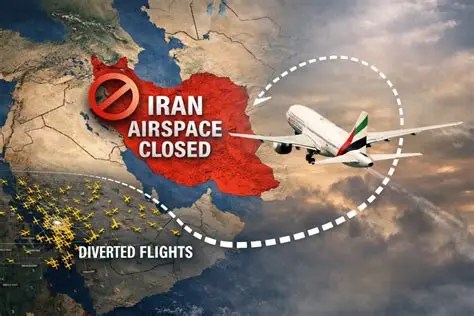
Washington promised to drive Iranian oil exports to zero and ground Iran’s airlines by late September. Nearly fifty days later, the oil is still moving, the planes are still landing, and the political and monetary costs are landing squarely on the United States.
Editorial Analysis | October 2026
The “Economic D-Day” was presented as the decisive blow that military operations had failed to deliver, but the observable record nearly fifty days later shows a campaign that has stalled rather than succeeded. Treasury Secretary Scott Bessent dispatched enforcement teams to more than fifty countries, threatened secondary sanctions against any entity facilitating Iranian trade, and publicly declared that Iranian oil exports would hit zero and all Iranian airlines would be shut down worldwide by late September. Those deadlines expired without being met. The Washington Post reported that while the naval blockade has forced maritime oil exports to minimal levels, it has failed to sever Tehran’s broader economic lifelines. Iran continues to export energy overland via highways and railways through Central Asia and the wider region, and international flights continue to arrive in Tehran from Istanbul, Moscow, Shanghai, and Islamabad. Talks remain stalled, and Iran’s top security official, Mohsen Rezaei, has made clear that Washington must accept all seven points proposed by Tehran.
The airline blockade has failed as comprehensively as the oil embargo, exposing the profound limits of American secondary sanctions in the face of determined geopolitical resistance. The United States had vowed to ground Iran’s airlines globally by cutting off access to international airspace, maintenance facilities, and aviation insurance. Yet commercial flights from Istanbul, Moscow, Shanghai, and Islamabad continue to land at Tehran’s airports on a daily basis, maintaining the country’s vital connections to the global economy. The failure of the aviation blockade stems from the refusal of major regional powers to comply with American demands. Russia has deepened its aviation cooperation with Tehran, leasing aircraft and providing maintenance to bypass Western restrictions, while Chinese carriers maintain essential connectivity. Furthermore, enforcing the blockade would require Washington to sanction major NATO ally Turkey and massive Chinese state-owned airlines. Bessent has explicitly acknowledged the impossibility of fully enforcing this siege without destabilising the global economy, asking why he would want to trigger a systemic financial collapse by going after large international financial institutions and their associated aviation networks.
The material arithmetic of the maritime blockade explains why the campaign has failed to produce the promised collapse. Iran’s pre-war seaborne exports of roughly 1.7 million barrels per day would require thousands of loaded tanker trucks every day to replace by road, a volume that the border crossings with Turkey and Pakistan cannot plausibly sustain. China still purchases roughly ninety per cent of Iran’s crude, and Chinese entities have for years facilitated non-dollar settlement for Iranian oil exports. The blockade has therefore raised the cost of Iranian exports without eliminating them, and the Islamic Republic has demonstrated that it can absorb those costs while maintaining its uncompromising negotiating position.
The economic blowback inside the United States has been severe and politically consequential. Brent crude has traded between $103 and $105 per barrel, representing a cumulative increase of roughly fifty per cent for the year, while the national average diesel price reached a record $6.52 per gallon in October. Diesel prices have climbed by sixty-seven per cent, and fertiliser costs have seen steep increases that hit American farmers directly. Consumer price inflation rose to 3.7 per cent in September, driven largely by fuel and clothing costs, and energy prices were more than twenty per cent higher than a year earlier. More than seventy per cent of American respondents in recent polls disapprove of President Trump’s handling of inflation, according to polling aggregated by Silver Bulletin. The administration has responded with stopgap measures, including allowing Russian diesel imports after years of sanctions and proposing rebate cheques, but these responses address the symptoms rather than the root cause.
The political consequences for the midterm elections are already visible in the geography of the campaign. Inflation and economic frustration have expanded the map of competitive midterm districts deep into Republican territory, and Republicans are fighting competitive contests in states that Trump won by double-digit margins two years ago, including Texas, Alaska, and Kansas. Trump has flown to previously reliable red states in a last-minute dash to shore up candidates who should not have been in jeopardy, according to polling analyst Tim Malloy of Quinnipiac University. The final inflation report before the 3 November elections showed prices rising faster than expected, and Democrats have seized on the energy-driven inflation to blame the president’s war and tariff policies. The political outcome is not yet determined, but the direction of pressure is unmistakable, because the war has become an affordability crisis and the party in power owns the price at the pump. This however, does not impact the United States foreign policy. The elections are not a mechanism for changing policy but a mechanism for legitimising the status quo, and the public is manipulated into focusing on politicians and elections to prevent it from recognising the corporate interests that are the actual source of the problems it faces.
The corporate interests that determine United States policy include the arms manufacturers, the banks, the oil companies, the pharmaceutical industry, the technology corporations, and the equity firms such as BlackRock and Vanguard that hold vast portfolios across all of these sectors. These interests play musical chairs not only between companies within industries but across different industries and shareholders, and the same individuals often sit on the boards of multiple corporations that appear to be competitors. The elections are there to distract the public from this reality, and the political circus that surrounds them is designed to engage the public emotionally and absorb its time and energy. The public is the hamster on the wheel, expending enormous energy while going absolutely nowhere, and the cage is constructed by the corporate interests that benefit from the public’s inability to recognise the true nature of its confinement.
The monetary implications extend beyond the immediate electoral cycle and threaten the structural foundations of American financial hegemony. Iran has begun accepting yuan as payment for transit through the Strait of Hormuz, and China’s Cross-border Interbank Payment System registered a record single-day transaction volume of 1.22 trillion yuan, equivalent to approximately $179 billion. The 2026 US-Iran conflict has renewed focus on the geopolitical fragility of a dollar-centric oil trade, and Iran’s move towards yuan-denominated settlements with China signals a deliberate manoeuvre to circumvent sanctions. The dollar’s role in oil trade has long rested on the compact between the United States and Saudi Arabia, which required oil to be priced in dollars and recycled surplus revenues into US Treasuries in exchange for American security guarantees. That arrangement is now under severe strain as sanctions, war, and the weaponisation of the dollar accelerate the search for alternatives. The petrodollar is not collapsing overnight, but the direction of travel is toward a more fragmented monetary order in which oil can be settled in multiple currencies.
A realist analysis explains why the campaign was always likely to fail in its maximal objectives. The United States possesses overwhelming military and financial power, but coercive power is effective only when the target cannot exit the coercive relationship. Iran has spent decades building sanctions-evasion networks, overland trade corridors, and financial relationships with China that allow it to continue exporting energy even when maritime routes are constrained. The American threat to cut off countries that trade with Iran is credible only if those countries cannot find alternatives to the dollar system, and China’s payment infrastructure and aviation networks provide exactly such an alternative. The security dilemma operates in reverse here, because every escalation of American coercion convinces Tehran and Beijing that they must deepen their de-dollarised arrangements, which in turn erodes the structural power that made American coercion possible in the first place.
Game theory clarifies the strategic interaction that has produced the stalemate. Washington faces a commitment problem, because it cannot credibly promise to lift sanctions in exchange for concessions when future administrations can reimpose them, and Iran therefore has little incentive to surrender its leverage. Tehran has chosen an attrition strategy, betting that the economic and political costs of the blockade will accumulate faster for the United States than for Iran. China and Turkey have chosen a strategy of opportunistic settlement, purchasing discounted Iranian crude and maintaining aviation links while avoiding direct confrontation with Washington. The equilibrium is a costly stalemate in which neither side can achieve its maximal objectives, but the United States bears the additional burden of a domestic political calendar that Iran does not face. The midterms constrain the timing of further escalation, and the inflation report has made the war a liability rather than an asset.
The conclusion is not that American power has collapsed, but that its financial instruments have limits that the architects of Operation Economic Outcast did not anticipate. The campaign promised a decisive victory and delivered a protracted stalemate, higher energy costs, a politically damaging inflation report, and an accelerated shift away from dollar-denominated oil trade. Iran has not capitulated, the planes are still landing in Tehran, and the oil is still moving. The political consequences will be measured at the ballot box in November, and the monetary consequences will be measured in the slow, uneven erosion of the dollar’s role as the sole settlement currency of the world’s most important commodity.
Authored By: Global GeoPolitics
Thank you for visiting. This is a reader-supported publication. If you believe journalism should serve the public, not the powerful, and you’re in a position to help, becoming a PAID SUBSCRIBER truly makes a difference. Alternatively you can support by way of a cup of coffee:
https://buymeacoffee.com/ggtv |
https://ko-fi.com/globalgeopolitics |
Bitcoin: 3NiK8BoRZnkwJSHZSekuXKFizGPopkE7ns
References
Congressional Research Service (2026) U.S. Military Spending: Overview and Trends. Washington, DC: CRS. Available at: https://crsreports.congress.gov/product/pdf/IF/IF10511 (Accessed: 17 October 2026).
Energy News Beat (2026) ‘Hormuz Oil Shipments Hit Six-Month High, States US Commander’, Energy News Beat, 19 September. Available at: https://energynewsbeat.co/crude-oil/hormuz-oil-shipments-hit-six-month-high-states-us-commander/ (Accessed: 17 October 2026).
Iran International (2026) ‘Bessent says Iran could have “nothing left to trade” within two weeks’, Iran International, 28 September. Available at: https://www.iranintl.com/en/202609288369 (Accessed: 17 October 2026).
NYT (2026) ‘Democrats Blame Trump After CPI Report Shows Energy Prices Drove Up Inflation’, New York Times, 14 October. Available at: https://www.nytimes.com/2026/10/14/business/economy/inflation-trump-democrats-midterms-energy.html (Accessed: 17 October 2026).
Press TV (2026) ‘Mirage of capitulation: Bessent’s “Economic D-Day” on Iran proves another foolhardy and failed gamble’, Press TV, 14 October. Available at: https://www.presstv.co.uk/Detail/2026/10/14/778296/mirage-capitulation-bessent-economic-dday-iran-proves-another-foolhardy-failed-gamble (Accessed: 17 October 2026).
Press TV (2026) ‘Bessent’s “Operation Economic Outcast” on Iran backfires on US economy’, Press TV, 17 October. Available at: https://www.presstv.co.uk/Detail/2026/10/17/778501/Bessent%E2%80%99s-%E2%80%98Operation-Economic-Outcast%E2%80%99-on-Iran-backfires-on-US-economy (Accessed: 17 October 2026).
Reuters (2026) ‘Iran’s airlines defy US sanctions as flights from Istanbul, Moscow and Beijing continue’, Reuters, 12 October. Available at: https://www.reuters.com (Accessed: 17 October 2026).
TASS (2026) ‘Middle East conflict leads to revival of petroyuan initiative Bloomberg’, TASS, 14 April. Available at: https://tass.com/economy/2116591 (Accessed: 17 October 2026).
The Economic Times (2026) ‘Oil trade’s shift towards a currency-agnostic future’, The Economic Times, 8 September. Available at: https://energy.economictimes.indiatimes.com/news/oil-and-gas/oil-trades-shift-towards-a-currency-agnostic-future/133903259 (Accessed: 17 October 2026).
The Guardian (2026) ‘US inflation rose to 3.7% in September in blow to Republicans before midterms’, The Guardian, 14 October. Available at: https://www.theguardian.com/business/2026/oct/14/us-inflation-september-midterms (Accessed: 17 October 2026).
US Department of the Treasury (2026) Operation Economic Outcast Neutralizes Iranian Regime’s Remaining Shadow Fleet Network. Washington, DC: Treasury, 8 October. Available at: https://home.treasury.gov/news/press-releases/sb0653/ (Accessed: 17 October 2026).


Leave a Reply