
Empty Lipid Nanoparticles Linked to Increased Cancer Spread in Mice
A 2026 study published in Nano Today reported that certain lipid nanoparticles used to deliver mRNA increased the spread of cancer in mice. The researchers found that this happened even when the nanoparticles were empty and contained no mRNA. In one experiment, the amount of cancer found in the lungs was more than ten times higher in mice given the nanoparticles before cancer was introduced.[1]
The researchers compared several groups of mice. Some received empty lipid nanoparticles, while others received nanoparticles carrying a harmless marker gene called GFP. Another group received control injections. Both the empty nanoparticles and the nanoparticles carrying GFP were linked to increased numbers of tumors in the lungs. The researchers concluded that the effect was not caused by the GFP cargo.[1]
The main lipid nanoparticle tested by the researchers contained ALC-0315, cholesterol, DSPC, and DMG-PEG 2000. ALC-0315 is the ionizable lipid used in the Pfizer-BioNTech COVID-19 vaccine. However, the study did not inject the Pfizer vaccine itself. The researchers made their own experimental nanoparticle formulation containing ALC-0315.[1][2]
The researchers also tested other formulations. A second formulation containing ALC-0315 also increased cancer spread in the mice. A third formulation using SM-102, the ionizable lipid used in Moderna’s vaccine, did not produce the same effect in these experiments. Therefore, the researchers did not find the same effect with every type of lipid nanoparticle they tested.[1]
The effect was observed in several cancer models, including melanoma, breast cancer, and colon cancer. In the colon cancer experiment, mice that received the nanoparticles before cancer exposure developed a much greater tumor burden in their lungs. The researchers also reported more tumor sites in the liver. They found that higher doses of the nanoparticles produced greater cancer spread.[1]
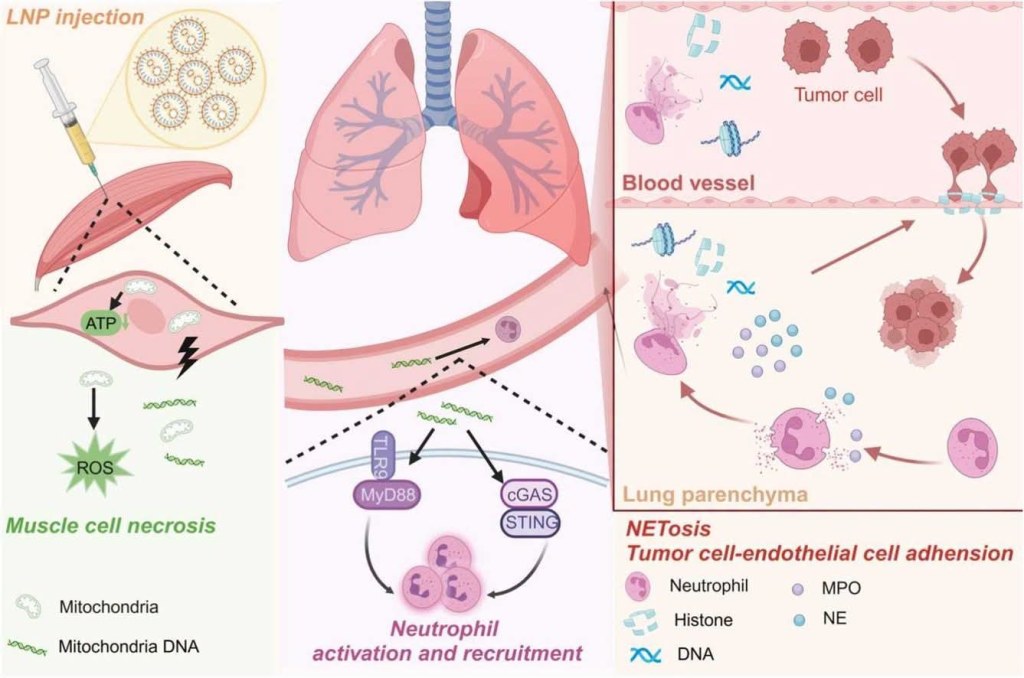
The study also investigated how the nanoparticles might produce this effect. After the nanoparticles were injected into muscle, the researchers observed damage to cells at the injection site. They reported swollen and damaged cells and found mitochondrial DNA in the bloodstream after this tissue damage occurred.[1]
According to the researchers, the mitochondrial DNA activated neutrophils, a type of white blood cell involved in inflammation. The neutrophils then produced structures known as neutrophil extracellular traps, or NETs. These sticky webs can trap cells and other material in tissues. The researchers proposed that the NETs created conditions that made it easier for cancer cells to settle in the lungs.[1]
The researchers then blocked neutrophils or interfered with the formation of these extracellular traps. When they did this, the increased spread of cancer was reduced. This supported their proposed explanation that tissue damage, mitochondrial DNA, neutrophil activation, and NET formation were involved in the metastatic effect.[1]
The study therefore reported a concerning finding in cancer-bearing mice: certain lipid nanoparticle formulations appeared to promote the spread of existing cancer, even without mRNA inside the particles. The effect was seen across multiple cancer models, increased with higher doses, and was reduced when the researchers blocked the inflammatory pathway they identified.[1]
However, these findings do not prove that Pfizer’s COVID-19 vaccine causes cancer to spread in people. The researchers used experimental lipid nanoparticle formulations in mice rather than testing the licensed Pfizer vaccine in humans. Whether the same effect occurs in humans at vaccine doses and under real-world conditions would require separate clinical evidence.
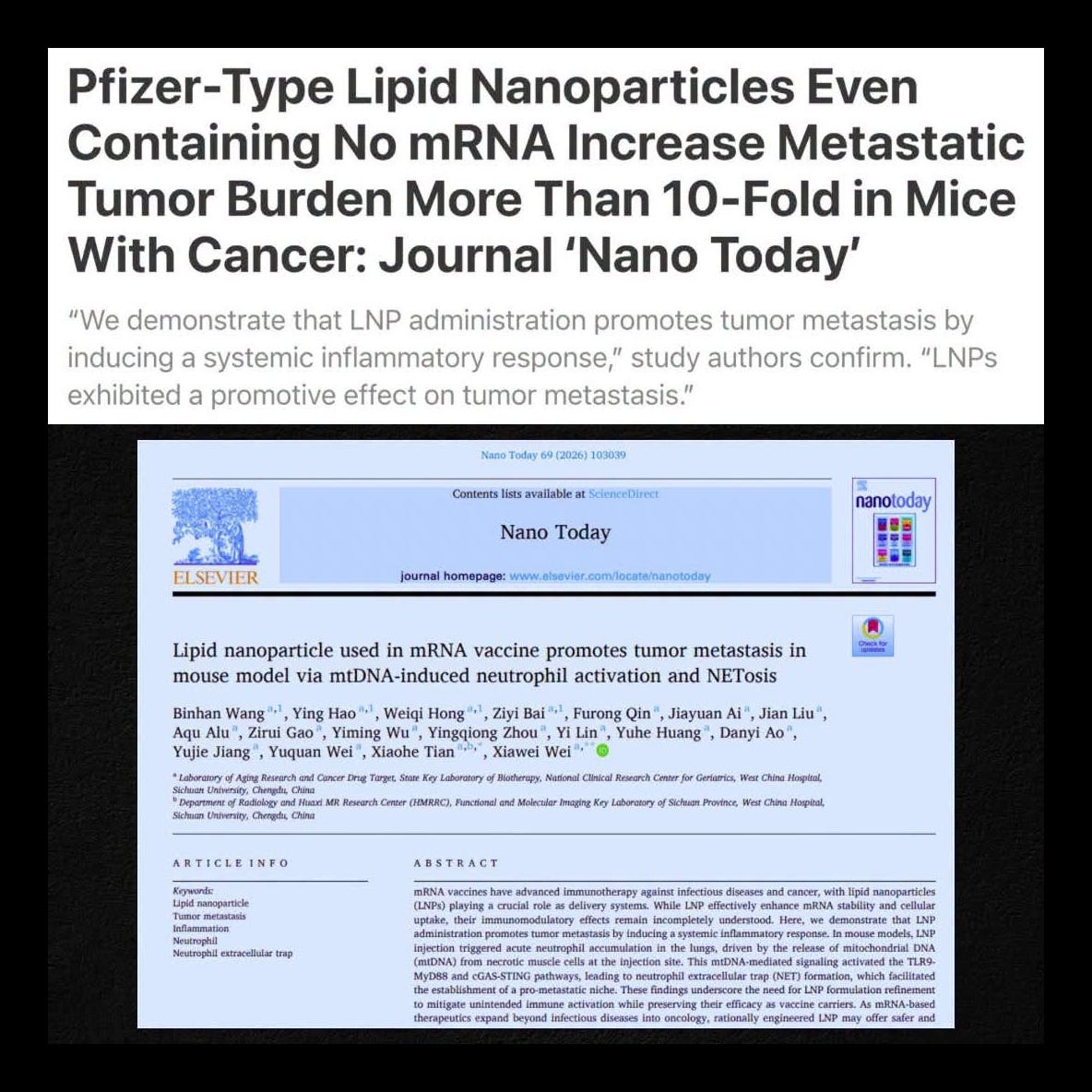
(Pfizer-Type Lipid Nanoparticles Even Containing No mRNA Increase Metastatic Tumor Burden More Than 10-Fold in Mice With Cancer: Journal ‘Nano Today’: “We demonstrate that LNP administration promotes tumor metastasis by inducing a systemic inflammatory response,” study authors confirm. “LNPs exhibited a promotive effect on tumor metastasis.” – Jon Fleetwood, September 2)
The study nevertheless raises an important question about the biological effects of lipid nanoparticles themselves, rather than only the genetic material they carry. The researchers’ findings suggest that, in these mouse models, certain lipid nanoparticles could have biological effects of their own and may influence inflammation and tumor metastasis.
Link to paper:
Authored By: Global GeoPolitics
If you prefer to make a one time donation in support of my work, you can do so by clicking any link below:
https://donate.stripe.com/7sY8wPfvi864don0k3awo07 |
https://buymeacoffee.com/ggtv |
https://ko-fi.com/globalgeopolitics |
Bitcoin: 3NiK8BoRZnkwJSHZSekuXKFizGPopkE7ns
References
[1] Nano Today (2026), study examining lipid nanoparticles, tissue damage, neutrophil extracellular traps, and cancer metastasis in mice.
[2] U.S. Food and Drug Administration (FDA), Pfizer-BioNTech COVID-19 vaccine information describing the vaccine’s lipid nanoparticle components, including ALC-0315.


Leave a comment