
New Trade Route Linking China’s Inland Factories to Southeast Asia
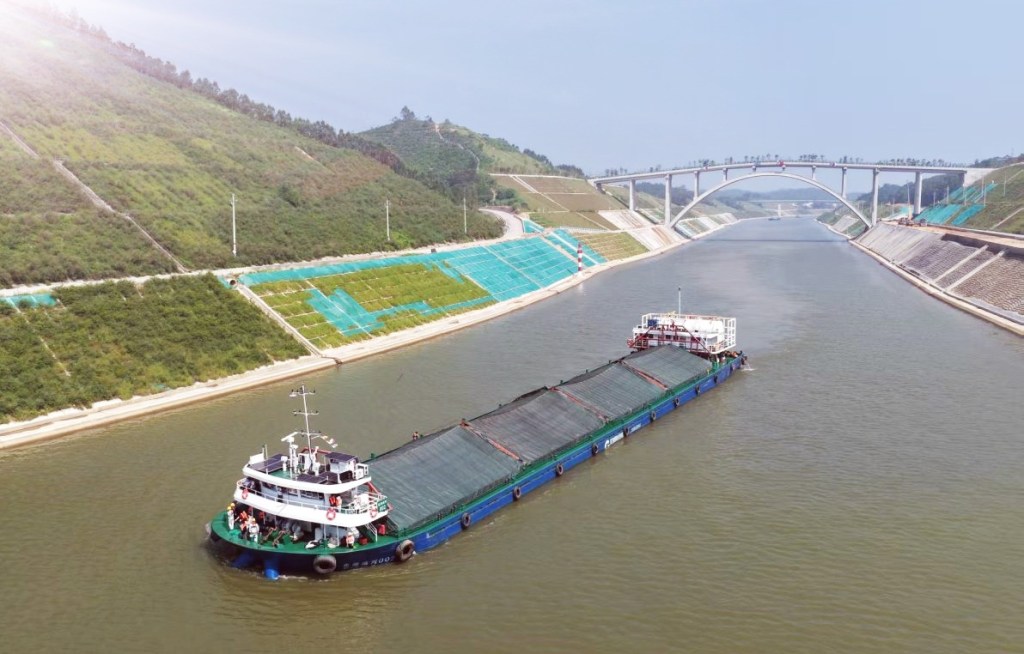
Later this month, cargo ships are expected to begin using a new and shorter route from China’s industrial southwest to the sea.
The 134-kilometre Pinglu Canal connects Nanning and the inland river network of Guangxi to the Gulf of Tonkin. The canal has been built for ships carrying up to 5,000 tonnes and reduces the journey to the coast by about 560 kilometres. The project cost around $10.8 billion.
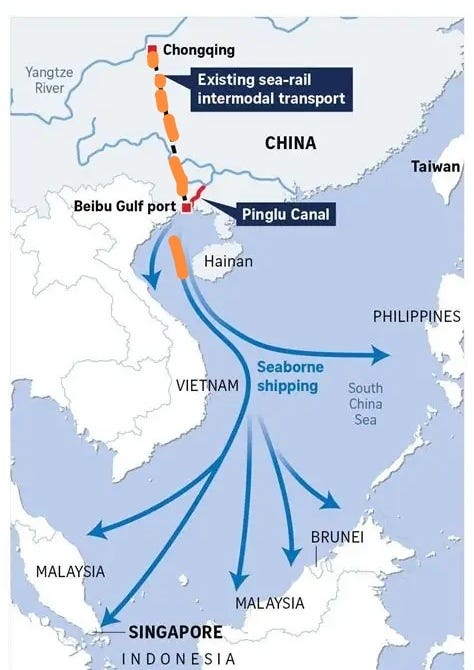
For manufacturers, the most important benefit is further upstream. Rivers across Guangxi can now connect with a sea route leading towards Vietnam, Hainan and the wider Southeast Asian market. Goods from Yunnan, Guizhou and Sichuan can travel to Nanning, be transferred onto ships and avoid the longer route to the coast.
Water transport is cheaper than road or rail for moving heavy and large amounts of goods. As a result, products such as textiles, timber, plastics, steel, electronics and industrial equipment could make up much of the canal’s early traffic.
Vietnam is an important part of the canal’s economic importance. Some Chinese manufacturers have moved parts of their production to Vietnam, while factories in China continue to provide machinery, components and other parts. Although some production takes place across the border, the supply chain remains closely connected to Chinese industry. The Pinglu Canal can make this system faster and cheaper.
Recent trade figures support this trend. China–ASEAN trade reached $744.4 billion during the first seven months of 2026, an increase of 24.7% compared with the same period a year earlier. Trade between China and Vietnam alone increased by 33.7% to $215.1 billion. Southeast Asia has helped Chinese exporters deal with the effects of the renewed trade war with the United States and has become China’s largest trading partner.
The Pinglu Canal could also help spread export growth beyond China’s busy eastern coast. Inland factories will have cheaper access to international markets, while Guangxi and Hainan could become important transport and trade gateways between China and ASEAN countries. This could allow investment to move further inland without cutting factories off from international trade.
The canal is also connected to existing railways and highways around Nanning. Transport terminals can collect goods from several provinces and transfer them from trains and trucks onto ships for the final journey to the Gulf of Tonkin.
The canal’s first major route will connect with Hainan, but its larger long-term purpose is to improve trade with Vietnam and the rest of Southeast Asia. A new fleet of vessels is already being prepared, suggesting that authorities expect the canal to handle a large amount of traffic from the beginning.
There is a wider strategy behind the canal and its locks. China is developing several transport routes connecting its inland industrial areas with coastal ports and neighbouring countries. Each new route can reduce transport costs, give exporters more choices and strengthen the links between Chinese factories and regional supply chains.
The United States is trying to weaken these production links through tariffs and political pressure. China’s response is to invest in infrastructure. The Pinglu Canal is another transport corridor that could reduce costs and provide a shorter route from China’s inland factories to international markets.
Authored By: Global GeoPolitics
If you prefer to make a one time donation in support of my work, you can do so by clicking any link below:
https://donate.stripe.com/7sY8wPfvi864don0k3awo07 |
https://buymeacoffee.com/ggtv |
https://ko-fi.com/globalgeopolitics |
Bitcoin: 3NiK8BoRZnkwJSHZSekuXKFizGPopkE7ns


Leave a comment