
The Bishkek Summit and the Practical Contours of Eurasian Multipolar Construction
Editorial Analysis | September 2026
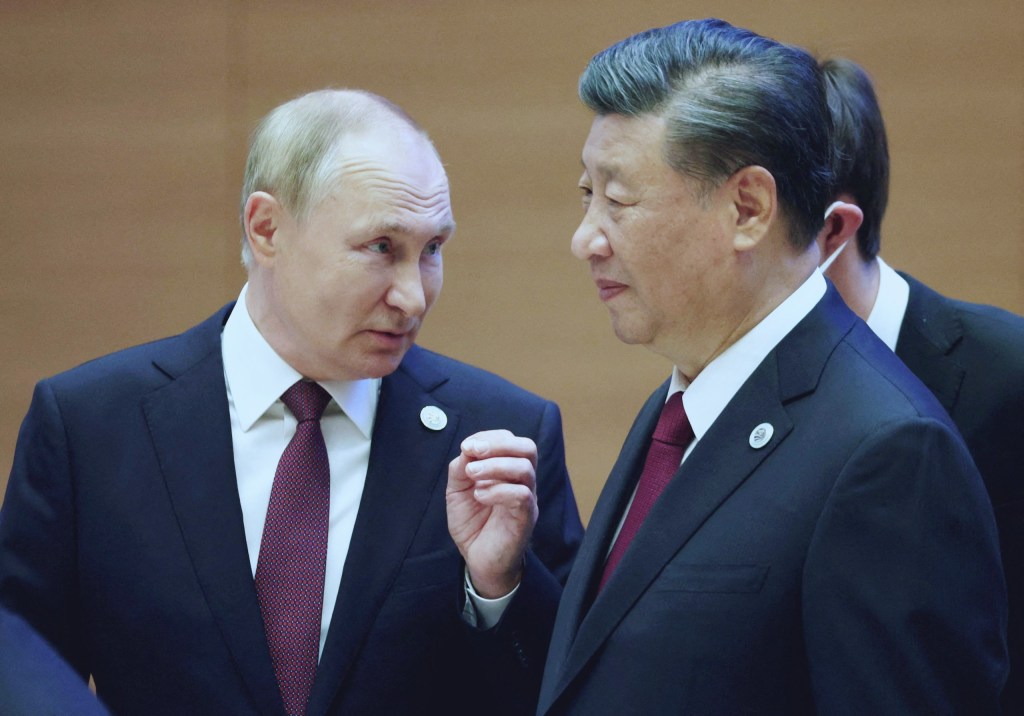
The twenty-fifth summit of the Shanghai Cooperation Organisation held in Bishkek generated less theatrical display than the preceding gathering in Tianjin yet advanced several concrete institutional steps that clarify the organisation’s evolving role. Member states adopted a final declaration that condemned the United States attack on Iran with collective clarity while supporting reform of the international financial system and positioning the SCO as a forum for debating global questions. The text rejected double standards in the treatment of terrorism, opposed interference in the internal affairs of sovereign states, and reaffirmed the principle of indivisible security. These formulations amount to a concise statement of Eurasian priorities that stands in deliberate contrast to the fragmented approaches characteristic of Western alliance management.
Among the documents signed in the Kyrgyz capital one instrument regulates the Universal Centre for Countering Security Challenges and Threats to SCO Member States. The centre is intended to provide a coordinated mechanism for responding to hybrid operations and open military pressure. Iran, as a full member, underlined the practical urgency of establishing both a development bank and an energy consortium capable of insulating regional projects from external disruption. Russian President Vladimir Putin observed that the organisation now constitutes the largest regional association on the Eurasian continent and in the world, encompassing nearly half of global population and more than one-third of global gross domestic product. He reported that Russian trade with SCO countries surpassed four hundred billion dollars in 2025 and that national currencies already account for more than ninety-eight per cent of Moscow’s settlements with fellow members.
The proposed SCO Development Bank is advancing through multilateral consultations on charter, capital and governance. Putin stressed that the institution must remain as independent as possible from financial systems deployed as weapons to secure unilateral advantages. Parallel work continues on an Energy Cooperation Strategy scheduled for detailed implementation through 2030. These financial and energy initiatives complement Chinese priorities articulated by President Xi Jinping, who framed the organisation as a platform for promoting high-quality Belt and Road cooperation and the Global Development Initiative. Xi called for consolidation of traditional cooperation in trade, investment, connectivity, energy and resources together with expansion into artificial intelligence, the digital economy, green industry and green mining. Specific measures include an international artificial-intelligence application cooperation centre, increased photovoltaic and wind capacity, and one hundred technological projects over three years.
Connectivity projects already under construction illustrate the practical geography of this emerging architecture. The International North–South Transportation Corridor links Russia, Iran and India, permitting trade in oil, gas and cargo to move from the Caspian through Iranian territory to the Persian Gulf and onward without reliance on Western-controlled maritime chokepoints. Complementary corridors such as the China–Kyrgyzstan–Uzbekistan railway and cross-border pipelines including Power of Siberia further integrate energy and logistics networks across the continent. In bilateral discussions Russia confirmed ongoing assistance to Iran in responding to naval blockade measures, underscoring the operational solidarity that accompanies formal declarations.
Russian economist Sergey Glazyev has argued that Washington’s threat to sever partners of Iran from dollar-based systems creates an opening for a sovereign digital settlement currency. His preferred design begins with a gold-backed instrument and later incorporates a commodity basket so that SCO trade need no longer transit payment systems controlled by NATO-aligned institutions. Glazyev notes that further delay risks serious losses for China, India and other members whose commercial links with Iran remain partially exposed. Complementary analysis by Michael Hudson focuses on the existing backlog of dollarised debts that continue to constrain growth in oil-dependent and food-deficit economies across Asia and the Global South. Hudson contends that productive credit extended by China, Russia and Iran through equity positions in public infrastructure would allow debtor states to escape the cycle of debt dependency while compensating the creditor economies through mutual gain.
Taken together these proposals outline a road map that moves beyond declarative multipolarity toward operational alternatives in settlement, credit and energy coordination. The SCO and the related BRICS framework are still assembling the technical and legal instruments required for full implementation. Yet the combination of institutional decisions taken in Bishkek, the scale of existing national-currency settlements, and the concrete connectivity corridors already in use indicates that the process has advanced beyond rhetorical aspiration. Western responses that rely on sanctions, naval interdiction and financial exclusion confront an expanding set of parallel mechanisms designed precisely to render such instruments less effective. The durability of the emerging architecture will depend on the capacity of member states to align industrial production, technological standards and risk-sharing arrangements at a pace that matches the intensity of external pressure.
Authored By: Global GeoPolitics
If you prefer to make a one time donation in support of my work, you can do so by clicking any link below:
https://donate.stripe.com/7sY8wPfvi864don0k3awo07 |
https://buymeacoffee.com/ggtv |
https://ko-fi.com/globalgeopolitics |
Bitcoin: 3NiK8BoRZnkwJSHZSekuXKFizGPopkE7ns
References
Escobar, P. (2026) ‘What the SCO is really up against’, Geopolitics Prime, September.
Glazyev, S. (n.d.) Statements on sovereign digital settlement currency and the UNIT project, as reported in contemporaneous analysis of SCO financial architecture.
Hudson, M. (n.d.) Analysis of dollarised debt overhang and equity-based productive financing for Belt and Road partners, as cited in discussions of SCO and BRICS financial alternatives.
Ministry of Foreign Affairs of the People’s Republic of China (2026) ‘President Xi Jinping attends the 26th Meeting of the Council of Heads of State of the Shanghai Cooperation Organization and delivers important remarks’, 1 September. Available at: https://www.fmprc.gov.cn/eng/xw/zyxw/202609/t20260901_12014119.html (Accessed: 5 September 2026).
Putin, V. (2026) Remarks at the SCO Council of Heads of State meeting in Bishkek concerning trade volumes, national-currency settlements and the Development Bank, as reported in official and independent coverage, 1 September.
South China Morning Post (2026) ‘SCO takes landmark stand on nuclear security as Iran comes under renewed attack’, 2 September. Available at: https://www.scmp.com/news/china/diplomacy/article/3366108/sco-takes-landmark-stand-nuclear-security-iran-comes-under-renewed-attack (Accessed: 5 September 2026).
Sentinel Assam (2026) ‘SCO condemns strikes on Iran, backs Palestine settlement: Key takeaways’, 3 September. Available at: https://www.sentinelassam.com/more-news/international/sco-condemns-strikes-on-iran-backs-palestine-settlement-key-takeaways (Accessed: 5 September 2026).


Leave a Reply