
After Larak Island strike, Iranian academic and former adviser Mohammad Marandi warns of a “different” and “very painful” response that may include economic assets, with potential effects on energy
General Article |September 2026
United States Central Command confirmed that American forces struck two launchers on Larak Island late on 30 August. Officials stated that Islamic Revolutionary Guard Corps units had been preparing to fire rockets carrying sea mines into the Strait of Hormuz. Iranian sources reported explosions near the island and later confirmed that the attack caused deaths and injuries among military personnel and civilians. The Guard Corps described the operation as an act of desperation and promised definite punishment for the aggressor. Within hours Iranian forces launched missiles and drones against United States facilities in Jordan, claiming damage to technical infrastructure and fighter positions. American sources reported that most incoming projectiles had been intercepted, while Iranian accounts presented a more contested assessment of the results.
( Professor Seyed Marandi on RT)
In the days that followed, Seyed Mohammad Marandi, professor at the University of Tehran and a former adviser to Iranian nuclear negotiators, characterised the American strike as a grave miscalculation. Speaking to RT, he stated that Tehran would not hold back after the deaths of its servicemen and that the coming response would be different from previous exchanges. The reply, he said, would be very painful and would likely affect the United States economy in the weeks ahead, with possible consequences for the midterm elections. Marandi linked the shift to the simultaneous application of military force and intensified economic pressure by Washington. Last week the Trump administration announced what it termed an economic onslaught against Iran, while oil prices rose following the latest exchange of fire.
The phrase “different” response, as employed by Marandi and echoed in official Iranian statements, points toward an expansion of target sets beyond purely military installations. Throughout the conflict Iranian officials and affiliated commentators have repeatedly indicated that attacks on Iranian critical infrastructure would be met by strikes against the economic assets of states hosting American forces or cooperating with the campaign. Gulf states rely heavily on desalination plants for drinking water and on concentrated oil, gas and power facilities for export revenue. These installations are fixed, coastal and within range of Iranian missiles and drones. Earlier phases of the war saw limited damage to such facilities on both sides of the Gulf; the present warning suggests a readiness to treat them as legitimate objects of retaliation should American strikes continue or intensify.
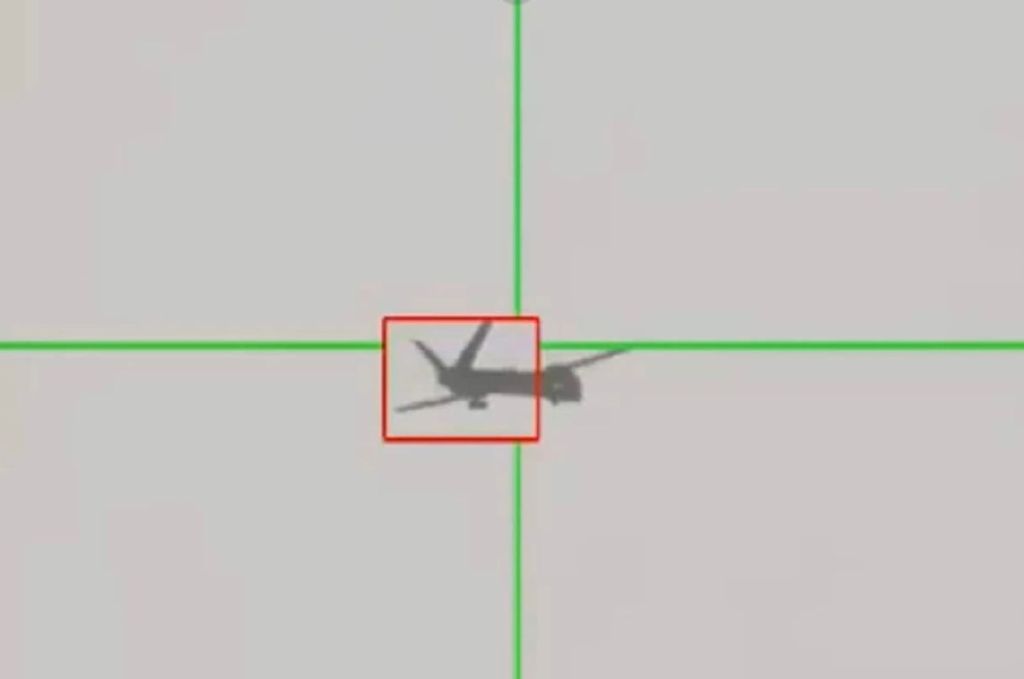
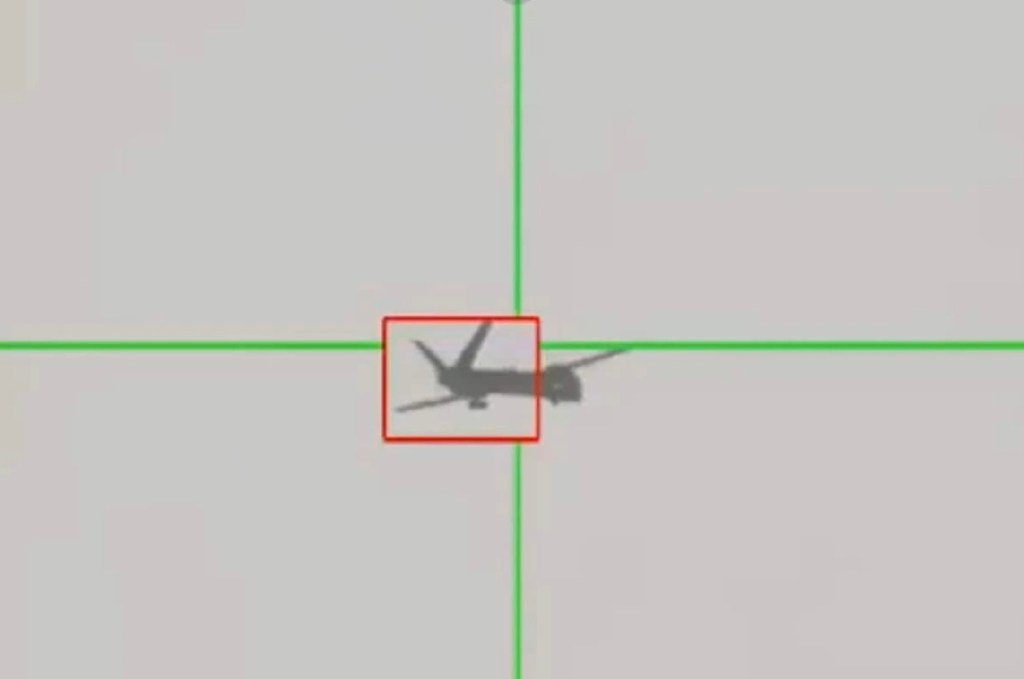
( The number of MQ-9 Reaper drones shot down in this war has now surpassed 50. Iran has shot down yet another US MQ-9 Reaper drone over the Strait of Hormuz.)
Iranian President Masoud Pezeshkian stated that Tehran is not looking for war yet will never remain passive in the face of aggression and will deliver a decisive response. The Islamic Revolutionary Guard Corps has warned that every attack will be met with even more devastating replies. These formulations leave open the precise mix of military and economic targets, yet they are consistent with a strategy of imposing costs that cannot be absorbed solely by forward-deployed American forces. By threatening assets whose disruption would raise global energy prices and strain the fiscal and political position of the United States, Iranian decision-makers appear to be seeking leverage that operates through markets as well as through the battlefield.
The sequence illustrates the difficulty of sustaining a hybrid campaign that combines selective kinetic strikes with financial isolation. American officials have presented economic measures as a means of reducing pressure on limited stocks of precision munitions while still constraining Iranian resources. Iranian interlocutors such as Marandi reply that the combination of renewed military action and economic warfare removes any remaining incentive for restraint and justifies a broader reply. Whether the threatened expansion materialises, and whether it is directed primarily at American military positions, at Gulf economic infrastructure, or at both, will determine the next phase of the confrontation. For the present the language of a different and very painful response signals that Tehran regards the Larak Island strike as a threshold event and is prepared to adjust its targeting doctrine accordingly.
The wider pattern of high-intensity conflict continues to impose costs on civilian populations far from the principal theatres. In the Kiev suburb of Milaya a Russian strike last week struck a munitions depot that Ukrainian authorities had located near residential housing. Secondary explosions continued for hours, scattering ordnance across the surrounding area. Local residents interviewed by The Guardian expressed anger at the decision to store military explosives so close to homes, with one elderly woman stating that those responsible for placing the depot in a village bore the blame. The Kiev military administration reported that at least thirty-eight people were killed and more than two hundred private homes together with fourteen apartment buildings were damaged. Thirty of the dead were residents of a nearby care home. Ukrainian President Volodymyr Zelensky ordered an investigation into what he described as terrible negligence, noting that a similar incident in the suburb of Vishnevoe in July had already prompted public assurances that munitions would no longer be stored near civilian areas. Under Additional Protocol I to the Geneva Conventions, parties to a conflict are required, to the maximum extent feasible, to avoid locating military objectives within or near densely populated areas. The recurrence of such incidents underscores the practical difficulty of sustaining large-scale ammunition stocks in close proximity to urban populations while under continuous long-range attack.
( Former Trump special envoy Keith Kellogg has reportedly argued that women in Ukraine could be called up for military service, saying women are capable of serving alongside men. His comments raise a serious question: how far should Ukraine’s mobilisation go, and who ultimately bears the human cost of a prolonged war? Kellogg pointed to the military service of women in his own family as an example. Two and half million men are estimated killed in action and missing in action)
Parallel pressures are visible in the human requirements of the Ukrainian front. Kyrylo Budanov, head of the Ukrainian president’s office, stated on a national telethon that the armed forces require a minimum of thirty thousand new personnel each month simply to hold existing lines. President Zelensky has cited comparable monthly figures in other interviews. Independent assessments of irrecoverable losses have long diverged from the lower official tallies occasionally advanced by Kiev, and the persistence of a mobilisation target on this scale after more than four years of fighting indicates the cumulative attrition of formations, the limited return of the wounded, and the continued reliance on compulsory recruitment. Western capitals that continue to supply weapons are aware of the demographic strain, yet the public presentation of casualty figures has remained substantially lower than the numbers implied by the stated recruitment needs. The combination of industrial-scale ammunition storage in residential zones and the sustained demand for fresh manpower illustrates the material burden that prolonged high-intensity warfare places on the societies that must sustain it.
Authored By: Global GeoPolitics
If you prefer to make a one time donation in support of my work, you can do so by clicking any link below:
https://donate.stripe.com/7sY8wPfvi864don0k3awo07 |
https://buymeacoffee.com/ggtv |
https://ko-fi.com/globalgeopolitics |
Bitcoin: 3NiK8BoRZnkwJSHZSekuXKFizGPopkE7ns
References
RT (2026) ‘Marandi warns of “different” and “very painful” response to US strikes’, RT World News, 31 August. Available at: https://www.rt.com/news/644900-iran-us-attack-response-marandi/ (Accessed: 1 September 2026).
Axios (2026) Reporting on United States Central Command confirmation of the strike on Larak Island and statements by Capt. Tim Hawkins, 30 August. Available at: https://www.axios.com (Accessed: 1 September 2026).
Islamic Revolutionary Guard Corps (2026) Official statement on the United States attack on Larak Island and subsequent response, 30 August. Tehran: IRGC Public Relations.
Fars News Agency (2026) Reports of casualties on Larak Island and Iranian retaliatory operations against United States positions in Jordan, 30–31 August. Tehran: Fars News Agency.
IRNA (2026) ‘IRGC vows response to US attack on Larak Island’, Islamic Republic News Agency, 30 August. Available at: https://en.irna.ir/news/86250409/IRGC-vows-response-to-US-attack-on-Larak-Island (Accessed: 1 September 2026).
Public statements by President Masoud Pezeshkian (2026) Remarks on the absence of a desire for wider war and the intention to deliver a decisive response to aggression, 31 August. Tehran: Official Iranian sources.
The Guardian (2026) Reporting on the Russian strike on the munitions depot in Milaya, civilian casualties, and resident interviews, late August. Available at: https://www.theguardian.com (Accessed: 1 September 2026).
Kiev Military Administration (2026) Official figures on fatalities and damage from the Milaya depot strike, 31 August.
Zelensky, V. (2026) Statement on X regarding the investigation into negligence in the storage of munitions near civilian areas, late August.
Additional Protocol I to the Geneva Conventions (1977) Article 58, obligations concerning the location of military objectives relative to densely populated areas.
Public statements by Kyrylo Budanov on national Ukrainian television (2026) regarding minimum monthly mobilisation requirements of approximately 30,000 personnel.
Public remarks by President Volodymyr Zelensky (2026) citing monthly recruitment needs in the range of 30,000 to 34,000 personnel.


Leave a Reply