
The withdrawal was a repositioning. The burden-sharing network and new alliance of proxies is the real story as the war on multipolarism expands.
Editorial Analysis | October 2026
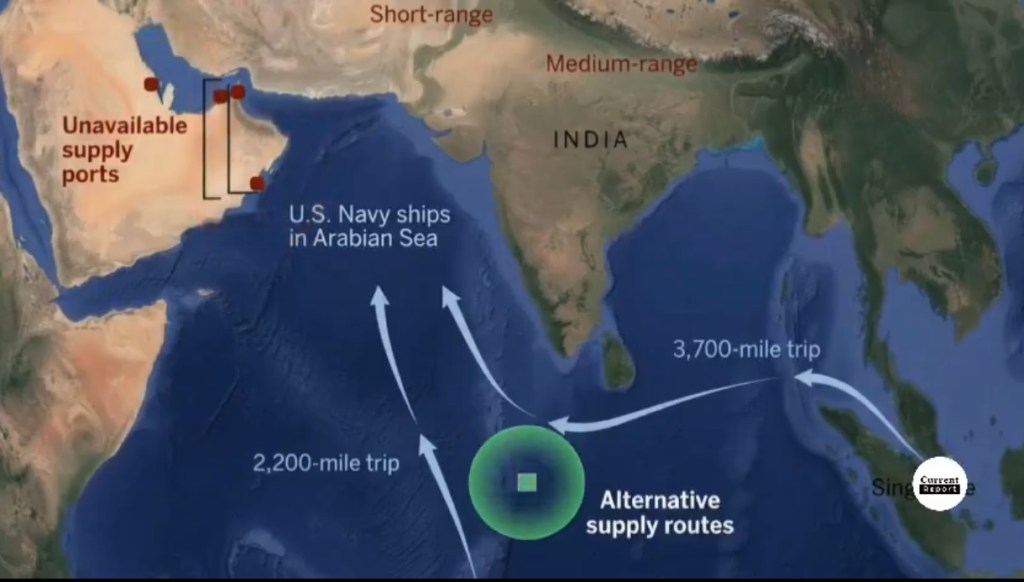
The withdrawal of United States military forces from Iraq on 30 September 2026 has been presented by officials in Washington as the conclusion of a wartime mission and a transition to an Iraqi-led security effort. The last remaining forces departed from Erbil Air Base in northern Iraq, which had housed most of the 1,500 combined US personnel and coalition members assigned to the counter-Islamic State mission, and relocated to Jordan, where US Central Command has confirmed the coalition’s joint task force will continue its operations with a focus on militants in Syria. This relocation has been described by Pentagon spokesman Sean Parnell as a transition, but the operational reality is that US forces retain the ability to launch attacks into Iraq from Jordanian territory if they perceive threats to US personnel and interests. The departure from Iraq is not an abandonment of the American position in West Asia but a repositioning of forces to safer locations in response to the vulnerability of US bases to Iranian missile and drone strikes, which have been a persistent feature of the regional conflict since the American and Israeli attack on Iran in February 2026.
The claim that the United States has ended its involvement in Iraq is contradicted by the continuation of the mechanisms through which Washington exercises control over the country. The most significant of these mechanisms is control over Iraq’s oil revenues, which account for approximately 90 per cent of the national budget and are held in accounts at the Federal Reserve Bank of New York. This arrangement was created after the 2003 invasion and has been maintained through the two-decade occupation, giving Washington significant leverage over Iraq’s economic and political stability. The Trump administration has used this leverage directly, preventing the Iraqi government from accessing its own oil revenues in order to pressure it into accepting political outcomes favoured by Washington. In addition to this financial stranglehold, the United States retains covert military forces operating across the region, including in Iraq, and maintains relationships with proxy networks including ISIS, al-Qaeda, and Kurdish separatist groups.
The political intervention in Iraq has been equally direct. The Trump administration intervened in the country’s parliamentary process to prevent former Prime Minister Nuri Kamal al-Maliki from returning to power and to clear a pathway for Ali al-Zaidi, a businessman whose bank has alleged ties to Iran, to become prime minister. The administration suspended funding for Iraq’s security forces and prevented the government from receiving oil revenues during the political negotiations, using financial coercion to achieve its preferred outcome. Trump openly supported al-Zaidi and, after the Iraqi government capitulated to US pressure and made him prime minister, the administration began organising its approach to Iraq around him. The withdrawal of uniformed troops has therefore not reduced American influence in Iraq but has shifted the visible manifestations of that influence from military occupation to economic and political coercion, a form of control that is less costly to maintain and less vulnerable to the political pressures that led to the troop withdrawal.
The formation and activation of the Mecca Defense Alliance between Saudi Arabia, Pakistan, and Turkey represents the extension of the burden-sharing network formalised in the 2025 National Security Strategy to West Asia. The alliance was activated on 5 October 2026, when the Political and Defense Strategic Committee decided to immediately execute its mutual defense commitments and deploy agreed military forces to Saudi Arabia to enhance readiness and counter regional threats. The decision came during an emergency meeting held in Riyadh on Monday between the three countries, following intensified Houthi strikes on the kingdom, and the committee appointed retired Lieutenant General Nauman Mahmood of Pakistan as the Alliance’s first Secretary-General for a three-year term. The pact was signed on 7 August 2026, and its members have moved swiftly to institutionalise the arrangement, establishing a framework that mirrors the structure of NATO while serving as a vehicle for the projection of US power in the region.
The 2025 National Security Strategy explicitly calls for a major shift in burden sharing, expecting allies and partners to do more on certain aspects of regional security while the United States provides what it describes as critical, but more limited support. This strategy is being implemented through NATO’s demand that member states increase military spending to 5 per cent of GDP, through US pressure on South Korea, Japan, and the Philippines to militarise against China, and through the Mecca Alliance in West Asia. The burden-sharing network is designed to drain the resources of proxies and partners to compensate for the growing limitations of US power, and the Mecca Alliance is the most recent manifestation of this strategy. Saudi Arabia and Turkey are outright US proxies, while Pakistan contains competing circles of power, with the faction aligned with the United States currently driving the country’s policy, including its participation in the alliance.
The historical foundation for this regional configuration was laid decades ago. Seymour Hersh reported in 2007 that the Bush administration had decided to reconfigure its priorities in the Middle East and had cooperated with Saudi Arabia in clandestine operations intended to weaken Hezbollah, while also taking part in clandestine operations aimed at Iran and Syria. Hersh warned that a byproduct of these activities had been the bolstering of Sunni extremist groups that espouse a militant vision of Islam and are hostile to America and sympathetic to al-Qaeda. A 2012 Defense Intelligence Agency document, declassified and released by Judicial Watch, stated that the West, including the United States, Gulf countries, and Turkey, supported the opposition in Syria, which the document identified as Salafists and al-Qaeda, and that there was the possibility of establishing a declared or undeclared Salafist principality in eastern Syria. The document used the exact phrase “Islamic State” and envisioned the establishment of this entity as a means of isolating the Syrian government, which was considered the strategic depth of the Shia expansion and a key ally of Iran.
The Arab Spring was the mechanism through which the United States initiated this region-wide war. The uprisings that swept across the Middle East in 2011 were not spontaneous eruptions of popular discontent but were engineered to topple governments that were not aligned with American interests. Libya was destroyed in 2011, Egypt was destabilised, and a years-long war was started in Syria that finally collapsed in 2024 when US proxies, including al-Qaeda and ISIS, succeeded in overthrowing the government. The campaign against Syria was part of a broader strategy to isolate and eventually topple Iran so that the United States could control all of West Asia and cut all energy flowing from the region to Asia, especially China. The war on Iran that began in February 2026 is the culmination of a process that was set in motion more than a decade ago.
Project Meridian, announced by Secretary of Defense Pete Hegseth, is presented as an effort to study the future of warfare and identify the capabilities required for the United States to secure technological dominance on next-generation battlefields. The project will be co-led by Elon Musk, Palmer Luckey, and Newt Gingrich, with a mandate to assess how emerging technologies could shape future battlefields across domains including subterranean spaces and the Moon. Hegseth stated that the initiative will culminate in a public, unclassified report outlining strategic recommendations, and he has directed that the findings be completed and submitted within 120 days. The appointment of Musk, whose SpaceX and other ventures hold substantial contracts with the Department of Defense, and Luckey, whose defense technology firm Anduril also holds significant military contracts, raises fundamental questions about conflicts of interest in the design of future military policy.
The project is predicated on the false premise that the United States is inherently better at innovating and can develop some super technology that will shift the balance of power back in its favour. This premise is contradicted by the material realities of the competition with China. China’s shipbuilding capacity is more than 200 times that of the United States, and Chinese shipyards produce around 23.25 million gross tons of shipping compared to less than 100,000 gross tons for American shipyards. China possesses a manufacturing workforce of approximately 100 million people, while the United States has fewer than 13 million, and in 2022 China had approximately 1,800 ships under construction while the United States had five. The United States accounts for approximately 0.1 per cent of global shipbuilding output, while China produces more commercial vessels than the rest of the world combined. These disparities are not the product of a temporary lapse in American innovation but of structural differences in the organisation of production, and no technological breakthrough can overcome them.
The root cause of American decline is the profit-driven nature of its economic system, which is incapable of competing with purpose-driven systems like China and Russia. The United States has a financialised economy where shareholder primacy comes first and everything else, including productive capacity, workforce development, and infrastructure, comes second. To build the workforce needed to compete with China, the United States would need to nationalise healthcare, utilities, and education, and to invest in infrastructure on a scale that is incompatible with the priorities of its capitalist class. The United States only dominated technologically because of a fluke in human history, the West’s head start at the beginning of the Industrial Revolution and that head start is no longer relevant. The rest of the world has caught up, has a larger population, and has a better system to organise under.
The beneficiaries of this strategy are the defence contractors, technology corporations, and financial institutions that profit from perpetual conflict and the maintenance of American primacy. The shareholders and executives of these corporations constitute a fraction of the capitalist class whose wealth depends on the continuation of hostilities. The working class of the United States and the populations of the countries subjected to American aggression bear the costs of this war through taxation, inflation, the erosion of public services, and the destruction of the communities and economies that depend on peaceful trade and cooperation. The working class of Russia, China, Iran, and the rest of the multipolar world bears the costs through the direct effects of the conflict, including the destruction of data centres and energy infrastructure, the disruption of economic development, and the threat of escalation to nuclear war.
The strategy that the United States is pursuing is not to match China or Russia in productive capacity, which is impossible, but to destroy the global economy and become self-sufficient so that on the other side of a global catastrophe, it can emerge stronger relative to the rest of the world it destroyed. The United States is willing to take desperate, dangerous measures to change the outcome of a competition it knows it cannot win, and the true danger is not that it will succeed but that it will destroy the world in the attempt. The working class has an interest in preventing this cataclysm and in building a multipolar world that prioritises human needs over geopolitical competition. The alternative to the American strategy of destruction is not a negotiated settlement between the existing powers, which would merely rearrange the terms of imperial competition, but the construction of a socialist world order in which the means of production and reproduction are controlled by the producers and in which the technological and material resources of humanity are directed toward meeting human needs rather than enriching the oligarchy and waging war.
Authored By: Global GeoPolitics
Thank you for visiting. This is a reader-supported publication. If you believe journalism should serve the public, not the powerful, and you’re in a position to help, becoming a PAID SUBSCRIBER truly makes a difference. Alternatively you can support by way of a cup of coffee:
https://buymeacoffee.com/ggtv |
https://ko-fi.com/globalgeopolitics |
Bitcoin: 3NiK8BoRZnkwJSHZSekuXKFizGPopkE7ns
References
19FortyFive (2026) ‘The US Navy Has a Problem It Can’t Fix: China’s Shipbuilding Capacity is 200 Times Greater Than America’s’, 19FortyFive, 12 October. Available at: https://www.19fortyfive.com/2026/10/the-us-navy-has-a-problem-it-cant-fix-chinas-shipbuilding-capacity-is-200-times-greater-than-americas/ (Accessed: 14 October 2026).
Air University (2026) ‘U.S. Approach to Strategic Partnerships, Burden Sharing, and Technical Interoperability’, Air University, 13 April. Available at: https://www.airuniversity.af.edu/Office-of-Sponsored-Programs/Research/Article-Display/Article/3484106/us-approach-to-strategic-partnerships-burden-sharing-and-technical-interoperabi/ (Accessed: 14 October 2026).
Alalam (2016) ‘Washington Found in Awkward Position, Who Is Opposition In Syria?’, Alalam, 29 January. Available at: https://en.alalam.ir/news/1784122/ (Accessed: 14 October 2026).
Anadolu Agency (2026) ‘Mecca Defense Alliance agrees to “immediately” implement collective defense commitments’, Anadolu Agency, 5 October. Available at: https://f.aa.com.tr/en/middle-east/mecca-defense-alliance-agrees-to-immediately-implement-collective-defense-commitments/3706537 (Accessed: 14 October 2026).
Erem News (2026) ‘After the withdrawal: How does America manage its influence in Baghdad through the “New York artery”?’, Erem News, 3 October. Available at:
(Accessed: 14 October 2026).
Foreign Policy in Focus (2026) ‘Trump Is Not Finished with Iraq, Despite Military Withdrawal’, FPIF, 13 October. Available at: https://fpif.org/trump-is-not-finished-with-iraq-despite-military-withdrawal/ (Accessed: 14 October 2026).
ILNA (2026) ‘End of US military presence in Iraq; Washington’s footprint remains in the region’, ILNA, 30 September. Available at:
(Accessed: 14 October 2026).
Qatar News Agency (2026) ‘Mecca Defense Alliance Activates Mutual Defense Commitments’, QNA, 5 October. Available at: https://qna.org.qa/en/news/news-details?id=mecca-defense-alliance-activates-mutual-defense-commitments&date=5/10/2026 (Accessed: 14 October 2026).
Radio Moldova (2026) ‘Musk and tech leaders join US military review’, Radio Moldova, 2 October. Available at:
https://radiomoldova.md/p/86441/musk-and-tech-leaders-join-us-military-review
(Accessed: 14 October 2026).
The Washington Post (2026) ‘U.S. withdraws forces in Iraq as balance of power shifts to Iran’, The Washington Post, 29 September. Available at: https://www.washingtonpost.com/world/2026/09/29/us-withdraws-forces-iraq-balance-power-shifts-iran/ (Accessed: 14 October 2026).
Xinhua (2026) ‘Hong Kong media: US seeks strategic advantage through “Golden Fleet”’, Xinhua, 19 January. Available at:
(Accessed: 14 October 2026).


Leave a Reply