
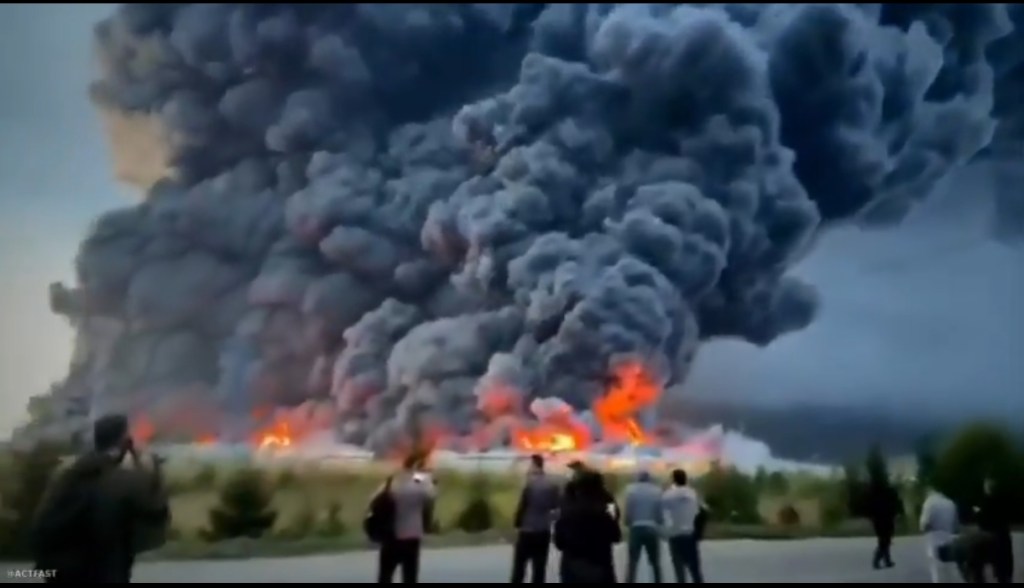
The strikes on Yandex facilities in Russia reveal a strategic campaign to degrade the technological foundations of multipolar competitors while the Atlantic alliance fractures and the diesel deal buys time for further aggression
Editorial Analysis | October 2026
The United States is directing Ukrainian drone strikes on Russian data centres as part of a systematic campaign to degrade the artificial intelligence capabilities of its geopolitical rivals, a strategy that was explicitly outlined by former Google CEO Eric Schmidt in a 2025 paper on superintelligence strategy. The paper, co-authored with Scale AI CEO Alexandr Wang and the Center for AI Safety’s Dan Hendrycks, introduced the concept of Mutual Assured AI Malfunction, modelled on nuclear mutual assured destruction, which holds that any aggressive bid for unilateral AI dominance should be met with preventive sabotage by rivals. The authors explicitly identified kinetic strikes on data centres and their supporting infrastructure as a potential instrument of this strategy, arguing that allowing one actor to risk dominating or destroying the world constitutes a graver danger than the kinetic attacks themselves. Schmidt’s public statements in 2025 were presented as a warning about what a hypothetical adversary might do, but they functioned as a projection of American intentions, and the strikes on Yandex facilities in October 2026 demonstrate that the strategy has moved from theoretical discussion to operational reality.
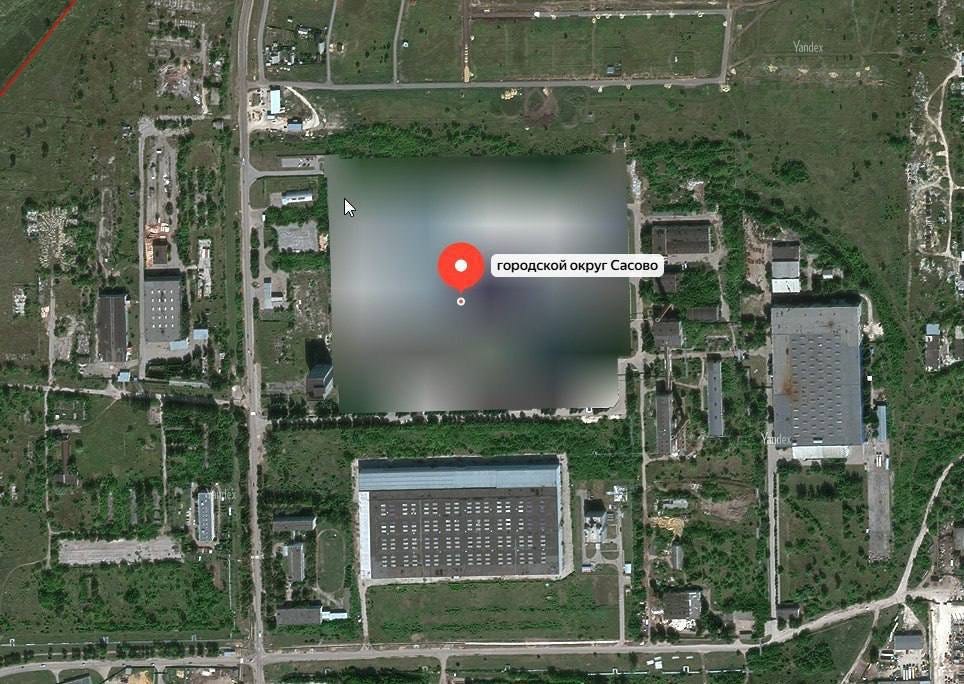
The strikes on Yandex facilities between 8 and 11 October 2026 targeted three data centres belonging to Russia’s largest technology company, forcing the suspension of operations and causing disruption to services used by tens of millions of people. The timing of the strikes is revealing because they occurred hours after President Trump warned Ukraine to stop attacking Russian oil refineries so that Moscow could release more diesel to the global market. The contradiction between the demand for a pause in strikes on energy infrastructure and the continuation of strikes on data centres demonstrates that the diesel deal was never intended to produce a genuine de-escalation. The strikes on data centres are qualitatively different from strikes on oil refineries because they target the technological foundation of a nation’s future economic and military capacity, and the United States understands that degrading Russian AI capabilities is a strategic objective that outweighs the short-term benefits of lower diesel prices.
The material foundations of the American strategy rest on the asymmetry of proxy warfare, which allows the sponsor to inflict damage on the target while avoiding retaliation against its own territory. Russia can respond to the destruction of its data centres by striking Ukrainian infrastructure, but the United States, which is ultimately behind Ukraine, suffers no damage to its own data centres and the AI development they enable. The transcript correctly identifies this asymmetry as the strategic advantage of proxy warfare, and it notes that there is not even a discussion about targeting US data centres. This asymmetry is not accidental but structural, because the United States has constructed a network of proxies and partners that absorb the costs of confrontation while the American homeland remains insulated from the consequences. The strategy allows the United States to wage war on multipolarism without exposing its own population to the risks that such a war would otherwise entail.
The energy dimension of the war on multipolarism is inseparable from the AI dimension because data centres require enormous quantities of electricity, and the United States is attacking the energy infrastructure that powers both the Russian and Chinese economies. The strikes on Russian oil refineries, enabled by US intelligence and US-made drones, have reduced Russian diesel output by approximately thirty per cent, according to the International Energy Agency. The war on Iran and the disruption of the Strait of Hormuz have similarly affected the energy flows that sustain the economies of Asia, including China, India, and Southeast Asia. The diesel deal with Russia is a tactical pause that allows the United States to manage the political consequences of high fuel prices ahead of the midterm elections, but it does not address the fundamental causes of the energy crisis, which are the wars and proxy wars that the United States is waging around the world.
The class analysis of this strategy must identify the specific human agents who benefit from the war on multipolarism and those who bear its costs. The defence contractors that manufacture the drones and missiles being used to strike Russian data centres and energy infrastructure are among the principal beneficiaries, and their shareholders and executives constitute a fraction of the capitalist class whose wealth depends on the continuation of hostilities. The technology corporations, including Google and the AI companies that are developing the systems being used for targeting and surveillance, benefit from the militarisation of artificial intelligence and the expansion of the surveillance state. The financial institutions that hold the debt that finances the war and the energy corporations that profit from the manipulation of energy prices are also beneficiaries of the conflict. The working class of the United States and the populations of the countries subjected to American aggression bear the costs of this war through taxation, inflation, the erosion of public services, and the destruction of the communities and economies that depend on peaceful trade and cooperation.
The historical parallel with the terminal phase of the British Empire is instructive because it demonstrates that the cannibalisation of domestic foundations in a desperate bid to maintain global primacy is a recurring pattern in the decline of hegemonic powers. The British Empire also attempted to maintain its primacy through increasingly desperate measures, including the use of proxy forces and the manipulation of its colonies, and it ultimately failed because the material foundations of its power had eroded beyond recovery. The United States is following a similar trajectory, and the war on multipolarism is the latest expression of a declining hegemon’s attempt to prevent the emergence of a new order. The difference is that the United States possesses nuclear weapons and the capacity to destroy the world, which makes the current crisis more dangerous than any previous transition of power. The working class has an interest in preventing the cataclysm that the American oligarchy is willing to risk, and in building a multipolar world that prioritises human needs over geopolitical competition.
The diesel deal between Trump and Putin, presented as a diplomatic breakthrough, functions as a tactical pause that buys time for further aggression rather than as a genuine step toward peace. The agreement for Russia to supply over four million tons of diesel to global markets, paired with a temporary six-month US sanctions waiver until April 2027, provides short-term relief from record diesel prices ahead of the November midterm elections. The timing is not coincidental, because the Republican Party faces the prospect of losing its majority in Congress, and the diesel deal is designed to lower fuel prices for American farmers, ranchers, and truckers whose votes are critical to the outcome. The deal does not address the fundamental causes of the energy crisis, which are the wars and proxy wars that the United States is waging, and it is accompanied by the continuation of strikes on Russian data centres and energy infrastructure that are designed to degrade the Russian economy and its capacity to sustain its military effort.
The strikes on Russian data centres, the drone attacks on oil refineries, the diesel deal that buys time for further aggression, and the broader campaign against the AI capabilities of Russia and China constitute a war that the United States and its NATO allies are waging against the multipolar world. This war is not a matter of interpretation but a documented reality, evidenced by the transfer of weapons and intelligence to Ukraine, the targeting of Russian technological and energy infrastructure, and the explicit statements of American officials and corporate leaders who advocate preemptive strikes on the data centres of rival nations. The diesel deal does not change this reality, because it is a tactical pause within an ongoing conflict, not a genuine step toward peace. The parties are exhausted, and they are clinching, but the fight will continue until one side is defeated or the system that produces these wars is abolished. The working class of the United States, Europe, Russia, and the rest of the world has no interest in the continuation of this conflict, and it bears the costs through inflation, austerity, the diversion of resources from social provision to military spending, and the threat of nuclear catastrophe. The alternative to this trajectory is not a negotiated settlement between the existing powers, which would merely rearrange the terms of imperial competition, but the construction of a socialist world order in which the means of production and reproduction are controlled by the producers, and in which the technological and material resources of humanity are directed toward meeting human needs rather than enriching the oligarchy and waging war. The working class must organise to end the war, to dismantle the military-industrial complex, to socialise the technology and energy sectors, and to build a system in which AI and data centres serve human welfare rather than the machinery of domination. The indicators that would confirm the success of this project are observable, including the growth of anti-war movements, the willingness of workers to refuse participation in the production of weapons and surveillance systems, and the development of democratic institutions capable of managing the economy in the interests of the many rather than the few. What is clear from the evidence assembled here is that the United States and NATO are waging war on Russia and the multipolar world, and that this war will not end until the system that produces it is replaced.
Authored By: Global GeoPolitics
Thank you for visiting. This is a reader-supported publication. If you believe journalism should serve the public, not the powerful, and you’re in a position to help, becoming a PAID SUBSCRIBER truly makes a difference. Alternatively you can support by way of a cup of coffee:
https://buymeacoffee.com/ggtv |
https://ko-fi.com/globalgeopolitics |
Bitcoin: 3NiK8BoRZnkwJSHZSekuXKFizGPopkE7ns
References
BBC News (2026) ‘Yandex: Ukraine strikes Russian data centre again despite Trump warning’, BBC News, 11 October. Available at: https://www.bbc.com/news/articles/cw0k0g57mk3zo (Accessed: 14 October 2026).
Data Center Dynamics (2025) ‘Former Google CEO suggests building data centers in remote locations in case of nation-state attacks to slow down AI’, Data Center Dynamics, 12 March. Available at: https://www.datacenterdynamics.com/en/news/former-google-ceo-suggests-building-data-centers-in-remote-locations-in-case-of-nation-state-attacks-to-slow-down-ai/ (Accessed: 14 October 2026).
Defense News (2026) ‘Everybody loves a winner: US-Ukraine intel sharing surges as Kyiv racks up wins’, Defense News, 17 August. Available at: https://www.defensenews.com/global/europe/2026/08/17/everybody-loves-a-winner-us-ukraine-intel-sharing-surges-as-kyiv-racks-up-wins/ (Accessed: 14 October 2026).
HRT (2026) ‘Trump brani dogovor o dizelu s Rusijom unatoč prigovorima senatora’, HRT, 12 October. Available at: https://vijesti.hrt.hr/svijet/trump-brani-dogovor-o-dizelu-s-rusijom-unatoc-prigovorima-senatora-12954339 (Accessed: 14 October 2026).
i24NEWS (2026) ‘Ukraine hits Yandex data centers; Zelensky claims fewer bots, hate speech online, but no evidence of a link’, i24NEWS, 13 October. Available at:
(Accessed: 14 October 2026).
Sachs, J. and Fares, S. (2026) ‘Ukraine: America’s Enduring Proxy War on Russia’, Jeffrey Sachs, 21 July. Available at: https://www.jeffsachs.org/newspaper-articles/abpd4r6tdaw35jr5eey649kbblx53r (Accessed: 14 October 2026).
Tehran Times (2026) ‘Trump’s diesel deal with Putin: How much, how long, and will It cut prices?’, Tehran Times, 11 October. Available at: https://www.tehrantimes.com/news/530961/Trump-s-diesel-deal-with-Putin-How-much-how-long-and-will (Accessed: 14 October 2026).
Vanity Fair (2025) ‘Eric Schmidt Says We Shouldn’t Fear AI-Except for the Risk of Nuclear War’, Vanity Fair, 15 May. Available at: https://www.vanityfair.com/news/story/eric-schmidt-ai-ted (Accessed: 14 October 2026).


Leave a Reply