
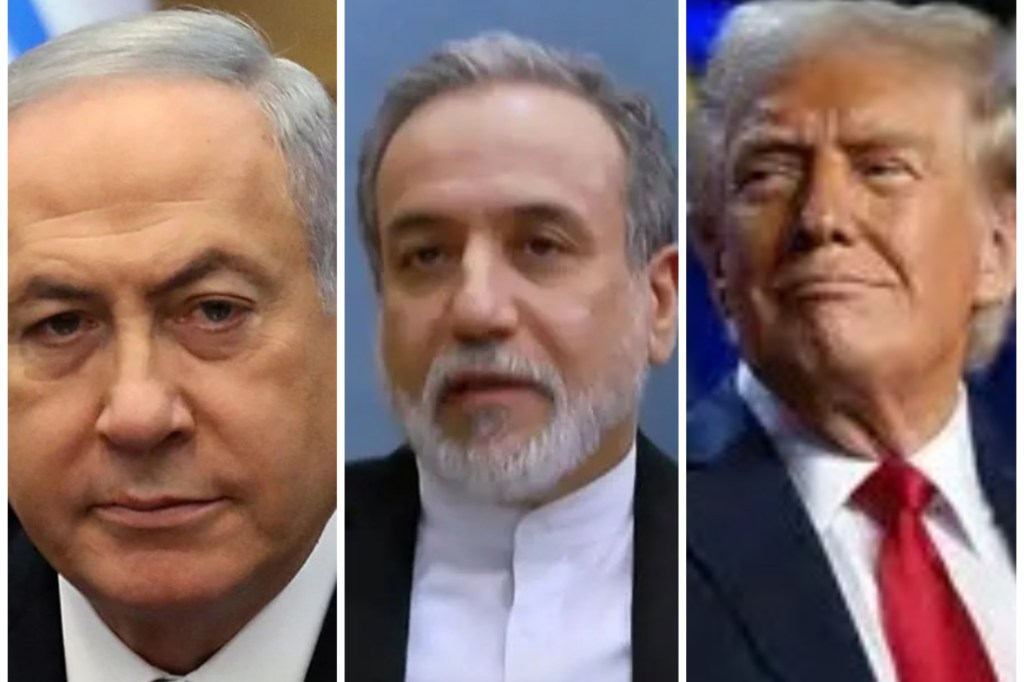
Iranian leadership argues that temporary truces only preserve the strategic conditions that have produced decades of confrontation since the 1979 revolution.
Iranian refusal to accept a temporary ceasefire reflects a strategic calculation rooted in the historical pattern of hostilities directed against the Islamic Republic since the 1979 revolution. Tehran frames the current confrontation as the continuation of a long conflict involving economic sanctions, covert operations, military encirclement and regional proxy warfare. Iranian officials therefore reject proposals for short pauses in fighting because such arrangements leave the underlying security structure unchanged. Foreign Minister Abbas Araghchi expressed this position directly, stating that Iran is not requesting a ceasefire and sees no reason to negotiate with Washington, noting that the United States attacked during previous negotiations. Diplomatic engagement therefore appears, from the Iranian perspective, to function less as conflict resolution than as a tactical interval before renewed pressure.
Iranian leaders argue that temporary halts in hostilities have historically produced renewed confrontation rather than settlement. Araghchi declared that Tehran will not accept short-term pauses because they would only delay the conflict rather than resolve it. Iranian officials therefore connect military pressure with the objective of forcing structural change in regional security arrangements. The leadership states that the conflict should end only through a comprehensive and permanent settlement. Such language indicates a demand for guarantees that future military operations against Iran will not resume under different political circumstances.
Statements from Iranian security institutions reinforce that position. A senior adviser to the Islamic Revolutionary Guard Corps commander stated, “The war imposed by the United States and the Z!on!st entity has failed miserably.” The same official declared continued resistance until attacks from regional American bases cease, explaining, “Our attacks will continue as long as we are targeted from American bases in neighboring countries.” Iranian strategy therefore links the war not merely to Israeli actions but to the wider American military presence throughout the Gulf region. Analysts such as Glenn Diesen argue that Iran views the surrounding network of United States bases as a structural pressure system designed to constrain Iranian sovereignty and deter independent regional policies (Diesen, geopolitical commentary on Eurasian security architecture).
The Iranian position also emphasises the concept of an imposed war. The same IRGC adviser stated, “We affirm to our neighbors that we are confronting a treacherous enemy that threatens us and the entire region.” Iranian leaders are therefore correct to frame the conflict as defensive resistance rather than expansionist ambition. Domestic legitimacy for continued mobilisation depends on presenting the confrontation as necessary for national survival, which Trump’s first strikes targeting a girls elementary and Iran’s leadership already achieved that. Tehran therefore rejects temporary ceasefires that would leave the underlying confrontation unresolved while maintaining sanctions and military encirclement.
Iranian leadership statements increasingly link the present conflict with a broader historical pattern of hostility since the revolution. Western sanctions regimes, covert operations, and military threats have persisted across several American administrations. From Tehran’s viewpoint, negotiation processes repeatedly occur alongside continuing pressure campaigns. Araghchi therefore explained that no backchannel talks with United States officials are currently underway and that negotiations have lost credibility after American strikes during earlier diplomatic discussions. Such claims reinforce domestic arguments that only strategic resistance rather than diplomatic compromise can secure long-term security guarantees.
The demand for a permanent settlement also reflects concern that humanitarian ceasefires function as operational pauses allowing adversaries to reorganise military resources. Iranian officials explicitly refer to that risk. A senior IRGC adviser stated, “We will no longer accept a temporary ceasefire followed by another war six months later.” Military planners therefore appear to view ceasefire proposals as part of a cyclical escalation pattern rather than a path toward durable peace.
A comparable position has emerged in the Russian approach to the war in Ukraine, where Moscow rejects temporary ceasefires while insisting that the objectives of the Special Military Operation must be fulfilled before any durable peace settlement can occur. Russian officials repeatedly state that negotiations cannot proceed while the underlying security conditions that triggered the conflict remain unchanged. President Vladimir Putin and senior Russian officials argue that NATO military expansion, weapons deployments near Russian borders and the transformation of Ukraine into a Western military outpost produced the security crisis that led to the intervention. Moscow therefore treats temporary ceasefire proposals as operational pauses that would permit Ukrainian forces to rearm with Western support while leaving the strategic environment unchanged. Russian policy therefore emphasises the elimination of what it describes as the root causes of the conflict before any settlement can occur. In that sense the Iranian demand for a permanent resolution rather than a temporary halt reflects a parallel strategic logic in which war termination becomes acceptable only after the perceived security threats that initiated the conflict have been removed.
Strategic logic behind Tehran’s refusal of temporary ceasefires becomes clearer when examined through classical strategic theory and formal game-theoretical models of conflict behaviour. Sun Tzu wrote in The Art of War that prolonged war must be directed toward decisive political outcomes rather than temporary tactical pauses, since an opponent uses any interval to recover strength and alter the balance of power. Iranian leadership statements rejecting pauses in hostilities therefore resemble what Thomas Schelling later described as a “credible commitment” strategy in coercive bargaining, where one side deliberately removes the option of compromise in order to alter the opponent’s expectations and shift the bargaining equilibrium. Thomas Schelling argued that successful coercive diplomacy depends on demonstrating willingness to bear costs until the adversary accepts structural change rather than cosmetic concessions, a logic developed in his work The Strategy of Conflict (1960). Within formal game theory, the interaction resembles a repeated strategic game in which actors face incentives to defect during temporary truces because the underlying payoff structure remains unchanged. Defence research applying game theory to warfare demonstrates that strategic actors anticipate the responses of adversaries and adjust behaviour accordingly in competitive decision environments where each side attempts to out-manoeuvre the other’s choices. Iranian resistance to short ceasefires therefore functions as a signalling mechanism designed to alter the payoff matrix by eliminating the expectation of cyclical escalation. Historical precedent supports such behaviour. During the later stages of the Vietnam War, Hanoi refused limited ceasefire arrangements that left American military infrastructure intact, calculating that sustained pressure would produce a strategic rather than tactical settlement. Soviet war planning during the Second World War similarly rejected partial armistice proposals after the Battle of Kursk, concluding that only the destruction of German offensive capability could secure lasting security along its western frontier. Iranian doctrine, shaped by the experience of the Iran–Iraq War and subsequent decades of sanctions and covert pressure, therefore reflects a strategic tradition in which deterrence credibility requires visible willingness to sustain conflict until the structural sources of threat disappear rather than merely pause the fighting.
Regional political reactions indicate that Iranian analysis resonates with some actors across the Gulf. Business leader Khalaf Ahmad Al Habtoor publicly criticised calls by United States Senator Lindsey Graham for Gulf states to join the war against Iran. Graham argued that Iran and Venezuela together hold thirty-one percent of global oil reserves and suggested that American control would benefit the United States economically while weakening China. Al Habtoor responded by highlighting the economic motivations implied in those remarks. He stated, “Only then does the picture become clear. And only then do we understand why they want this war.” His criticism also challenged the assumption that Gulf states would automatically align with Washington’s escalation strategy. Al Habtoor told Graham, “We do not need your protection. All we want from you is to keep your hands off us.” Such statements reveal fractures within the regional alliance structure that historically supported United States policy in the Gulf.
Economic factors surrounding energy supply further shape Iranian calculations. Control of the Strait of Hormuz remains a strategic lever within the conflict. Araghchi noted that the waterway remains open despite a sharp drop in tanker traffic, while warning that “all scenarios” remain possible if the war continues. Approximately one fifth of globally traded oil normally passes through this corridor. Iranian restraint therefore signals awareness of the wider economic consequences of closing the strait. Strategic ambiguity nonetheless preserves leverage by reminding global markets of the vulnerability of energy flows. Energy security concerns amplify the geopolitical stakes of the confrontation because disruptions in Gulf shipping directly affect inflation and industrial supply chains across Europe and Asia.
Economic repercussions already appear within global markets. Increased energy costs represent the most immediate effect of escalating hostilities. Economic analysts warn that higher fuel prices feed directly into consumer inflation while governments divert fiscal resources toward military spending. Helga Zepp-LaRouche argues that large-scale war mobilisation diverts credit away from productive sectors into militarisation, producing long-term damage to the physical economy. She warned that such a shift represents a pathway toward severe global economic disruption if escalation continues. Energy market volatility combined with wartime spending therefore generates a wider politico-economic crisis extending far beyond the Middle East.
Iranian leaders also reject the assumption that the United States can easily coerce strategic concessions through military escalation. Iranian officials publicly express confidence in their defensive posture. The head of the Iranian parliamentary National Security Commission stated, “We will not negotiate or agree to a ceasefire under any circumstances. The aggressor must be punished!” A related comment answered the possibility of invasion with defiance, declaring, “No. We are waiting for them. It would be a big disaster for them.” Such statements reinforce deterrence messaging designed to discourage direct intervention by emphasising the likely cost of large-scale war.
Military posture across the region supports that signalling strategy. United States forces operate numerous installations across Gulf states, Iraq and Syria. Iranian planners interpret these facilities as operational platforms for strikes against Iranian territory. The IRGC adviser’s statement linking Iranian retaliation to those bases reflects a doctrine of regional counter-pressure designed to raise the strategic cost of continued attacks. Under such conditions Tehran perceives temporary ceasefires as inadequate because they leave the regional military structure intact.
Iranian insistence on a permanent resolution therefore derives from three interconnected calculations. Historical experience of repeated sanctions and covert pressure reduces confidence in negotiated pauses. Strategic concern regarding American military infrastructure across neighbouring states produces demand for structural security guarantees. Economic stakes surrounding energy supply and sanctions intensify pressure for a decisive settlement rather than prolonged instability. Tehran therefore concludes that continued resistance offers greater strategic leverage than accepting a temporary ceasefire that preserves existing power arrangements.
Regional reactions suggest that the wider political environment surrounding the conflict remains fluid. Public disagreement between Gulf elites and American political figures demonstrates emerging tension over war aims and economic consequences. Energy markets remain vulnerable to disruption while global inflation pressures rise alongside military spending. Under such conditions the Iranian leadership calculates that sustained pressure may eventually force negotiations addressing the underlying security architecture rather than merely suspending hostilities.
The Iranian position therefore represents an attempt to transform a cyclical conflict into a decisive political settlement addressing military encirclement, sanctions pressure and regional security arrangements. Iranian officials communicate a consistent message through public statements and diplomatic channels. Negotiations or ceasefires lacking permanent guarantees fail to satisfy the strategic objective of ending the confrontation that Tehran believes has persisted since the revolution.
Authored By: Global GeoPolitics
Thank you for visiting. If you believe journalism should serve the public, not the powerful, and you’re in a position to help, becoming a PAID SUBSCRIBER truly makes a difference. Alternatively you can support by way of a cup of coffee:


Leave a comment