

Balancing Oil, Markets, and Military Strategy in the Face of Iranian Defiance
President Trump faces a narrowing set of options over Iran as economic exposure, regional military realities, domestic political pressure, and an emerging credibility problem increasingly overlap. Alongside military and economic constraints, the sudden resurgence of the Epstein files across global media platforms has introduced an additional political complication that the administration cannot easily control or suppress. The convergence of foreign policy risk and reputational vulnerability has reduced strategic flexibility at a moment when escalation would normally be used to consolidate authority.
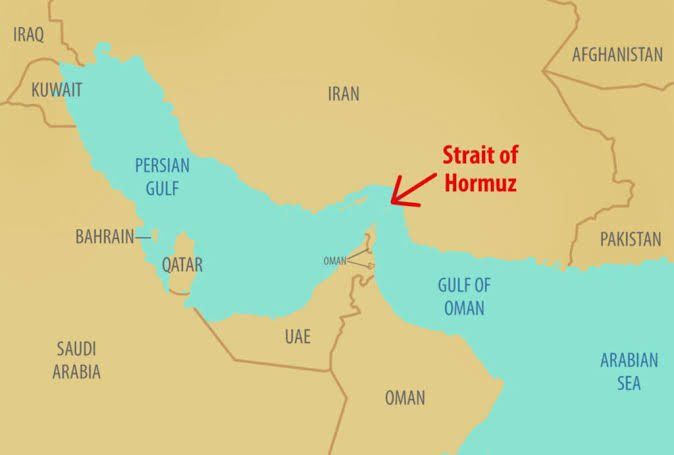
Any serious military action involving Iran would immediately place the Strait of Hormuz at risk, either through direct disruption or heightened insurance and shipping restrictions. Approximately twenty per cent of globally traded oil and a substantial share of liquefied natural gas passes through this corridor, making it structurally sensitive to perceived instability. The International Energy Agency has repeatedly stated in its oil market reports that prices respond first to credible risk rather than confirmed supply loss, with futures markets incorporating expectations ahead of physical disruption. Even limited hostilities would therefore translate into higher oil prices within days, regardless of whether shipping lanes were formally closed.
Rising energy costs would feed directly into inflation at a moment when the United States economy is already under strain. Treasury auctions have shown weakening demand for longer-dated debt, reflecting concern over fiscal exposure and rising interest servicing costs. Equity markets have become increasingly reactive to geopolitical stress, while sustained inflows into gold and silver have been interpreted by economists at the Bank for International Settlements as indicators of systemic anxiety rather than routine portfolio rebalancing. An externally driven energy shock would intensify these pressures rather than remain contained.
Trade policy has further reduced the administration’s tolerance for economic disruption. Empirical research published by the Kiel Institute for the World Economy concluded that recent tariff measures failed to impose lasting damage on Chinese exporters, who rerouted supply chains and adjusted pricing strategies. The study noted that the economic burden was absorbed primarily by American consumers through higher prices and increased input costs for domestic producers. The dollar weakened as import expenses rose, adding inflationary pressure without improving competitiveness. A sharp increase in energy prices would compound these effects across transport, manufacturing, and consumer markets.
These economic factors carry direct political consequences. Fuel prices and inflation remain among the most visible indicators for voters, and financial volatility translates rapidly into declining public confidence. Electoral studies published by the American Political Science Review consistently show that economic stability outweighs foreign policy signalling in shaping voter behaviour. With midterm elections approaching, the administration’s capacity to absorb economic disruption is limited.
Regional military dynamics further complicate the picture. Iran possesses substantial strategic depth, with military infrastructure distributed across a large territory and protected by hardened facilities and underground networks. The International Institute for Strategic Studies has long documented how dispersion and redundancy raise the cost and duration required to achieve meaningful degradation through air or missile campaigns. Sustained operations are therefore required to produce lasting effects, increasing escalation risk.
Israel operates under materially different conditions. Its territory is small, and critical infrastructure is densely concentrated. Military installations, energy facilities, communications networks, and industrial assets are clustered within a narrow geographic area. During recent exchanges, Iran demonstrated the ability to deliver coordinated missile and drone strikes with sufficient precision to disrupt key systems. Independent military analysts cited by the Royal United Services Institute acknowledged that these attacks exposed structural vulnerabilities rather than isolated weaknesses.
This imbalance shapes escalation risk. Iran can absorb damage over time while maintaining operational continuity. Israel faces a lower threshold for disruption that affects civilian life, economic activity, and military readiness. Prolonged conflict therefore imposes asymmetric costs, reducing the appeal of sustained escalation for Israel and its partners.
For Washington, direct involvement would increase exposure across multiple fronts. Iranian retaliation could target regional bases, maritime routes, or allied infrastructure, raising the likelihood of broader instability. Such actions would place energy flows at risk and amplify market volatility. They would also test Israel’s capacity to manage sustained disruption, complicating alliance politics and domestic narratives.
The administration’s preferred pattern has been limited action followed by negotiation. This approach relies on producing visible damage while retaining control over escalation. Iranian strategy does not accommodate this model. Iranian officials have repeatedly rejected negotiations conducted under pressure, with the Iranian foreign ministry stating that talks under threat amount to capitulation rather than diplomacy. Academic studies of coercive strategy, including Robert Pape’s analysis in Bombing to Win, show that such approaches fail when the targeted state does not view compliance as improving long-term security.
Public assertions that Iranian nuclear facilities were destroyed have further constrained diplomatic space. If core objectives had been achieved, the rationale for continued pressure would be unclear. The subsequent emphasis on internal repression and human rights has appeared as an attempt to sustain leverage rather than evidence of a resolved strategic outcome. Research on bargaining credibility by scholars such as Thomas Schelling demonstrates that shifting justifications weaken negotiating power rather than strengthen it.
Financial markets have responded with growing sensitivity. Episodes of broad selling without identifiable macroeconomic triggers suggest rising concern over systemic risk rather than reaction to discrete events. Analysts at JPMorgan have noted that such behaviour reflects liquidation fear and declining risk tolerance. A conflict involving Iran would intensify these dynamics across currencies, equities, and commodities.
The current posture reflects these constraints. Public statements emphasise readiness and deterrence, while operational actions remain limited. This pattern reflects recognition that available options carry significant secondary effects across economic and political systems.
From a strategic interaction perspective, the situation resembles a repeated game in which one actor raises the cost of escalation by linking military action to economic disruption. Iran’s capacity to threaten energy flows and regional stability alters the payoff structure for its adversaries. The United States faces higher immediate costs from escalation than Iran, which has prepared for prolonged pressure through economic insulation and regional deterrence.
As tensions increase, the margin for controlled outcomes narrows. Once military action occurs, commitment replaces signalling, and the ability to manage escalation declines rapidly. Financial markets respond faster than political institutions, and political institutions respond faster than military planning cycles. Under such conditions, miscalculation becomes more likely than negotiated resolution.
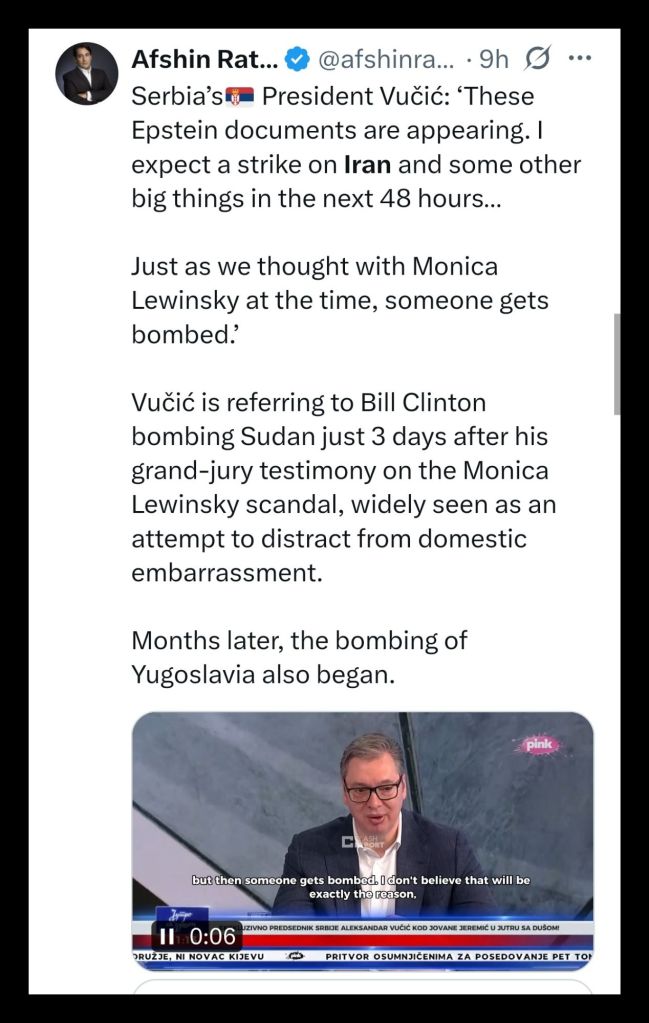
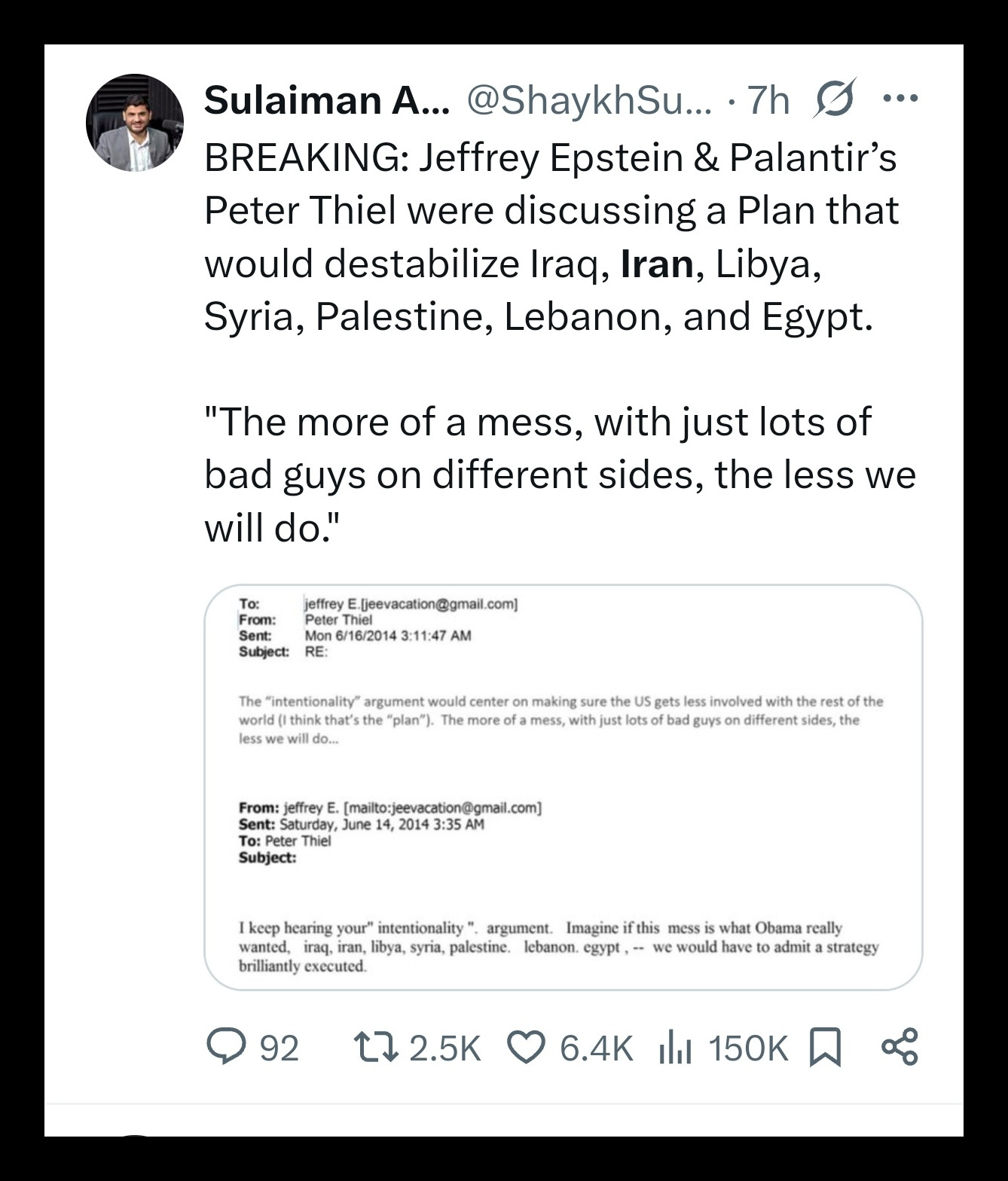
The political environment further complicates restraint. The re-emergence of the Epstein files in global discourse has introduced an additional credibility problem for the administration, raising questions about influence, exposure, and institutional protection. Efforts to divert attention through foreign policy escalation carry risk, as failure or economic fallout would amplify scrutiny rather than suppress it. Historical analysis of political distraction strategies, including work by Jack Levy on diversionary war theory, shows that such efforts often backfire when underlying conditions are unfavourable.
Trump’s position is shaped by these overlapping pressures. Military action risks economic shock, market instability, allied exposure, and political backlash at a moment of heightened reputational vulnerability. Restraint invites criticism but preserves control. Iran’s leverage lies in its ability to impose costs without initiating conflict, shaping the boundaries within which its adversaries operate.
The persistence of shifting and often conflicting public justifications for confrontation with Iran indicates that the nuclear programme has served primarily as a permissive rationale rather than the central strategic objective. President Trump’s repeated references to a Venezuela-style operation against Iran reflect a preference for a rapid, regime-impacting action that avoids prolonged warfare while delivering visible political effect. His remarks comparing the military presence assembled in the Gulf to the force deployed against Caracas signal an aspiration for decisive intervention without sustained escalation, while simultaneously revealing sensitivity to domestic political and economic risk. This approach, shaped by Trump’s unpredictable decision-making style and heightened scrutiny arising from unrelated political controversies, seeks disruption without systemic fallout, an outcome that has proven difficult to engineer in practice. Iran’s scale, military dispersion, and capacity for retaliation fundamentally distinguish it from Venezuela, rendering any attempt at replication far more consequential and far less controllable.
For Prime Minister Benjamin Netanyahu, Iran constitutes the principal obstacle to a long-standing strategic vision that extends beyond nuclear containment toward regional reconfiguration post Gaza ethnic cleansing. Weakening Iran means limiting its nuclear program dismantling its role as a regional power and a connector within global energy and transport networks. The Iranian state’s geographic and economic position links critical energy corridors, from the Persian Gulf to Central Asia, influencing the future direction of regional order and global influence. This connection places Iran at the center of emerging multipolar integration, which poses a direct challenge to Israel’s long-term strategy of regional primacy and its broader efforts to limit Chinese and Russian influence in the region. Netanyahu’s push for a confrontation with Iran is thus part of a grander geopolitical vision of reshaping regional power structures while neutralizing non-Western influences. Failing to curtail Iran’s autonomy would accelerate a realignment in the Middle East and expose the limits of Israeli coercive power.
The situation exemplifies a broader shift in international politics, where military power, though still crucial, is increasingly restrained by financial interdependence, energy sensitivities, domestic political exposure, and the transparency brought by the information age. These constraints create a volatile environment where the risk of unintended escalation is higher, and the capacity to control events once they spiral out of control is increasingly limited. Both Trump and Netanyahu face a dilemma that blends military considerations with global economic imperatives, illustrating how contemporary geopolitics is being reshaped by factors far beyond the battlefield.
The confrontation therefore reflects a broader shift in international politics, where military power remains significant but increasingly constrained by financial interdependence, energy sensitivity, domestic political exposure, and information transparency. As these constraints tighten, the risk grows that events accelerate beyond deliberate control, leaving diminishing capacity to manage escalation once it begins.
Authored By: Global GeoPolitics
Thank you for visiting. This is a reader-supported publication. Substack chatbot says it maybe a “glitch” preventing the page from adding new subscribers or followers. Page has not grown for 30 days straight. I cannot do this without your support. You can support by way of a cup of coffee:
buymeacoffee.com/ggtv or


Leave a comment