
How loss of a single trade route reshapes power, finance, and global order
Loss of control over the Strait of Hormuz will mark the end of American global dominance in the same manner that the Suez Canal marked the end of British imperial power, with the mechanism of decline rooted not in immediate military defeat but in the rapid collapse of financial credibility, alliance confidence, and perceived authority over global trade routes.
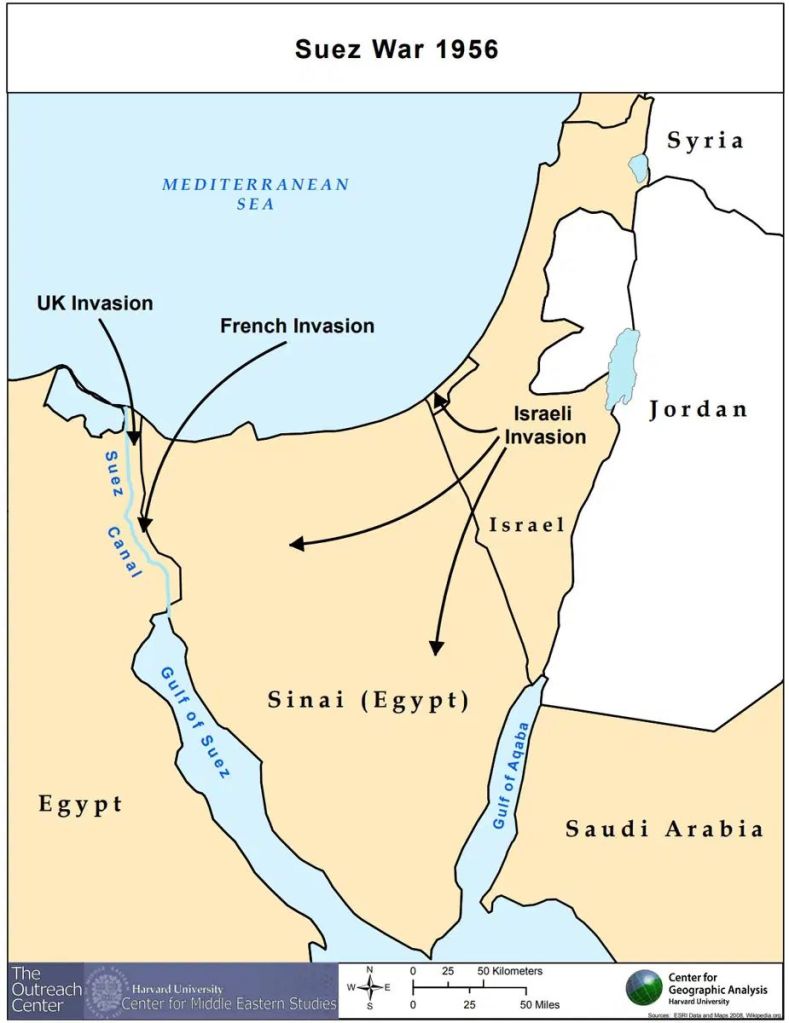
The precedent rests on the events of the Suez Crisis, where Britain, still formally a great power with global reach, attempted to reverse the nationalisation of the canal by force. Archival material and later scholarship, including Keith Kyle’s detailed study of Suez and Corelli Barnett’s analysis of British strategic overreach, show that British leadership assumed residual authority would compel compliance. That assumption failed under coordinated pressure from the United States and the Soviet Union, alongside acute stress in sterling markets. Barry Eichengreen’s monetary history documents how the pound required emergency support as capital flight accelerated during the crisis, demonstrating that financial dependence constrained military action. The withdrawal that followed did not destroy British capability in a material sense, yet it destroyed confidence in British autonomy. Within a decade, decolonisation accelerated, and within two, Britain’s reserve currency role had largely dissipated.
Economic historians have treated Suez as a credibility shock rather than a singular cause of decline. Harold James and Adam Tooze both describe the episode as the point at which markets and allies reassessed Britain’s capacity to act independently. That reassessment drove capital reallocation and strategic realignment. The sequence aligns with earlier imperial contractions. Portugal’s loss of maritime dominance in the seventeenth century, examined by Charles Boxer, followed the erosion of control over trade routes to Dutch competitors. The Dutch Republic, analysed by Jonathan Israel, saw financial supremacy weaken once naval control could no longer be guaranteed against rising British power. Each case demonstrates that control over narrow trade arteries carries disproportionate weight in sustaining systemic trust.
Ray Dalio’s long-cycle framework, developed through research at Bridgewater Associates, synthesises these patterns into a sequence linking debt accumulation, external challenge, and loss of reserve currency status. Dalio writes that great powers decline when creditors begin to doubt both repayment capacity and enforcement capability. Independent analysts such as Russell Napier and Michael Hudson, writing outside mainstream policy institutions, reach related conclusions from different methodological positions, emphasising that financial systems depend on credible power projection as much as on economic size. Napier’s work on capital cycles stresses that reserve status depends on the expectation of order, while Hudson has argued that overextension abroad combined with internal debt burdens historically precedes monetary restructuring.
The Strait of Hormuz occupies a comparable structural position within the contemporary system. Data from the U.S. Energy Information Administration indicates that roughly one fifth of globally traded oil transits through this corridor. Independent energy consultancies, including Rystad Energy and the Oxford Institute for Energy Studies, have published detailed assessments showing that alternative routes lack the capacity to offset a sustained closure. Disruption at Hormuz therefore transmits directly into global price formation, industrial output, and fiscal stability across importing economies. European dependence on external energy supplies, documented in work by the Bruegel think tank, and Asian manufacturing reliance on Gulf exports, analysed by Japanese and South Korean policy institutes, create a system in which a single chokepoint carries systemic risk.
Control of such a chokepoint depends on more than fleet presence. It requires sustained dominance under contested conditions. The United States has maintained naval forces in the region for decades, yet recent military history shapes perceptions of endurance. Studies by Andrew Bacevich and reports from the Quincy Institute for Responsible Statecraft document the limits encountered in Vietnam, Iraq, and Afghanistan, where prolonged engagements produced strategic withdrawal without decisive victory. These cases inform external assessments of American tolerance for extended conflict.
Iran’s approach reflects a doctrine of asymmetrical warfare designed to exploit those limits. Analysis from the Royal United Services Institute and independent regional scholars such as Trita Parsi describe a strategy centred on denial, attrition, and calibrated escalation. Naval mines, anti-ship missiles, and distributed proxy networks create persistent disruption without presenting a conventional target set. The objective involves raising the cost of securing passage beyond politically sustainable levels. Historical parallels appear in weaker powers imposing disproportionate costs on stronger adversaries, as examined in Ivan Arreguín-Toft’s work on asymmetric conflict outcomes.
Statements attributed to Donald Trump emphasise deterrence through threat of overwhelming response. Dalio records that policymakers in allied states question whether such threats translate into prolonged engagement when faced with sustained disruption. The issue concerns credibility under duration rather than capacity at a single point in time. Empirical work by political scientists such as Daryl Press suggests that credibility depends on demonstrated willingness to absorb costs, not merely on stated commitments.
The financial position of the United States introduces an additional constraint. Public debt has reached levels that require substantial annual interest payments, limiting fiscal flexibility during crisis conditions. Analysis from the Bank for International Settlements and independent economists including Carmen Reinhart indicates that high debt burdens reduce the capacity to respond to external shocks without triggering inflationary or currency pressures. A disruption in Hormuz would likely increase energy prices, feeding directly into inflation across advanced economies. Central banks would face a conflict between tightening policy to contain inflation and maintaining accommodative conditions to manage debt servicing costs.
Currency stability depends on sustained demand for dollar-denominated assets. The reserve role of the dollar has persisted due to liquidity, institutional depth, and the absence of a comparable alternative. However, independent analysts such as Michael Hudson and research groups examining BRICS financial initiatives note gradual efforts to diversify settlement mechanisms away from the dollar. These efforts remain limited in scale, yet a visible failure to secure critical trade routes could accelerate diversification by undermining confidence in the system’s guarantor.
Alliances would respond to such a shift in perception. European policy discussions, reflected in reports by Chatham House and German economic institutes, increasingly reference strategic autonomy in response to uncertainty about long-term US commitments. Asian economies dependent on Gulf energy supplies would face immediate pressure to secure alternative arrangements. China’s position as a major importer gives it a direct stake in the stability of Hormuz. Research from the Mercator Institute for China Studies indicates that China has expanded naval capabilities and logistical access points to protect maritime routes, though it has not yet assumed a dominant security role. A sustained crisis could alter that posture.
Russia and other energy exporters would experience secondary effects through price movements and shifting demand patterns. Higher prices would strengthen fiscal positions for exporters while increasing strain on import-dependent economies. The redistribution of economic leverage would interact with existing geopolitical alignments, reinforcing trends toward a more fragmented system.
The analogy with Suez rests on the role of perception in driving systemic change. Britain did not lose all capability in 1956, yet markets and allies concluded that it could no longer act independently of larger powers. That conclusion triggered capital flight, currency weakness, and strategic contraction. The United States retains far greater structural advantages than Britain held at that moment, including technological leadership and deeper financial markets. However, the mechanism of decline identified in historical cases does not require parity between situations. It requires a visible failure at a point of systemic importance.
Dalio’s framework aligns with earlier theories in international political economy, including Charles Kindleberger’s argument that global stability depends on a leading power capable of maintaining open trade routes and financial order. When that capacity comes into question, fragmentation follows. Independent scholarship has revisited this framework in light of current conditions, noting that no alternative power fully replicates the role, increasing the potential for disorder during transition.
Energy flows, maritime control, and financial credibility converge in the Strait of Hormuz scenario. A sustained inability to guarantee passage would signal limits to American power in a domain central to the global economy. Historical precedent indicates that such a signal carries consequences beyond the immediate region, affecting currency stability, alliance structures, and capital allocation.
The analysis of earlier empires shows consistent patterns. Portugal lost its position after failing to defend maritime routes against emerging competitors. The Dutch Republic’s financial dominance eroded once naval superiority weakened. Britain’s global role contracted after Suez demonstrated dependence and limited autonomy. Each case involved a moment where control over a critical artery failed and perception adjusted rapidly.
The present situation reflects similar dynamics under different technological and geopolitical conditions. Iran’s strategy aims to impose sustained costs through asymmetrical means, extending conflict duration and exploiting political constraints within the United States. Evidence from previous conflicts indicates that such strategies can succeed against materially stronger opponents when the cost of engagement exceeds perceived benefit.
A failure by the United States to secure the Strait of Hormuz would therefore represent more than a regional setback. It would demonstrate an inability to enforce open trade at a critical chokepoint, prompting reassessment among creditors and allies. Capital flows would respond to that reassessment, as they have in previous historical episodes. Currency stability would come under pressure, and alternative arrangements would gain traction.
Historical precedent supports the argument that imperial systems do not collapse solely through battlefield defeat but through loss of confidence in their capacity to maintain order. The Suez Crisis provides a clear example of that process in operation. Dalio’s synthesis of long-term cycles, supported by independent economic and historical scholarship, places the current situation within a recognisable pattern.
Misjudgment of asymmetrical warfare forms a central risk. Stronger powers have repeatedly underestimated the capacity of weaker adversaries to impose prolonged costs. Vietnam, Iraq, and Afghanistan provide empirical evidence of that pattern in recent decades. Iran’s strategy reflects awareness of those precedents, combining regional leverage with methods designed to avoid decisive confrontation while sustaining pressure.
Should the United States fail to secure the Strait of Hormuz under such conditions, the resulting shift in perception would align closely with the British experience in 1956. Allies would reassess commitments, creditors would reconsider exposure, and competing powers would expand influence within the emerging space. The end of dominance would follow not from a single defeat but from the cumulative effect of lost confidence.
The historical record shows that control over vital trade routes underpins the authority of great powers. Loss of that control has repeatedly marked the transition from dominance to decline. The Strait of Hormuz now occupies that role within the contemporary system. A failure to secure it, given the structural pressures already present, would place the United States within the same trajectory that followed Britain after Suez, with asymmetrical warfare serving as the mechanism through which a weaker power compels that outcome.
Authored By: Global GeoPolitics
Thank you for visiting. This is a reader-supported publication. If you believe journalism should serve the public, not the powerful, and you’re in a position to help, becoming a PAID SUBSCRIBER truly makes a difference. Alternatively you can support by way of a cup of coffee:
https://buymeacoffee.com/ggtv |
https://ko-fi.com/globalgeopolitics |
Bitcoin: 3NiK8BoRZnkwJSHZSekuXKFizGPopkE7ns


Leave a comment