

How Tehran Forced a Trans-national Owned Superpower To Retreat and Reshaped the Global Economy
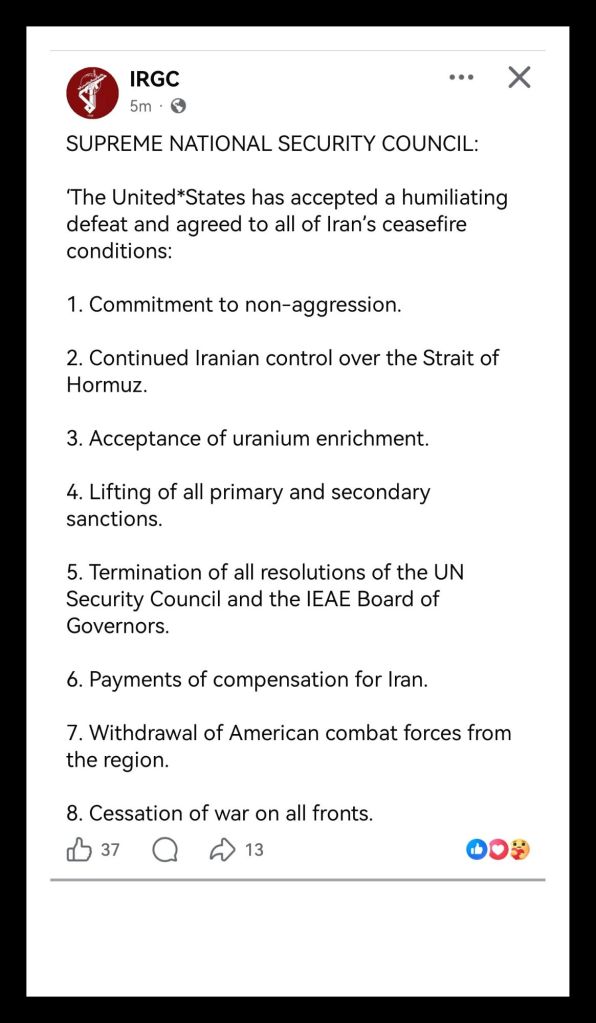
The war ended, fingers crossed, at the point where the United States accepted conditions it had rejected for four decades, and that moment marked a structural break rather than a negotiated settlement. Washington agreed to terms that reversed its established position on sanctions, enrichment, regional deployment, and maritime control, conceding outcomes previously treated as non-negotiable limits. The shift did not emerge from incremental compromise but from the exhaustion of available escalation pathways under conditions that no longer favoured continuation.
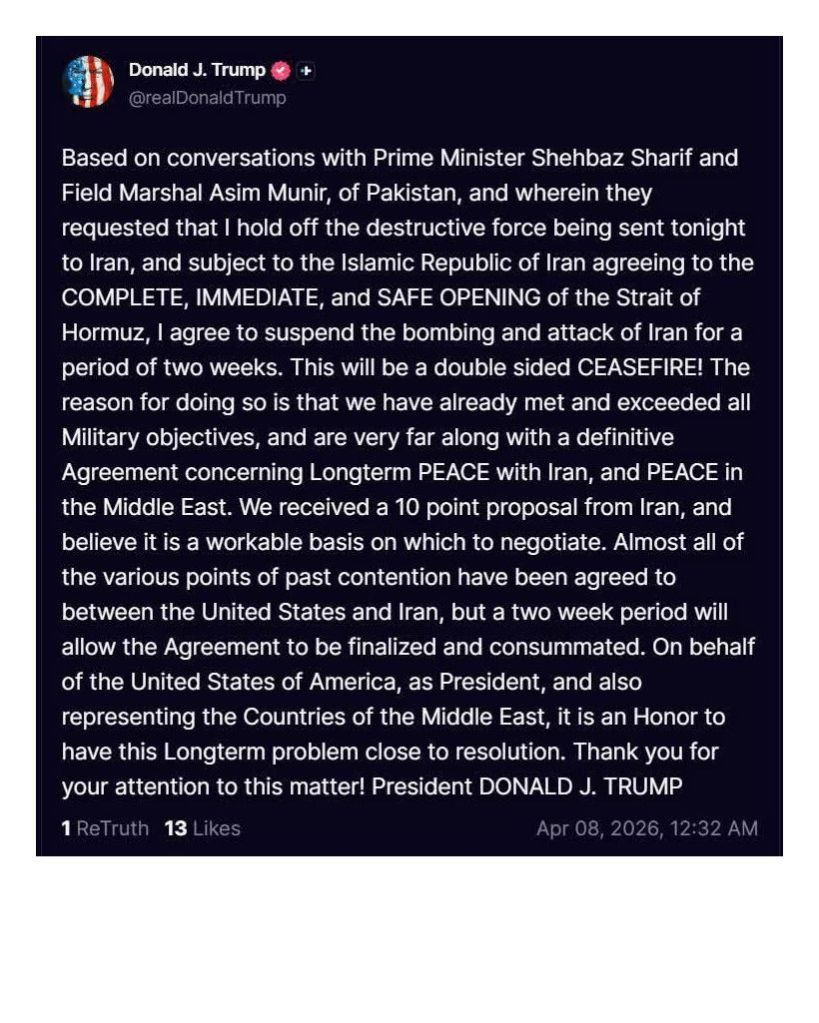
Iran’s position at the conclusion cannot be understood without recognising the scale of pressure it absorbed and the manner in which it responded. Sustained strikes on infrastructure, targeted killings of senior personnel, and civilian casualties did not produce institutional collapse or command disintegration. Continuity of governance, preservation of strategic assets, and retention of retaliatory capability were maintained throughout the conflict. Iran fought under conditions imposed by the most advanced military forces currently deployable, and retained both territory and operational coherence at the point of settlement. No modern precedent demonstrates a sanctioned state enduring that level of coordinated pressure while forcing a reversal of imposed constraints.
The attempted seizure of nuclear material near Isfahan illustrates the limits encountered at the operational level. A complex operation involving air power and special forces did not achieve its objective and appears to have incurred losses without securing strategic assets. The failure carries implications beyond the immediate event, indicating that escalation dominance did not translate into access or control over critical infrastructure. Strategic denial held under direct assault, and that denial shaped the negotiation that followed.
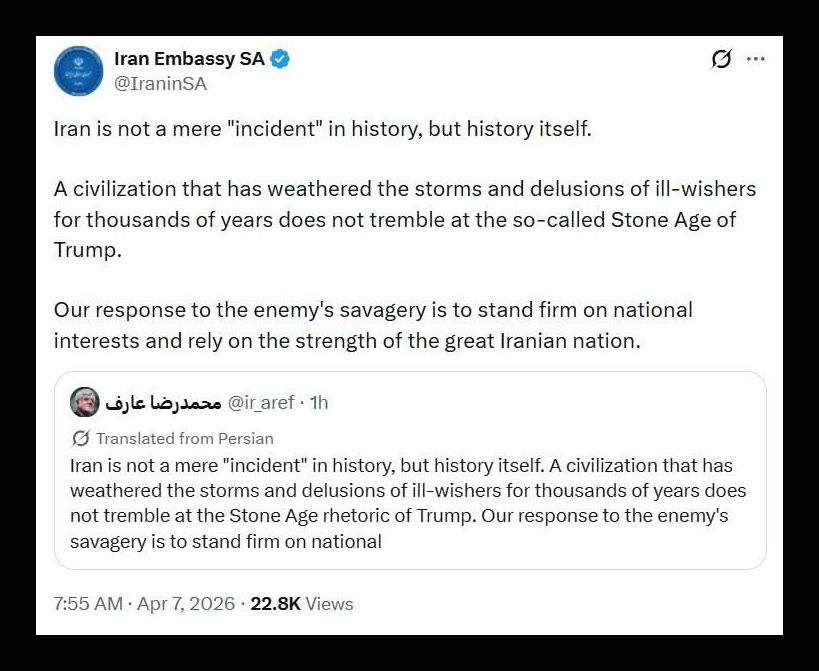
Iran’s conduct throughout the war followed a structured doctrine based on calibrated escalation and reciprocal cost imposition. Each action corresponded to an incoming measure, with responses designed to impose higher marginal cost without crossing thresholds that would trigger uncontrolled expansion. The formulation expressed as “security for all or security for no one” and “prosperity for all or prosperity for no one” defined the operational logic. That logic extended the consequences of conflict beyond bilateral engagement and embedded them within the wider economic system.
Iran did not accept interim ceasefires at any stage of the conflict, rejecting proposals that would have introduced pauses without altering underlying conditions. Negotiation was framed as a terminal process rather than a temporary adjustment, removing the possibility of reset cycles that allow adversaries to restore capability before resuming operations. This position eliminated a standard mechanism of conflict management and forced a binary outcome between continuation under worsening conditions and acceptance of final terms.
A defining feature of the conflict lies in the relationship between military capability and intellectual doctrine. Iran did not seek parity in conventional force projection but instead studied the operational patterns, thresholds, and constraints of its adversaries, constructing a response system that disassembled those patterns over time. Each escalation step encountered a prepared counter that imposed disproportionate cost relative to the initiating action. The process resembled controlled dismemberment rather than direct confrontation, where cumulative pressure replaced decisive engagement. No comparable modern case demonstrates the defeat of concentrated military superiority through such a disciplined and adaptive doctrinal approach sustained over a full conflict cycle.
Economic performance during the war reinforced the strategic position. Energy exports continued at scale, generating daily revenues estimated at approximately $850 million and exceeding previous monthly baselines. These figures indicate that sanctions enforcement had already degraded before formal removal. More important was the behavioural shift among external actors, who adjusted to maintain access to energy flows under Iranian conditions. Economic alignment followed material necessity rather than declared policy.
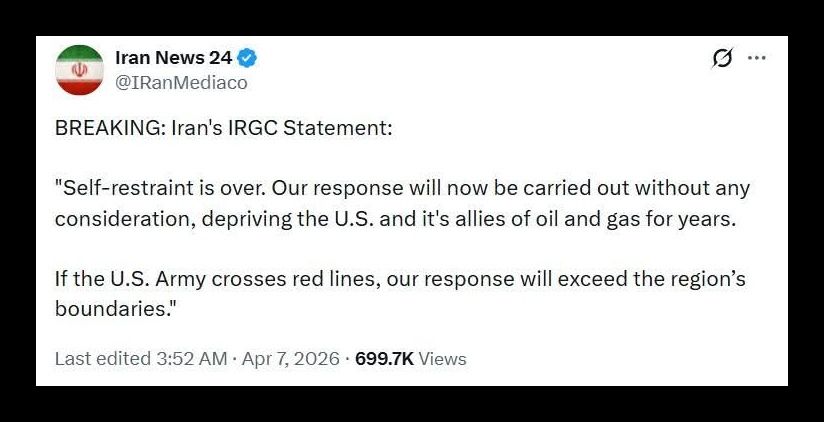
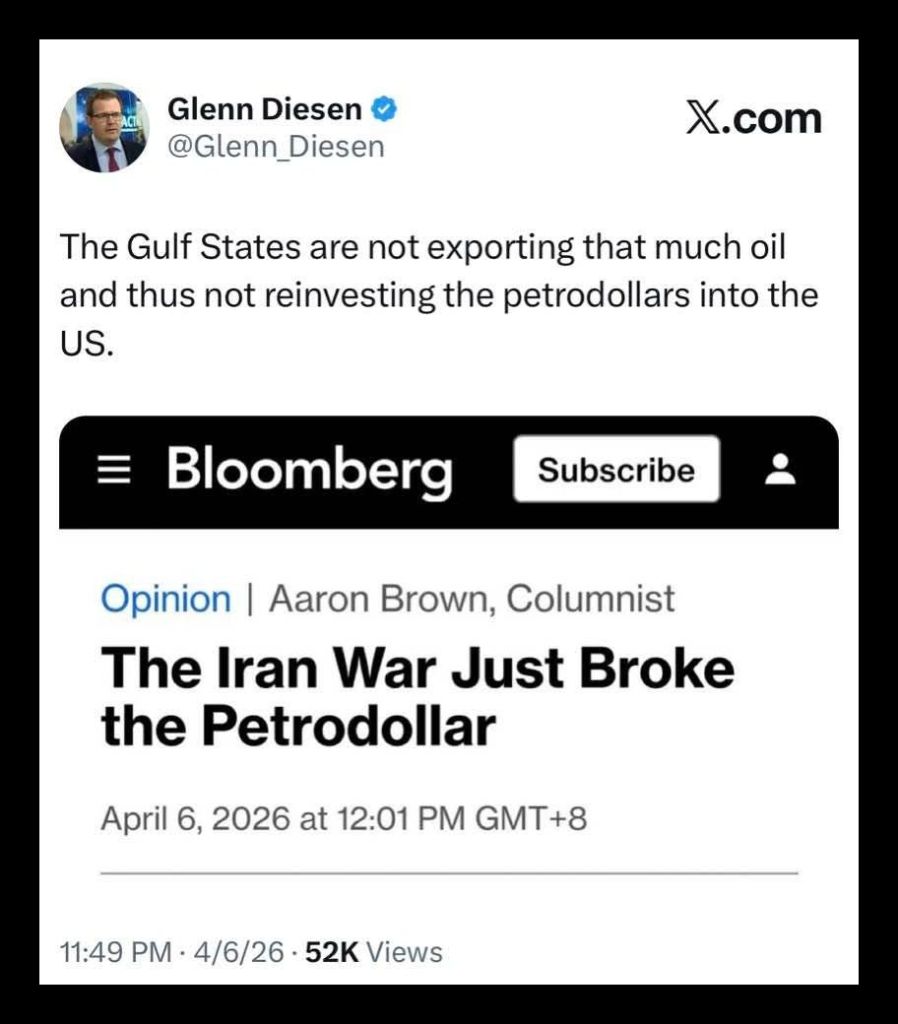
Evidence of this shift already appears in financial practice. European institutions have begun expanding non-dollar lending instruments, while Russia has moved to demand payment in alternative currencies for energy exports. These changes, incremental in isolation, acquire systemic weight when coupled with Iranian control over energy chokepoints. The result resembles a forced coordination problem in game theory terms, where states must choose between adherence to legacy dollar systems or access to essential energy supplies. Rational actors, facing immediate supply constraints, converge on the latter, accelerating currency diversification.
Control over the Strait of Hormuz consolidated that position. Combined with allied influence in adjacent Red Sea maritime routes, a significant share of global energy transit fell under a single strategic framework. Control over transit introduces conditional access, allowing restrictions based on compliance with imposed terms. The enforcement mechanism of sanctions therefore inverted, shifting from restriction of exports to conditional access to transit.
The consequences for the global financial system follow directly. The petrodollar structure depended on secure transit, enforced stability, and recycling of energy revenues into dollar markets. Those conditions no longer hold in their previous form. Adjustments are already visible in financial practice, including expansion of non-dollar settlement mechanisms and alternative lending frameworks. The change reflects not preference but constraint imposed by altered control over physical flows.
The conflict can be reduced to a single game theoretic transformation. Iran converted the war into a coordination problem with asymmetric penalties. Compliance preserved access to energy and continuity of trade. Resistance introduced escalating risk to supply, infrastructure, and financial stability. Under those conditions, the rational strategy for external actors shifted simultaneously, producing rapid convergence on acceptance of Iranian terms. The creation of this payoff structure in which resisting its terms carried higher costs than compliance was a masterpiece by Iran. The war therefore resolves not merely as a military outcome but as a coordination shift in global economic behaviour.
The United States faced a narrowing decision space in which further escalation increased systemic risk without improving outcomes, leading to acceptance of a new equilibrium defined by the opposing side, accepting conditions it had previously rejected.
The agreement represents a reversal of long-standing policy architecture. For decades, the United States pursued containment through sanctions, isolation, and forward military presence. Each of those elements has been removed or inverted within a single settlement. Sanctions have been lifted, enrichment accepted, and forces withdrawn. The structure did not erode gradually but ceased to function under pressure applied at critical points.
Israel’s position follows the same structural change. Its deterrence model depended on integration with American projection capacity and regional dominance of escalation. Sustained losses and operational constraints during the conflict indicate that this model no longer functions as previously configured. Acceptance of the ceasefire reflects the altered balance rather than an independent strategic choice. Its strategic objective of regional hegemony over energy and resources faces direct contradiction from the new arrangement, which removes United States enforcement capacity and elevates Iran as the central organising power.
The durability of the ceasefire depends on whether the structural changes are implemented or deferred. From a game theory perspective, the credibility of commitments becomes central. Iranian analysis has consistently rejected temporary arrangements that allow rearmament and re-entry into conflict. This position mirrors Russian negotiating logic in Ukraine, where short-term ceasefires are viewed as mechanisms for prolonging conflict rather than resolvingit. A settlement that removes forward deployment and enforcement capacity alters incentives permanently. A pause that preserves those capabilities recreates the conditions for renewed conflict. The distinction determines whether the present outcome holds. Iran’s demands therefore aims to eliminate future threat capacity by removing military presence and sanction tools, thereby locking in its gains. The United States and Israel retain incentives to revise the outcome if capability is restored. This creates a classic commitment problem, where each side doubts the other’s long-term adherence. The likelihood of renewed conflict depends on whether structural changes, particularly the removal of United States bases and the reorganisation of regional security, are implemented in full.
Under these conditions, ceasefires risk becoming tactical pauses within a longer conflict cycle rather than endpoints. The logic that emerges is not one of cooperative security, but of competitive dominance where stability is pursued through the reduction or removal of adversary capability rather than mutual accommodation. This dynamic, often described as hegemonic peace, leaves little space for lasting agreement, as each side retains both the incentive and the expectation of renewed confrontation.
The details of the alleged armistice remain contested, with both sides presenting significantly different interpretations of what has been agreed. Reports of continued missile exchanges underscore the extent to which the situation remains fluid rather than settled. This ambiguity reinforces the underlying commitment problem: without shared understanding or verified implementation, the agreement risks functioning as a temporary pause rather than a structural resolution. Still, the costs of continued escalation are now sufficiently high that even an unstable peace represents a preferable outcome. At present, the conflict benefits no actor in material or strategic terms.
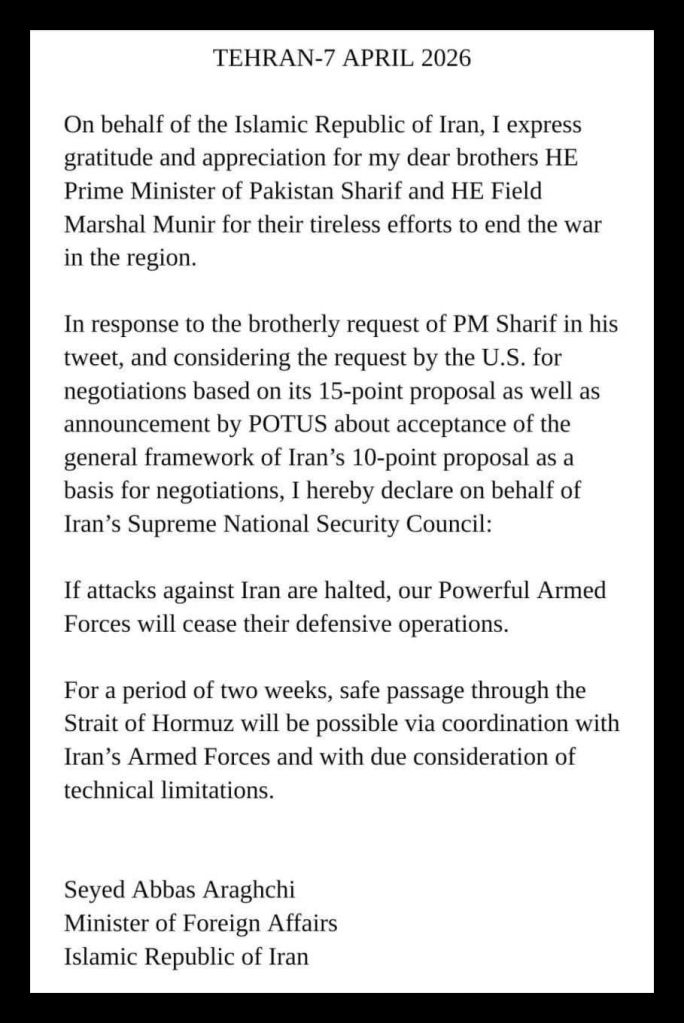
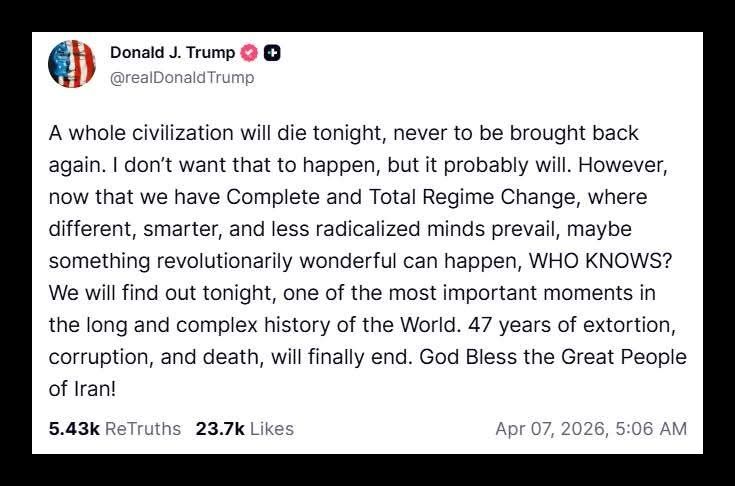
The final phase of the war introduced the prospect of systemic disruption extending beyond the region. The counter threat to Trump’s 8.00pm deadline issued by Iran prior to the ceasefire, involving potential strikes on Gulf Cooperation Council infrastructure and Israeli targets, introduced a systemic risk that extended beyond regional warfare into global economic collapse. Disruption of energy production and transit at that scale would have triggered immediate price shocks, supply chain breakdowns, and financial instability. The avoidance of such an outcome underscores the coercive leverage Iran achieved at the final stage of negotiations and the recognition of consequences beyond military domains.
Domestic political constraints within the United States may have influenced the timing and acceptance of terms. Escalation under conditions of strategic failure carries internal costs, including legislative and institutional responses that can limit executive action. The possibility of emergency political measures, including impeachment proceedings, introduces an additional layer of constraint on decision-making during crisis conditions. Such pressures do not determine outcomes independently but shape the range of viable options available at critical moments.
The implications extend into other theatres. Reduced presence in the Middle East constrains its capacity to project power into adjacent theatres, including the Eastern Mediterranean and Central Asia. The Ukraine conflict operates under similar negotiation dynamics, where opposing actors reject interim arrangements and seek structural outcomes. The pattern indicates convergence in strategic approach among states resisting external pressure.
The long-term strategic doctrine associated with a “Pivot to Asia And American Grand Strategy” and “Pivot to Asia? U.S. Policy in Asia Under the Trump Administration”, becomes difficult to execute under these circumstances. A sustained confrontation with China requires secure energy supplies, stable financial systems, and credible alliance structures. Each of these elements faces disruption following the outcome of the Iran conflict.
China’s position strengthens within the emerging structure. Control over industrial inputs and rare earth materials provides leverage across supply chains, complementing shifts in energy transit control positions it to capitalise on the weakening of dollar dominance. Engagement between Taiwanese political actors and Beijing reflects recalibration based on perceived reliability of external guarantees. Strategic doctrines premised on extended deterrence require consistent demonstration of capability, and recent events alter those perceptions.
The emerging order does not rest on a single centre of enforcement but on distributed control over resources, transit, and production. The order trends towards multipolarity anchored in resource control and regional security arrangements rather than centralised financial dominance. Power derives from the ability to impose conditions on essential flows rather than from unilateral projection. Iran’s position strengthened because it aligned military conduct, economic resilience, and doctrinal coherence within that framework.
The war will be understood not through individual engagements but through the structural change it produced. A system built on control of energy, currency, and security guarantees lost coherence when those elements no longer operated together. The war demonstrates that control over critical economic nodes can offset disparities in conventional power when combined with disciplined escalation and refusal to accept interim outcomes. The shift that follows extends beyond the region and into the structure of the global system.
Right now the conflict enters afragile diplomacy phase. Whether this transformation endures depends not on the agreement itself, but on its enforcement. If the current ambiguity hardens into competing interpretations rather than a shared structure, the system may yet revert to conflict. However, there are strong reasons to question whether any durable settlement is possible under present conditions. J.D. Vance signing an oil deal with Orban in Turkey while Kharg island was being bombed, sounds taking out the competition or whether there was a mutiny in there was mutiny in the ranks, the strategic objective of the United States has not fundamentally shifted, and past behaviour, including withdrawal from the Joint Comprehensive Plan of Action and the use of surprise military action, indicates that agreements can function as temporary instruments rather than binding constraints.
From this perspective, diplomacy operates less as resolution and more as sequencing: a mechanism to pause, recalibrate, and re-engage under more favourable conditions. Similar dynamics are observable in the Russo-Ukrainian War, where interim arrangements have repeatedly failed to address underlying security conflicts. Where rival powers do not accept coexistence on equal terms, political settlements struggle to move beyond temporary stabilisation.
Yet even if conflict resumes, the structural shift produced by this war cannot be undone. The limits of coercion have been exposed, the alignment between military pressure and economic control has fractured, and the global system has already begun to reorganise around new constraints. The question is no longer whether the previous order can be restored, but how future conflict will unfold within a system that no longer operates on its original foundations.
Authored By: Global GeoPolitics
Thank you for visiting. This is a reader-supported publication. If you believe journalism should serve the public, not the powerful, and you’re in a position to help, becoming a PAID SUBSCRIBER truly makes a difference. Alternatively you can support by way of a cup of coffee:
https://buymeacoffee.com/ggtv |
https://ko-fi.com/globalgeopolitics |
Bitcoin: 3NiK8BoRZnkwJSHZSekuXKFizGPopkE7ns


Leave a comment