
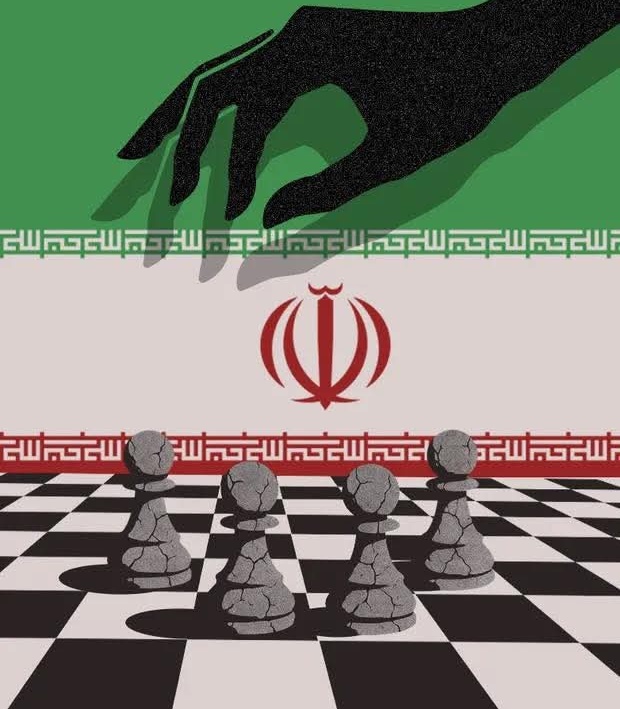
Why Iran Will Not Bargain, Ukraine Cannot Prevail and Brazil’s Rupture with the System
A decisive structural rupture now governs the international system, where coercive diplomacy has lost credibility and military-economic escalation has become the primary language of state interaction. Iran’s refusal to attend ceasefire talks does not represent obstinacy but rather a rational rejection of a collapsed bargaining framework, while the Ukraine war’s informational distortions and Brazil’s open institutional defiance together confirm that the post-Cold War order has already fragmented into competing strategic blocs.
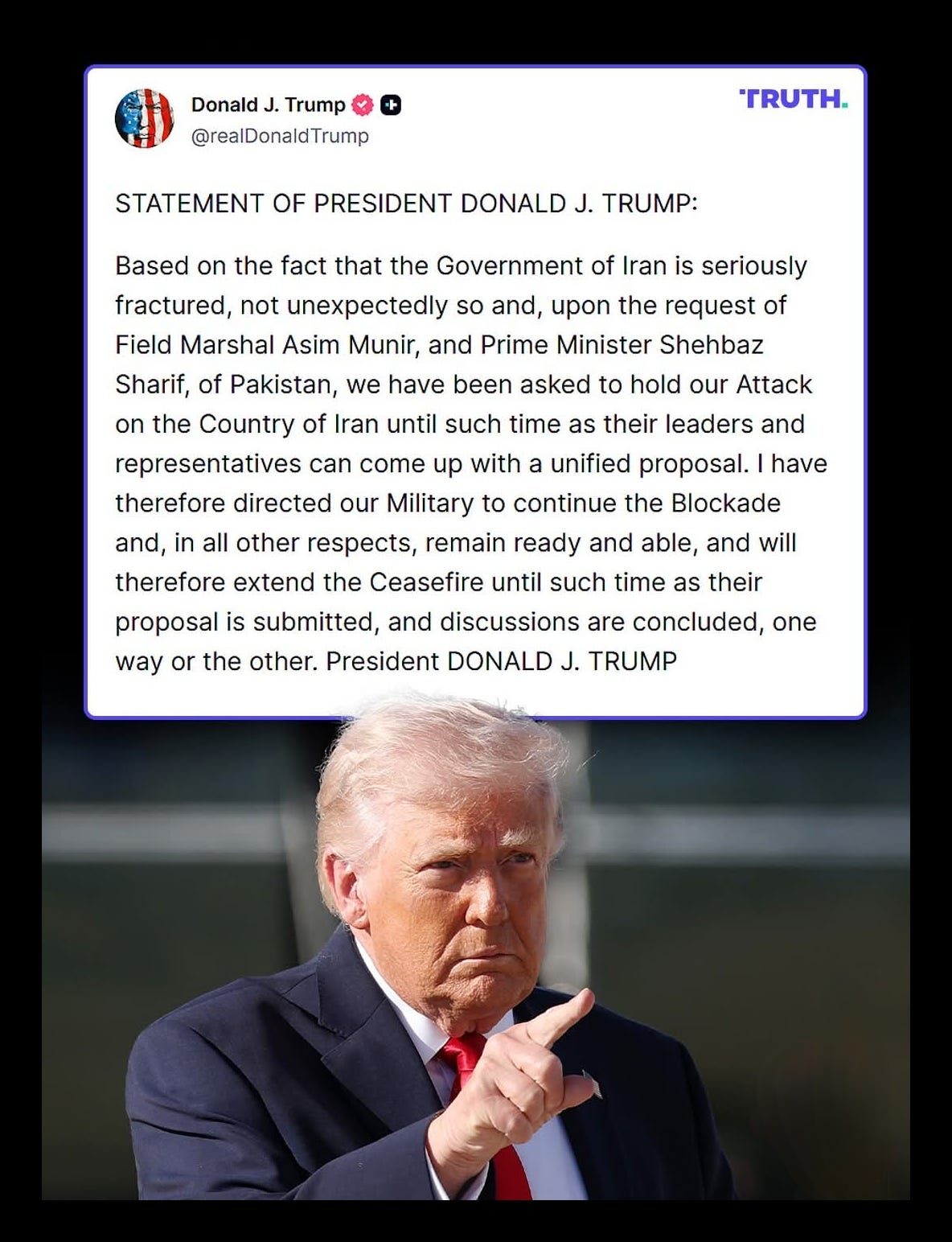
Scale reveals the depth of this transformation, because three theatres once considered separate now function as a single strategic system bound by energy flows, military-industrial capacity, and legitimacy crises. The Middle Eastern theatre now directly threatens nearly 20 percent of global energy supply through the Strait of Hormuz, while Europe remains trapped in a grinding attritional war whose casualties and equipment losses have reached systemic proportions, and Latin America has begun openly contesting the ideological and institutional foundations of Western leadership. Gas prices rising by over 30 percent in Europe and physical oil trading far above financial benchmarks illustrate not temporary disruption but structural distortion in global markets . These pressures interact, rather than accumulate, producing a compound crisis across energy, security, and governance systems simultaneously.
Strategic execution across these theatres reveals a consistent failure of coercive sequencing. American policy towards Iran assumes that rapid escalation followed by negotiation can produce compliance, despite historical evidence that the original nuclear agreement required over a decade of sustained bargaining. Iran’s leadership has therefore recalibrated its strategy based on demonstrated behaviour rather than declared intent, concluding that negotiations conducted alongside military strikes and shifting demands cannot produce enforceable outcomes. The assertion that “you can’t dictate on Iran when you’re not the winner” captures the underlying strategic reality that coercion without decisive victory lacks bargaining power . Iran’s refusal to engage under these conditions therefore represents a rational adaptation to a failed negotiation model, rather than ideological intransigence.
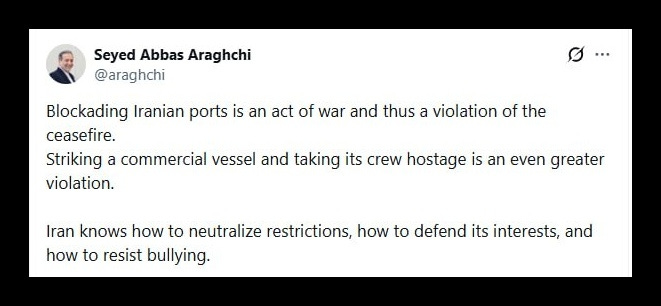
This refusal is reinforced by the absence of credible guarantees, because repeated violations of prior commitments have eliminated any expectation of compliance. The United States’ withdrawal from earlier agreements, combined with continued military actions during negotiation periods, has transformed the interaction into a non-cooperative game where defection dominates. Iran’s insistence on maintaining uranium enrichment rights, missile capabilities, and regional alliances reflects an understanding that relinquishing these assets without enforceable guarantees would produce strategic vulnerability without reciprocal benefit. The negotiation space has therefore collapsed into a zero-trust environment where engagement itself imposes unacceptable risk.
The military dimension of this conflict extends beyond direct confrontation into regional proxy structures that have evolved into a coordinated system. The so-called Axis of Resistance, spanning Iran, Iraq, Lebanon, Yemen, and Palestine, has transitioned from a loosely aligned network into an operationally synchronised bloc capable of imposing costs across multiple fronts simultaneously. Hezbollah’s adaptation towards asymmetric tactics, including the use of improvised explosive devices capable of disabling advanced armour, demonstrates a shift towards cost-efficient attrition that mirrors earlier insurgent successes against technologically superior forces. Israeli attempts to expand territorial control in southern Lebanon, including the destruction of infrastructure and attempts to occupy strategic zones, indicate a doctrine focused on altering geography rather than achieving decisive military victory.
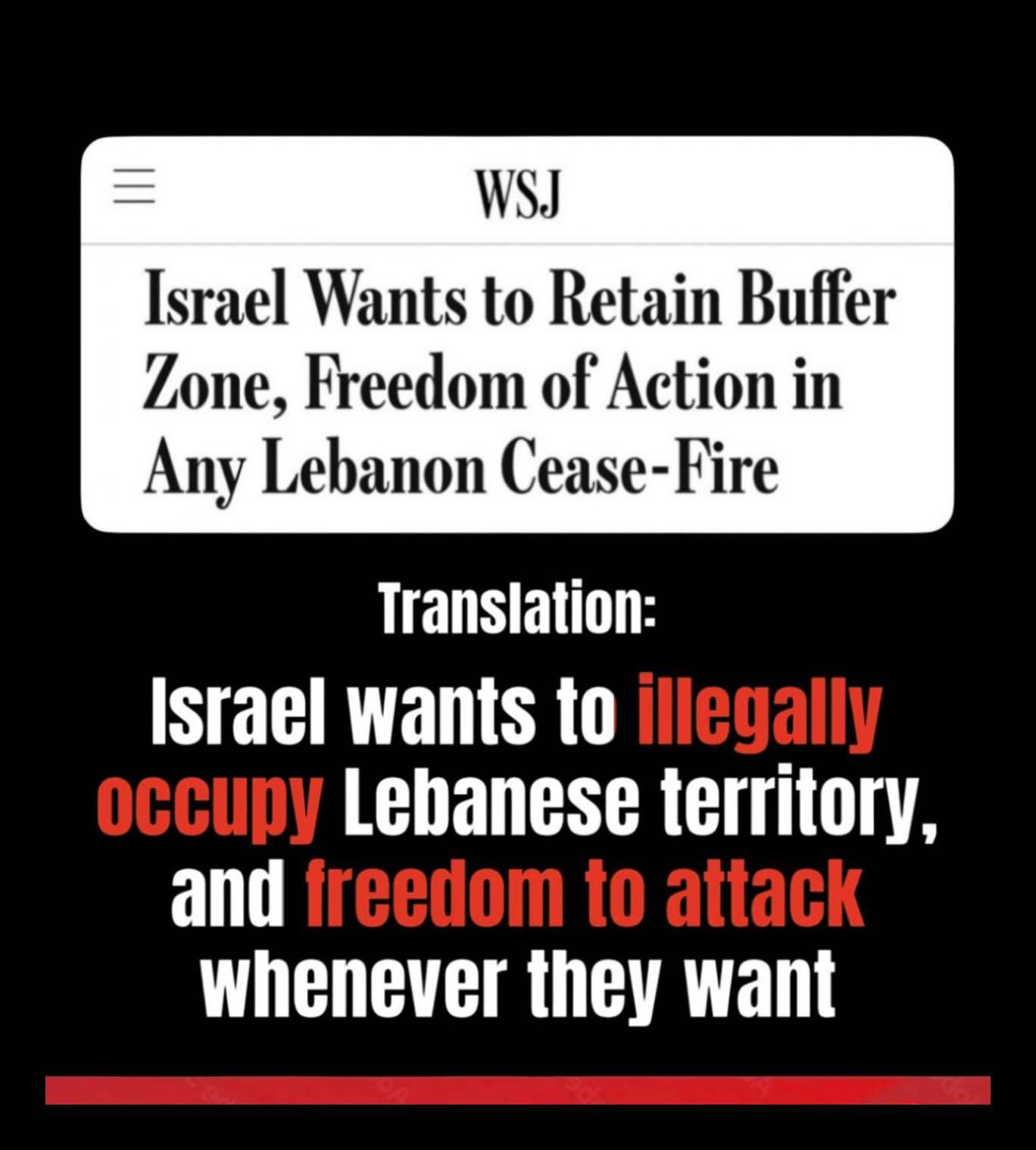
Internal fragmentation within Lebanon further complicates this theatre, as state institutions demonstrate limited capacity to coordinate defence or negotiate from a position of strength. The withdrawal of the Lebanese army from targeted areas and the reliance on external actors for security reinforce the perception of state weakness, creating conditions in which non-state actors assume primary responsibility for resistance. This dynamic transforms the conflict from a conventional interstate war into a hybrid system where legitimacy and capability are distributed unevenly across actors.
The economic dimension binds these dynamics into a unified system of coercion and compensation. Iran’s strategic use of the Strait of Hormuz transforms a geographic chokepoint into a financial instrument capable of offsetting sanctions and war-related losses estimated at hundreds of billions of dollars . By constraining energy flows, Iran effectively redistributes the economic burden of conflict onto global consumers, rendering sanctions increasingly ineffective as a tool of pressure. The distinction between physical oil markets and financial pricing underscores the extent to which geopolitical risk has decoupled supply from valuation, creating persistent volatility that extends beyond the immediate conflict.
Macron -“Lasting stabilization of Lebanon and the region will only be possible through an Israeli withdrawal from Lebanese territory,
Israel should abandon territorial ambitions and understand that the condition of its security is a strong Lebanese state, not a policy of chaos”
Simultaneously, the potential closure or disruption of the Bab el-Mandeb Strait introduces a second axis of economic pressure capable of extending disruption into European and Asian supply chains. Shipping reroutes around the Horn of Africa increase transit times, insurance costs, and logistical complexity, compounding the economic impact of the Hormuz disruption. These mechanisms demonstrate that modern conflict operates through systemic leverage rather than territorial control, with economic disruption serving as both weapon and outcome.
The Ukraine war reflects a parallel integration of military and informational strategies designed to sustain engagement despite structural disadvantages. The persistent promotion of successive “wonder weapons” operates as a mechanism for maintaining political and public support, rather than reflecting genuine strategic breakthroughs. The repeated introduction of systems ranging from artillery to advanced drones, each framed as decisive, conceals the underlying reality that Russia retains superiority in production capacity, manpower, and logistical sustainability. As one analysis notes, such narratives function “to keep Ukrainians fighting… and the Western public lined up in support of the war” .
The attritional nature of the conflict further undermines these narratives, as technological innovations fail to offset the fundamental imbalance in industrial output. Russia’s ability to produce unmanned systems in quantities exceeding those of Ukraine and its supporters ensures that incremental technological gains cannot alter the strategic trajectory. The concentration of advanced systems within specific units, rather than across the entire фронт, further indicates limited scalability and operational impact. The war therefore persists not because victory is imminent, but because political and economic structures incentivise its continuation.
The integration of extremist elements within Ukrainian military formations, previously acknowledged in Western reporting and subsequently minimised, illustrates the extent to which narrative management has superseded strategic transparency. The shift from acknowledgement to omission reflects a broader pattern in which information is curated to sustain legitimacy rather than accurately represent conditions on the ground. This informational distortion constitutes a strategic layer in its own right, shaping perceptions and decisions across the conflict.
Game theory clarifies the structural logic underlying these developments by framing the interactions as a multi-level strategic game characterised by incomplete information, asymmetric capabilities, and absent enforcement mechanisms. In the Iran case, the interaction constitutes a repeated prisoner’s dilemma with a dominant strategy of defection, because prior behaviour has eliminated trust and credible commitment. Iran’s refusal to negotiate under coercive conditions represents the equilibrium outcome, where cooperation yields no enforceable benefit.
In Ukraine, the game resembles a war of attrition with external sponsorship, where one player relies on sustained external support while the other leverages internal capacity and endurance. Western actors face a coordination dilemma, as continued support requires alignment among multiple states with divergent interests, while Russia operates under a unified command structure with fewer constraints. The equilibrium therefore favours prolonged conflict, as neither side can achieve decisive victory without incurring disproportionate costs.
Brazil’s intervention introduces a third strategic layer by challenging the legitimacy of the institutional framework governing these interactions. President Lula’s assertion that the United Nations Security Council has become a body of “lords of war” reframes global governance as an instrument of power rather than a mechanism of order . This reframing alters the payoff structure for non-Western states, reducing the incentive to comply with institutional norms that no longer provide equitable outcomes. The result is a transition from hierarchical governance to decentralised negotiation, where legitimacy is contested rather than assumed.
“What kind of world are we living in? Armed conflicts are now at their highest since World War II. Iraq was a lie. Libya was another lie. Gaza is another huge lie. The UN Security Council was created to safeguard peace. Now its permanent members act like warlords. One approves, another vetoes, and the world burns.”
Long-standing doctrines have been visibly reversed across all theatres. Coercive diplomacy has failed to produce compliance in Iran, despite sustained military and economic pressure. Technological superiority has failed to deliver decisive outcomes in Ukraine, exposing the limits of innovation in the absence of industrial scale. Institutional authority has failed to constrain state behaviour, as major powers increasingly operate outside established frameworks. These reversals indicate not isolated failures but systemic transformation.
The earlier declarative observations now require integration into a unified analytical framework. The war has outgrown diplomacy because the mechanisms required to enforce agreements no longer exist, rendering negotiation subordinate to coercion. Energy has become a weapon rather than a commodity because control over supply routes now determines strategic leverage more directly than market forces. Information has replaced strategy as a sustaining force because narratives are required to maintain political commitment in the absence of achievable objectives. Institutions no longer constrain power because their authority depends on the very actors they are meant to regulate, allowing them to reflect rather than shape outcomes. Attrition has replaced manoeuvre as the dominant doctrine because industrial capacity and endurance determine victory more reliably than tactical innovation. Multipolarity has ceased to be theoretical because the distribution of power now enforces it in practice, regardless of institutional recognition.
Systemic consequences extend beyond the immediate conflicts, reshaping the global order into a fragmented but interdependent system. China benefits indirectly from the diversion of Western resources and the weakening of institutional coherence, consolidating its position without direct confrontation. Russia leverages the Ukraine conflict to redefine European security structures, reinforcing its role as a central actor in continental stability. Regional powers observe these dynamics and adjust their strategies towards greater autonomy, reducing reliance on Western-led systems.
Future dynamics will be determined by the interaction between escalation incentives and structural constraints. Iran retains leverage through energy disruption and regional coordination, ensuring that any settlement must address its strategic demands. Russia’s advantage in attritional warfare incentivises continuation rather than resolution, as time favours its position. Western actors face increasing domestic and economic constraints that limit their capacity to sustain prolonged engagement without tangible results.
Iran will not negotiate under coercion, because doing so eliminates its only leverage. Ukraine cannot achieve decisive victory, because structural imbalances cannot be offset by technology alone. Brazil’s challenge will not be reversed, because institutional legitimacy once lost cannot be restored by assertion.
Energy markets will remain unstable, because strategic manipulation has replaced commercial logic.
Attritional warfare will persist, because no actor possesses the capacity or incentive for decisive escalation. Multipolar fragmentation will deepen, because no single power can enforce systemic coherence.
The convergence of objectives between those pursuing continued escalation and those resisting it remains structurally impossible, because each side derives its strategy from incompatible incentive structures. Western powers require ongoing pressure to maintain strategic primacy, while opposing actors require resistance to preserve sovereignty and deterrence. This divergence ensures that conflict persists as a systemic condition rather than a temporary disruption, producing a prolonged phase of managed instability in which resolution is deferred and equilibrium is maintained through continuous, distributed confrontation.
Authored By: Global GeoPolitics
Thank you for visiting. This is a reader-supported publication. If you believe journalism should serve the public, not the powerful, and you’re in a position to help, becoming a PAID SUBSCRIBER truly makes a difference. Alternatively you can support by way of a cup of coffee:
https://buymeacoffee.com/ggtv |
https://ko-fi.com/globalgeopolitics |
Bitcoin: 3NiK8BoRZnkwJSHZSekuXKFizGPopkE7ns


Leave a Reply