
Security Fears, Spy Allegations, and Diplomatic Tension Define America’s High-Stakes Beijing Visit
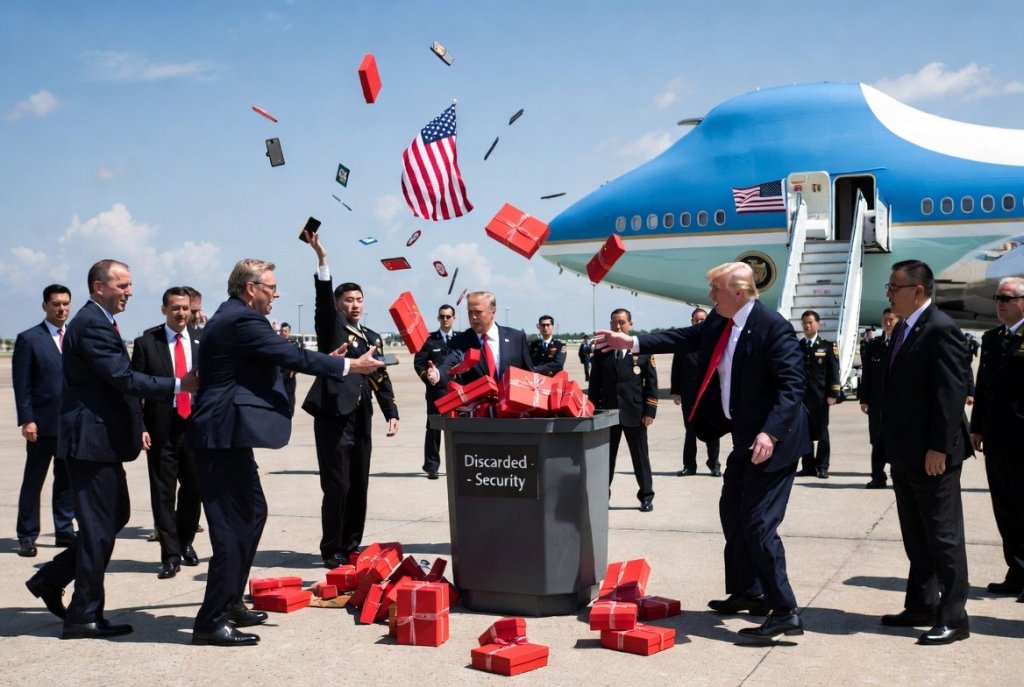
During the Beijing visit, the entire United States delegation discarded every item provided by Chinese officials before boarding Air Force One. Gifts, badges, commemorative pins, press materials, and other objects were thrown directly into trash bins at the aircraft stairs. The rule was absolute: nothing originating from the Chinese hosts was allowed onto the plane.
Delegation members also operated under strict counterintelligence security measures throughout the trip. Personal phones and electronics were left at home before departure. Officials used clean burner devices during the entire visit to reduce the risk of surveillance, hacking, or data collection by Chinese intelligence services.
The incident demonstrated the “zero-trust” security doctrine used around Air Force One and high-level diplomatic travel. Under these directives, all foreign-provided items are treated as potentially compromised. Security teams consider ordinary objects such as lapel pins, badges, gift boxes, and commemorative items possible tools for hidden surveillance technology, including audio transmitters, tracking devices, RFID chips, or malicious hardware implants.
The precautions reflected the intense intelligence war between Washington and Beijing. China’s surveillance and espionage capabilities are viewed inside U.S. security circles as one of the most aggressive and sophisticated in the world. The measures taken during the trip showed how seriously American officials view the threat of Chinese intelligence operations.
The situation also drew attention because the United States does not publicly apply the same visible level of suspicion during visits to allied countries such as Israel, despite past spying controversies involving Israeli intelligence operations against American officials.
Another major point of discussion from the trip involved Marco Rubio. Although Rubio participated in the delegation, China had previously sanctioned him, creating diplomatic complications surrounding his presence in Beijing. To work around the issue, his name was reportedly altered in Chinese documentation and references during the visit.
His surname was rendered as “Lu” using the Chinese character 鲁. The character carries associations in several common expressions connected to recklessness, bluntness, crudeness, and impulsive behavior. Online observers noted the political symbolism immediately, interpreting it as a subtle insult directed at Rubio by Chinese authorities.
The Beijing visit exposed the extreme level of distrust between the two global powers. Every object, every device, and even every name became part of a larger struggle over intelligence, symbolism, and geopolitical power.


Leave a comment