
How America’s War on Iran Has Exposed the Limits of Military Power, the Fragility of Financial Hegemony, and the Terminal Decline of Western Imperialism
Editorial Analysis | August 2026
The war on Iran, which American planners confidently predicted would conclude within four to six weeks, has instead become a grinding conflict that is consuming the material foundations of US military power at an alarming rate. The depletion of critical munitions has reached levels that should alarm any serious student of military affairs: American forces have consumed nearly 80 per cent of their THAAD interceptors, with stockpiles falling to “levels of concern” that have prompted private warnings from the Chairman of the Joint Chiefs of Staff. The US has expended approximately 1,000 of an estimated 3,000 Tomahawk cruise missiles, 250 of roughly 410 SM-3 ballistic missile interceptors, and virtually exhausted its entire inventory of 90 PrSM ground-launched missiles. What is striking about these figures is not merely the scale of expenditure but the fact that this vast consumption of ordnance has produced no corresponding strategic achievement. Iran’s missile capabilities remain undegraded, its leadership intact, its posture unchanged. As Alastair Crooke, a former British diplomat with extensive experience in the Middle East, has observed, the campaign has “failed utterly to change the war” and has achieved “how little that has achieved” despite the enormous expenditure of munitions.
The military failure is compounded by the economic devastation that the war has inflicted on America’s Gulf allies. Saudi Arabia’s crude oil production has collapsed from 10.9 million barrels per day in February to just 6.3 million barrels per day in April, a decline of 42 per cent that represents the lowest level since the 1990 Gulf War. The closure of the Strait of Hormuz has forced six Gulf states to shut down approximately 11.8 million barrels per day of production capacity, with Saudi Arabia alone losing 3.8 million barrels per day, Iraq 2.8 million, and Kuwait 2 million. The cumulative production loss has already reached 1 billion barrels, and analysts at Rystad Energy project that this figure will nearly double by the end of the year. The pipeline that transported Saudi oil from the eastern fields to the Red Sea port of Yanbu has been destroyed, the refinery at Yanbu lies in ruins, and Saudi Arabia’s exports through the Red Sea have fallen to zero. The Gulf states, which were supposed to benefit from the destruction of Iranian power, have instead been devastated by the very conflict they were expected to support.
The financial dimensions of the crisis extend far beyond the oil markets and threaten the very architecture of the global dollar system. Japan, America’s largest foreign creditor with $1.14 trillion in US Treasury holdings, has seen its currency collapse to levels not witnessed since 1986, driven by the interest rate differential between Japan and the United States and the spiralling cost of energy imports. The US Treasury, in an extraordinary intervention not seen since 1998, has coordinated with Tokyo to purchase yen, with Treasury Secretary Scott Bessent photographed at Camp David on 31 July with a notepad reading “Buy Japanese Yen $5-10 billion”. The US has sold euros to fund this operation, a telling detail that reveals Washington’s reluctance to weaken the dollar further by selling its own currency. The intervention, which has already cost approximately $90 billion, has proven short-lived, with the yen giving up a third of its gains within weeks. The deeper concern, as analysts have noted, is that the crisis may force Japan to liquidate its Treasury holdings to defend the currency, triggering a cascade of selling that would drive American borrowing costs to levels that would crash the US economy.
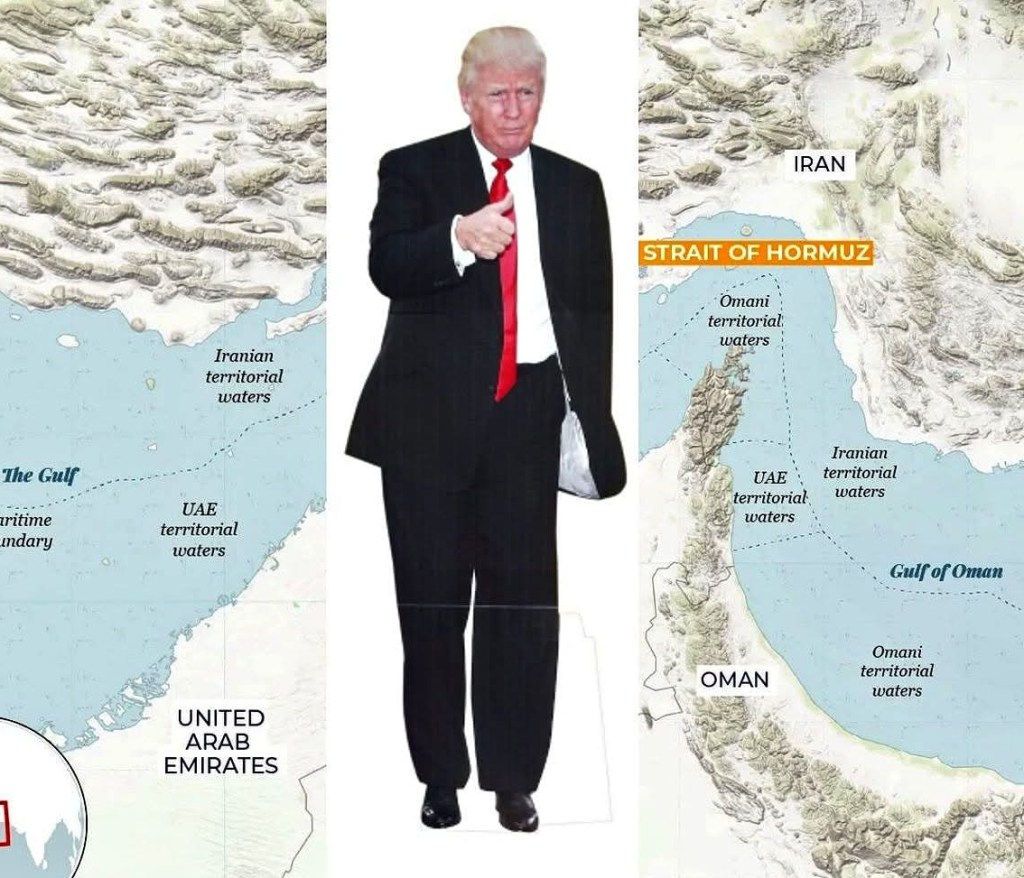
The agreement between Iran and Oman regarding the Strait of Hormuz represents a further humiliation for the United States. Iran and Oman have reached an understanding on a new route for maritime traffic, with vessels entering the strait using a route close to Iran and those leaving taking one close to Oman. Iranian Foreign Ministry spokesman Esmaeil Baghaei has confirmed that the two countries have agreed on the map of the new route and are finalising a joint statement, while rejecting US claims of negotiations with Tehran. The agreement, which still requires approval by Iran’s Supreme National Security Council, would formalise Iranian control over the waterway and effectively shut out American influence from the region’s most critical maritime chokepoint. Iran has also introduced the threat of legislation that would permanently bar US and Israeli vessels from transiting the strait, a move that would cement Tehran’s victory in the confrontation.
The war’s strategic failure is most clearly revealed in the fact that Iran’s military capabilities remain intact despite six months of relentless American bombing. One Iranian missile city, according to Crooke, has been struck 45 times by American bombs and was still launching missiles from that same site half an hour after each attack. The US has spent hundreds of billions of dollars on advanced weaponry, but Iran has found the answer to American air power: burying its production systems, its leadership, and its missiles in “mosaic systems” that cannot be destroyed from the air. The era of American air dominance, which has defined US military doctrine since the Second World War, has come to an end. Iran has effectively achieved “missile air dominance at this stage over the Gulf”, a development that fundamentally alters the balance of power in the region.
The European Union, which has positioned itself as a geopolitical actor in the conflict, has instead been reduced to irrelevance. Crooke observes that “no one is paying any attention” to the Europeans, and that “Russia or Iran, no one wants to talk to the Europeans at all.” The EU is “completely at odds with Russia,” “at loggerheads with China,” and “in bad relations with the United States,” leaving it “no friends really at all” and “no influence on events either.” The European ruling class has tied its fortunes to the US empire, and as the empire declines, the European bourgeoisie is being dragged down with it. The desperation of the European elites, manifested in their enforcement of “conformity” and their refusal to debate the war, reflects their fear that any deviation from the US-led imperialist consensus will expose the fragility of the entire system. The “language coming out of Brussels is all about we have to be in line. We have to accept conformity. No one can say anything that is out of line because if that happens, then everything falls apart.”
From a Marxist-Leninist perspective, the war on Iran represents the attempt by the US ruling class, the financial oligarchy of Wall Street, the military-industrial complex, and the transnational corporations, to preserve its global hegemony through military force, but this attempt is failing because the material basis for that hegemony has eroded. Lenin argued in Imperialism, the Highest Stage of Capitalism that imperialism is characterised by the export of capital, the domination of finance capital, and the struggle for the redivision of the world. The US war on Iran represents the latest expression of this struggle: the attempt to seize Iran’s resources, control the Strait of Hormuz, and maintain the petrodollar system that allows the US to extract tribute from the rest of the world. However, the declining phase of imperialism is marked by the inability of the imperialist state to achieve its objectives through military means, as seen in the US failure in Afghanistan, Iraq, Syria, and now Iran.
The analysis reveals that the war is being driven not by strategic necessity but by the interests of the financial oligarchy. Crooke notes that “ultimately the big picture about Iran is that this whole issue now hangs on the bond market, the debt market and the bond market.” Netanyahu “let the cat out of the bag” when he said Trump is “trying to prevent an economic collapse.” The war is being waged to prop up the petrodollar and maintain the “Wall Street Financialized world” in the Gulf states. The financial oligarchy is willing to sacrifice the lives of millions to preserve its profits, and the war is being managed to manipulate oil prices and protect financial assets rather than to achieve genuine strategic objectives. The documented evidence of insider trading connected to war announcements, with suspiciously timed trades in oil futures markets preceding major announcements, reveals the extent to which American foreign policy has become a vehicle for private profit rather than national interest.
The war on Iran is not a war of national defence or a war for democratic values; it is a war of imperialist aggression driven by the interests of the ruling class. The American and European populations are being told that the war is necessary to protect them from an Iranian threat, but the analysis shows that the war is actually threatening their living standards through higher energy prices and economic instability. The working class in the United States and Europe has no interest in this war, and its interests lie in ending the war and opposing the ruling class that wages it. As Lenin argued in The Defeat of One’s Own Government in the Imperialist War, the revolutionary class cannot but wish defeat to its government in a reactionary war, because the defeat of the imperialist state is the precondition for the victory of the proletariat.
The Saudi and Gulf ruling classes are facing a profound contradiction: they have tied their security to the United States, but the United States is unable to protect them. Saudi oil production has collapsed by 74 per cent, the pipeline and refinery infrastructure has been destroyed, and the Saudi government cannot sell its oil or its US treasuries. The Saudi ruling class is being squeezed between its alliance with the declining US empire and the rising resistance of the Houthis and the Iraqi resistance. This contradiction creates opportunities for the working class and the oppressed peoples of the region to break free from the chains of US and Gulf monarchy domination.
The implications of this failure for the future of American power are profound and likely irreversible. The depletion of munitions stockpiles means that the United States cannot sustain the war indefinitely, yet it cannot accept a negotiated settlement without acknowledging defeat. The collapse of Gulf oil production has weakened Washington’s allies and strengthened Iran’s position, while the crisis in Japan threatens to unravel the financial system that underwrites American military power. The war on Iran, which was supposed to strengthen the petrodollar and reassert American dominance over the Middle East, has produced exactly the opposite outcome. Iran remains unbowed, its regional position enhanced; American credibility lies in ruins; and the foundations of the global dollar system are cracking under the strain of a conflict that Washington cannot win and cannot end. The empire is unravelling, and the war on Iran has exposed the limits of its power for all the world to see.
Authored By: Global GeoPolitics
If you prefer to make a one time donation in support of my work, you can do so by clicking any link below:
https://donate.stripe.com/7sY8wPfvi864don0k3awo07 |
https://buymeacoffee.com/ggtv |
https://ko-fi.com/globalgeopolitics |
Bitcoin: 3NiK8BoRZnkwJSHZSekuXKFizGPopkE7ns
References
BBC. 2026. “US and Japan take action to prop up yen in rare joint move.” BBC, 3 August. Available at:
[Accessed 18 August 2026].
China Daily. 2026. “Iran and Oman Agree on Terms of Deal.” China Daily, 7 August. Available at: http://global.chinadaily.com.cn/a/202608/07/WS6a753247a310986e2b4697c2.html [Accessed 18 August 2026].
China.org.cn. 2026. “Iran Says Agreement Reached with Oman on Map of New Route in Hormuz Strait.” China.org.cn, 17 August. Available at: http://www.china.org.cn/world/Off_the_Wire/2026-08/17/content_118651790.shtml [Accessed 18 August 2026].
Cls.cn. 2026. “Bessent’s ‘Note’ Exposed: Is the U.S. Stepping in to Support the Yen?” Cls.cn, 2 August. Available at: https://news.futunn.com/en/post/76972657/ [Accessed 18 August 2026].
Cls.cn. 2026. “Saudi Arabia’s Crude Oil Production Falls to 36-Year Low.” Cls.cn, 14 May. Available at: https://news.futunn.com/en/post/73036175/ [Accessed 18 August 2026].
CNBC. 2026. “Analysis: Federal Reserve may be pulled into Bessent’s effort to support Japan’s yen.” CNBC, 3 August. Available at:
[Accessed 18 August 2026].
CNN. 2026. “Trump’s Iran Troubles Keep Piling Up.” CNN, 13 August. Available at:
[Accessed 18 August 2026].
Fortune. 2026. “Scott Bessent fired a currency bazooka, but global finance still looks like a ‘giant Jenga tower’.” Fortune, 15 August. Available at:
[Accessed 18 August 2026].
Guangming Daily. 2026. “The U.S. Has Stopped Fighting? Or Can’t Fight?” Guangming Daily, 28 July. Available at: https://m.gmw.cn/2026-07/28/content_1304539004.htm [Accessed 18 August 2026].
IndexBox. 2026. “Yen Intervention and Its Impact on US Treasuries: ING Analysis.” IndexBox, 14 August. Available at:
[Accessed 18 August 2026].
KuCoin. 2026. “US Treasury Secretary Proposes Expanding FIMA Facility.” KuCoin, 3 August. Available at: https://www.kucoin.com/news/flash/us-treasury-secretary-proposes-expanding-fima-facility [Accessed 18 August 2026].
Lenin, Vladimir. 1917. Imperialism, the Highest Stage of Capitalism. Petrograd: Zhizn i Znanie.
Lenin, Vladimir. 1915. “The Defeat of One’s Own Government in the Imperialist War.” Social-Demokrat, No. 42.
Ministry of Commerce, PRC. 2026. “Gulf Oil Producers Shut Down Nearly Half of Pre-War Production.” Ministry of Commerce, 11 June. Available at: https://sa.mofcom.gov.cn/hwhzwyh/art/2026/art_1c8075f67ebf4298a2029630022376b0.html [Accessed 18 August 2026].
TASS. 2026. “Restoring depleted US missile stockpiles after Iran war to take years, experts say.” TASS, 22 April. Available at:
[Accessed 18 August 2026].
Tehran Times. 2026. “The hollowed arsenal of a fading empire.” Tehran Times, 24 April. Available at:
[Accessed 18 August 2026].
Xinhua Daily Telegraph. 2026. “Iran Ceasefire: America Has Stopped Fighting or Can’t Fight?” Xinhua Daily Telegraph, 28 July. Available at: http://mrdx.cn/content/20260728/Articel08003NR.htm [Accessed 18 August 2026].
Yicai Global. 2026. “Yen Plunge Could Trigger US Financial Crisis.” Yicai Global, 13 July. Available at: https://www.yicai.com/news/102706442.html [Accessed 18 August 2026].
Bank of America Global Research
Agenzia Nova. 2026. “Usa: riserve strategiche di petrolio ai minimi da 45 anni.” Agenzia Nova, 7 August. Available at:
[Accessed 18 August 2026].
The Mirror. 2026. “US only has 43-day emergency buffer of crude oil left in 45-year low.” The Mirror, 5 August. Available at:
[Accessed 18 August 2026].
Tippah News. 2026. “U.S. crude oil supplies hit 45-year low amid Iran conflict.” Tippah News, 7 August. Available at:
[Accessed 18 August 2026].
Chris Hedges Interviews with Alastair Crooke
Hedges, Chris. 2026. “Why the Iran War Won’t End Soon (w/ Alastair Crooke).” The Chris Hedges Report, 8 August. Available at:
[Accessed 18 August 2026].
Conflicts Forum. 2026. “’A Matrix of Conflicts’: Why the Iran War Won’t End Soon.” Conflicts Forum, 8 August. Available at:
[Accessed 18 August 2026].
Brave New Europe. 2026. “Alastair Crooke, Chris Hedges – Why the Iran War Won’t End Soon.” Brave New Europe, 9 August. Available at:
[Accessed 18 August 2026].
Iranian Parliamentary Committee – Hormuz Bill
TASS. 2026. “Iranian parliamentary committee approves bill of Strait of Hormuz – TV.” TASS, 9 August. Available at: https://tass.com/world/2170713 [Accessed 18 August 2026].
Times of Oman. 2026. “Iranian Parliament to debate Hormuz Strait oversight bills.” Times of Oman, 16 August. Available at:
[Accessed 18 August 2026].
Anadolu Agency. 2026. “Iranian parliament to debate foreign influence, Hormuz oversight bills.” Anadolu Agency, 16 August. Available at:
[Accessed 18 August 2026].
Iran Supreme National Security Council
Times of Israel. 2026. “Iran’s Supreme National Security Council issues drastic new demands of the US, as conditions for reopening Hormuz.” Times of Israel, 8 August. Available at:
[Accessed 18 August 2026].
Press TV. 2026. “Hormuz will stay closed until US changes its behavior: Iran’s security chief.” Press TV, 8 August. Available at:
[Accessed 18 August 2026].
China.org.cn. 2026. “1st LD Writethru: Iran says to control traffic through Hormuz until war definitively ended.” China.org.cn, 19 April. Available at:
[Accessed 18 August 2026].
Iran-Oman Strait of Hormuz Agreement
AzerTac. 2026. “Iran says agreement reached with Oman on Strait of Hormuz shipping routes.” AzerTac, 16 August. Available at:
[Accessed 18 August 2026].
Ahram Online. 2026. “Iran says it reached an ‘understanding’ with Oman on Strait of Hormuz transit route.” Ahram Online, 17 August. Available at:
[Accessed 18 August 2026].
Times Now News. 2026. “Iran, Oman Agree on Shipping Route Map Through Strait of Hormuz, Deal Yet to be Finalised.” Times Now News, 16 August. Available at:
[Accessed 18 August 2026].


Leave a comment