
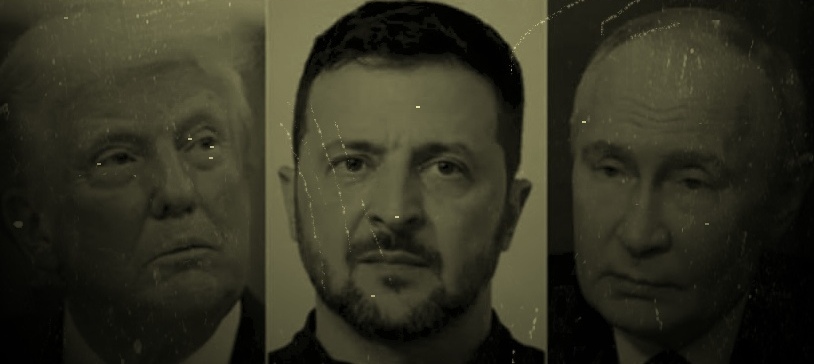
The conflict now tests whether Western power can still limit Russian outcomes as Moscow shifts from containment to full restructuring of Ukraine
The conflict is no longer defined by whether Russia can impose its terms, but by which version of those terms ultimately emerges. The war in Ukraine is increasingly defined by a contradiction within Russian strategy, where Russia retains the military capacity to pursue a more decisive outcome but continues a slower campaign based on gradual pressure and limited advances. At the same time, the political conditions that could produce a negotiated settlement are narrowing rather than expanding, according to analysis from the International Crisis Group on prolonged interstate conflicts. International Crisis Group The result is a conflict that no longer appears to be moving toward a stable compromise between Russia, Ukraine, and Western governments, but instead toward competing Russian endgames that differ in scale, control, and political consequence.
The central question is no longer whether Ukraine becomes part of a Western security system, since Russia has repeatedly stated it will not accept Ukraine as a permanent military platform for NATO expansion, a position consistent with its long-standing security doctrine. North Atlantic Treaty Organization The more immediate question is how far Russia is prepared to go to prevent that outcome and whether it continues with gradual pressure or shifts toward a more direct and decisive strategy. Western proposals for Ukraine increasingly focus on turning it into a heavily armed frontier state, often described as the “porcupine model,” supported by long-term European assistance and sustained military capacity. European Union Under this model, Ukraine would maintain a large standing army financed and supplied by Europe, while functioning as a de facto forward military partner of Western states without formal NATO membership. However, this approach assumes Russia will accept a permanently militarized Ukraine on its border, an assumption that is not supported by Russian policy statements or military behavior, since Moscow continues operations partly to prevent precisely that outcome. The model also depends on sustained Western protection and deterrence, which recent experience has tested, as Ukraine has remained vulnerable to continued missile and drone strikes despite extensive external support, and research on protracted warfare from the RAND Corporation notes that external assistance often sustains conflict without producing decisive resolution. RAND Corporation
A second scenario involves a negotiated settlement between Moscow and Washington, often described as a compromise even though both sides define compromise in incompatible terms. Under this arrangement, Russia would retain Crimea and other territories it currently controls or claims, while Ukraine would remain formally independent but permanently neutral and excluded from NATO membership. In earlier phases of the war, such terms were often treated as a possible baseline for negotiation, but Russian political debate has since shifted toward harder positions that go beyond territorial questions. Increasingly, Russian officials and commentators argue that neutrality and territorial adjustments are insufficient without deeper political change inside Ukraine, reflecting growing doubt about the durability of any agreement with the current Ukrainian leadership. As a result, the question of negotiation has become tied not only to borders and alliances but also to the internal political structure of Ukraine and the conditions under which its leadership might change.
The third scenario is a Belarus-style model of alignment between Russia and Ukraine, under which Ukraine would remain formally independent but function as a strategically subordinate state within a Russian-led security and economic system. Belarus This structure would resemble the relationship between Russia and Belarus, where sovereignty exists in constitutional form but foreign policy and security orientation follow Moscow’s direction. Ukraine would in this case be permanently excluded from NATO and any Western military integration structures, and its external policy would be constrained through binding agreements, economic dependence, and long-term security arrangements that limit strategic autonomy. North Atlantic Treaty Organization Russian influence could extend beyond current front lines depending on battlefield developments, with regions such as Kharkiv, Odessa, and Mykolaiv frequently discussed in Russian strategic commentary as essential to long-term security objectives. The purpose of this model is not only territorial adjustment but the creation of durable political constraints that prevent Ukraine from re-emerging as a Western-aligned military partner. Supporters of this approach within Russian strategic thinking argue that neutrality alone has historically proven unstable, since Ukraine has shifted orientation in past periods, and therefore requires structural limits that persist regardless of future leadership changes or external pressure.
The final scenario is complete military defeat and unconditional surrender, which depends on a breakdown of Ukrainian resistance under sustained pressure and continued Russian advances on the battlefield. Within Russia, some military analysts argue that current operations are too slow to achieve such an outcome efficiently and claim that a more concentrated campaign could accelerate Ukrainian military collapse through direct pressure on command structures. The disagreement within Russia is therefore not about whether the war continues but about how it should be conducted, with one approach emphasizing gradual pressure and controlled escalation while another calls for faster and more decisive action. The current Russian leadership appears to favor the slower approach in order to manage escalation risks involving NATO states and preserve space for negotiation under changing conditions, while critics argue that this gradualism has strengthened Western involvement rather than weakening it, as military assistance from Europe and the United States has expanded over time. North Atlantic Treaty Organization If the latter view prevails, the war may shift further away from negotiated outcomes and toward more forceful territorial and political restructuring, potentially dividing Ukraine into zones of influence and control. The broader conclusion is that the space for compromise is narrowing as each phase of the war alters the internal logic on both sides, particularly within Russia, where expectations about achievable outcomes continue to evolve, and the conflict increasingly moves toward a set of defined endgames in which the remaining question is not whether change occurs but how complete it becomes.
Authored By: Global GeoPolitics
Thank you for visiting. This is a reader-supported publication. If you believe journalism should serve the public, not the powerful, and you’re in a position to help, becoming a PAID SUBSCRIBER truly makes a difference. Alternatively you can support by way of a cup of coffee:
https://buymeacoffee.com/ggtv |
https://ko-fi.com/globalgeopolitics |
Bitcoin: 3NiK8BoRZnkwJSHZSekuXKFizGPopkE7ns


Leave a reply to gustavo_horta Cancel reply