
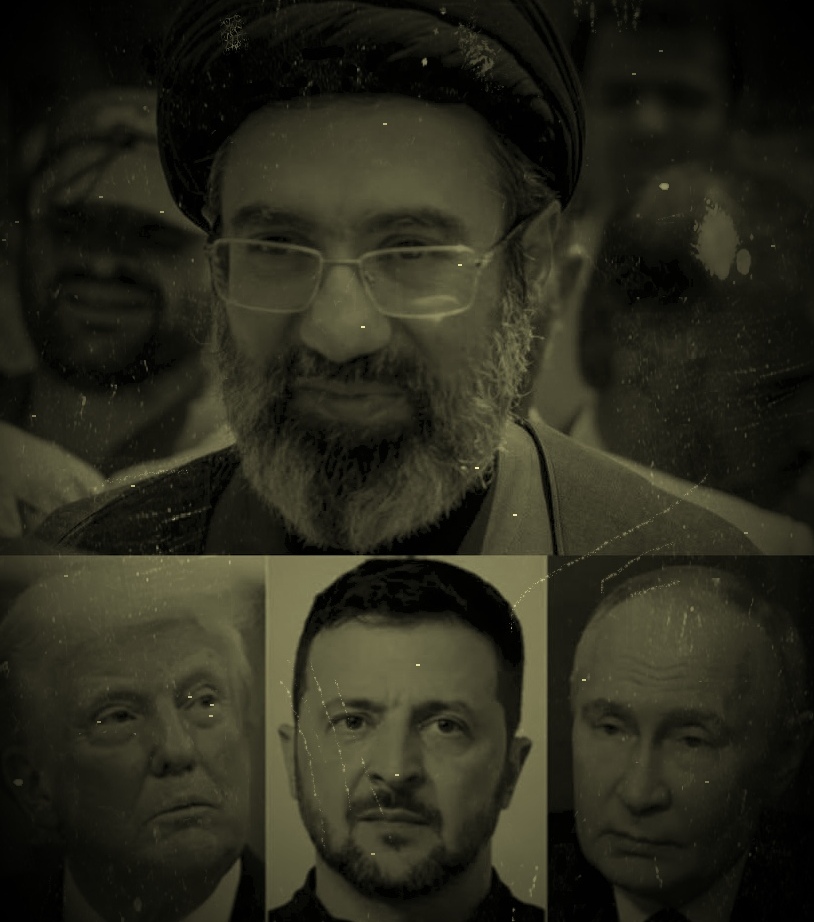
Different objectives and different constraint hence Russia’s calibrated attrition contrasts with Iran’s cost-imposition strategy revealing competing paths to power
Russia is no longer fighting for victory in Ukraine in the conventional sense; it is determining the scale and timing of an outcome it increasingly believes it can impose. What appears externally as operational restraint reflects a deliberate strategic calibration, one that contrasts sharply with Iran’s openly asymmetric doctrine and has begun to generate pressure on Moscow to reconsider its approach.
The scale of the war has already exceeded the boundaries of a regional conflict, drawing in industrial production chains, energy markets, and military stockpiles across multiple continents. The diversion of Western air defence systems toward the Middle East has directly constrained Ukraine’s ability to intercept Russian strikes, reinforcing a structural asymmetry in resource consumption and replenishment . Russia’s capacity to sustain drone and missile production domestically has compounded this imbalance, allowing it to maintain pressure without proportional escalation.
This dynamic has reshaped the battlefield into a contest defined not by manoeuvre but by endurance and resource attrition. Analysts observing both Ukraine and Iran note that modern warfare increasingly rewards actors capable of leveraging low-cost, scalable systems to offset technological inferiority, rather than those relying solely on conventional superiority . The implication is clear: survival and sustained pressure have become viable substitutes for decisive battlefield victory.
Russian strategic execution reflects a consistent pattern rooted in historical doctrine. Moscow has avoided rapid escalation in favour of controlled pressure, seeking to exhaust Ukrainian capacity while preserving its own operational flexibility. As noted by analysts at Chatham House, Russia’s approach combines patience with opportunism, intervening decisively only when “the cost-benefit ratio turns decisively in its favour” . This approach prioritises long-term positional advantage over short-term tactical breakthroughs.
Such restraint, however, is not synonymous with passivity. Russian forces continue to exploit asymmetric tools, including drones, cyber operations, and information warfare, to degrade Ukrainian capabilities and decision-making structures. These methods align with a broader Russian tradition of exploiting vulnerabilities rather than confronting strengths directly, a strategy designed to offset Western technological advantages .
Yet this is precisely where comparison with Iran becomes analytically decisive. Iran’s doctrine is built explicitly around asymmetry as a primary organising principle, not a supplementary tool. Developed over decades of confronting superior adversaries, Iran’s strategy prioritises disruption, decentralisation, and economic pressure over territorial control . In practice, this has meant targeting energy infrastructure, leveraging geographic choke points, and imposing systemic costs that extend far beyond the battlefield.
Military analysts have increasingly drawn parallels between these approaches while highlighting their divergence. As one Ukrainian security expert observed, the conflicts in Ukraine and the Middle East reveal “universal” trends in modern warfare centred on adaptability and asymmetry rather than conventional dominance . Both theatres demonstrate that weaker actors can impose disproportionate costs, yet Russia has not fully embraced the logic that underpins Iran’s strategy.
This divergence has confounded many observers. Iran’s approach transforms vulnerability into leverage by targeting the economic and logistical systems that sustain its adversaries. Russia, by contrast, has largely confined its operations within a geographically bounded theatre, despite possessing the capability to escalate horizontally through economic or infrastructural disruption on a broader scale.
Russia and Iran are not operating in isolation, nor are their respective conflicts independent in strategic design or intent. Both states are confronting the same adversarial structure, one defined by the preservation of Western primacy and the prevention of a multipolar order in which China emerges as a co-equal centre of power. The underlying logic of pressure applied to both Moscow and Tehran follows a consistent pattern: fragment territorial integrity, constrain sovereign decision-making, and establish leverage over critical energy corridors that feed Asian industrial growth. As Glenn Diesen argues, control over energy flows remains central to maintaining dollar hegemony and geopolitical influence, making both Russia and Iran indispensable targets within a broader systemic strategy to regulate access to resources and trade routes.
Within this framework, the conflicts in Ukraine and the Persian Gulf function as interconnected fronts in a wider contest over the structure of the international system. Russia’s position as a primary energy supplier to Europe and Asia, and Iran’s control over the Strait of Hormuz as a chokepoint for global oil flows, place both states at critical nodes of the global economy. Michael Hudson has long emphasised that such nodes are not merely economic assets but instruments of geopolitical control, particularly in relation to the petrodollar system and the pricing of energy in global markets. The attempt to weaken or restructure these nodes therefore carries implications far beyond regional security, extending directly into the balance of power between the United States and China.
Cooperation between Russia and Iran must be understood within this systemic context rather than as opportunistic alignment. Intelligence sharing, technological exchange, and operational coordination reflect converging strategic interests rather than temporary convenience. Reports of Russian support in surveillance and cyber capabilities, alongside Iranian experience in asymmetric warfare, suggest an ongoing process of mutual adaptation in which each actor studies and selectively incorporates elements of the other’s approach. This interaction does not produce identical strategies, but it does indicate a level of coordination shaped by shared constraints and common adversaries.
China’s role further reinforces this alignment. As the primary consumer of both Russian and Iranian energy exports, Beijing has a direct interest in maintaining the stability of these supply chains while resisting attempts to subordinate them to external control. The convergence of Russian, Iranian, and Chinese interests around energy security, trade continuity, and resistance to unilateral sanctions forms the economic backbone of an emerging counter-system. Andrei Martyanov has noted that such alignment reflects not ideological unity but structural necessity, driven by the intersection of military vulnerability and economic interdependence.
The result is not a formal alliance in the classical sense, but a coordinated strategic environment in which actions in one theatre influence calculations in another. Iran’s emphasis on cost imposition and systemic disruption complements Russia’s strategy of controlled attrition, creating a cumulative pressure effect that extends beyond any single battlefield. Whether by design or convergence, the combined impact challenges the sustainability of a unipolar framework by increasing the costs required to maintain it.
The reasons for this restraint are structural rather than tactical. Russia’s war aims remain tied to territorial and political outcomes within Ukraine, which necessitates a degree of control incompatible with the kind of systemic disruption Iran employs. Expanding the conflict into a broader economic war risks undermining the very stability Moscow seeks to secure in the post-war settlement.
At the same time, Russia’s calibrated approach reflects a conscious effort to avoid overextension. Its involvement in the Middle East has been deliberately limited, providing support to Iran while avoiding direct entanglement. Reports of intelligence sharing and cyber cooperation illustrate a growing partnership, yet one bounded by clear limits designed to prevent escalation with the United States . This aligns with a broader strategy of extracting advantage from global instability without assuming its full costs.
Pressure nevertheless exists within strategic circles for Russia to adopt elements of the Iranian model. The effectiveness of low-cost drone swarms, economic targeting, and decentralised command structures has demonstrated the potential to impose disproportionate costs on technologically superior adversaries. The continued success of such methods in both Ukraine and the Middle East reinforces the argument that modern conflict increasingly rewards disruption over control.
However, adopting such a strategy would represent a fundamental shift in Russian war aims. Iran’s doctrine is designed for survival and deterrence, not for achieving defined territorial outcomes. Russia’s objectives, by contrast, require the imposition of a political settlement, which in turn demands a level of conventional dominance and territorial control that asymmetric strategies alone cannot provide.
The conflict can therefore be understood as a strategic game defined by asymmetric incentives. Russia operates within a framework where controlled escalation preserves long-term gains, while Ukraine seeks to impose costs sufficient to alter Russian calculations. Iran’s approach represents a different equilibrium altogether, one in which imposing systemic costs becomes the primary objective rather than a means to an end.
This divergence highlights a critical transformation in modern warfare. The ability to endure and impose costs has become as significant as the ability to seize and hold territory. Yet the choice between these approaches is not merely tactical; it reflects fundamentally different strategic objectives and constraints.
Russia’s restraint is not evidence of incapacity but of strategic prioritisation. It has chosen a path that balances pressure with preservation, seeking to shape outcomes without triggering uncontrollable escalation. Iran has chosen the opposite path, embracing escalation as a means of redefining the strategic environment itself.
These choices carry distinct risks. Russia’s approach risks prolonging the conflict without achieving decisive resolution, while Iran’s strategy risks triggering systemic instability that could escalate beyond control. Each reflects a different calculation of acceptable risk and desired outcome.
The convergence of these conflicts nevertheless reveals a broader shift in global power dynamics. The effectiveness of asymmetric strategies challenges the assumptions underpinning conventional military superiority, while the increasing interdependence of economic and military systems amplifies the consequences of disruption.
Russia is not failing to adopt Iran’s strategy; it is pursuing a different operational logic shaped by its objectives, geography, and escalation constraints within a shared conflict system. Both Russia and Iran confront the same adversarial structure, one centred on preserving strategic primacy through control over energy flows, financial systems, and security architectures that underpin Western dominance. As Glenn Diesen argues, the contest is no longer confined to territory but extends to “who controls the rules of economic exchange and the infrastructure of global trade,” which places both Moscow and Tehran at critical pressure points within that system. Their strategies therefore diverge at the operational level while converging at the systemic level, each contributing to a broader effort to raise the cost of maintaining that order.
Iran’s approach is designed around cost imposition as a primary objective, leveraging geographic choke points and asymmetric capabilities to disrupt global energy circulation and impose immediate economic consequences. Michael Hudson has long emphasised that control over energy pricing and transport routes remains central to sustaining financial hegemony, which explains why the Strait of Hormuz functions not merely as a military theatre but as an economic lever with global reach. Russia, by contrast, is engaged in a territorial and political contest that requires a degree of control incompatible with unconstrained systemic disruption. Its strategy of controlled attrition reflects the necessity of producing a defined settlement rather than simply increasing the cost of conflict indefinitely.
These differences do not indicate strategic divergence in purpose but differentiation in role. Iran operates on a front where disruption yields immediate leverage over global markets, while Russia operates on a front where territorial outcomes determine the post-war order. As Andrei Martyanov has noted, modern conflict increasingly favours actors capable of imposing disproportionate costs relative to their resource base, yet the application of this principle varies depending on whether the objective is survival, deterrence, or political settlement. Russia’s restraint reflects the requirement to manage escalation against a nuclear-armed adversarial bloc, whereas Iran’s environment permits a more direct application of asymmetric pressure against economic and logistical systems.
The sequencing of conflict also matters. Iran was subjected to direct large-scale attack under the assumption that it could be rapidly neutralised, a miscalculation that allowed it to demonstrate the effectiveness of its prepared asymmetric doctrine. Russia, as a nuclear power with strategic depth, was never a candidate for such direct treatment, and the conflict in Ukraine has therefore taken the form of a prolonged proxy and economic war. This difference in initial conditions has shaped the strategic pathways available to each actor, reinforcing divergence in methods while maintaining alignment in underlying objectives.
Coordination between Russia, Iran, and China further reinforces this structure. Their shared interest in securing energy flows, resisting unilateral sanctions, and developing alternative financial and logistical systems reflects a convergence driven by systemic pressure rather than ideological alignment. Diesen’s analysis of emerging multipolarity highlights that such coordination is rooted in necessity, as states subjected to the same forms of economic and military coercion develop complementary strategies to mitigate and counter those pressures. Intelligence sharing, technological exchange, and operational learning between Russia and Iran indicate an adaptive process in which each actor refines its approach while contributing to a cumulative effect that extends beyond individual theatres.
Modern warfare therefore operates across multiple layers simultaneously. Territorial control, economic disruption, and systemic resilience interact to produce outcomes that cannot be reduced to battlefield developments alone. Dominance in one domain no longer guarantees success, while the ability to endure and impose costs across interconnected systems has become a decisive factor in shaping strategic outcomes. Russia’s model of controlled attrition and Iran’s model of systemic disruption represent different applications of this broader logic, each calibrated to its specific environment but aligned in their contribution to a wider contest over global order.
The outcome in Ukraine will not be determined by a singular operational breakthrough or diplomatic intervention. It will be determined by the sustainability of Russia’s ability to maintain pressure while preserving its strategic position within this wider system, just as Iran’s effectiveness is measured by its capacity to impose costs without triggering uncontrollable escalation. These are not competing models in isolation but complementary pressures within a single conflict architecture.
The defining feature of this conflict is not divergence in strategy, but convergence in purpose.
Authored By: Global GeoPolitics
Thank you for visiting. This is a reader-supported publication. If you believe journalism should serve the public, not the powerful, and you’re in a position to help, becoming a PAID SUBSCRIBER truly makes a difference. Alternatively you can support by way of a cup of coffee:
https://buymeacoffee.com/ggtv |
https://ko-fi.com/globalgeopolitics |
Bitcoin: 3NiK8BoRZnkwJSHZSekuXKFizGPopkE7ns


Leave a comment