
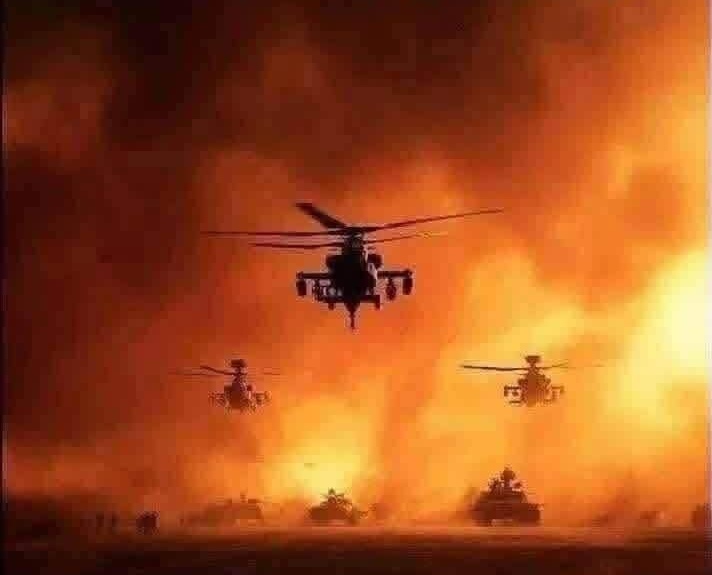
How a United States Senate hearing revealed the machinery of permanent war, energy blackmail, the consumption of proxies and the making of a new Asian front
For most people who follow international affairs, the daily news cycle provides a sense of orientation. Headlines announce wars, peace talks, diplomatic summits, and military mobilisations. Politicians stand behind lecterns and speak of freedom, democracy, and the defence of a rules-based order. Social media accelerates this spectacle into a blur of outrage, solidarity, and competing narratives. The cumulative effect is disorienting by design. The machinery of United States foreign policy operates most efficiently when the public is distracted by the theatre of personalities, partisan squabbling, and moral outrage. Beneath this surface lies a far more structured and transparent reality, accessible to anyone willing to read congressional hearing transcripts or the policy papers produced by the major Washington think tanks. On 21 April 2026, the United States Senate Committee on Armed Services convened a hearing titled The Posture of the United States Indo-Pacific Command and the United States Forces Korea in Review of the Defense Authorization Request for Fiscal Year 2027 and the Future Years Defense Program. The witnesses were Admiral Samuel Paparo, Commander of the United States Indo-Pacific Command, and General Xavier Brunson, Commander of the United Nations Command, Combined Forces Command, and United States Forces Korea. The hearing lasted more than two hours. It was not a secret session. It was broadcast publicly. And within its testimony, stripped of the usual rhetorical camouflage, one could observe the actual architecture of American grand strategy in the twenty-first century.
The first thing any honest observer must acknowledge is that the United States does not have a foreign policy driven by threat response. It has a foreign policy driven by structural maintenance. The unipolar moment that followed the collapse of the Soviet Union was never consolidated into a stable multipolar order. Instead, Washington constructed a global military infrastructure of approximately eight hundred overseas bases, eleven carrier strike groups, and a network of political dependencies stretching from Western Europe to East Asia. This infrastructure does not exist to defend the American homeland, which is protected by two vast oceans and has not faced a credible conventional threat since the Second World War. It exists to project power, to enforce economic compliance, and to prevent the emergence of any rival capable of challenging American primacy. China is that rival. Everything else is subordinate to that central confrontation.
The hearing made this explicit within its first twenty minutes. Senator Roger Wicker, the Republican chairman of the committee, stated without equivocation that China intends to prevent an American-led twenty-first century. He did not argue that American leadership had been earned through superior governance, economic efficiency, or moral example. He simply asserted it as a right. China’s population is four times that of the United States. Its industrial base is larger. Its infrastructure investments through the Belt and Road Initiative have reshaped trade routes across Asia, Africa, and Latin America. Its economy, measured by purchasing power parity, surpassed that of the United States several years ago. And yet the presumption underlying Senator Wicker’s statement was that this Asian giant must remain subordinate to a power half a world away, not because of any tangible threat China poses to North America, but because the maintenance of unipolarity requires it. China has not invaded a single country in the twenty-first century. It has not toppled foreign governments or imposed regime change through military force. The United States has done both repeatedly. The aggression the hearing purported to deter was largely imaginary, while the aggression the committee endorsed was quite real.
The second structural reality exposed in the testimony concerns the nature of American alliances. Throughout the hearing, senators and witnesses referred repeatedly to allies and partners in the Indo-Pacific region. Japan, South Korea, the Philippines, Australia, and the island province of Taiwan were all described as democratic partners sharing American values and interests. This language conceals a far more coercive relationship. A genuine alliance involves mutual benefit and shared sacrifice. The relationship the United States maintains with its Asian proxies is hierarchical, extractive, and ultimately dangerous for the populations of those countries. Consider South Korea. Its largest export partner is China, accounting for twenty-two percent of all exports. Its largest import partner is also China, at twenty-five percent. The United States is a distant second in both categories. The primary economic relationship sustaining South Korean prosperity is with Beijing, not Washington. And yet American troops remain stationed on the Korean peninsula, not primarily to deter North Korea, as Senator Jack Reed openly admitted during the hearing, but to create dilemmas for China in the Yellow Sea and impose costs on Russia in the East Sea.
The proxy character of these relationships became even clearer when senators discussed the question of wartime operational control. South Korea has sought for years to obtain command authority over its own military forces during any conflict on the peninsula. The United States has consistently refused. General Brunson testified that the transfer of operational control remains conditions-based, meaning the Americans will decide when, if ever, the South Koreans can command their own troops. Senator Jeanne Shaheen, who had recently returned from a visit to Seoul, noted that the South Korean president was very focused on achieving this transfer by the end of his administration. General Brunson’s response was to warn against allowing political expediency to outpace conditions. In plain English, Washington does not trust its own proxy to command its own soldiers during a war that the United States is likely to provoke. This is not an alliance. It is a occupation dressed in diplomatic language.
The third revelation concerned energy as a weapon of war. This dimension of the testimony received less attention in subsequent news coverage, but it may be the most significant. Senator Joni Ernst asked Admiral Paparo whether the Indo-Pacific Command treated allied energy dependence as a strategic vulnerability. The Admiral answered affirmatively, explaining that his command tracks energy reserves for each partner and competitor and views key maritime straits as critical geography for the ability to impose costs. He listed the Straits of Malacca, Lombok, and Sunda by name. These are the chokepoints through which most Asian energy imports pass. The United States, by its own admission, is studying how to close or disrupt them to impose economic and military costs on China.
This strategy is not hypothetical. It has already been executed in Europe using the same doctrinal template. The 2019 RAND Corporation paper Extending Russia, which is publicly available, outlined a plan to provide lethal aid to Ukraine, provoke a Russian military response, and then use the resulting wartime conditions to decouple Europe from Russian energy supplies. The paper explicitly noted that reducing European peacetime consumption of Russian gas had a medium to low likelihood of success. The solution was to eliminate peacetime entirely. Under the Biden and Trump administrations, the United States armed Ukraine, withdrew from diplomatic engagements, and eventually participated in the sabotage of the Nord Stream pipelines. European industry was thereby forced to abandon cheap Russian pipeline gas and purchase expensive American liquefied natural gas instead. Projects that had made no economic sense during peacetime became profitable under wartime conditions.
The hearing confirmed that the same blueprint is now being applied to Asia. Senator Lisa Murkowski and Senator Dan Sullivan both raised the strategic importance of American LNG exports to Japan, South Korea, the Philippines, and Taiwan. Senator Sullivan, whose state of Alaska contains a major LNG project, emphasised that his project could deliver gas to Asia without passing through contested chokepoints. The implication was clear. The United States has an interest in making those chokepoints contested. The war against Iran, which several Democratic senators criticised as illegal while nonetheless supporting its continuation, has already disrupted the flow of Middle Eastern energy to Asia. Vietnam, previously a marginal customer for American gas, imported sixty-six thousand tons of American LPG in April 2026 compared to forty-four thousand tons from the Middle East. In March of the same year, Vietnam had purchased just two thousand tons from the United States. The shift is not a coincidence. It is the intended outcome of a deliberate strategy.
The fourth structural feature revealed in the hearing was the bipartisan continuity of American foreign policy. A casual observer might have noted that Democratic senators criticised President Trump’s war against Iran while Republican senators blamed President Biden’s weakness for Chinese assertiveness. This partisan theatre should not deceive anyone. When the questioning turned to substantive matters, there was no disagreement between Republicans and Democrats. Senator Jack Reed, a Democrat, demanded to know whether the transfer of military assets from the Indo-Pacific to the Middle East had degraded deterrence against China, but he did not propose ending the Iran war. Senator Jeanne Shaheen, a Democrat, pressured Taiwan to spend forty billion dollars on American weapons but did not question the underlying policy of arming a Chinese province against the mainland. Senator Elissa Slotkin, a Democrat from Michigan, devoted her limited questioning time to a demand that Chinese electric vehicles be banned from the United States on national security grounds, a position indistinguishable from that of her Republican colleagues.
The unanimity becomes comprehensible once one follows the money. Senator Deb Fischer of Nebraska asked Admiral Paparo whether the United States needed two hundred B-21 bombers rather than the one hundred currently planned. The Admiral agreed enthusiastically. Northrop Grumman, the manufacturer of the B-21, has substantial operations in Nebraska. Senator Tommy Tuberville of Alabama asked whether the Navy needed sixteen Columbia-class submarines rather than twelve. The Admiral again agreed. General Dynamics, the manufacturer of the Columbia class, is a major employer in Alabama. Senator Fischer and Senator Tuberville are not independently arriving at these conclusions. They are representing the interests of the defence contractors who finance their campaigns and who will offer lucrative retirement positions to the generals and admirals who comply with their requests. The system is not corrupted. The system is corruption institutionalised.
The fifth and most disturbing pattern in the testimony was the explicit preparation for a future war with China. Admiral Paparo described the Indo-Pacific Command as an AI-powered headquarters racing to achieve decision superiority over Beijing. General Brunson explained that United States Forces Korea provided positional advantage inside the first island chain and allowed American forces to project power into the region. Senators asked about the lessons learned from the Ukraine war and how those lessons could be applied to Taiwan. They discussed the hellscape strategy, by which cheap drones and autonomous systems would make any Chinese amphibious assault prohibitively costly. At no point did any senator ask the obvious question: why is the United States preparing to fight a war against China in the first place?
China has not attacked an American ally. It has not invaded a neighbouring country. It has not toppled a foreign government. Its military buildup, while substantial, has been defensive in character, focused on countering the American encirclement that the hearing itself acknowledged. The United States maintains troops in Japan, South Korea, the Philippines, and Guam. It operates surveillance aircraft within fifty miles of the Chinese coast. It sells weapons to a breakaway province that Beijing considers part of its sovereign territory. If China were doing any of these things to the United States, American commentators would describe it as an act of war. The double standard is not accidental. It flows from the assumption of American exceptionalism, which holds that the same actions taken by Washington are legitimate while those taken by Beijing are inherently aggressive.
The hearing also made clear that the United States is actively subverting the economic interests of its own proxies. Japan’s largest export partner is China. South Korea’s largest export partner is China. Australia’s largest export partner is China. The Philippines trades more with China than with any other country. In every case, the United States is pressuring these governments to militarise against their primary economic partner. The result, if Washington succeeds, will be the destruction of the prosperity that these countries have built over decades of integration with the Chinese economy. Ukraine followed this path after the United States overthrew its elected government in 2014. Before that coup, Ukraine’s largest trading partner was Russia. After a decade of American pressure and proxy war, Ukraine’s economy lies in ruins, its infrastructure destroyed, its population scattered, and its territory occupied. The senators who applauded their own support for Ukraine never mentioned that country’s fate as a cautionary example, because it is not a cautionary example to them. It is a successful model of proxy consumption. Japan, South Korea, the Philippines, and Taiwan are being prepared for the same wood chipper.
The energy decoupling strategy discussed at length in the hearing is part of this same destructive logic. Europe is now permanently dependent on American LNG because the Nord Stream pipelines were blown up and because sanctions have prevented the resumption of Russian gas flows. European industry faces deindustrialisation as a direct consequence of energy price differentials that favour American producers. Asian policymakers watching this unfold must understand that they are next. The United States does not want Japan and South Korea to have secure, affordable energy from the Middle East. It wants them dependent on expensive American gas shipped across the Pacific, because that dependence translates into political leverage. A country that can freeze without American approval is a country that will vote the American way in international forums. This is not energy security. It is energy blackmail.
The Orwellian language that permeated the hearing deserves particular attention because it reveals the cognitive framework of the policymakers involved. Aggression, in their vocabulary, describes China building a navy in its own waters. Deterrence describes the American ability to prevent China from defending itself against encroachment. Elite capture, which Admiral Paparo accused China of practicing, is in fact the core competency of the National Endowment for Democracy, a tax-funded American organisation that has spent decades overthrowing governments and installing pliable successors. The United States does not merely engage in these practices. It has institutionalised them, budgeted for them, and repeatedly defended them as necessary to the preservation of freedom. The hearing transcripts would be farcical if the consequences were not so grave. Every accusation is a confession. Every projection of motive onto Beijing describes something Washington has already done.
The senators and admirals who testified appeared entirely comfortable with this inversion of language. They did not seem to believe they were lying. They had internalised the framework so thoroughly that they could no longer see its contradictions. This is the hallmark of a mature imperial bureaucracy. The inhabitants no longer need to justify their actions in terms that would persuade an external observer. They only need to persuade themselves and their immediate colleagues. The hearing was not designed to inform the American public. It was designed to create a record, to allocate funding, and to coordinate policy among the various branches of the national security state. That the public could watch it live was irrelevant to the participants. They assumed, correctly, that almost no one would.
The final hour of the hearing descended into a series of parochial lobbying exercises. Senator Slotkin demanded that Chinese cars be banned from the United States. Senator Sullivan demanded that the Alaska LNG project be prioritised. Senator Fischer demanded more bombers. Senator Tuberville demanded more submarines. Each of these senators was representing a specific corporate donor rather than a strategic vision. The cumulative effect was to demonstrate that the national security of the United States has been captured by a collection of rent-seeking industries that profit from conflict, fear, and dependency. The arms industry needs war to justify its budget. The energy industry needs war to justify its infrastructure. The auto industry needs protection to survive competition. These are not the characteristics of a healthy republic. They are the characteristics of a decaying empire that has lost the capacity to compete in open markets and therefore seeks to destroy the markets rather than adapt to them.
China’s response to this American strategy has been notably restrained. Beijing continues to trade with the United States. It continues to allow American companies like Tesla to operate on Chinese soil. It has not banned American cars, American phones, or American social media platforms, despite the fact that the United States has banned Chinese equivalents. This asymmetry is not naivety. It reflects a strategic calculation that the United States will eventually exhaust itself through its own contradictions. The American defence budget, now approaching one trillion dollars annually, cannot be sustained indefinitely against an economy that spends a fraction of that on its military while out-investing Washington in infrastructure, education, and industrial capacity. The United States has chosen to weaponise its remaining advantages in finance and military power, but those advantages are depreciating assets. Each war, each sanction, each blockade consumes credibility and resources that cannot be easily replaced.
The hearing concluded without any senator asking the fundamental question that should have framed the entire proceeding. Why does the United States maintain forward military bases on the other side of the planet? Why does it insist on controlling the sea lanes that carry Asia’s energy supplies? Why does it treat China’s rise as an existential threat rather than an opportunity for mutually beneficial coexistence? These questions were not asked because the assumptions underlying American grand strategy have become unexaminable within the Washington consensus. The unipolar moment has hardened into a permanent posture. Any deviation from that posture is treated as appeasement, weakness, or betrayal. The result is a foreign policy that generates permanent conflict, permanent military expenditure, and permanent instability, all in the service of a status quo that cannot be sustained.
We are left, then, with a paradox. The United States possesses the most powerful military in human history, an unparalleled network of alliances and bases, and a financial system that still dominates global transactions. And yet the testimony in this hearing was filled with anxiety about munitions shortages, industrial decline, allied unreliability, and Chinese technological progress. The empire is more powerful than any rival, but it is also more fearful than it has ever been. That fear, not strategic necessity, is driving the successive wars in Ukraine, the Middle East, and now the Western Pacific. The senators and admirals who testified on 21 April 2026 are not confident imperialists striding across the global stage. They are anxious bureaucrats trying to manage decline while preserving the privileges of the institutions they represent. The hearing was not a display of strength. It was a display of fear dressed in the language of deterrence.
No amount of military spending will resolve this fear, because the fear is not rooted in any tangible threat to the American homeland. It is rooted in the recognition that unipolarity is historically anomalous and cannot last. The United States faces a choice between managed transition to a multipolar order and a futile attempt to preserve primacy through perpetual war. The hearing demonstrated that Washington has chosen the second path. The consequences for Japan, South Korea, the Philippines, Taiwan, and Australia will be severe. These countries will be asked to sacrifice their economies, their security, and their young people in a war that serves American corporate interests rather than their own national survival. Ukraine is the template. Ukraine is the warning. And from the testimony of 21 April 2026, there is no reason to believe that anyone in the United States Senate is listening.
The machine is transparent. It operates in plain view. It explains itself in public hearings, in think tank papers, in budget documents, and in the speeches of politicians who assume that no one is paying attention. The question is not whether the machine exists. It is whether enough people will finally look at it, describe it accurately, and demand something different. Until then, the hearings will continue. The wars will continue. The proxies will be consumed. And the unipolar machine will grind on, because no one has yet found the will to turn it off.
Recommendation
Brian Berletic comprehensive analysis on YouTube:
Part 1: DEEP DIVE: US Senate Hearing Reveals US Fo…
Part 2: DEEP DIVE: US Senate Hearing Reveals US Fo…
Part 3: DEEP DIVE: US Senate Hearing Reveals US Fo…
Authored By: Global Geopolitics
Thank you for visiting. This is a reader-supported publication. If you believe journalism should serve the public, not the powerful, and you’re in a position to help, becoming a PAID SUBSCRIBER truly makes a difference. Alternatively you can support by way of a cup of coffee:
https://buymeacoffee.com/ggtv |
https://ko-fi.com/globalgeopolitics |
Bitcoin: 3NiK8BoRZnkwJSHZSekuXKFizGPopkE7ns
References
Primary Sources (U.S. Government & Congressional)
United States Senate, Committee on Armed Services (2026) The Posture of the United States Indo-Pacific Command and the United States Forces Korea in Review of the Defense Authorization Request for Fiscal Year 2027 and the Future Years Defense Program, 21 April. Available at: https://www.armed-services.senate.gov/hearings (Accessed: 10 May 2026).
Paparo, S.J. (2026) Written testimony of Admiral Samuel J. Paparo, United States Navy Commander, United States Indo-Pacific Command before the Senate Committee on Armed Services, 21 April. Washington, D.C.: U.S. Government Publishing Office.
Brunson, X.T. (2026) Written testimony of General Xavier T. Brunson, United States Army Commander, United Nations Command, Combined Forces Command, United States Forces Korea before the Senate Committee on Armed Services, 21 April. Washington, D.C.: U.S. Government Publishing Office.
Wicker, R.F. (2026) Opening statement of Senator Roger F. Wicker, Chairman, Senate Committee on Armed Services, 21 April. Washington, D.C.: U.S. Government Publishing Office.
Reed, J.F. (2026) Opening statement of Senator Jack F. Reed, Ranking Member, Senate Committee on Armed Services, 21 April. Washington, D.C.: U.S. Government Publishing Office.
Think Tank Publications
RAND Corporation (2019) Extending Russia: Competing from Advantageous Ground. Santa Monica, CA: RAND Corporation. Available at: https://www.rand.org/pubs/research_reports/RR3063.html (Accessed: 10 May 2026).
Energy and Economic Data
Wall Street Journal (2026) ‘US energy exports hit records as world adjusts to closed Persian Gulf’, The Wall Street Journal, [online] Available at: https://www.wsj.com (Accessed: 10 May 2026).
Harvard University, Center for International Development (2026) The Atlas of Economic Complexity: Country Trade Data. Available at: https://atlas.cid.harvard.edu (Accessed: 10 May 2026).
Vietnam Gas Major (2026) ‘Vietnam gas major looks to US as Iran war reorders LPG flows’, Reuters, 28 April. Available at: https://www.reuters.com (Accessed: 10 May 2026).
Historical and Declassified Documents
United States Department of Defense (1965) Draft memorandum: Courses of action in Vietnam. Washington, D.C.: National Archives and Records Administration, Record Group 330.
Treaty and Legal Documents
United States Congress (1979) Taiwan Relations Act, Public Law 96-8, 10 April. Washington, D.C.: U.S. Government Publishing Office.
United States Department of State (1982) Six Assurances to Taiwan, unofficial memorandum. Washington, D.C.: U.S. Department of State.
Secondary Sources (Context and Analysis)
Berletic, B. (2026) The New Atlas: Geopolitical analysis of U.S. Senate hearing on Indo-Pacific Command, [online] Available at: https://www.youtube.com/@TheNewAtlas (Accessed: 10 May 2026).
Cooley, A. and Nexon, D.H. (2020) Exit from Hegemony: The Unraveling of the American Global Order. Princeton, NJ: Princeton University Press.
Mearsheimer, J.J. (2014) The Tragedy of Great Power Politics. Updated ed. New York: W.W. Norton & Company.
Walt, S.M. (2018) The Hell of Good Intentions: America’s Foreign Policy Elite and the Decline of U.S. Primacy. New York: Farrar, Straus and Giroux.
Additional Documentary Evidence
United Nations Command (1953) Korean Armistice Agreement, 27 July. Panmunjom: United Nations Command.
North Atlantic Treaty Organization (2023) Vilnius Summit Communiqué, 11 July. Brussels: NATO.
U.S. Department of Defense (2025) National Defense Strategy 2025, Washington, D.C.: U.S. Department of Defense.
Alaska LNG Project (2025) Alaska LNG: Strategic Energy Infrastructure for the Indo-Pacific, Anchorage, AK: Alaska Gasline Development Corporation. Available at: https://www.alaska-lng.com (Accessed: 10 May 2026).
In-Text Citation Examples
The RAND Corporation (2019) explicitly outlined the strategy of provoking a war with Russia through lethal aid to Ukraine.
Senator Wicker (2026) stated without equivocation that China intends to prevent an American-led twenty-first century.
Admiral Paparo (2026) testified that his command tracks energy reserves and views key maritime straits as critical geography for the ability to impose costs.
As documented by the Wall Street Journal (2026), U.S. energy exports to Asia reached record levels following the closure of the Strait of Hormuz.
Trade data from the Harvard Atlas of Economic Complexity (2026) confirms that China is South Korea’s largest export and import partner.


Leave a comment