
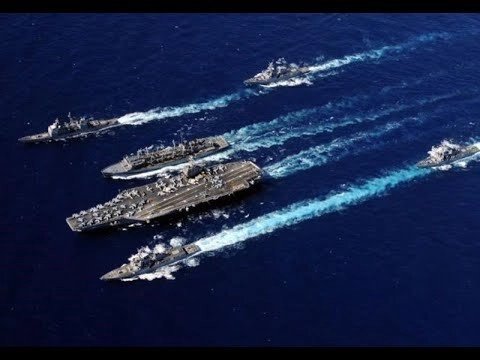
How Washington weaponised energy chokepoints, controlled instability, and alliance dependency against China, Iran, and Europe.
The post-Cold War order is ending not because American power suddenly collapsed beneath external pressure, but because Washington abandoned the economic logic that previously sustained its own imperial system across multiple continents simultaneously. The United States no longer governs primarily through expanding prosperity, industrial integration, or stable globalisation, because those mechanisms ultimately accelerated Chinese industrial ascendance beyond levels Washington considered strategically tolerable. American power increasingly operates through controlled scarcity, engineered dependency, and coercive management of strategic circulation systems whose disruption imposes cumulative pressure upon both rivals and nominal allies alike. The pressure campaign against Iran, the militarisation of Southeast Asian chokepoints, and the fragmentation now spreading visibly throughout NATO and the European Union are not disconnected geopolitical crises developing independently from one another.
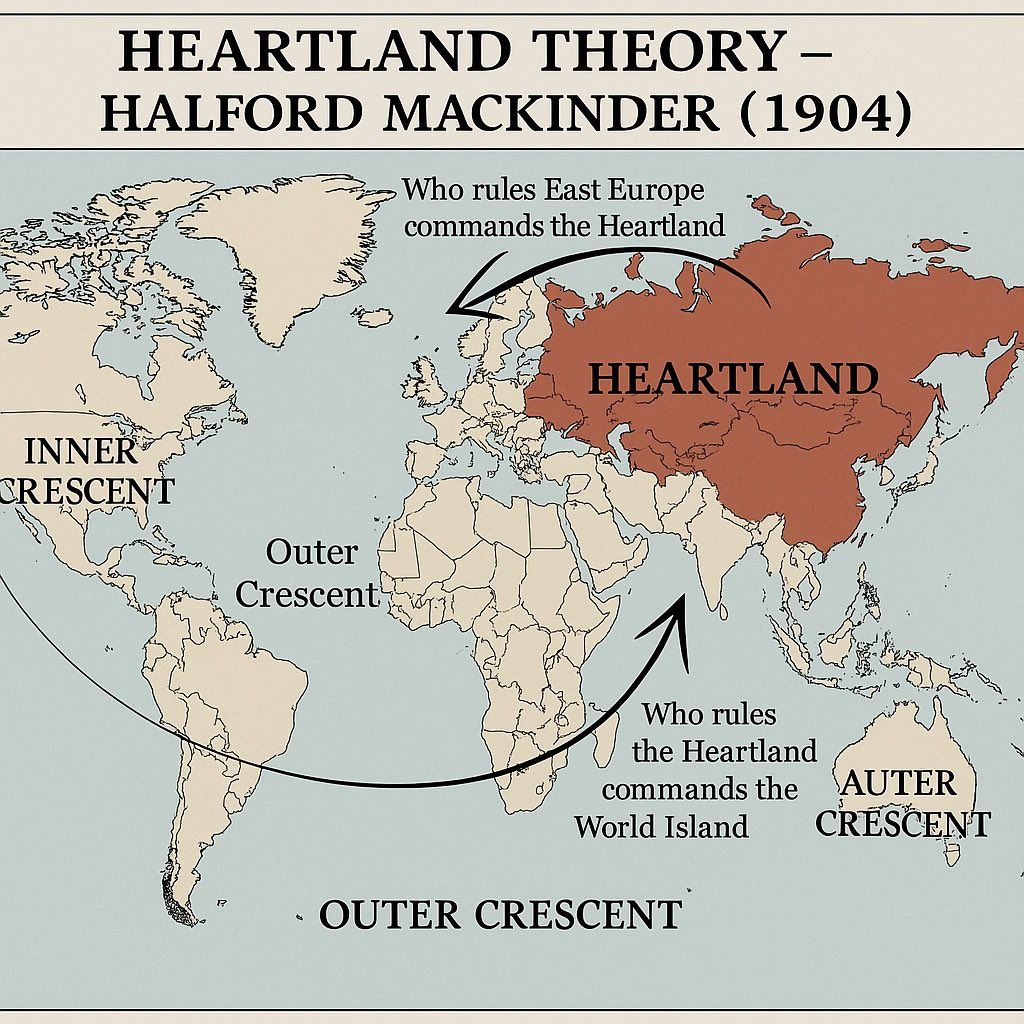
Halford Mackinder’s Heartland Theory argued that control of the Eurasian “Heartland” the vast interior of Eastern Europe and Central Asia would determine global dominance. In his view: “Who rules the Heartland commands the World-Island; who rules the World-Island commands the world.”
They instead represent interconnected components within a single strategic transition whereby the United States seeks to preserve declining primacy through the weaponisation of energy insecurity against Eurasian industrial integration itself. Europe has already been subordinated through energy dependency and industrial deterioration, while Asia increasingly enters the same coercive architecture through maritime pressure directed overwhelmingly toward China’s external vulnerabilities. As Brian Berletic argued throughout the source transcripts, Washington increasingly preserves influence “not through prosperity creation but through controlled instability and dependency management.”
The strategic centre of the world economy shifted decisively from the Atlantic toward Asia decades ago, although many European governments continued behaving as though the post-1991 unipolar structure remained materially permanent despite mounting evidence demonstrating otherwise. China now occupies the central position within global manufacturing, industrial processing, shipping volume, critical mineral refinement, and transcontinental trade integration, thereby transforming Eurasian commerce into the principal engine sustaining global economic growth. Europe meanwhile retains substantial accumulated wealth and institutional influence, yet its geopolitical importance diminished relative to the Indo-Pacific economy now dominating industrial civilisation itself. American planners recognised this structural transition years before most European political elites fully comprehended its implications for the Atlantic alliance system. Washington therefore confronted a dilemma that ultimately became impossible to postpone indefinitely. The United States lacked sufficient industrial depth, fiscal sustainability, political cohesion, and military surplus capacity necessary to sustain simultaneous confrontation against Russia in Eastern Europe, Iran throughout the Middle East, and China across the Indo-Pacific while preserving the liberal globalisation order enabling Chinese industrial expansion in the first place. American grand strategy therefore underwent a profound transformation whereby open integration gave way to coercive fragmentation.
Pete Hegseth’s February 2025 address before the Ukraine Defense Contact Group outlined this transition with remarkable bluntness when he described a strategic “division of labour” requiring European governments to absorb increasing responsibility for continental confrontation while Washington redirected military and economic resources toward China and Iran. The frequently discussed transatlantic rift therefore functions largely as political theatre necessary for legitimising domestic sacrifice within Europe while concealing the deeper strategic continuity underpinning Atlantic coordination. Washington does not fundamentally require European approval regarding strategic priorities because institutional dependency already constrains European decision-making autonomy across military, financial, and energy sectors simultaneously. American policymakers instead require Europe to absorb escalating economic, military, and political costs associated with prolonged confrontation against Russia while preserving American strategic flexibility for the Indo-Pacific theatre increasingly considered decisive for twenty-first century power distribution.
European governments subsequently accelerated defence expenditures toward five per cent of gross domestic product, intensified sanctions regimes against Russia, expanded domestic arms production, and deepened military integration precisely along trajectories encouraged continuously by Washington. Simultaneously, American troop reductions in Germany reduced direct exposure ahead of potential escalation scenarios involving Russia while transferring operational burdens increasingly onto European states themselves. The strategic logic resembles every historical imperial proxy arrangement whereby peripheral actors absorb attritional costs while imperial centres preserve strategic manoeuvrability and domestic political insulation. Europe consequently confronts a deteriorating strategic environment without possessing sufficient industrial autonomy, military cohesion, or energy security necessary for independent geopolitical action.
Energy remains the hidden mechanism binding this entire process together across every theatre simultaneously. The destruction of Russian-European energy integration fundamentally transformed Europe’s economic structure because cheap Russian pipeline gas constituted the material foundation underpinning German industrial competitiveness and wider European manufacturing strength for decades previously. American liquefied natural gas imports transported across oceans at substantially higher prices replaced that system with one rooted increasingly in dependency rather than productive efficiency. Europe therefore accomplished something historically extraordinary by voluntarily dismantling the material foundations of its own industrial autonomy while becoming increasingly dependent upon American energy exports, financial systems, and military guarantees. Washington benefited directly from this transformation because European deindustrialisation weakened a potential economic competitor while simultaneously increasing American leverage over continental policy formation.
A harder reality consequently defines the Atlantic alliance system today because American strategy no longer seeks prosperous allied integration producing mutually beneficial economic expansion across advanced industrial economies. Washington increasingly pursues controlled deterioration sufficient to deepen dependency without provoking outright systemic collapse capable of destabilising broader Western financial structures. Economic pain among allied states no longer necessarily represents policy failure because economic insecurity itself increasingly functions as leverage reinforcing strategic obedience. The weaker, more indebted, and more energy insecure allied governments become over time, the more dependent those governments remain upon American military protection, financial architecture, and energy exports sustaining domestic stability.
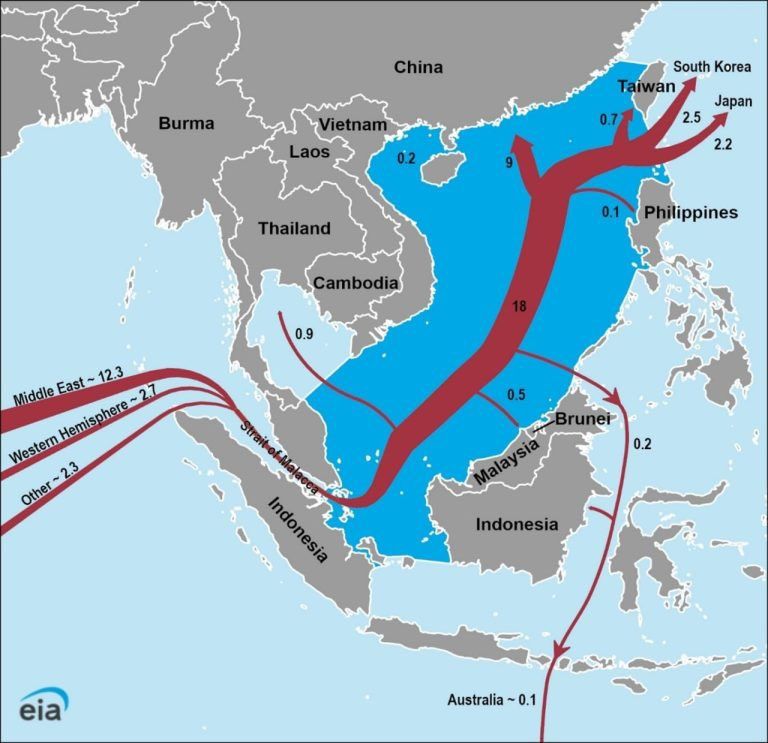
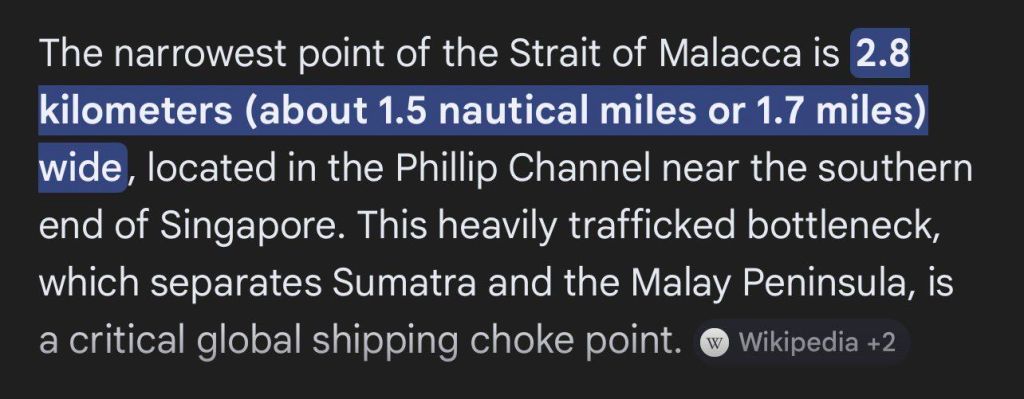
The same coercive architecture now extends visibly across Asia through increasingly coordinated maritime pressure directed principally against China’s external vulnerabilities. American pressure for unrestricted military access to Indonesian airspace has little relationship with conventional regional security cooperation despite official diplomatic framing suggesting otherwise. The strategic target remains the Strait of Malacca, one of the world’s most important maritime chokepoints through which the majority of Chinese imported hydrocarbons and substantial proportions of Asian trade continue flowing daily. American strategic planners openly discussed potential interdiction scenarios involving Malacca for decades because Chinese industrial civilisation remains structurally dependent upon uninterrupted maritime energy circulation vulnerable ultimately to superior American naval power. Expanded access to Indonesian airspace therefore extends American surveillance capacity, interdiction capability, and operational depth directly across this critical artery connecting Gulf energy supplies with East Asian industrial economies.
This pressure campaign cannot plausibly be interpreted as isolated regional policy because Washington already exerts coordinated pressure across the Strait of Hormuz through sanctions enforcement, naval operations, maritime interdictions, and partial blockade conditions directed against Iranian shipping networks. Simultaneously, Russian energy infrastructure continues facing sabotage and drone strikes, Venezuelan exports remain constrained through sanctions pressure, instability repeatedly disrupts the China-Myanmar pipeline corridor, and the China-Pakistan Economic Corridor operates continuously under worsening security threats. Every significant alternative energy pathway capable of reducing Chinese maritime vulnerability now experiences varying degrees of coordinated coercive pressure. The broader pattern appears too integrated, synchronised, and strategically coherent to dismiss plausibly as coincidence or disconnected regional instability.
Indonesia illustrates the strategic sequencing underpinning this larger transition with considerable clarity. Before escalation against Iran intensified and before wider Gulf instability threatened global shipping routes more severely, Jakarta experienced substantial pressure compelling acceptance of approximately fifteen billion dollars in American oil and gas agreements negotiated under conditions shaped heavily by tariff threats and mounting energy insecurity. Shortly afterwards, Washington intensified demands for expanded military overflight access and operational integration throughout the Indonesian archipelago. Sequencing matters enormously because the United States did not merely exploit an unforeseen crisis opportunistically after conditions deteriorated independently. Washington positioned itself beforehand to dominate the very crisis structure emerging subsequently across Southeast Asia. Indonesia alone imports roughly twenty per cent of its crude oil requirements from Gulf producers despite containing nearly 290 million citizens and substantial internal political vulnerabilities. Disruption through Hormuz therefore generates immediate domestic pressure throughout Southeast Asia, after which Washington presents American energy exports, security guarantees, and military integration as indispensable solutions to instability partly generated through American coercive policy itself.
The ongoing blockade against Iran demonstrates the operational logic underpinning this broader strategic architecture with remarkable precision. American officials falsely present the blockade as near total while numerous anti-Western commentators incorrectly dismiss sanctions and interdiction efforts as strategically meaningless because Iranian state institutions survived despite sustained pressure. Neither interpretation withstands serious analysis because both rely upon simplistic binary assumptions regarding success and failure within modern economic warfare. According to evidence discussed extensively throughout the source material, American pressure likely disrupted between forty and sixty per cent of Iranian maritime throughput despite continued smuggling operations and Chinese purchases circumventing sanctions structures. Such disruption falls considerably short of absolute strangulation while nevertheless imposing severe cumulative pressure upon shipping insurance, industrial supply chains, fiscal planning, currency stability, and long-term investment confidence.
Modern industrial economies rarely require complete paralysis before experiencing profound structural deterioration because prolonged uncertainty itself imposes cumulative strategic costs throughout interconnected economic systems. A partial blockade sustained across extended periods produces inflationary pressures, investment insecurity, logistical instability, industrial inefficiencies, and political vulnerability without requiring total interruption of trade flows altogether. Iran absorbs immediate economic burdens resulting directly from sanctions and interdictions, yet China absorbs the larger strategic lesson emerging unmistakably from the broader pressure campaign. Beijing understands clearly that Washington’s objective extends far beyond Tehran itself because the United States seeks ultimately to regulate the circulation systems upon which Chinese industrial output, export competitiveness, and domestic stability continue depending.
Classical realism explains this logic far more accurately than liberal institutional theories emphasising mutual economic integration and interdependence. Maritime powers historically dominated continental rivals not necessarily through direct territorial occupation but through control over external access to trade routes, energy supplies, financial systems, and shipping corridors sustaining industrial civilisation itself. Britain exhausted Napoleonic Europe through blockade systems constraining economic circulation despite French military dominance across the continent. The United States similarly destroyed Imperial Japan strategically through energy embargoes before military victory became operationally inevitable during the Pacific War. Contemporary American strategy increasingly applies comparable logic against China through distributed maritime pressure calibrated carefully below the threshold likely to trigger uncontrollable general war.
The strategic game therefore changed fundamentally once Washington concluded that unrestricted globalisation no longer served American long-term interests. During the earlier globalisation equilibrium, China and the United States operated within a partially cooperative system whereby China generated industrial output while Washington controlled global finance, maritime security, and reserve currency architecture simultaneously. Both powers benefited materially from expanding economic integration despite underlying geopolitical tensions. Washington abandoned that equilibrium once Chinese industrial expansion threatened eventually to displace American primacy structurally across multiple sectors simultaneously. The game consequently shifted from cooperative hegemony toward coercive containment rooted increasingly in vulnerability management rather than market integration.
Game theory clarifies the emerging structure more effectively than conventional diplomatic language emphasising abstract stability or international norms. The United States seeks to maximise Chinese vulnerability through incremental pressure while avoiding direct military escalation capable of collapsing global financial systems upon which American prosperity also depends significantly. China meanwhile seeks maintaining sufficient energy access, industrial continuity, and trade resilience while avoiding premature naval confrontation against superior American maritime forces. Both powers therefore engage within a prolonged deterrence framework based primarily upon signalling, redundancy construction, positional advantage, and calibrated coercion rather than immediate conventional warfare. Control over circulation consequently replaced openness as the organising principle governing international order itself.
China recognised this transition years beforehand and consequently accelerated preparations designed specifically to reduce maritime vulnerability over the long term. Beijing constructed enormous strategic petroleum reserves, expanded pipeline integration with Russia, deepened energy partnerships throughout Latin America and Africa, invested heavily in coal-to-liquid fuel conversion technologies, accelerated nuclear expansion, and launched the largest renewable energy deployment programme in recorded history. China’s small modular reactor development, unprecedented electric vehicle adoption, and massive renewable infrastructure expansion all form interconnected components within one strategic objective reducing exposure to maritime energy coercion imposed externally by superior naval powers. The contest therefore concerns industrial resilience and systemic endurance at least as much as conventional military strength.
Europe meanwhile confronts accelerating fragmentation because the Atlantic order sustaining post-1945 stability no longer functions coherently under present geopolitical conditions. Britain’s creation of the Joint Expeditionary Force alongside Nordic and Baltic states represents far more than routine regional military coordination intended merely to strengthen deterrence against Russia. The initiative instead reflects declining confidence regarding NATO cohesion combined with growing British fears that Germany may eventually dominate a future continental defence structure developing increasingly independent from traditional Anglo-American leadership. The historical significance remains enormous because Anglo-American strategy since 1945 rested fundamentally upon Atlantic solidarity, nuclear integration, intelligence cooperation, and coordinated management of European security structures.
Military realities intensify these fractures because Russia retains overwhelming escalation dominance throughout the Baltic theatre through Kaliningrad missile concentrations, Bastion coastal defence systems, Kalibr and Zircon hypersonic missiles, integrated S-400 air defence networks, expanding drone production capacity, and substantial naval assets positioned specifically for confrontation against NATO forces. European rhetoric regarding military readiness increasingly exceeds actual industrial capability, logistical sustainability, and operational preparedness required for prolonged high-intensity conflict. Britain’s northern coalition lacks sufficient force concentration necessary for independent confrontation against Russia without overwhelming American support, while Germany remains economically powerful yet militarily constrained and politically fragmented internally.
Internal European fissures consequently extend beyond military policy into questions concerning sovereignty, migration, economic autonomy, and civilisational identity itself. Hungary, Slovakia, Romania, Bulgaria, Poland, and several Southern European governments increasingly resist Brussels regarding migration quotas, domestic cultural regulation, anti-Russian sanctions, and supranational centralisation undermining national authority progressively over time. The conflict therefore concerns far more than temporary policy disagreements because it reflects growing resistance against a supranational structure increasingly shaped through externally driven security imperatives and permanent crisis management rather than consensual economic integration.
Germany itself may eventually become the decisive fault line destabilising the present European order. Should domestic instability weaken the current governing structure while expanding support for parties favouring renewed accommodation with Russian energy exports, the broader anti-Russian architecture imposed through Brussels would begin collapsing internally from within Europe’s industrial core itself. Washington understands this possibility clearly, thereby explaining extraordinary pressure applied continuously toward maintaining European strategic conformity despite mounting industrial deterioration and worsening domestic discontent across multiple states simultaneously.
The liberal assumption claiming globalisation dissolved traditional power politics has therefore collapsed completely beneath contemporary geopolitical realities. Interdependence never eliminated coercion because coercion simply embedded itself within supply chains, shipping corridors, energy systems, sanctions networks, financial infrastructure, and industrial dependencies linking modern economies together. Washington recognised this transformation before most rivals fully comprehended its implications and subsequently began weaponising the very global system previously presented as universally beneficial and permanently open.
A far harsher reality consequently governs international politics today because states lacking sufficient energy autonomy increasingly lose meaningful strategic autonomy regardless of military size, ideological orientation, or institutional sophistication. Maritime chokepoints now function openly as instruments of macroeconomic warfare while economic crises themselves become manufactured, directed, and strategically exploited by major powers pursuing geopolitical advantage through instability management. The post-Cold War order did not collapse naturally because globalisation simply exhausted itself historically. That order ended because the dominant power concluded that open integration no longer served its strategic interests against rising Eurasian competitors. Washington now preserves influence increasingly through coercive supervision over circulation systems rather than through expansion of shared prosperity. Europe became the first major casualty of that transition while Asia increasingly emerges as the next principal theatre upon which this coercive strategy unfolds. History will probably remember this period not as the collapse of American power, but as the moment American power abandoned liberal empire altogether and reverted openly toward imperial coercion exercised through direct control over energy, circulation, dependency, and scarcity itself.
Authored By: Global GeoPolitics
Thank you for visiting. This is a reader-supported publication. If you believe journalism should serve the public, not the powerful, and you’re in a position to help, becoming a PAID SUBSCRIBER truly makes a difference. Alternatively you can support by way of a cup of coffee:
https://buymeacoffee.com/ggtv |
https://ko-fi.com/globalgeopolitics |
https://buy.stripe.com/3cI5kDdnaeusckjd6Pawo00
References
Berletic, B. (2025) What Connects US-Europe Stand Down, Access to Indonesian Airspace, & the US Blockade on Iran. Source transcript provided by user.
Berletic, B. (2025) New Cracks in NATO and EU. Source transcript provided by user.
Braudel, F. (1984) The Perspective of the World. London: Collins.
Brzezinski, Z. (1997) The Grand Chessboard: American Primacy and Its Geostrategic Imperatives. New York: Basic Books.
CSIS (2024) Iran’s Strait of Hormuz Gambit and the Limits of US Military Power. Washington DC: Center for Strategic and International Studies.
Fiori, J. and Passeri, A. (2023) ‘The Weaponisation of Interdependence and the Return of Geopolitical Economics’, Geopolitics, 28(4), pp. 1442–1468.
Gray, C.S. (1999) Modern Strategy. Oxford: Oxford University Press.
Hughes, C.W. (2022) ‘China’s Energy Insecurity and Maritime Vulnerability’, Survival, 64(5), pp. 79–102.
Kaplan, R.D. (2010) Monsoon: The Indian Ocean and the Future of American Power. New York: Random House.
Kennedy, P. (1987) The Rise and Fall of the Great Powers. London: Fontana Press.
Mearsheimer, J.J. (2001) The Tragedy of Great Power Politics. New York: W.W. Norton.
RUSI (2024) US Blockade Dynamics and Strategic Pressure in the Persian Gulf. London: Royal United Services Institute.
Tooze, A. (2021) Shutdown: How Covid Shook the World’s Economy. London: Allen Lane.
Waltz, K.N. (1979) Theory of International Politics. Reading, MA: Addison-Wesley.
World Bank (2024) Global Trade and Energy Transit Data. Washington DC: World Bank.
Yergin, D. (2020) The New Map: Energy, Climate, and the Clash of Nations. New York: Penguin Press.


Leave a comment