
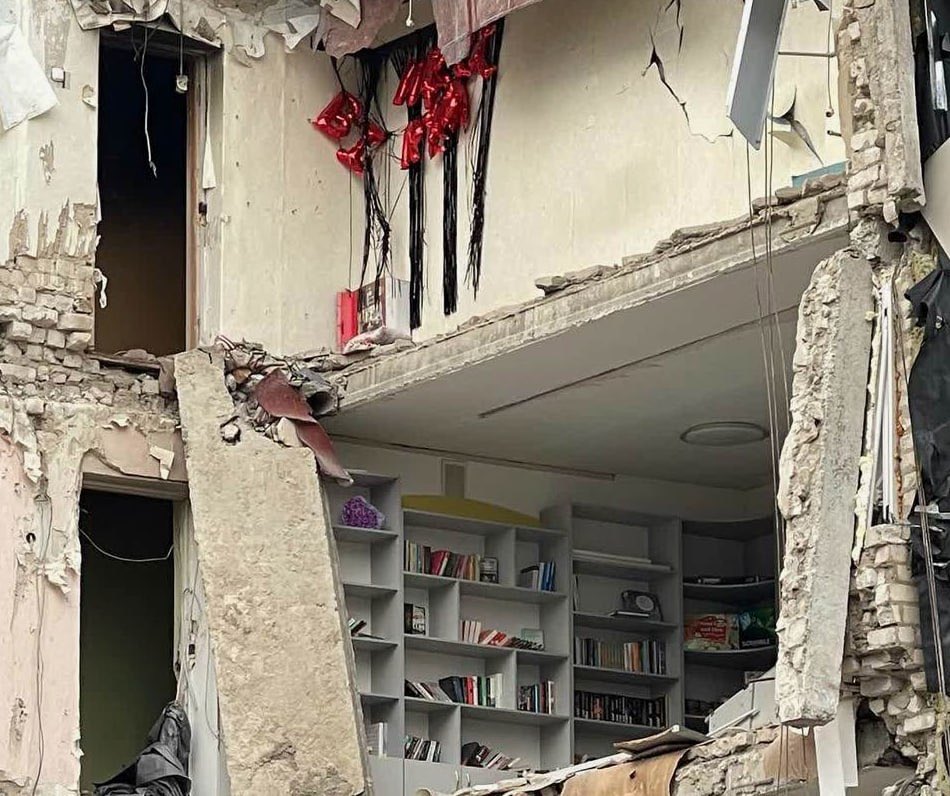
As accusations and denials intensify, the central question remains unchanged: why do civilian children repeatedly become acceptable collateral in geopolitical conflict?
The attack on the Starobilsk Pedagogical College in Russian-controlled Lugansk on 22 May entered public discussion through a familiar pattern of accusation, denial, and selective amplification. Russia’s representative to the United Nations, Vassily Nebenzia, described the strike before the Security Council as a deliberate attack upon sleeping students between fourteen and eighteen years of age, while Vladimir Putin characterised the incident as evidence of the “terrorist nature of the Kiev regime”. Ukrainian military authorities rejected those accusations and stated that the intended target involved the Russian “Rubikon” drone unit operating within the Starobilsk area.
Reuters reported that Russian officials initially stated six people had died, with dozens injured and several children missing beneath the collapsed structure while rescue operations continued through the day. Subsequent Russian statements raised the death toll further, with officials later claiming eighteen fatalities and more than forty injured. Reuters noted that independent verification remained impossible because Starobilsk lies inside Russian-controlled territory inaccessible to outside journalists. Nevertheless, Reuters confirmed that rescue operations took place after a strike severely damaged the dormitory building and that Russian officials reported students trapped beneath the rubble after sections of the five-storey structure collapsed. (reuters.com)
Russian investigators stated that multiple fixed-wing drones participated in the strike, while Putin later alleged that sixteen drones struck the same target in three separate waves during the night. Ukraine’s military maintained that the operation targeted military infrastructure connected to Russian drone warfare rather than civilian accommodation and stated that Ukrainian forces were complying with international humanitarian law. Russian authorities rejected that explanation entirely and insisted that no military facilities, intelligence centres, or operational command structures existed within the vicinity of the dormitory itself. (reuters.com)
Wars increasingly unfold through information systems before facts emerge through forensic investigation. Every combatant understands the political value attached to civilian casualties, particularly where children become involved, and modern governments shape military narratives accordingly. Russian authorities regularly publicise attacks affecting Belgorod, Kursk, Donetsk, and Lugansk, while Western broadcasters often place greater emphasis upon Russian missile strikes against Kharkiv, Kyiv, Odessa, and Dnipro. Such editorial asymmetry produces predictable political conclusions among audiences already conditioned by national loyalties, wartime propaganda, and geopolitical alignment.
Western coverage of civilian deaths inside Russian territory or Russian-controlled regions frequently appears brief, heavily caveated, or absent altogether, even where fatalities involve minors or large casualty figures. Reuters carried the Starobilsk story while repeatedly noting the limits of independent verification and including Ukrainian denials, yet major British and American broadcasters devoted comparatively limited sustained attention to the identities of the dead students or the missing children reportedly trapped beneath the rubble. During the same period, extensive international reporting continued to follow Russian missile strikes against Ukrainian apartment blocks and urban infrastructure. Part of that disparity reflects access restrictions and the broader Western political alignment with Ukraine after the February 2022 invasion. Yet editorial culture, ideological proximity, and strategic sympathies also influence newsroom priorities more deeply than many institutions publicly acknowledge. (reuters.com)
Historical precedent offers numerous examples where civilian casualties received radically different moral and political treatment depending upon strategic alignment. NATO’s 1999 bombing campaign in Yugoslavia struck bridges, passenger trains, refugee convoys, factories, and the Serbian state broadcaster headquarters in Belgrade. American military campaigns in Iraq and Afghanistan generated similar controversies during operations in Fallujah, Mosul, Kunduz, and elsewhere, where civilian casualties were often framed within the language of operational necessity, proportionality, or unfortunate collateral damage. Israeli operations in Gaza and Lebanon have repeatedly involved arguments that military systems, command structures, or armed groups were operating within or near civilian infrastructure. Western governments and media institutions frequently accepted those explanations as strategically relevant context when discussing civilian casualties arising from retaliatory strikes. Comparable contextual arguments tend to receive far less acceptance when advanced by Russian officials during the present war.
That asymmetry also intersects with a broader argument increasingly visible even among some Russian military commentators and nationalist critics of the Kremlin: namely, that Moscow has exercised a degree of restraint significantly below the level of force historically employed by Western powers or regional actors confronting insurgent or proxy threats. Russian officials including independent commentators and analysts have repeatedly contrasted Russian operations in Ukraine with the scale of destruction witnessed in Gaza, Fallujah, Mosul, Raqqa, or southern Lebanon. Putin himself has repeatedly argued that Russians and Ukrainians constitute “one people”, a formulation he uses to justify what he describes as a slower and more restrained operational approach, despite criticism from hardline Russian constituencies demanding harsher retaliation against Ukrainian infrastructure and command centres following attacks inside Russian territory. Whether one accepts that argument or not, it forms an important component of the political and ideological framework through which Moscow publicly explains both its conduct and its restraint.
Questions surrounding military use of civilian areas do not materially alter the central fact that a student dormitory housing teenagers collapsed after repeated drone strikes during the night. Ukrainian military statements referenced the Russian “Rubikon” drone structure operating somewhere within the broader Starobilsk area. Russian officials insisted that no military facilities existed near the dormitory and argued that repeated drone impacts demonstrated deliberate targeting rather than navigational error or accidental interception. Publicly available evidence has not demonstrated the existence of military infrastructure inside the college dormitory itself. Russian officials further argued that the pattern of repeated impacts against the same building weakened suggestions that Russian electronic warfare systems or air defences accidentally redirected the drones onto civilian structures. (reuters.com)
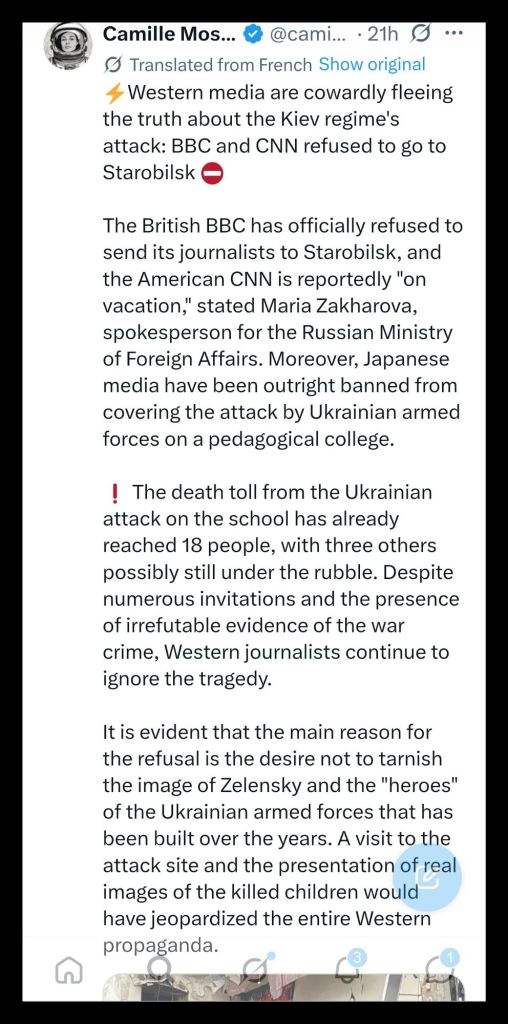
Russian Foreign Ministry spokeswoman Maria Zakharova later accused Western representatives at the United Nations of spreading “outright lies” by dismissing the strike as propaganda or denying that it had taken place at all. Zakharova stated that foreign correspondents accredited in Moscow would be invited to visit Starobilsk personally and specifically criticised the BBC and CNN after both organisations reportedly declined the invitation. According to Zakharova, BBC representatives refused the trip while CNN cited staff vacations. Moscow subsequently argued that major Western media organisations showed little interest in independently examining the site despite the scale of the civilian casualty claims. Those allegations themselves became part of the wider information war surrounding the conflict: not simply over missiles and drones, but over who possesses the authority to define civilian suffering, legitimacy, and truth in wartime.
The broader pattern extends beyond Starobilsk itself. Russian officials increasingly argue that attacks upon civilians inside Russian territory and Russian-controlled regions form part of a sustained campaign that includes Belgorod shelling, cross-border drone strikes, attacks upon apartment blocks and public infrastructure, and the March 2024 Crocus City Hall massacre in Moscow, which Russian authorities linked to wider security failures connected to the war environment and alleged foreign intelligence exploitation. Critics of Moscow reject many of those claims or argue that Russia’s own conduct fundamentally shapes the escalation dynamic. Yet within Russia, such incidents are increasingly presented collectively as evidence that the conflict long ago moved beyond conventional battlefield engagements into a broader campaign involving psychological pressure upon civilian populations.
Governments engaged in prolonged wars routinely elevate atrocities committed against their own populations while minimising, contextualising, or legally reframing civilian deaths caused by allied military operations. That pattern is not unique to Russia, Ukraine, NATO states, Iran, Israel, or the United States. It reflects the deeper logic of wartime political communication itself.
The Starobilsk strike nevertheless demonstrates how selective visibility shapes political morality during prolonged wars. Civilian deaths become symbols allocated according to geopolitical convenience rather than consistent legal or ethical principle. Governments demand outrage for their own dead while contextualising the deaths caused by allied forces. Media institutions frequently mirror those priorities because access, audience expectation, ideological orientation, and state relationships all influence editorial selection.
Comparable patterns emerged during the February 2026 strike on the girls’ school in Minab, Iran, where Iranian authorities stated that 168 schoolchildren died following repeated Tomahawk missile strikes. Early Western reporting treated Iranian accusations cautiously, while American officials initially disputed responsibility or suggested uncertainty regarding the origin of the strike. Subsequent video analysis by independent weapons researchers, alongside reporting from ABC News, The Guardian, and other outlets, pointed toward the involvement of American Tomahawk missiles. A later Senate hearing acknowledged the strike and framed the deaths as the consequence of operational error rather than deliberate targeting, although that acknowledgement emerged only after weeks of public dispute, mounting forensic evidence, and growing international scrutiny surrounding the attack itself.
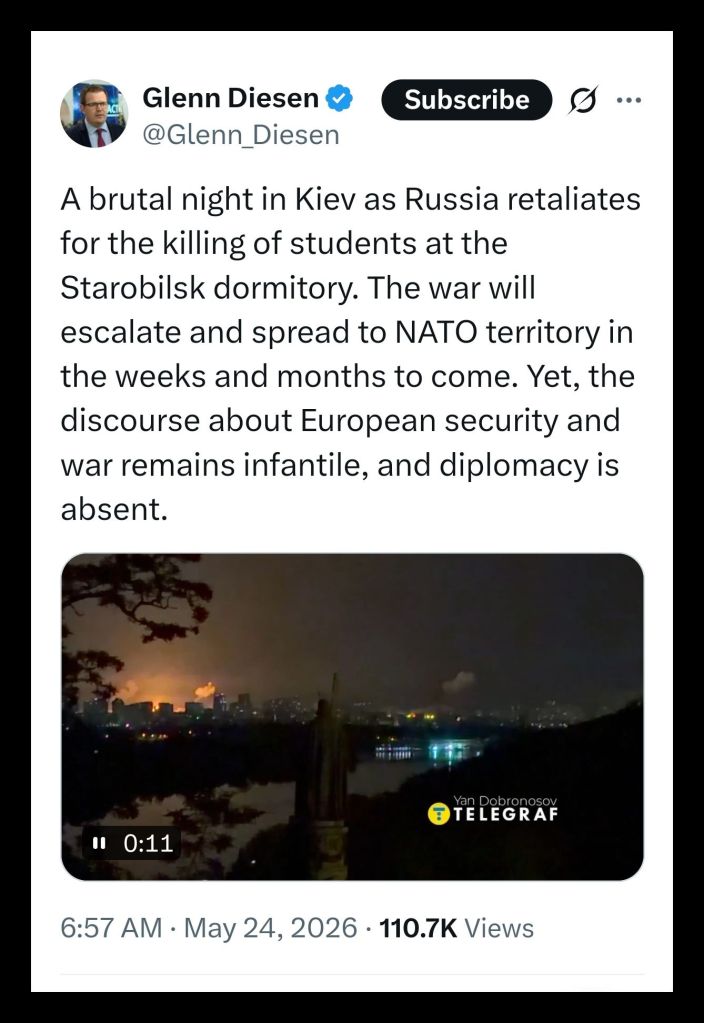
The same sequence now appears around Starobilsk, where dead students, wounded teenagers, and missing children beneath collapsed concrete compete against geopolitical alignment, strategic messaging, and narrative management long before independent investigation reaches completion. Russian authorities, as they did following the events in Bucha, have again invited foreign correspondents and international observers to examine the site directly, arguing that independent verification rather than immediate narrative consolidation should determine public judgement. Whether foreign media institutions accept those invitations or not, the larger problem extends beyond a single strike or a single war. Modern conflicts increasingly reduce civilian deaths to strategic language: “collateral damage”, “human shields”, “operational necessity”, or “legitimate military infrastructure”. Yet beneath every doctrinal formulation remain the same human realities — children sleeping in dormitories, families trapped beneath concrete, civilians caught between states pursuing military objectives while demanding moral immunity for themselves. If humanitarian principles possess any universal meaning at all, they cannot apply selectively according to alliance, geography, or political convenience. The deliberate targeting of civilians, or the normalization of their deaths as acceptable strategic cost, remains indefensible regardless of which flag conducts the strike or controls the narrative afterward.
Authored By: Global GeoPolitics
If you prefer to make a one time donation in support of my work, you can do so by clicking any link below:
https://buymeacoffee.com/ggtv |
https://ko-fi.com/globalgeopolitics |
Bitcoin: 3NiK8BoRZnkwJSHZSekuXKFizGPopkE7ns
References
ABC News (2026) US Senate hears testimony regarding Minab school strike and Tomahawk missile use. Available at:
(Accessed: 24 May 2026).
Al Jazeera (2026) ‘Russia labels Ukraine attack in occupied Luhansk “monstrous crime”’, Al Jazeera, 22 May. Available at: https://www.aljazeera.com/news/2026/5/22/russia-labels-ukraine-attack-in-occupied-luhansk-monstrous-crime (Accessed: 24 May 2026).
BBC News (2022) ‘Bucha killings: Satellite images show bodies lay in street for weeks’, BBC News, 5 April. Available at: https://www.bbc.com/news/world-europe-60981228 (Accessed: 24 May 2026).
Human Rights Watch (2000) Civilian Deaths in the NATO Air Campaign. New York: Human Rights Watch. Available at: https://www.hrw.org/reports/2000/nato/ (Accessed: 24 May 2026).
Meduza (2026) ‘Ukraine says Starobilsk strike targeted Russian drone unit’, Meduza, May 2026. Available at:
(Accessed: 24 May 2026).
Reuters (2026a) ‘Four killed, 35 children injured in Ukrainian drone attack in Luhansk, Russian officials say’, Reuters, 22 May. Available at: https://www.reuters.com/world/europe/four-killed-35-children-injured-ukrainian-drone-attack-luhansk-russian-officials-2026-05-22/ (Accessed: 24 May 2026).
Reuters (2026b) ‘Death toll in student dorm strike rises, Russian-installed official says’, Reuters, 23 May. Available at: https://www.reuters.com/world/europe/death-toll-student-dorm-strike-rises-10-russian-installed-official-says-2026-05-23/ (Accessed: 24 May 2026).
Reuters Connect (2026) Aftermath of drone attack on Luhansk dormitory building amid Russia-Ukraine conflict. Available at:
https://www.reutersconnect.com/
(Accessed: 24 May 2026).
Putin, V. (2021) ‘On the Historical Unity of Russians and Ukrainians’, Kremlin.ru, 12 July. Available at: http://en.kremlin.ru/events/president/news/66181 (Accessed: 24 May 2026).
The Guardian (2026) ‘Questions mount over Minab school strike as missile fragments analysed’, The Guardian, February 2026. Available at:
(Accessed: 24 May 2026).
United Nations Security Council (2026) Meeting records concerning attacks in Lugansk and civilian casualties. New York: United Nations. Available at: https://www.un.org/securitycouncil/ (Accessed: 24 May 2026).
Zakharova, M. (2026) Statements to foreign media regarding Starobilsk investigation and Western press invitations, Russian Foreign Ministry briefing, May 2026. Available at: https://mid.ru/en/ (Accessed: 24 May 2026).


Leave a comment