
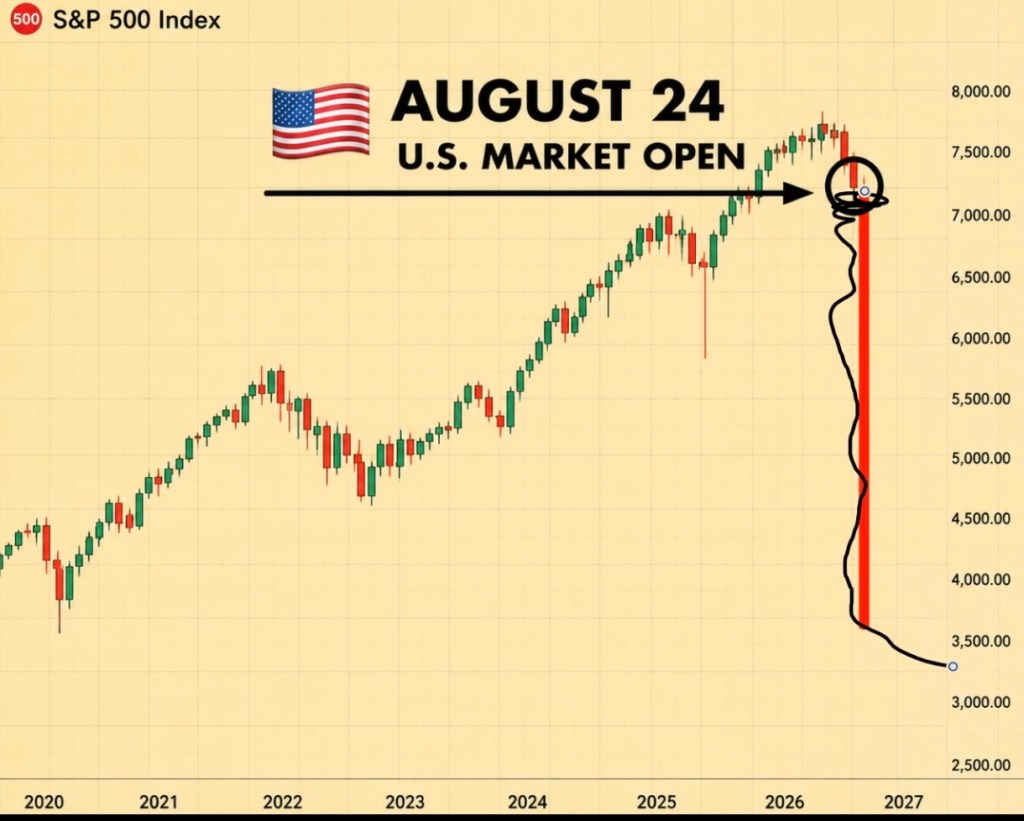
Expanded Treasury buybacks and a rare public intervention by the Secretary underline the rising cost of financing a public debt that now exceeds forty trillion dollars
General Article | August 2026
The yield on the thirty-year United States Treasury note climbed to 5.34 per cent in recent sessions, marking the highest reading since the period preceding the global financial crisis of 2008. Market participants responded by selling longer-duration government paper, prompting the Treasury to expand its regular buyback operations. Officials announced that purchases of longer-term bonds would rise from two billion dollars to at least four billion dollars per operation beginning in September, with the explicit aim of stabilising the long end of the curve. Yields fell immediately after the announcement but recovered most of the decline within a single trading session, leaving the thirty-year rate once again near its recent peak. Treasury Secretary Scott Bessent has indicated that the scale of buybacks could be increased further if necessary and has scheduled a public statement for Monday afternoon Eastern Time.
Foreign demand for United States government debt has simultaneously shown signs of moderation. Japanese holdings stood at roughly 1.12 trillion dollars in the most recent data, while Chinese holdings declined to 633 billion dollars, the lowest figure recorded since 2008. The reduction in Chinese exposure has occurred alongside continued accumulation of gold reserves, a pattern consistent with gradual diversification away from dollar-denominated official assets. Japanese authorities have faced domestic pressure arising from a weaker yen, rising local yields and large public-debt obligations. Earlier official purchases of yen by the United States Treasury were described by some participants as an attempt to ease the need for Japan to liquidate American Treasuries in order to support its currency. Whether or not that interpretation is accurate, the net effect of simultaneous moderation in demand from two historically large foreign holders has been to place additional upward pressure on American long-term yields.
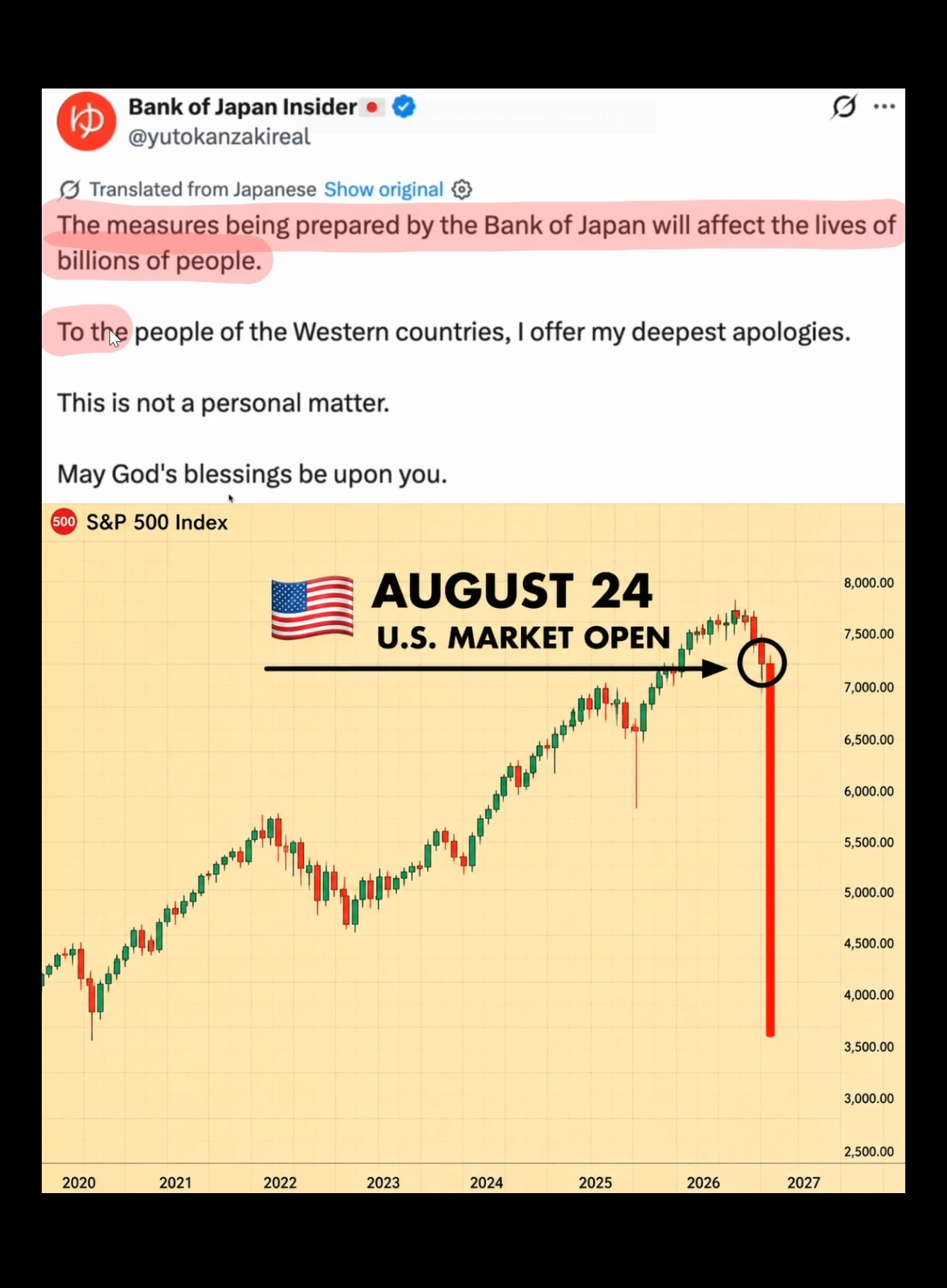
The arithmetic of public debt amplifies the consequences. United States federal debt now exceeds forty trillion dollars. Higher long-term rates increase the projected cost of refinancing maturing obligations and of funding new deficits. Those higher costs feed directly into the federal budget, into the pricing of thirty-year mortgages, and into the borrowing rates faced by corporations. Buyback programmes can absorb a portion of excess supply in the secondary market, yet they do not reduce the primary issuance required by ongoing fiscal deficits. Market participants have therefore treated the expanded buybacks as a tactical response rather than a structural solution, which helps explain the rapid reversal of the initial yield decline.
Comparisons have been drawn between the Treasury’s repeated efforts to stabilise the long end of the curve and the concurrent military and economic campaign in the Middle East. In both cases, critics argue, initial actions were undertaken with incomplete assessment of the opponent’s resilience and of the cumulative costs that would follow. The bond market, unlike a conventional adversary, cannot be compelled by force; it responds to the balance of supply, demand and expected future issuance. Official statements that frame buybacks as routine liquidity management sit alongside market pricing that treats sustained high long-term yields as the more probable baseline.
The broader environment includes the gradual unwinding of earlier carry trades that had been financed by low Japanese interest rates. Capital that once flowed from yen funding into higher-yielding dollar assets has begun to reverse as Japanese yields rise and domestic policy priorities shift toward supporting the yen and local bond markets. China’s parallel reduction in Treasury holdings removes another source of structural demand. The combined effect is a market in which the United States must increasingly rely on domestic buyers and on its own official account to absorb primary issuance. That shift raises the marginal cost of public borrowing and constrains the fiscal space available for other priorities.
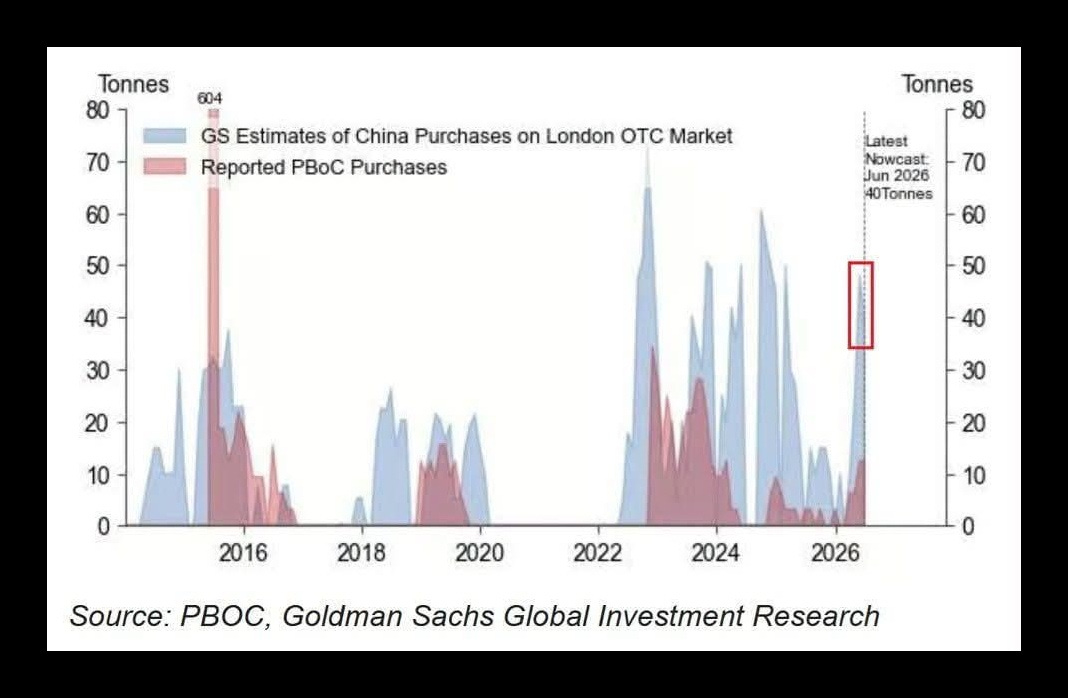
( Meanwhile, China keeps buying more and more gold)
Monday’s scheduled remarks by the Treasury Secretary will be examined for any indication of further scaling in buyback size, changes in issuance composition, or additional measures aimed at the long end of the curve. Market reaction will depend less on the tone of the statement than on whether subsequent operations demonstrably alter the balance between supply and demand. For the present, the combination of elevated long-term yields, moderated foreign demand and expanding official buybacks underscores the tightening constraint imposed by a public debt stock that continues to grow faster than the willingness of non-official buyers to finance it at previously prevailing rates.
References
U.S. Department of the Treasury (2026) Major Foreign Holders of Treasury Securities. Washington, DC: U.S. Department of the Treasury. Available at: https://ticdata.treasury.gov/Publish/mfh.txt (Accessed: 24 August 2026).
U.S. Department of the Treasury (2026) Treasury Announces Expansion of Long-Term Buyback Operations. Washington, DC: U.S. Department of the Treasury. Available at: https://home.treasury.gov (Accessed: 24 August 2026).
U.S. Department of the Treasury (2026) Remarks by Secretary Scott Bessent on market conditions and scheduled press conference, 24 August 2026. Washington, DC: U.S. Department of the Treasury.
U.S. Department of the Treasury (2026) Monthly Statement of the Public Debt. Washington, DC: Bureau of the Fiscal Service. Available at: https://fiscaldata.treasury.gov (Accessed: 24 August 2026).
Board of Governors of the Federal Reserve System (2026) Selected interest rates (H.15) – 30-year Treasury constant maturity. Washington, DC: Federal Reserve. Available at: https://www.federalreserve.gov/releases/h15/ (Accessed: 24 August 2026).
Financial Times (2026) ‘Scott Bessent’s running battle with the bond market’, Financial Times, August. Available at: https://www.ft.com (Accessed: 24 August 2026).
U.S. Department of the Treasury (2026) Data on official yen purchases and foreign-exchange intervention. Washington, DC: U.S. Department of the Treasury.
Authored By: Global GeoPolitics
If you prefer to make a one time donation in support of my work, you can do so by clicking any link below:
https://donate.stripe.com/7sY8wPfvi864don0k3awo07 |
https://buymeacoffee.com/ggtv |
https://ko-fi.com/globalgeopolitics |
Bitcoin: 3NiK8BoRZnkwJSHZSekuXKFizGPopkE7ns
References
U.S. Department of the Treasury (2026) Statements on long-term bond buyback operations and scheduled remarks by Secretary Scott Bessent.
U.S. Department of the Treasury (2026) Major foreign holders of Treasury securities data (Japan and China holdings).
Financial Times (2026) Reporting on Treasury intervention in the yen and subsequent bond-market commentary.
Market data on the thirty-year Treasury yield and federal debt outstanding, August 2026.


Leave a comment