
Material interests, naval power and the political economy of energy transit through the Strait of Hormuz under conditions of prolonged disruption
Editorial Analysis | August 2026
Geographic concentration of exportable hydrocarbons in the Persian Gulf has repeatedly drawn major powers into contests over the narrow waterway that connects those fields to oceanic shipping lanes. Approximately one-fifth of globally traded oil normally passes through the Strait of Hormuz. Any sustained interruption therefore registers immediately in the cost structures of industrial economies whose transport, petrochemical and power-generation systems remain dependent on middle distillates. The events that began on 28 February 2026 converted that structural vulnerability into an active shortage. Pre-loaded tankers and in-transit cargoes delayed the visible impact for several weeks. Thereafter the largest coordinated emergency stock release in the history of the International Energy Agency, exceeding four hundred million barrels, together with a substantial draw on the United States Strategic Petroleum Reserve, supplied roughly two and a half million barrels per day for approximately four months. Those releases functioned as a temporary socialisation of scarcity costs onto public balance sheets. Once the releases approached their arithmetic limits in August, prices rose toward levels consistent with the missing physical barrels.
Official expressions of surprise at the subsequent price movement rested on a mis-specification of the price-formation process. Crude is valued according to barrels delivered to refineries, not according to the volume of sanctions designations issued by finance ministries. Additional restrictions on Iranian exports remove supply from the market and therefore exert upward pressure on price. Light-sweet shale inventories accumulated in the United States offered limited relief because the majority of American refining capacity remains configured for heavier, sourer grades that had previously arrived through Gulf routes. The net result was a reassertion of physical scarcity after a period in which public stocks had masked it.
Competing legal claims over the Strait illustrate the relationship between juridical superstructure and material interest. The majority of states and most Western scholarship treat the transit-passage regime of the United Nations Convention on the Law of the Sea as customary international law that cannot be suspended. Iran, having signed but not ratified the Convention, maintains a persistent objection and asserts that only the more restrictive regime of innocent passage applies. Innocent passage may be temporarily suspended for security reasons. In conditions of armed conflict the law of naval warfare supplies additional rules governing visit, search, capture and attack against enemy vessels, while neutral shipping retains residual passage rights. These doctrinal disputes do not determine the physical movement of tankers; naval presence, mining, insurance markets and the willingness of shipowners to accept risk do. Legal argument serves principally to legitimise or contest the exercise of that material power.
The class distribution of consequences follows predictable lines. Elevated middle-distillate prices raise logistics and household energy costs that are borne by wage earners and smaller firms. Integrated energy companies and financial institutions able to position themselves in futures markets capture scarcity rents. Public strategic reserves are drawn down to protect domestic political legitimacy and the value of inflation-sensitive financial assets, transferring intergenerational energy security into present-day price containment. Sanctions and naval measures aimed at Iranian and, by extension, Chinese access to Gulf hydrocarbons defend hierarchical patterns of surplus extraction centred on dollar clearing and Western financial institutions. Populations in energy-importing regions absorb the price shock; populations in the immediate theatre absorb the direct costs of disrupted trade and military operations.
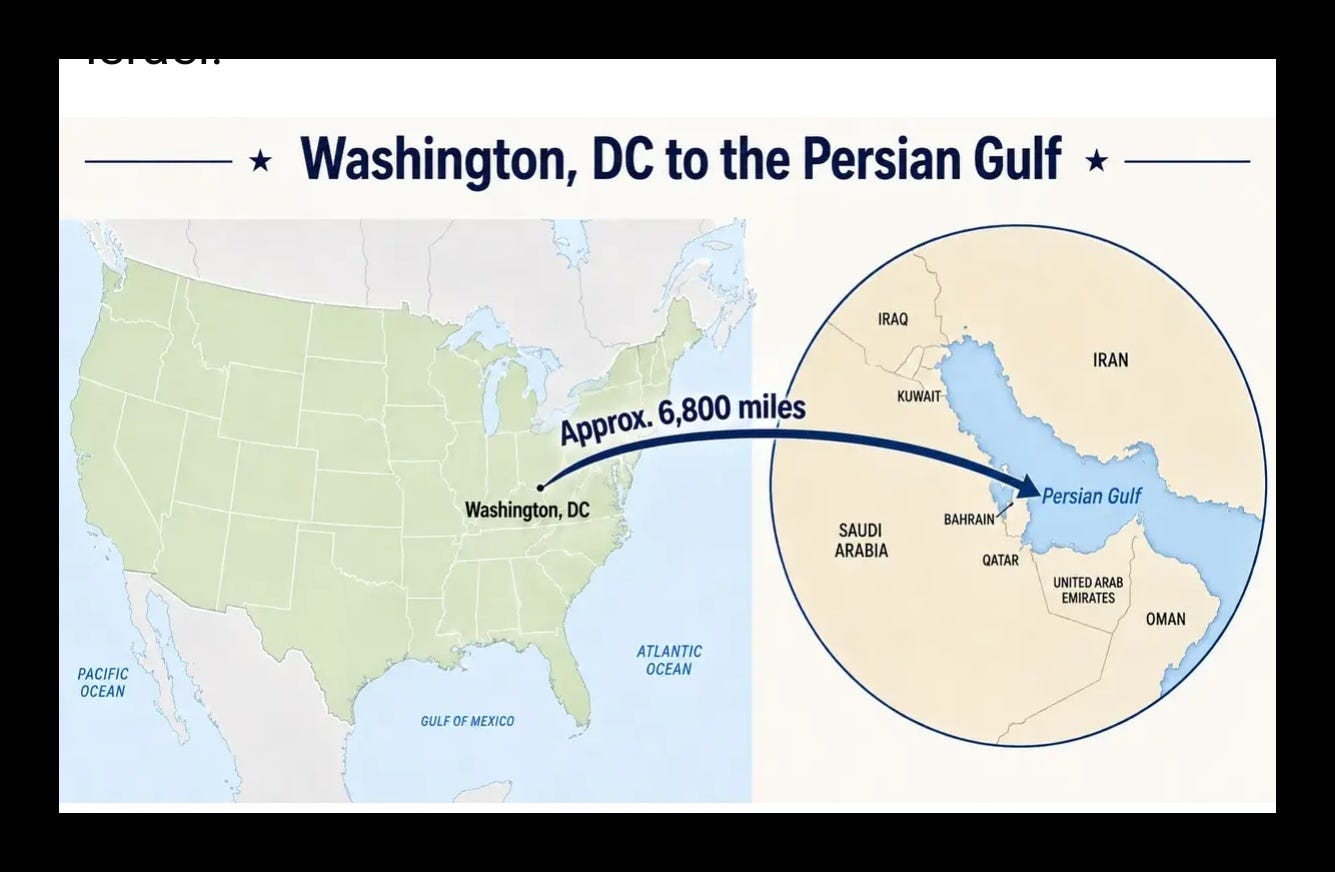
Historical continuity is evident. From the Anglo-Persian Oil Company through the post-1945 petrodollar arrangements to the present contest, control of Gulf export routes has remained a central object of state policy for the dominant industrial and financial powers. The current disruption simply renders explicit a dependence that ordinary market operations usually obscure. Neither appeals to abstract market freedom nor invocations of a rules-based maritime order have restored the pre-February volumes. Restoration will depend on the relative capacity of the parties to impose or resist costs, on the scalability of alternative supply routes and grades, and on the political tolerance of importing societies for sustained high energy prices. Material constraints of geography, naval power and industrial configuration continue to outweigh juridical and rhetorical claims in determining actual flows.
Authored By: Global GeoPolitics
If you prefer to make a one time donation in support of my work, you can do so by clicking any link below:
https://donate.stripe.com/7sY8wPfvi864don0k3awo07 |
https://buymeacoffee.com/ggtv |
https://ko-fi.com/globalgeopolitics |
Bitcoin: 3NiK8BoRZnkwJSHZSekuXKFizGPopkE7ns
References
International Energy Agency (2026) *IEA confirms Member country contributions to collective action to release oil stocks in response to Middle East disruptions*. Paris: International Energy Agency. Available at: https://www.iea.org/news/iea-confirms-member-country-contributions-to-collective-action-to-release-oil-stocks-in-response-to-middle-east-disruptions (Accessed: 23 August 2026).
International Energy Agency (2026) *How global oil supplies have readjusted to help fill the huge gap left by the Strait of Hormuz shock*. Paris: International Energy Agency. Available at: https://www.iea.org/commentaries/how-global-oil-supplies-have-readjusted-to-help-fill-the-huge-gap-left-by-the-strait-of-hormuz-shock (Accessed: 23 August 2026).
United Nations (1982) *United Nations Convention on the Law of the Sea*. Montego Bay: United Nations. Available at: https://www.un.org/depts/los/convention_agreements/texts/unclos/unclos_e.pdf (Accessed: 23 August 2026).
U.S. Department of Energy (2026) *Weekly Petroleum Status Report*. Washington, DC: Energy Information Administration. Available at: https://www.eia.gov/petroleum/supply/weekly/ (Accessed: 23 August 2026).
U.S. Department of Energy (2026) Strategic Petroleum Reserve inventory data. Washington, DC: Office of Petroleum Reserves.
Reuters (2026) ‘Oil stocks in US Strategic Petroleum Reserve fall by 5.5 million to lowest level since 1983’, *Reuters*, 29 June. Available at: https://www.reuters.com/business/energy/oil-stocks-us-strategic-petroleum-reserve-fall-by-55-million-lowest-level-since-2026-06-29/ (Accessed: 23 August 2026).
Reuters (2026) ‘Oil stocks in US Strategic Petroleum Reserve fall by 5.3 million barrels to lowest level since 1982’, *Reuters*, 17 August. Available at: https://boereport.com/2026/08/17/oil-stocks-in-us-strategic-petroleum-reserve-fall-by-5-3-million-barrels-to-lowest-level-since-1982/ (Accessed: 23 August 2026).
Just Security (2026) ‘Iran’s Conditions for Reopening Hormuz and International Law’, *Just Security*, 13 August. Available at: https://www.justsecurity.org/153505/iran-conditions-hormuz-international-law/ (Accessed: 23 August 2026).
Just Security (2026) ‘Expert Q&A on Key Law of Naval Warfare Issues in the Conflict with Iran’, *Just Security*, 15 March. Available at: https://www.justsecurity.org/133999/law-naval-warfare-iran-war/ (Accessed: 23 August 2026).
Washington Institute for Near East Policy (2026) *Countering Iran’s Latest “Smart Control” Gambit in the Strait of Hormuz*. Washington, DC: The Washington Institute. Available at: https://www.washingtoninstitute.org/policy-analysis/countering-irans-latest-smart-control-gambit-strait-hormuz (Accessed: 23 August 2026).


Leave a comment