
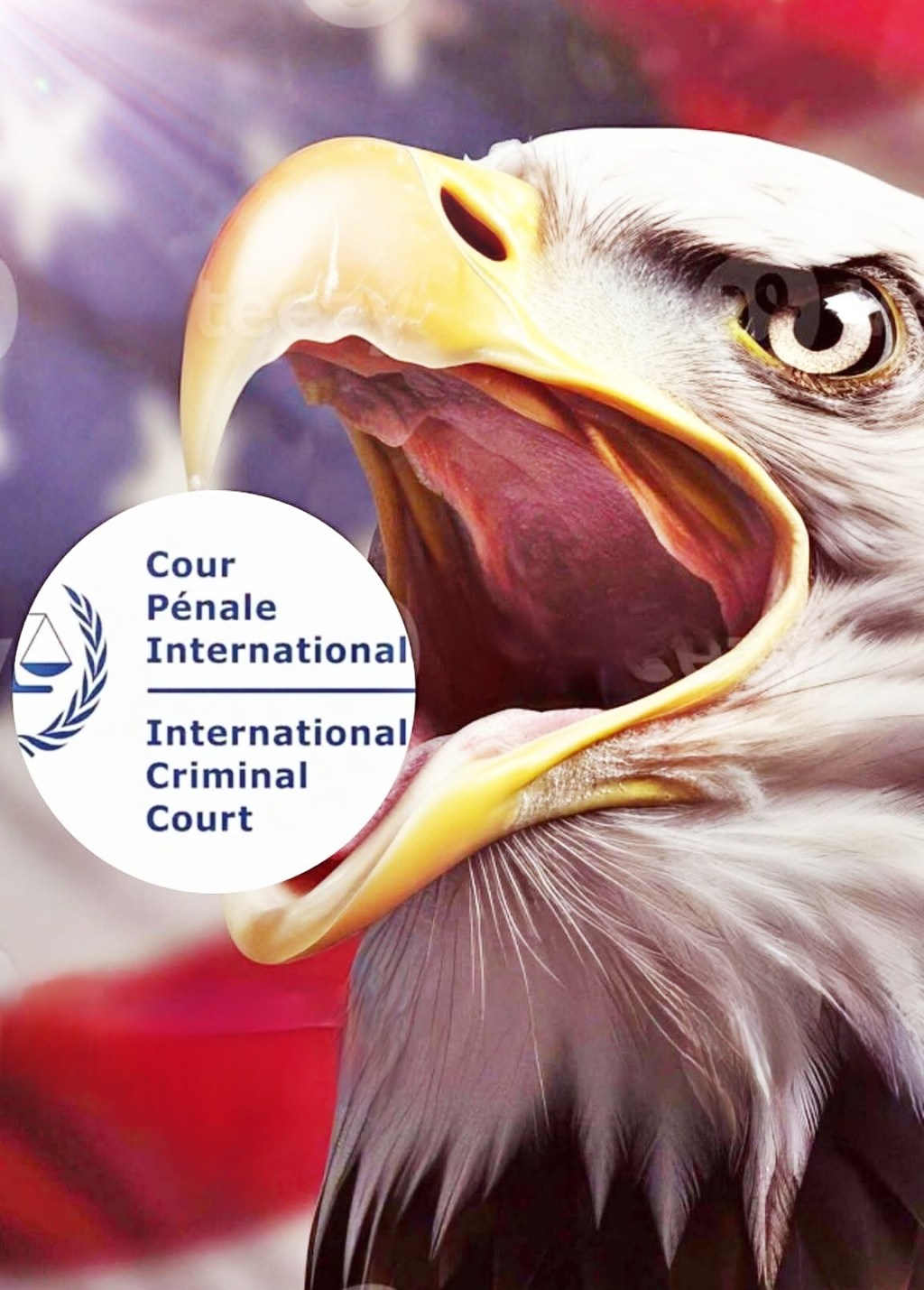
By attacking the ICC, the United States is undermining the international legal order that it has historically used to legitimise its own interventions
The International Criminal Court, established by the Rome Statute in 1998 and operational since 2002, represents the most ambitious effort in history to create a permanent international tribunal capable of prosecuting genocide, crimes against humanity, war crimes, and the crime of aggression (1-2). The Court’s jurisdiction operates on two distinct bases: nationality jurisdiction, which extends to nationals of states parties to the Rome Statute, and territorial jurisdiction, which applies to crimes committed on the territory of states parties, regardless of the perpetrator’s nationality. This territorial principle, codified in Article 12 of the Rome Statute, is not a novel or controversial innovation in international law. It reflects one of the oldest expressions of state sovereignty: any state has the authority to prosecute crimes committed within its borders, and a state may confer that jurisdiction upon an international court (3). As the analysis in the transcript observes, if an American citizen murders someone on the streets of London, this is not an affront to American sovereignty if the British government prosecutes that individual. The delegation of that territorial jurisdiction to the ICC is no different in legal principle.
The United States has been a persistent opponent of the ICC since its inception. In 1998, at the Rome diplomatic conference, the US government objected to the territorial jurisdiction provision and lost overwhelmingly by a vote of 120 to 7 (4-5). The US subsequently voted against the adoption of the Rome Statute and has never ratified it, with successive administrations arguing that the Court should not have jurisdiction over American nationals (7). However, this opposition has never been absolute. When the ICC issued arrest warrants for Vladimir Putin and other Russian officials in March 2023 for crimes committed in Ukraine, the Biden administration enthusiastically supported the Court’s work. Senator Lindsey Graham, a Republican foreign policy leader, pushed through the Senate a unanimous resolution supporting the ICC’s investigation into Russian atrocities. The US even shared evidence of Russian war crimes with the Court (13). Ukraine, though not a state party to the Rome Statute, had lodged two Article 12(3) declarations accepting the Court’s jurisdiction over crimes committed on its territory since 2013 (18). The ICC’s jurisdiction over Putin therefore rested on the same territorial principle that the United States now denounces.
The contradiction became impossible to ignore when the ICC issued arrest warrants for Israeli Prime Minister Benjamin Netanyahu and former Defence Minister Yoav Gallant on 21 November 2024 (14-15). Palestine, which has been a state party to the Rome Statute since 2015, granted the ICC jurisdiction over crimes committed on its territory (17). The Pre-Trial Chamber I of the ICC rejected Israel’s challenges to the Court’s jurisdiction, ruling that the Court’s territorial jurisdiction extends to the territories occupied by Israel since 1967. The ICC’s jurisdiction over Israeli officials, like its jurisdiction over Russian officials, rests on the territorial principle. Yet the American response could not have been more different. The Trump administration launched a sweeping campaign to “systematically disable” the ICC, with Rubio accusing the Court of “waging a war against our country” through international law (21). The administration threatened sanctions against ICC officials, travel bans, visa revocations, and diplomatic pressure on other nations to withdraw from the Court (22). States receiving American assistance have been warned that continued recognition of the Court may attract increased scrutiny (12).
This selective enforcement of international law reveals the true doctrine behind the American campaign: the ICC may pursue Washington’s adversaries, but its allies must remain beyond examination (25). As the analysis in the transcript notes, Rubio’s central legal claim, that the ICC cannot exercise jurisdiction over Americans because the United States never ratified the Rome Statute, sounds persuasive until one reads the Statute (12). The Statute places no general obligation on Washington to finance the Court, arrest suspects, or assist its investigations (12). It cannot invalidate an Act of Congress or command the Pentagon (12). It may, however, exercise jurisdiction over crimes committed on the territory of a state that has accepted its authority (12). If non-party nationality defeated the Court’s jurisdiction, the legal foundation for pursuing Russian officials would collapse as well (12). Article 12 contains no rule for American friends and another for American enemies.
The legal arguments deployed by the Trump administration are not merely inconsistent; they are a demand for impunity. Rubio asks Americans to imagine soldiers being imprisoned for the “crime” of defending their country (22). This is political theatre. Defending a country is not an offence under the Rome Statute. Neither is serving in the military, enforcing immigration law, or holding public office (12). The Court has jurisdiction over genocide, crimes against humanity, war crimes, and aggression (1-2). The American campaign against the ICC is not a defence of sovereignty; it is a defence of the prerogative to commit war crimes anywhere in the world with impunity. The United States is attempting to compel 125 sovereign states to abandon a treaty they freely ratified (12). American consent is treated as sacred; the consent of other nations is treated as disposable (12).
The material interests underlying this position are not difficult to identify. The United States maintains the largest military apparatus in human history, with hundreds of bases spanning the globe and forces engaged in operations across multiple continents. The prospect of international accountability for American military personnel, particularly for operations in Afghanistan, where the ICC opened an investigation into alleged torture by US forces, represents a threat to the unfettered exercise of American power (9-11). Reuters reported that the Trump administration backed sanctions against ICC officials in part to “head off any future attempts to hold the Republican president or his officials accountable for U.S. military action overseas” (22). The war on Iran, the support for Israel’s operations in Gaza, and the ongoing global network of US military operations all generate potential liability under international criminal law. The ICC is not a threat to American sovereignty; it is a threat to American impunity.
From a historical materialist perspective, the American campaign against the ICC reflects the structural logic of imperialism in its declining phase. The international legal order, including the ICC, represents a limited concession to the principle that even the powerful should be subject to law. Yet the enforcement of this principle has always been selective, shaped by the material interests of the dominant powers. The United States, as the preeminent imperial power, has consistently sought to exempt itself from the constraints that it imposes on others. This is not a matter of hypocrisy or inconsistency; it is the predictable behaviour of a ruling class that recognises no authority superior to its own interests.
The ICC’s jurisdiction over Russian officials was acceptable to Washington because it served a strategic objective: isolating and delegitimising Russia. The Court’s jurisdiction over Israeli officials became intolerable because Israel is a key ally and a projection of American power in the Middle East. The material interests at stake are not abstract principles of justice but the preservation of American military and economic hegemony. The American ruling class, the military-industrial complex, the financial oligarchy, and the transnational corporations that benefit from the global projection of American power, has no interest in accountability for its own actions. Its interest lies in maintaining the capacity to wage war, conduct surveillance, and project force without legal constraint.
The ICC’s investigation into Afghanistan, which covered alleged crimes by US forces, was particularly threatening because it directly implicated American military personnel in torture and other serious violations. The Trump administration’s campaign against the ICC must be understood in this context: not as a principled defence of sovereignty but as a defensive action by a ruling class that faces growing scrutiny for its actions (9-11). The class character of international law is revealed in its selective enforcement: the powerful are rarely held accountable, while the weak are subject to the full rigour of legal sanctions.
The demand for impunity is not merely a legal position; it is a class position. The American ruling class demands the right to act without restraint, to wage war, to torture, to assassinate, and to occupy, while denying that right to its adversaries. This is the logic of empire: the rules apply to others, not to us. The campaign against the ICC is a campaign to preserve this logic, to ensure that the American empire remains above the law. The contradiction is that this campaign undermines the very international legal order that the United States has historically used to discipline its rivals. By attacking the ICC, Washington is weakening the institutions that it has relied upon to legitimise its own interventions. This is the self-defeating logic of a declining hegemon: in its desperation to preserve its power, it destroys the instruments of its own legitimacy.
The fundamental contradiction in American policy toward the International Criminal Court is now impossible to ignore. The United States has never been consistent in its opposition to the Court; it supports the ICC when it targets adversaries and attacks it when it targets allies. The legal principle at stake, territorial jurisdiction, is one of the oldest and most widely accepted principles of criminal law, yet the Trump administration treats it as a threat to American sovereignty when applied to Americans or their allies. The campaign to dismantle the ICC, announced by Secretary Rubio in July 2026, is not a defence of sovereignty but a demand for impunity, an attempt to ensure that the United States and its allies remain beyond the reach of international law.
The material interests driving this campaign are clear: the American ruling class, which benefits from the global projection of military power, seeks to exempt itself from the constraints that it imposes on others. The ICC’s investigations into Afghanistan, the war on Iran, and the support for Israel’s operations in Gaza all threaten to hold American officials and their allies accountable for violations of international law. The campaign against the ICC is therefore a defensive action by a ruling class that faces growing scrutiny for its actions, a desperate attempt to preserve the capacity to wage war without legal constraint.
The implications of this campaign are profound. By attacking the ICC, the United States is undermining the international legal order that it has historically used to legitimise its own interventions. This is the logic of a declining hegemon; in its desperation to preserve its power, it destroys the instruments of its own legitimacy. The working class and the peoples of the world have no interest in this campaign; their interest lies in building a world in which the powerful are held accountable for their actions, and in which international law serves the cause of justice rather than the interests of empire. The struggle against American impunity is not a struggle for abstract legal principles; it is a struggle for the liberation of humanity from the dictatorship of capital.
Authored By: Global GeoPolitics
If you prefer to make a one time donation in support of my work, you can do so by clicking any link below:
https://donate.stripe.com/7sY8wPfvi864don0k3awo07 |
https://buymeacoffee.com/ggtv |
https://ko-fi.com/globalgeopolitics |
Bitcoin: 3NiK8BoRZnkwJSHZSekuXKFizGPopkE7ns
References
ICC Official. “Rome Statute of the International Criminal Court, Article 12 – Preconditions to the Exercise of Jurisdiction.” Available at: https://www.icc-cpi.int [Accessed 22 August 2026].
ICC Official. “Article 12(2)(a) of the Rome Statute – Jurisdiction Based on the Principle of Territoriality.” Available at: https://www.icc-cpi.int [Accessed 22 August 2026].
Oxford Public International Law. “Jurisdictional Links: International Criminal Court (ICC).” Available at: https://opil.ouplaw.com [Accessed 22 August 2026].
CNN. 1998. “International war-crimes court approved.” 17 July. Available at: https://us.cnn.com [Accessed 22 August 2026].
American Journal of International Law. 2017. “The United States and the Statute of Rome.” Cambridge Core. Available at: https://www.cambridge.org [Accessed 22 August 2026].
Sun-Sentinel. 1998. “A Turn in the Road of History.” 21 July. Available at: https://www.sun-sentinel.com [Accessed 22 August 2026].
US Department of Justice. 2026. “Justice Department Rejects International Criminal Court Jurisdiction Over U.S. Persons.” 2 July. Available at: https://www.justice.gov [Accessed 22 August 2026].
US Congress. 2002. “American Servicemembers’ Protection Act of 2002 (ASPA).” Public Law 107-206. Available at: https://www.congress.gov [Accessed 22 August 2026].
Center for Constitutional Rights. 2020. “International Criminal Court Authorizes Investigation into U.S. Torture Program.” Available at: https://ccrjustice.org [Accessed 22 August 2026].
The Guardian. 2018. “The ICC must hold the US accountable for crimes in Afghanistan.” 16 February. Available at: https://www.theguardian.com [Accessed 22 August 2026].
Arab News. 2020. “International court approves Afghanistan war crimes investigation.” 5 March. Available at: https://www.arabnews.com [Accessed 22 August 2026].
TheCable. 2026. “In defence of the ICC: Rubio’s sovereignty argument is a demand for impunity.” 15 July. Available at: https://www.thecable.ng [Accessed 22 August 2026].
BBC. 2023. “Putin arrest warrant: ICC accuses Russian leader of war crimes.” 17 March. Available at: https://www.bbc.com [Accessed 22 August 2026].
ICC Official. 2024. “ICC judges issue arrest warrants in the context of the Situation in the State of Palestine.” 21 November. Available at: https://www.icc-cpi.int [Accessed 22 August 2026].
SIDI Blog. 2026. “The ICC Arrest Warrants in the Situation in the State of Palestine: Some Reflections on the Chamber’s Decisions.” 11 June. Available at: https://www.sidiblog.org [Accessed 22 August 2026].
TASS. 2024. “ICC issues arrest warrants for Netanyahu, Gallant for alleged crimes in Gaza Strip.” 21 November. Available at: https://tass.com [Accessed 22 August 2026].
ICC Official. 2015. “ICC welcomes Palestine as a new State Party.” 1 April. Available at: https://www.icc-cpi.int [Accessed 22 August 2026].
ICC Official. 2014. “Ukraine accepts ICC jurisdiction over alleged crimes committed between 21 November 2013 and 22 February 2014.” 17 April. Available at: https://www.icc-cpi.int [Accessed 22 August 2026].
Trump White House Archives. 2020. “Statement from the Press Secretary.” 11 June. Available at: https://trumpwhitehouse.archives.gov [Accessed 22 August 2026].
BBC. 2020. “Afghan conflict: US sanctions ‘kangaroo’ ICC over war crimes probe.” 11 June. Available at: https://www.bbc.co.uk [Accessed 22 August 2026].
US Department of State. 2026. “State Department Launches Campaign to Dismantle International Criminal Court’s Threat to American Sovereignty.” 13 July. Available at: https://www.state.gov [Accessed 22 August 2026].
Reuters. 2026. “Trump administration launches effort to isolate International Criminal Court.” 13 July. Available at: https://www.reuters.com [Accessed 22 August 2026].
Anadolu Agency. 2025. “US sanctions 2 International Criminal Court judges over rejecting Israel’s appeal of war crimes arrest warrants.” 18 December. Available at: https://www.aa.com.tr [Accessed 22 August 2026].
US Congress. 2025. “H.Res.9 – Reaffirming that the United States is not a party to the Rome Statute and does not recognize the jurisdiction of the International Criminal Court.” 119th Congress (2025-2026), 3 January. Available at: https://www.congress.gov [Accessed 22 August 2026].
US Senate Judiciary Committee. 2023. “Durbin, Graham Statement Following Biden Administration’s Decision to Support the ICC’s Investigation into Atrocities in Ukraine.” 26 July. Available at: https://www.judiciary.senate.gov [Accessed 22 August 2026].


Leave a comment