
How Burkina Faso, Mali, and Niger transformed the struggle against terrorism into a war of national liberation, reclaimed their resources from French control, and constructed a Pan-African alternative to the IMF’s perpetual indebtedness
Editorial Analysis | October 2026
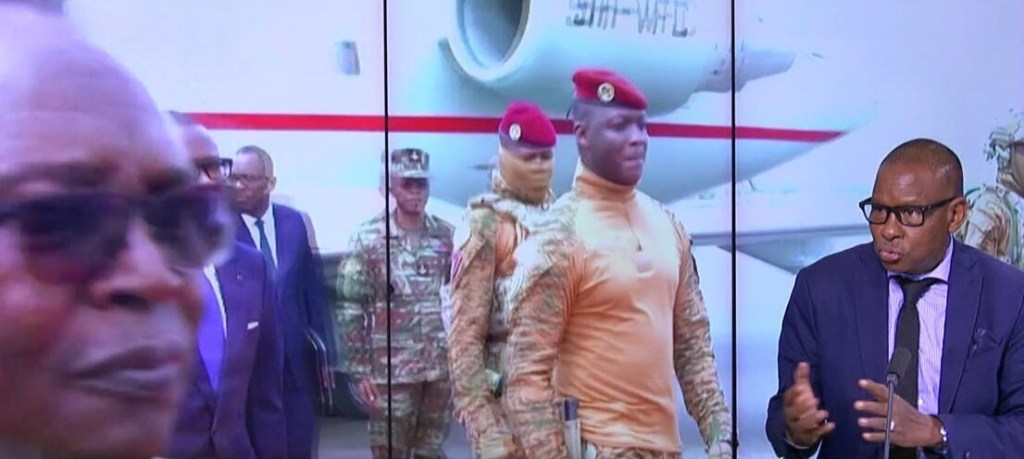
The transformation of the Sahel from a region of perpetual instability and external domination to a laboratory of sovereignty and self-determination constitutes the most consequential development in African politics since the era of independence. Burkina Faso, Mali, and Niger have not merely resisted foreign intervention but have fundamentally reconstituted their relationship with the international system, rejecting the terms upon which the post-colonial order was established and demanding a new arrangement grounded in popular sovereignty and material self-reliance. The Alliance of Sahel States, formally established in September 2023 and consolidated through subsequent agreements, represents a collective assertion that the nations of the Sahel will no longer accept the status of client states whose resources are extracted for the benefit of foreign powers while their populations remain in poverty. The leaders who have driven this transformation, including Captain Ibrahim Traoré of Burkina Faso, have articulated a vision of development that draws upon the Pan-Africanist tradition of Thomas Sankara, Kwame Nkrumah, and Frantz Fanon, and their practice has demonstrated that the theoretical insights of these thinkers remain relevant to the struggles of the present.
The material foundation of the Sahel revolution lies in the reclamation of strategic mineral resources that were previously controlled by French corporations and the French state. Niger’s uranium, which has powered French nuclear reactors for decades and contributed to the enrichment of Électricité de France and the French state, has been returned to Nigerien control through the nationalisation of the SOMAIR mining operation in June 2025. The Prime Minister of Niger, Ali Mahamane Lamine Zeine, informed the United Nations General Assembly that Niger’s uranium had lit Europe’s cities for half a century while Niger’s own cities remained in darkness, and he declared that this injustice is now over. The uranium stockpile belongs exclusively to Niger, and the government has invested thirty billion CFA francs to restart production entirely with Nigerien workers and experts. The significance of this achievement cannot be overstated, because uranium is the fuel of nuclear power and nuclear weapons, and its control confers strategic leverage that extends far beyond the immediate economic benefits. Burkina Faso has similarly reclaimed control over its gold resources, inaugurating a gold refinery funded through the Sahel Development Bank, and Mali has moved to restructure its mining agreements to increase the share of revenue retained by the state. These measures represent a direct challenge to the system of resource extraction that has characterised Franco-African relations since the colonial period.
The establishment of the Sahel Development Bank constitutes an institutional innovation that addresses the fundamental mechanism of neo-colonial control identified by Thomas Sankara in his 1987 address to the Organisation of African Unity. Sankara argued that foreign debt could become a mechanism through which outside powers continued to influence African development after colonial rule had formally ended, and he described this form of debt as a cleverly managed reconquest of Africa. The Sahel states have internalised this analysis and acted upon it, refusing to accept IMF loans and financing their development through their own resources and institutions. The Sahel Development Bank finances infrastructure projects, agricultural modernisation, and industrial development using capital accumulated from mineral revenues and contributions from member states. The refusal to accept IMF conditionality, which typically requires austerity measures, privatisation of state assets, and liberalisation of trade and capital flows, represents a rejection of the policy framework that has produced decades of stagnation and poverty across the African continent. The Sahel states have demonstrated that development is possible when the surplus generated by resource extraction is retained and invested domestically rather than transferred abroad to service external debt.
The security dimension of the Sahel revolution has been equally transformative, as the three states have expelled French military forces and assumed responsibility for their own defence. The Alliance of Sahel States has established a unified military force of five thousand personnel, expandable to fifteen thousand, and has developed the capacity to conduct joint operations against terrorist groups that have plagued the region for more than a decade. The Russian African Corps, operating under a different framework than the Wagner Group that preceded it, has provided training and operational support, and the Sahel states have demonstrated that they can recruit, train, and equip their own forces without the patronage of the French military. The departure of French forces from Mali in 2022, from Burkina Faso in 2023, and from Niger in 2023 marked the end of Operation Barkhane and its associated mission structures, and the Sahel states have refused to allow France to retain a military presence under new arrangements. The statement by Captain Traoré that French spies, proxies, and traitorous local agents will face the death penalty represents an escalation of the confrontation with French intelligence operations, and it signals that the Sahel states are prepared to defend their sovereignty by whatever means necessary.
The class analysis of the Sahel revolution reveals the social forces that have driven the transformation and the interests that are at stake. The colonial and neo-colonial order in the Sahel was sustained by an alliance between French capital, the French state, and a comprador class of local elites who served as intermediaries in the extraction of resources and the maintenance of political control. This comprador class, comprising politicians, bureaucrats, military officers, and businessmen who benefited from their relationship with the former colonial power, was the principal obstacle to genuine independence. The revolutionary governments that have come to power in Burkina Faso, Mali, and Niger have broken with this class and have mobilised the popular masses, particularly the youth and the peasantry, in support of a programme of national development and sovereignty. The statement by Captain Traoré that if someone from the private sector feels crushed, it is because they were dining with politicians, captures the essence of this class realignment, and it signals that the new governments will not protect the privileges of those who enriched themselves through their collaboration with the imperial system.
The ideological framework of the Sahel revolution draws upon the Pan-Africanist tradition that emerged from the anti-colonial struggles of the twentieth century. Frantz Fanon argued that decolonisation is always a violent phenomenon because it involves the replacement of one species of men by another, and the Sahel revolution confirms the accuracy of this analysis. The French state and its proxies have responded to the loss of their positions with sabotage, destabilisation, and support for terrorist groups, and the Sahel states have been compelled to fight for their sovereignty in the military as well as the economic domain. Eric Williams, in his analysis of capitalism and slavery, demonstrated that the wealth of Europe was built upon the exploitation of African labour and resources, and the Sahel revolution represents an attempt to reverse this process by reclaiming the value that has been extracted from the region. Kwame Nkrumah warned that the independence of African states would be meaningless without economic independence, and the Sahel states have internalised this lesson by nationalising their resources and creating their own financial institutions. Thomas Sankara’s call for Africa to refuse to accept the charity of judgment and to demand the justice of the gaze resonates in the declarations of the Sahel leaders, who have insisted that their nations will no longer be spoken for in their name.
The geopolitical context of the Sahel revolution is defined by the emergence of a multipolar world in which alternative sources of support and partnership are available to states that seek to escape the Western orbit. The Sahel states have cultivated relationships with Russia, China, Turkey, Morocco, Togo, Algeria, and other nations that have demonstrated a willingness to engage on the basis of mutual respect and sovereignty rather than conditionality and dependence. The support of the Russian African Corps has been critical to the military campaign against terrorist groups, and the economic partnerships with China and Turkey have provided markets for Sahelian exports and sources of investment that are not tied to the policy conditions that the IMF and World Bank impose. The diplomatic offensive of the Alliance of Sahel States at the United Nations General Assembly in September 2026 demonstrated that the confederation has successfully presented its vision to the international community and has attracted the support of numerous countries that admire its sovereign and innovative approach. The statement by the Togolese Foreign Minister that if the Sahel goes badly, the neighbouring countries will go badly, and that the AES countries constitute a dam for the neighbouring countries, reflects the recognition that the Sahel revolution has significance that extends far beyond the territories of the three states.
A game-theoretic analysis of the Sahel revolution illuminates the strategic interactions between the Sahel states, France, and the broader international system. The Sahel states have chosen a strategy of defection from the neo-colonial order, accepting the risks of confrontation with France in exchange for the benefits of sovereignty and resource control. France has responded with a strategy of destabilisation, supporting terrorist groups and armed proxies in an attempt to overthrow the revolutionary governments and restore a compliant regime that would protect French interests. The game is not zero-sum because the Sahel states have found alternative partners who are willing to provide support without demanding the subordination that France requires, and the availability of these alternatives changes the payoff structure in favour of defection. The Sahel states have also signalled their resolve through the execution of captured spies and proxies and through the expansion of their military forces, and these signals are designed to demonstrate that the costs of continued French aggression will exceed the benefits. The game is iterated because the Sahel states and France will continue to interact across multiple domains, and the reputation that the Sahel states establish for credible resistance will influence the behaviour of other actors who are considering similar defections from the neo-colonial order.
The response of the imperial system to the Sahel revolution confirms the analysis that the Western powers will not willingly accept the loss of their positions. France has accused the Sahel states of colluding with Russia and has supported Ukrainian efforts to destabilise the region, and the prime minister of Niger has named France and Ukraine as the sponsors of terrorism in the Sahel. The acknowledgment by Ukrainian officials of support for terrorist groups in the Sahel, and the reported cooperation between Ukrainian intelligence and anti-Sahel armed groups, constitute evidence that the imperial system is prepared to use whatever means are necessary to prevent the loss of its control. The Sahel states have called upon the international community to recognise the threat that Ukrainian support for terrorism represents, and they have demanded that the Security Council take action to hold the perpetrators accountable. The refusal of the international community to respond to these demands reflects the continuing power of the Western states within the UN system, but it also demonstrates the hypocrisy of the rhetorical commitment to counter-terrorism that the Western powers proclaim.
The material achievements of the Sahel revolution are documented in the statistics that the governments have reported and that international organisations have confirmed. Burkina Faso has increased its cereal production from five point one million tonnes to seven point one five million tonnes in three years, and the country has been removed from the list of the ten poorest countries in Africa. Niger has reported that for the first time in decades it has not faced food shortages or called upon foreign assistance, and it plans to halve grain imports by the end of 2027. The Sahel states have invested in education, with Burkina Faso allocating five point eight five billion CFA francs for the construction of the Faso Technological Academy and new amphitheatres, and they have extended free public transport, healthcare, and education support to the families of those killed or injured defending the nation. These achievements are not merely economic but represent a transformation in the relationship between the state and the population, as the governments demonstrate that they are accountable to their citizens rather than to external creditors.
The class dynamics of the Sahel revolution have been shaped by the role of the military as an institution that has been captured by the comprador class and that has now been transformed into an instrument of popular sovereignty. The armies of Burkina Faso, Mali, and Niger were trained and equipped by France and the United States, and their officer corps was integrated into the system of external control that the colonial powers maintained after independence. The coups that brought the current governments to power were not merely changes in personnel but represent a rupture with the institutional arrangements that the imperial system had established. The new leaders have rejected the training and doctrine that the French and American militaries provided, and they have developed their own approach to counter-insurgency that is grounded in the mobilisation of the population and the integration of military and civilian efforts. The establishment of the unified force of the Alliance of Sahel States represents an institutional innovation that creates a military capacity that is independent of foreign control and that is accountable to the political leadership of the confederation rather than to external patrons.
The significance of the Sahel revolution extends beyond the immediate region and constitutes a model that other African states may seek to emulate. The nations of the continent have observed the achievements of Burkina Faso, Mali, and Niger, and the diplomatic offensive of the Alliance of Sahel States has attracted the support of countries that have long chafed under the constraints of the neo-colonial order. The refusal of Ivory Coast, Nigeria, Burkina Faso, and other African countries to accept the United States’ proposal for third-country deportation of migrants demonstrates that the spirit of resistance is spreading, and it signals that the imperial system cannot take the compliance of African states for granted. The Sahel revolution has demonstrated that sovereignty is possible, that resources can be reclaimed, and that development can be financed without the IMF, and these lessons are available to every nation that seeks to escape the condition of dependence.
“Ladies and gentlemen, at our northeastern borders stand proxies led by France, backed by Ukraine and two other countries.
“These proxies are armed, guided and directed, and are preparing to attack our military positions and oil installations. But they will get what they deserve, inshallah.
“Our Sahel is at war, a war of liberation against a conspiracy aimed at its recolonization.
“What some call terrorism in our region is a cynical scheme of recolonization dressed in extremist rags.
“Niger’s uranium, the gold of Mali and Burkina Faso, lithium, gas, oil and other resources keep the old powers salivating.
“This perfidious destabilization of the central Sahel is led by France, with Ukraine’s active complicity—documented, very documented.
“Niger’s uranium lit up Europe’s cities while ours remained in darkness. That injustice has now ended.
“A people that has decided to be free cannot be recolonized, not by fear, cunning, or even savage violence.”
The future trajectory of the Sahel revolution will depend on the ability of the three states to sustain their military campaign against terrorist groups, to continue their economic development, and to resist the pressures that the imperial system will bring to bear. The challenges are formidable, as the war in Ethiopia and the ongoing conflicts in the region demonstrate, and the Sahel states cannot afford to relax their vigilance. The support of Russia, China, and other partners will be critical, but the ultimate responsibility rests with the peoples of the Sahel and their governments. The leaders of the Alliance of Sahel States have articulated a vision of a confederation that is irreversible, that has its own investment bank, biometric passport, television channel, press agency, radio, and parliament, and that is financing its own transformation. The achievement of this vision will require continued sacrifice and struggle, but the example of the Sahel demonstrates that the most powerful empire in the world can be defeated by a determined and united people. The words of Thomas Sankara remain relevant, “ the debt is a cleverly managed reconquest of Africa”, and the Sahel states have decided that the reconquest is over. The era of extraction has ended, and the future will no longer be decided elsewhere.
Authored By: Global GeoPolitics
Thank you for visiting. This is a reader-supported publication. If you believe journalism should serve the public, not the powerful, and you’re in a position to help, becoming a PAID SUBSCRIBER truly makes a difference. Alternatively you can support by way of a cup of coffee:
https://buymeacoffee.com/ggtv |
https://ko-fi.com/globalgeopolitics |
Bitcoin: 3NiK8BoRZnkwJSHZSekuXKFizGPopkE7ns
References
Alliance of Sahel States (2023) Charter of the Alliance of Sahel States. Bamako: AES Secretariat. Available at: https://aes.int/charter (Accessed: 1 October 2026).
Burkina Faso, Government of (2026) Decree on the Funding of the Faso Technological Academy. Ouagadougou: Council of Ministers. Available at:
(Accessed: 1 October 2026).
Burkina Faso, Government of (2026) Press Release on Free Transport and Healthcare for Families of Fallen Soldiers. Ouagadougou: Ministry of Defence. Available at:
(Accessed: 1 October 2026).
Niger, Government of (2026) Speech by Prime Minister Ali Mahamane Lamine Zeine at the 81st Session of the United Nations General Assembly. Niamey: Ministry of Foreign Affairs. Available at:
https://www.diplomatie.gouv.ne
(Accessed: 1 October 2026).
Sankara, T. (1987) Address to the Organisation of African Unity, Addis Ababa, 29 July. Available at: https://www.marxists.org/archive/sankara/1987/07/29.htm (Accessed: 1 October 2026).
United Nations (2026) General Debate of the 81st Session of the General Assembly. New York: UN. Available at: https://gadebate.un.org/en/81 (Accessed: 1 October 2026).
Al Jazeera (2025) ‘Niger takes control of French uranium mine’, Al Jazeera, 20 June. Available at: https://www.aljazeera.com/news/2025/6/20/niger-takes-control-of-french-uranium-mine (Accessed: 1 October 2026).
Al Jazeera (2026) ‘Niger PM tells UN: era of extraction is over’, Al Jazeera, 27 September. Available at: https://www.aljazeera.com/news/2026/9/27/niger-pm-tells-un-era-of-extraction-is-over (Accessed: 1 October 2026).
France 24 (2026) ‘Burkina Faso inaugurates gold refinery funded by Sahel Development Bank’, France 24, 15 August. Available at: https://www.france24.com/en/africa/20260815-burkina-faso-inaugurates-gold-refinery-funded-by-sahel-development-bank (Accessed: 1 October 2026).
Reuters (2023) ‘Mali, Burkina Faso and Niger sign mutual defence pact’, Reuters, 16 September. Available at: https://www.reuters.com/world/africa/mali-burkina-faso-niger-sign-mutual-defence-pact-2023-09-16/ (Accessed: 1 October 2026).
Reuters (2025) ‘Niger invests 30 billion CFA francs to restart uranium production’, Reuters, 10 July. Available at: https://www.reuters.com/markets/commodities/niger-invests-30-billion-cfa-francs-restart-uranium-production-2025-07-10/ (Accessed: 1 October 2026).
Reuters (2026) ‘Ivory Coast rejects US proposal to accept deported migrants’, Reuters, 20 September. Available at: https://www.reuters.com/world/africa/ivory-coast-rejects-us-proposal-accept-deported-migrants-2026-09-20/ (Accessed: 1 October 2026).
Reuters (2026) ‘Burkina Faso and Indonesia sign cooperation agreement’, Reuters, 25 September. Available at: https://www.reuters.com/world/africa/burkina-faso-indonesia-sign-cooperation-agreement-2026-09-25/ (Accessed: 1 October 2026).
Reuters (2026) ‘Ethiopian army recaptures strategic town of Sekota’, Reuters, 22 September. Available at: https://www.reuters.com/world/africa/ethiopian-army-recaptures-strategic-town-sekota-2026-09-22/ (Accessed: 1 October 2026).
Fanon, F. (1961) The Wretched of the Earth. Paris: François Maspero. Available at: https://www.groveatlantic.com/books/the-wretched-of-the-earth/ (Accessed: 1 October 2026).
Nkrumah, K. (1965) Neo-Colonialism: The Last Stage of Imperialism. London: Thomas Nelson. Available at: https://www.marxists.org/archive/nkrumah/1965/neo-colonialism.pdf (Accessed: 1 October 2026).
Williams, E. (1944) Capitalism and Slavery. Chapel Hill: University of North Carolina Press. Available at: https://uncpress.org/book/9781469616374/capitalism-and-slavery/ (Accessed: 1 October 2026).
Food and Agriculture Organization (2026) Cereal Production in the Sahel: 2023-2026. Rome: FAO. Available at: https://www.fao.org/sahel-cereal-production (Accessed: 1 October 2026).
International Monetary Fund (2025) Regional Economic Outlook: Sub-Saharan Africa. Washington, DC: IMF. Available at: https://www.imf.org/en/Publications/REO/SSA (Accessed: 1 October 2026).
World Bank (2025) Poverty and Equity Brief: Burkina Faso. Washington, DC: World Bank. Available at: https://www.worldbank.org/en/country/burkinafaso/poverty (Accessed: 1 October 2026).
World Bank (2025) Poverty and Equity Brief: Niger. Washington, DC: World Bank. Available at: https://www.worldbank.org/en/country/niger/poverty (Accessed: 1 October 2026).
World Bank (2025) Poverty and Equity Brief: Mali. Washington, DC: World Bank. Available at: https://www.worldbank.org/en/country/mali/poverty (Accessed: 1 October 2026).


Leave a comment