
The drive to monopolise global energy, deny rivals access, and reinforce the dominance of the U.S.-led core is accelerating geopolitical realignment reshaping of global power.
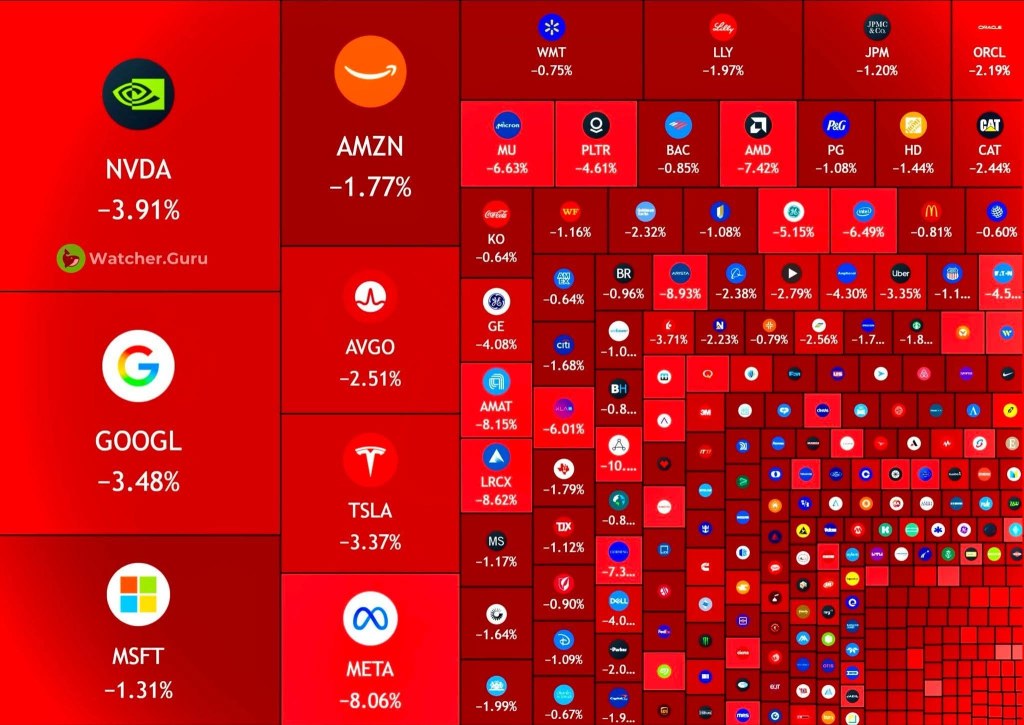
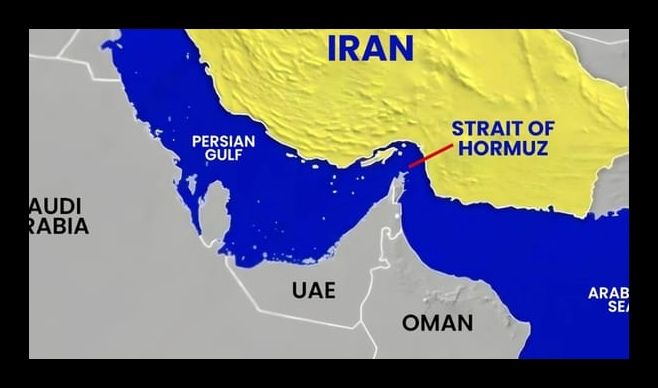
The war centred on Iran has entered an economic phase that now drives outcomes more decisively than battlefield engagements. The featured image is March 26, 2026, when the stock market lost USD$1 trillion dollar, a bloodbath with no precedence in modern history. Restrictions imposed on the Strait of Hormuz have disrupted a maritime corridor responsible for roughly one fifth of global oil flows, with far greater dependence concentrated in Europe and Asia . The closure did not require sustained naval confrontation. A credible threat environment proved sufficient, as insurers withdrew coverage for tanker transit, halting movement and forcing an immediate contraction in supply. The International Energy Agency has long identified Hormuz as the most critical oil transit chokepoint in the global system. Price escalation followed without delay, transmitting through fuel, fertiliser, and all downstream logistics, consistent with established models of energy price pass-through described in work by economists such as James Hamilton.
Iran’s strategy follows a clear logic grounded in long exposure to western hegemonic pressure. A state facing overwhelming military imbalance does not choose symmetrical confrontation. Iran has faced repeated attacks and interventions over a period extending back to the overthrow of its elected government under Mohammad Mossadegh in 1953, establishing a pattern in which defensive planning centres on asymmetric response . Scholars of asymmetric warfare, including Andrew Mack, have demonstrated that weaker states shift conflict into domains where stronger powers face structural vulnerability. Economic warfare presents the available lever. The method mirrors the approach used by the United States and its allies against Russia when direct military defeat proved unattainable. Sanctions were expected to collapse the Russian economy, yet those expectations failed, and the ruble did not collapse as predicted . Analysts such as Isabella Weber and Adam Tooze have shown that state intervention and trade redirection enabled resilience. Iran has applied the same principle in reverse by targeting the energy flows that underpin Western economies.
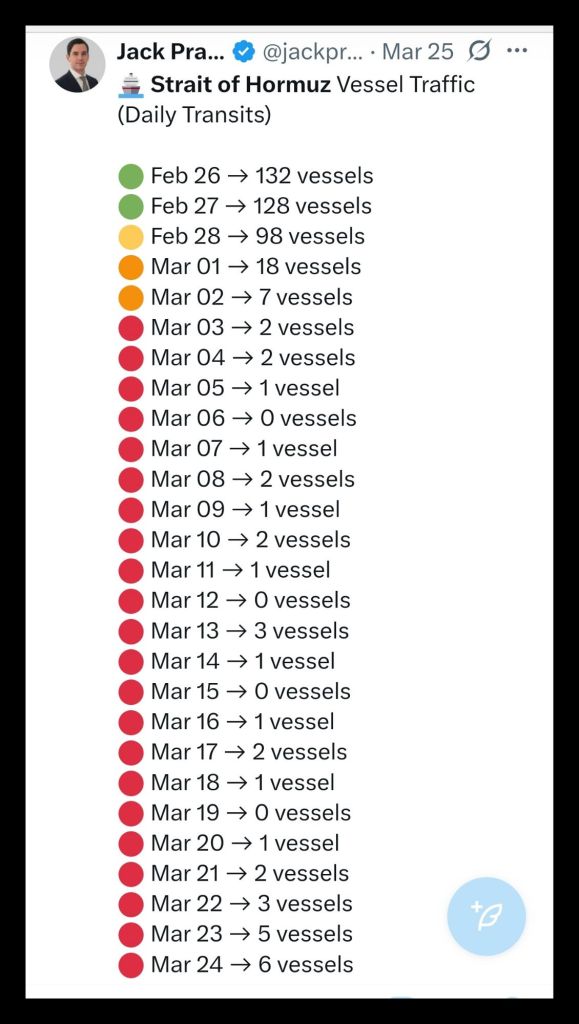
Control over the Strait of Hormuz represents the most direct instrument available. Geographic positioning allows Iran to threaten or interdict shipping with missiles and drones, creating a risk environment that insurers refuse to underwrite. Maritime doctrine has long established that sea denial can be achieved through risk imposition rather than sustained blockade. The interruption raises global oil prices and imposes immediate political pressure on governments dependent on stable energy costs. Domestic impact in the United States follows quickly, where fuel price increases translate into voter dissatisfaction in a transport-dependent economy. Political economists such as Mark Blyth have linked inflationary shocks to political instability and policy reversal. The mechanism operates without the need for prolonged combat, relying instead on systemic vulnerability.
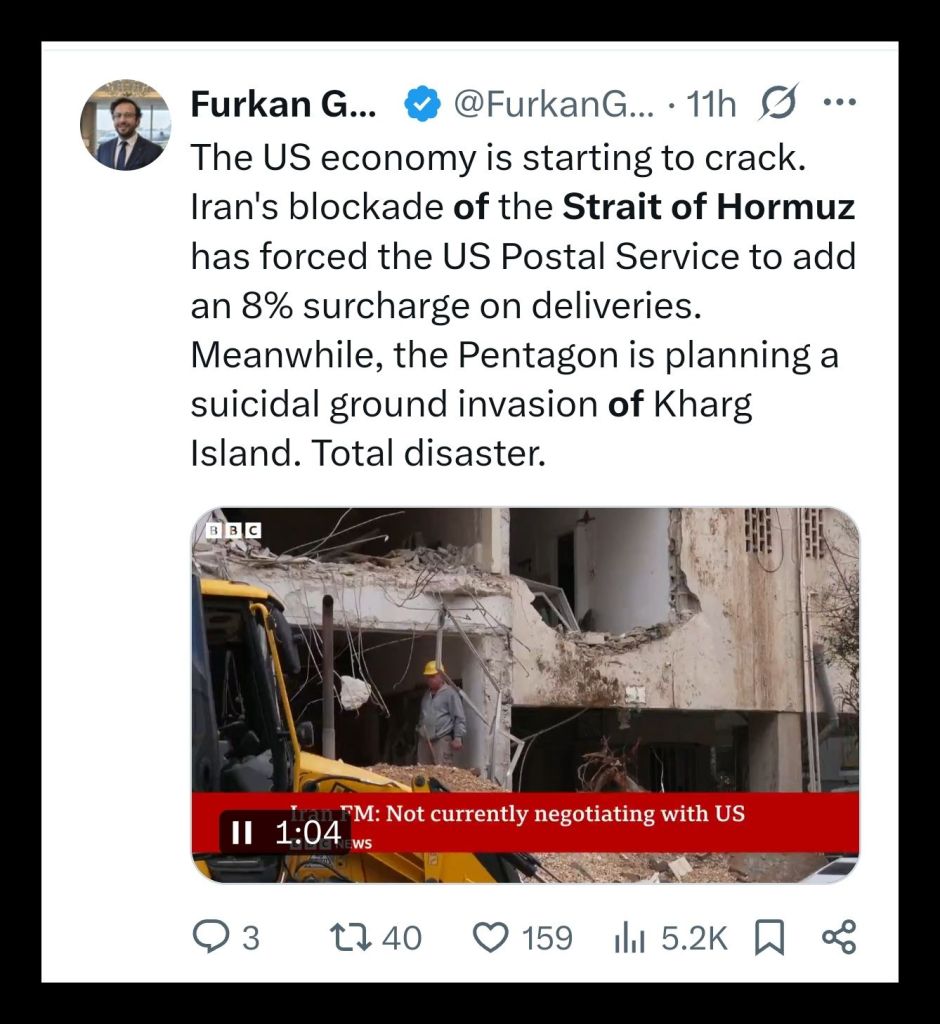
Damage to infrastructure has compounded the disruption. Strikes on major gas fields, including the South Pars complex, and retaliatory actions across the Gulf have reduced production capacity alongside transit restrictions . Major suppliers have declared force majeure, signalling a breakdown in contractual reliability. Energy analysts at the Oxford Institute for Energy Studies have shown that conflict-induced disruption creates persistent volatility due to delayed reinvestment and insurance withdrawal. Restoration of supply cannot occur immediately even if hostilities cease. Repair timelines, capital flight, and insurance recalibration ensure prolonged instability in energy markets.
The financial structure tied to energy trade has been directly affected. The arrangement between Gulf monarchies and the United States rested on a reciprocal understanding. Oil exports denominated in dollars generated large surpluses which were recycled into United States debt markets, enabling sustained deficit financing. This mechanism has been examined by economists such as Benjamin Cohen as central to dollar dominance. That system depended on security guarantees. Recent events have shown those guarantees failing in practice. Military bases intended to protect Gulf states have instead drawn retaliatory strikes, turning host countries into targets . The political basis of the arrangement has therefore been undermined. Gulf states face a position where alignment no longer ensures protection but increases exposure, a dynamic consistent with balance of threat theory developed by Stephen Walt.
Policy responses undertaken to manage the crisis have intensified contradictions. The removal of sanctions on Russian oil aimed to increase supply and reduce price pressure. The same measure increases Russian revenue at elevated market prices, directly supporting its ongoing military operations . A similar removal of restrictions on Iranian oil allows Tehran to sell at inflated prices through channels it controls, increasing its financial capacity to sustain the conflict . Nicholas Mulder’s work on economic warfare demonstrates that sanctions regimes often generate counter-adaptation rather than collapse. Measures intended to relieve domestic economic pressure have therefore strengthened both adversaries simultaneously.
The internal political condition in the United States formed the backdrop to the decision to initiate war. Economic indicators prior to escalation showed weakening labour markets, declining real wages, and persistent inflationary pressure . Public discourse had also focused on political scandal and institutional distrust, including renewed scrutiny surrounding the Epstein files and elite networks. These pressures created a deteriorating domestic environment in which political leadership faced declining legitimacy. The shift towards external conflict redirected attention away from domestic economic weakness and internal political exposure. The literature on diversionary conflict, associated with Jack Levy and Christopher Gelpi, identifies this pattern where foreign escalation coincides with domestic strain. The war therefore reflects not only strategic calculation abroad but political necessity at home.
European states face immediate economic consequences with limited capacity to respond. Earlier decisions to reduce reliance on Russian energy removed access to lower-cost supply. Replacement sources have proven more expensive and less stable. The current disruption has intensified cost pressures, accelerating industrial decline. Research from the German Economic Institute and Bruegel has documented contraction in energy-intensive sectors across Europe. Political responses reflect these constraints. German officials have refused participation in the war, stating no prior consultation occurred and that national interests do not support involvement . Belgian officials have argued for restoration of Russian energy flows as necessary for economic survival . These positions indicate a widening divide between European economic reality and United States strategic direction.
The alignment of Russia and China with Iran reflects structural considerations rather than short-term calculation. Geographic continuity allows material support to move across land routes beyond maritime control. Russia shares an extensive border with Iran, while China’s industrial capacity provides large-scale production of military and logistical equipment . Analysts at the Stockholm International Peace Research Institute have noted the growing integration of Eurasian supply networks as a counterweight to maritime dominance. Supply chains extending across Eurasia reduce the effectiveness of isolation strategies. Statements from senior Russian officials, including Sergey Lavrov, have raised the possibility that escalation could expand into a broader conflict involving multiple powers . The logistical foundation for such escalation exists within existing trade and military networks.
The broader economic impact extends through multiple sectors. Diesel price increases raise transportation costs, which feed into the price of all goods moved by road. Fertiliser costs increase alongside energy prices, affecting agricultural output and food prices. Industrial producers face rising input costs that compress margins and increase default risk. Financial institutions are exposed to these pressures through lending to affected sectors. Historical precedent from the 1973 oil shock, analysed by Daniel Yergin, demonstrates how energy disruptions propagate into stagflationary conditions across advanced economies. The current situation follows a similar transmission pattern, with additional strain introduced by financial interdependence.
Structural change in energy consumption is accelerating under these conditions. Volatility in fossil fuel markets has created a financial incentive for states to reduce dependence on imported hydrocarbons. Investment in alternative energy sources now reflects strategic necessity rather than environmental preference. The experience of heavily sanctioned states such as Cuba demonstrates how energy blockade conditions force systemic adaptation through decentralised generation, rationing, and substitution. Research from the International Renewable Energy Agency shows that energy insecurity accelerates domestic renewable deployment. Countries facing supply disruption are moving towards systems based on solar and wind resources that cannot be externally interdicted . This shift threatens long-term demand for oil and gas, introducing risk across the energy sector. Major oil producers now face the consequence of reduced future demand created by their own participation in supply disruption, a dynamic described in industry analysis as demand destruction.
A broader strategic interpretation has emerged which frames the conflict as part of an attempt by transnational economic elites to consolidate control over global energy systems. The argument holds that by disrupting competing sources of energy production and restricting the ability of rival states to export or import resources, dominant actors can concentrate control over supply. Such a strategy relies on geographic insulation, particularly the relative security provided by the United States’ position between two oceans, while proxy conflicts impose costs on rival regions. Analysts within heterodox political economy, including Michael Hudson, have argued that control over energy flows constitutes a primary instrument of imperial power. The simultaneous targeting of West Asian production, Russian exports, and efforts to influence Venezuelan output align with a pattern of restricting competitive supply.
Within this framework, the war extends beyond regional conflict into a wider confrontation involving Russia, China, Iran, and the Democratic People’s Republic of Korea. Escalation pathways exist through proxy engagement, supply chain integration, and direct military support. The concept of a third world war emerges not as a formal declaration but as an accumulation of interconnected conflicts driven by competition over resources and system control. The underlying strategy involves absorbing economic damage in the short term in order to secure long-term dominance over energy markets. The cost of this approach falls on the global economy and the working populations within Western states, who bear the burden of inflation, reduced real income, and economic contraction.
Iran: In a heated pre-war interview, Iranian professor Mohammad Marandi clashes with an Australian reporter, defending Tehran’s stance and warning Israel will “fall” while condemning what he calls athno-supremacism and racism.
The cumulative position shows a system under strain where each attempted corrective action introduces further instability. Economic warfare has exposed vulnerabilities in energy dependence, financial structures, and alliance systems. Policy responses have reinforced adversaries while weakening established mechanisms of control. The conflict has therefore moved beyond a regional war and into a wider process affecting the structure of the global economy and the balance of power within it. Analysis from institutions such as the Quincy Institute and scholars within critical political economy increasingly points to the erosion of unipolar dominance and the emergence of a contested multipolar order defined by resource competition.
Authored By: Global GeoPolitics
Thank you for visiting. This is a reader-supported publication. If you believe journalism should serve the public, not the powerful, and you’re in a position to help, becoming a PAID SUBSCRIBER truly makes a difference. Alternatively you can support by way of a cup of coffee:
https://buymeacoffee.com/ggtv |
https://ko-fi.com/globalgeopolitics |
Bitcoin: 3NiK8BoRZnkwJSHZSekuXKFizGPopkE7ns


Leave a comment