
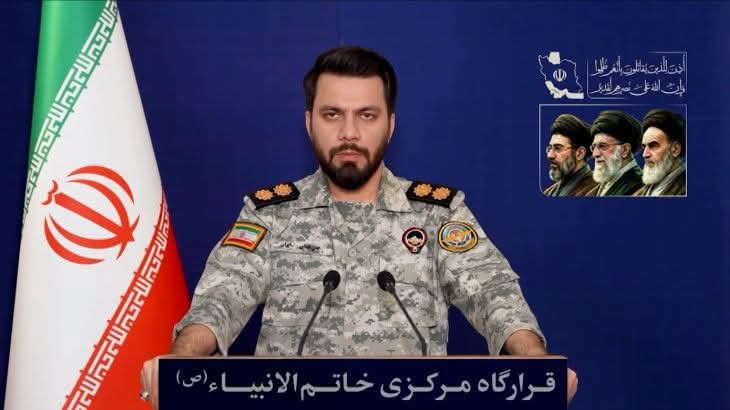
Iran imposes controlled transit after sustained aggression, converting open passage into a regulated system of access, payment, and geopolitical alignment
A functioning maritime corridor has been converted into a controlled economic gate without formal closure, altering both the legal character and financial mechanics of the most critical energy chokepoint in the global system. Shipping through the Strait of Hormuz continues in physical terms, yet access now depends on compliance with an authority structure administered by the Islamic Revolutionary Guard Corps. Traffic reductions of seventy to eighty percent indicate a shift from open passage to selective throughput governed by screening, pricing, and political alignment.
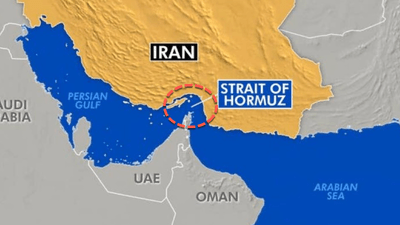
The operational structure rests on a formalised vetting and payment system that now determines passage. Vessel operators submit ownership records, cargo manifests, flag registration, crew lists, and AIS transponder data through intermediaries linked to Iranian security institutions. Clearance depends on exclusion criteria removing United States affiliations, Israeli-linked cargo, and vessels associated with states defined as hostile. Japan and South Korea remain outside the clearance framework, reflecting alignment considerations rather than commercial demand. Passage is granted through a defined five-mile corridor near Qeshm and Larak Island, where visual confirmation replaces escort. Payment structures range between two and four million dollars per transit, settled in cash, Chinese yuan, or USDT on the Tron network, with settlement executed in seconds outside SWIFT infrastructure.
The payment architecture introduces a tiered access system shaped by geopolitical alignment. China, India, Pakistan, Turkey, Malaysia, Iraq, Bangladesh, and Russian-aligned operators transit under varying financial conditions. Some pay full tolls, others receive reduced rates, and selected states obtain exemptions through bilateral arrangements. Alignment functions as a form of settlement, establishing a political clearing mechanism layered over commercial shipping. The structure resembles a controlled membership system where access depends on compliance, payment, and strategic positioning rather than universal transit rights.
Insurance markets have adapted in a manner that converts this arrangement into enforceable commercial reality. Standard hull and machinery coverage has been withdrawn for Hormuz transits, replaced by war-risk premiums reaching five percent of vessel value per voyage. Actuarial models now incorporate IRGC clearance as a risk-reduction variable, reducing estimated loss probabilities from above twenty percent to below five percent for compliant vessels. Dozens of tankers remain outside the strait without coverage, unable to transit despite physical openness. Insurance withdrawal operates as a structural enforcement mechanism, compelling compliance by denying market access to non-approved vessels. Dr. Salvatore Mercogliano has observed that insurance frameworks can halt shipping more effectively than naval interdiction, a condition now evident in the present system.
The integration of Iranian clearance into underwriting models reflects a shift from informal enforcement to embedded commercial recognition. Professor Richard Scott of King’s College London has written that risk modelling often precedes legal acceptance in maritime governance, establishing de facto norms through repeated commercial practice. The inclusion of compliance status within actuarial pricing places Iranian authority inside global insurance calculations, creating persistence independent of diplomatic recognition.
Energy settlement mechanisms reveal the broader monetary implications. Payments conducted in yuan and digital instruments bypass dollar clearing systems and sanctions frameworks. Zoltan Pozsar has argued that commodity flows increasingly settle outside the dollar where geopolitical risk intersects with financial restriction. The use of Tron-based USDT transactions introduces near-instant settlement capacity beyond Western regulatory reach, strengthening the infrastructure supporting non-dollar trade. Each transaction conducted in this manner reduces marginal dependence on dollar liquidity and SWIFT messaging systems.
Iran’s oil production and pricing demonstrate the economic consequences of this transition. Output has increased from approximately 1.1 million barrels per day to 1.5 million barrels per day, while realised prices have risen from discounted levels near $47 to above $100 per barrel. Sales primarily directed toward Asian buyers now occur with minimal discounting, supported by alternative payment channels. Amena Bakr has noted that sanctions become ineffective when payment routes operate entirely outside Western jurisdiction, a condition now observable in these flows. The result constitutes functional sanctions relief achieved through operational adaptation rather than formal policy change.
“The Strait of Hormuz will not be the same as it was before the war. We have set new rules and those who want access need to follow them”
The system extends beyond oil into broader commodity disruption. Nearly half of global urea exports originate from the Gulf, and ammonia production depends on natural gas supply affected by regional instability. Disruptions to gas infrastructure constrain fertiliser output, feeding into agricultural input costs and downstream food pricing. Javier Blas has warned that fertiliser shocks produce delayed but significant effects across global food systems, indicating that the impact of Hormuz restrictions extends beyond immediate energy markets.
Damage to Gulf energy infrastructure reinforces the regional dimension. Qatar has reported a loss of approximately seventeen percent of its liquefied natural gas capacity following strikes linked to the conflict, with revenue losses estimated at twenty billion dollars and repair timelines extending several years. Warnings issued by Qatari officials regarding escalation risks were not heeded, resulting in spillover effects across the Gulf energy system. These developments demonstrate that attempts to degrade Iranian capacity produce reciprocal disruption affecting neighbouring producers.
Legislative developments within Iran aim to formalise the toll system as “security compensation,” converting an operational mechanism into codified sovereign policy. Such a move would establish a precedent for chokepoint monetisation within international law. Scholars associated with the Indian Society of International Law have argued that sustained state practice under conflict conditions can reshape customary interpretations of maritime transit. Codification would align the Hormuz system with existing toll regimes such as the Suez and Panama canals, where passage remains open yet subject to regulated fees and administrative control.
The financial dimension extends into capital allocation and reserve management. Gulf states face increased exposure to infrastructure risk and may reallocate capital accordingly. Estimates of potential capital withdrawal from United States markets reach into the trillions, reflecting precautionary adjustments rather than speculative repositioning. Analysts at the Institute for New Economic Thinking have observed that jurisdictional risk influences capital flows alongside yield considerations, suggesting that geopolitical instability can drive structural shifts in investment patterns.
The alignment between Russia, China, and Iran gains operational substance through settlement mechanisms linking energy trade to gold accumulation. Russian energy exports generate yuan revenues converted into physical gold through exchanges in Shanghai, while Iran accumulates yuan from transit fees and oil sales. China expands bullion infrastructure to support this system. Michael Hudson has argued that linking commodity trade to gold-backed settlement challenges dollar dominance by introducing tangible anchors to currency flows. The emerging structure forms a closed circuit where energy exports translate into reserve assets outside the dollar system.
Military responses remain constrained by the distributed nature of the system. Physical strikes against coastal infrastructure cannot dismantle payment networks, insurance practices, or compliance incentives that sustain the arrangement. Efforts to impose naval escorts or sanctions on intermediaries address symptoms rather than the underlying mechanism. Market participants continue to prioritise access, adapting operations to meet the conditions imposed.
The present configuration reflects a deliberate shift in maritime governance driven by conflict conditions. Iranian officials have stated that the rules of transit have changed and that permission for passage will now be determined by Iranian authorities. Such a position frames the system as a sovereign response to sustained pressure and repeated attacks on infrastructure and territory. For decades, transit through Hormuz remained open without direct monetisation despite regional tensions. The introduction of controlled access follows a period of escalation that altered the cost-benefit calculation of maintaining unrestricted passage.
Comparison with established canal systems clarifies the structural logic. The Suez and Panama canals operate under recognised toll regimes where passage depends on payment and compliance with administrative rules. The Hormuz model introduces similar economic principles within a strategic maritime corridor, combining security oversight with revenue extraction. The difference lies in the absence of multilateral agreement, replaced by unilateral enforcement backed by the capacity to impose risk.
The system now functions as a new normal shaped by leverage rather than legal consensus. Shipping continues for those who comply with vetting, payment, and alignment requirements, while others remain excluded or face prohibitive costs. Insurance markets, payment networks, and energy trade have adjusted to these conditions, embedding them within commercial practice. Iranian leverage derives from geographic position, control of risk, and the capacity to enforce compliance without continuous physical intervention.
The cumulative effect represents a restructuring of maritime access, energy settlement, and financial flows under conditions of conflict. Passage through Hormuz remains physically open, yet governed by rules that reflect a shift in authority and economic control. The system has emerged from sustained pressure and confrontation, producing a framework in which transit depends on acceptance of terms set by the controlling power.
Authored By: Global GeoPolitics
Thank you for visiting. This is a reader-supported publication. If you believe journalism should serve the public, not the powerful, and you’re in a position to help, becoming a PAID SUBSCRIBER truly makes a difference. Alternatively you can support by way of a cup of coffee:
https://buymeacoffee.com/ggtv |
https://ko-fi.com/globalgeopolitics |
Bitcoin: 3NiK8BoRZnkwJSHZSekuXKFizGPopkE7ns


Leave a comment