
The Unending War for Primacy: US Empire Survival Strategy, Iranian Resistance, and the Struggle for a Multipolar Order
Editorial Analysis | July 2026
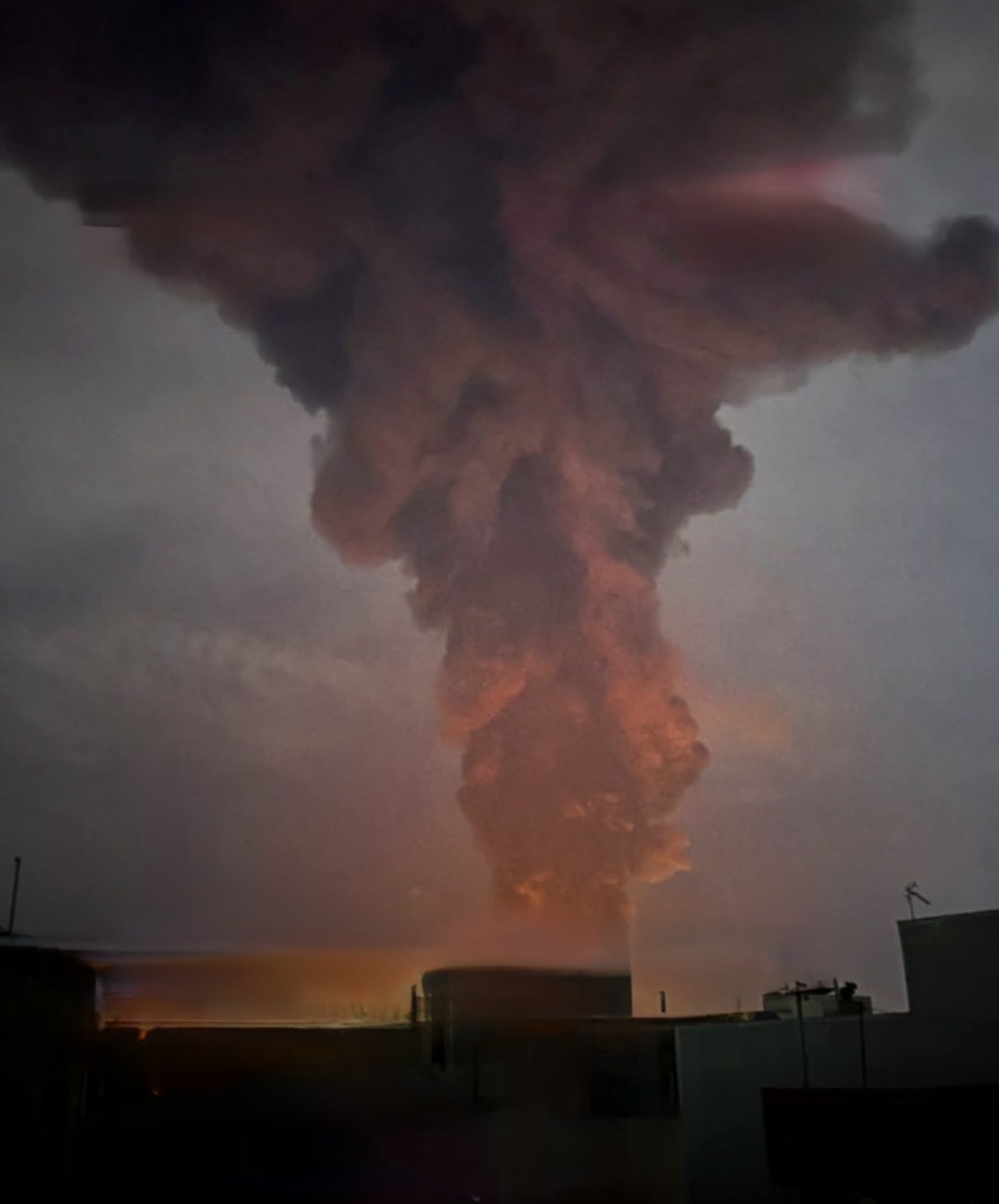
The confrontation in the Strait of Hormuz that began on July 7, 2026, represents not an isolated incident but the latest chapter in a continuous, decades-long war that the United States has waged against Iran and its regional allies. The attempt by the US Navy, in coordination with Qatar and Oman, to move a convoy of four vessels through Omani territorial waters, circumventing the Iranian control mechanism, was a deliberate challenge to Iranian sovereignty timed to coincide with the funeral of the late Supreme Leader Ali Khamenei. This calculation, which assumed that Iran would be too preoccupied to respond, proved catastrophically wrong. Iranian forces struck two vessels with missiles, hit a third with an armed drone, and set a fourth Qatari-owned tanker ablaze, forcing its crew to abandon ship.
President Trump responded by ordering American air strikes against Iranian targets, reimposing sanctions on Iranian oil exports, and revoking the memorandum of understanding that had formed the basis of the de-escalation framework. “We hit them hard last night,” Trump declared at the NATO summit in Ankara. “We will probably hit them hard again tonight”. The United States struck Iranian targets again on the following night, despite Iran having conducted no further attacks on vessels attempting to bypass the Iranian corridor. Iran responded by launching ballistic missiles and drones at American bases in Kuwait, Bahrain, the United Arab Emirates, and Muwaffaq Al-Salti airbase in Jordan, and warned that further American attacks would be met with a comprehensive all-out surprise offensive.
This pattern of American provocation and Iranian response is not new. The United States has been waging war against Iran and its allies across the region since at least the early 2000s, though the direct military confrontation has escalated significantly since 2024. The war has taken multiple forms: direct air strikes, support for Israeli military operations against Hezbollah in Lebanon, proxy warfare in Syria and Yemen, economic sanctions, and the targeted assassination of Iranian military and scientific personnel. The assassination of the late Supreme Leader Ali Khamenei, which occurred in the middle of US-Iranian negotiations, was described by analysts as a “decapitation strike” carried out “in absolute cold blood”. This followed a similar pattern: the US had promised negotiations and diplomacy, then murdered senior Iranian leadership in a surprise attack.
The strategic continuity underlying these actions is remarkable. US policy toward Iran has remained consistent across every administration from Barack Obama to Donald Trump’s second term, demonstrating that American foreign policy is driven not by electoral outcomes or individual presidents but by deeper institutional and corporate interests. The Joint Comprehensive Plan of Action, or JCPOA, the nuclear deal negotiated under Obama, was, according to this analysis, a deliberate trap from the outset. The US never believed that Iran obtaining nuclear weapons would constitute a genuine threat; rather, the agreement was designed to set Iran up, to make it appear that Iran had rejected diplomacy, and to leave the US and Israel with “no choice” but to strike. This pattern of using diplomacy as a pretext for war has been repeated with the various memoranda of understanding that have been signed and then immediately violated by the US.
The 2009 RAND Corporation report, “Dangerous But Not Omnipotent: Exploring the Reach and Limitations of Iranian Power in the Middle East,” prepared for the United States Air Force, provides a revealing window into American strategic thinking. The report admits that Iran fields a weak conventional force and has adopted an asymmetric strategy of “homeland defense” that would “exact intolerable costs from an invader.” It describes Iran’s approach as “mosaic defense” and acknowledges that Iran’s support for groups like Hezbollah, Ansarallah, and the Popular Mobilization Forces in Iraq serves as “strategic depth” for Iran’s homeland defense. The report explicitly states that Iran’s regional allies would act as “retaliatory agents” in the event of a US strike against Iran. There is no mention of Iranian expansionism or aggression; the entire framework is defensive.
Yet the US government and mainstream Western media continue to characterise these groups as terrorist organisations and Iran as an expansionist, revisionist power. This contradiction between the admissions in US policy papers and the public narrative is not accidental. The policy papers reveal what US policymakers actually believe; the public narrative is designed to sell wars of aggression to the American and global public. The US is keenly aware that in order to isolate and undermine Iran, it must first undermine or completely eliminate the strategic depth Iran has created across the region through its network of allies. This explains why the US enables Israel to continue its war against Hezbollah in Lebanon even as it negotiates with Iran: the war against Hezbollah is the war against Iran itself.
The role of the Israeli-Palestinian conflict in this strategy deserves particular attention. The US expertly uses this conflict as a “strategy of tension,” creating emotional responses that override logic and reason. Benjamin Netanyahu, according to this analysis, deliberately acts as a “cartoon villain” to make people so angry that their brains shut down, creating tunnel vision that prevents them from seeing the broader US strategy. The deep emotional currents within the Israeli-Palestinian conflict are exploited by design, leaving people incapable of appealing to logic or reason and causing them to fall into the strategy of tension that empires have always used.
Beyond West Asia, the US is waging a connected war on multiple fronts. The war in Ukraine is fundamentally a US war against Russia. Ukraine lacks the capacity to wage war on its own; the drones used to strike Russian energy infrastructure, including AI-guided Hornet drones, are made by the US and transferred to Ukraine. Senior Ukrainian officials have admitted that “American intelligence assistance has also played a role, aiding Kiev in charting the best path for drones and helping to skirt air defenses.” The US is also waging economic warfare against China through sanctions, tariffs, and the deliberate disruption of global energy supplies. All of these fronts are connected into a single campaign: the destruction of the multipolar world and the preservation of American primacy.
The energy dimension of this strategy is particularly significant. The US has been spending years developing LNG export capacity that made no economic sense because Asia was already receiving a steady flow of energy from West Asia. This capacity was deliberately built to exploit future disruptions in West Asian energy exports. Between 18 and 20 per cent of all energy production in the Persian Gulf has been disrupted or destroyed by the US war of aggression against Iran, requiring weeks, months, and in some cases a year or more to bring back online. The US has already forced China to scramble to replace up to half of its total energy imports and has forced many nations across Asia to sign long-term contracts for US LNG exports.
The US is conducting what can only be described as a controlled demolition of both West Asia’s capacity to supply Asia with energy and the economies of Asia depending on this energy. The US is causing enough damage to gradually shift dependency away from West Asia and toward the US, without triggering a unified front against the US and its upending of global stability. The US does not want to collapse the global economy overnight; that would trigger an emergency response that might enable nations to prove themselves against both the disruption of energy exports and America’s attempts to exploit them. Instead, the US is moving slowly, carefully, almost unnoticed, gradually coaxing everyone into a false sense of security while it closes in.
The US strategy is driven by a fundamental reality: the United States cannot compete with the rising multipolar world in open, fair markets. The US is falling behind China in virtually all metrics despite aggressive tariffs, sanctions, bans, and information operations. Its inability to compete and maintain dominance over the world with all factors equal is a fantasy. Thus, more aggressive means are being pursued: means by which past empires have maintained hegemony over vastly larger geographical regions and populations through dividing and weakening others, thus avoiding the necessity to compete altogether.
As long as the rising multipolar world continues allowing the US to target and undermine nations one by one without creating a united front against US aggression, the US will continue to successfully manage the size and power of the multipolar world and eventually isolate and contain the core nations driving its emergence. The US depends on the fact that no single nation except China can challenge it. As long as the US maintains its subversion, coercion, and aggression just below the threshold of posing a global threat, focusing on individual states while carefully avoiding escalation with others, the nations of the world will fall short of the united front required to fully and finally neutralise the threat the US pursuit of primacy poses to the world collectively.
The failure to recognise and address the information space is a monumental failure of multipolarism. The US maintains complete control over global information space except in Russia, China, and a few other countries. This allows the US to manufacture consent for its wars of aggression, to insulate the corporations driving policy from public accountability, and to prevent the formation of a united front against it. The daily political circus in Washington and mainstream media is designed to appeal to emotions and override reason, logic, and common sense. Even alternative media is increasingly falling into the trap of reporting on the political circus rather than the underlying policy papers that reveal the true strategy.
The corporations driving US foreign policy are insulated from public accountability. People focus their anger on politicians and proxies like Israel, not the corporations that actually drive policy. The US has created a system where politicians serve as punching bags for the public, allowing people to work out their frustration in a completely meaningless, fruitless way, leaving the corporations actually driving all of this policy completely unnoticed and unharmed. The US government knows that by enabling Israel to continue its wars and by hanging politicians out there for the public to use as punching bags, it can distract from the corporate interests that are the real drivers of policy.
The question that now confronts American policymakers and the nations of the world is whether the US can be driven out of the Middle East altogether, or whether it can emerge from the Strait of Hormuz, Ukraine, and its other failing fronts in a position to confront China and retain its primacy. Iran has demonstrated that it can impose costs on the US and its allies without triggering a full-scale war, and that it can escalate in ways that make continued American action prohibitively costly. The Gulf states, observing American inability to control the strait, will hedge their bets. Russia and China, both beneficiaries of higher oil prices, will observe American overstretch with satisfaction. The international order, already under strain from multiple conflicts, will face additional pressure as the credibility of American security guarantees comes into question.
Yet the US has yet to fall on its own sword, remains incredibly powerful and dangerous, not just militarily and economically, but through its infiltration of information spaces, education systems, and political structures of other nations. The US is desperate, and desperation is driving everything that it does. It literally cannot match the rising multipolar world, so what it is doing instead is trying to destroy it, destroy everything, and hope somehow to come out the other side stronger. Because the corporations driving this process are not paying any price for it, they have no motivation to stop.
The only way to stop the US is for the nations of the world to present a united front against US aggression. This does not require fighting and destroying the US; it requires only stopping its involvement in everything everywhere else except within its own borders. This could start with the information space and work its way outward. But the failure to recognise and address the information space is such a monumental failure of multipolarism that one wonders whether there even is a plan. To allow the US complete control over global information space except in Russia, China, and a very few other countries seems like an oversight so significant that it suggests a fundamental misunderstanding of the problem.
History is replete with examples of countries that did not fully understand the situation they were in. It is possible that, just as with empire in previous centuries, the ruling interests of the world’s nations are too short-sighted and self-serving to cooperate sufficiently to displace US dominance short of the US creating an obvious and omnipresent threat to all nations simultaneously. As long as the US does not openly pose a huge threat to everyone all at once, it will be allowed to pick off one nation after another. Each nation will say, “I kind of get what they’re doing, and yes, we could be next, but if we jump in now it’ll be a big problem, let’s put this off until tomorrow.” This is a global version of what the US does to an individual country, where people keep putting off action until it is too late.
The result is a US that will continue to enjoy dominance simply because of insufficient action by the collective world. The only reason the US continues to dominate the planet is the insufficient action of the collective world, and that includes people in America who continue buying the products and services of the very corporations driving all of these things that they claim to oppose. People do not connect the problem to the corporations; they connect it to American proxies and American politicians. This is by design, to insulate the actual interests driving US policy.
The outcome of the struggle remains uncertain. Iran is only one of several metrics indicating the vector sum of this overall struggle. Iran’s ability to weather US aggression and confound US ambitions in West Asia signals multipolarism’s success. The persistence of US primacy in West Asia and its ability to disrupt the rest of the world because of it signals multipolarism’s limits or failures. The crisis in the Strait of Hormuz is not a regional confrontation that can be isolated and managed. It is a symptom of a broader disorder: the decline of American unipolarity, the rise of regional powers with their own strategic interests, the fragmentation of international institutions, and the vulnerability of the global economy to shocks from multiple sources.
The strategic crossroads before the United States and the world is clear. Option One is to accept the limits of American power, resign itself to a multipolar order in which the United States is no longer the sole hegemon, and recalibrate its ambitions accordingly. Option Two is to double down, escalate the confrontation with Iran, and attempt to restore American primacy through the application of military force. This path carries the risk of a catastrophic war that could draw in regional powers, disrupt global energy supplies, and accelerate the economic crisis that already threatens the stability of the international system. Given the class character of the Western ruling elite and their demonstrated commitment to maintaining their wealth, power, and privilege, the choice is not difficult to predict.
Only time will tell if the rest of the world is prepared for the effort and energy required for this transition, or if complacency and shortsightedness prevail, allowing the US to persist in its pursuit of power and profit at the cost of not only the world abroad but also the vast majority of Americans at home. The crisis in the Strait of Hormuz is a warning: the struggle is not over, multipolarism has not won, and the US remains incredibly powerful and dangerous. The information space, the education systems, and the political structures of other nations are all battlegrounds in a war that is far from concluded.
( if interested in reading the general version of this article, follow this link:
Authored By: Global GeoPolitics
If you prefer to make a one time donation in support of my work, you can do so by clicking any link below:
https://donate.stripe.com/7sY8wPfvi864don0k3awo07 |
https://buymeacoffee.com/ggtv |
https://ko-fi.com/globalgeopolitics |
Bitcoin: 3NiK8BoRZnkwJSHZSekuXKFizGPopkE7ns
Reference
Berletic, B. (2026) ‘The US War on Iran Continues’, New Eastern Outlook, 3 July. Available at:
(accessed 15 July 2026).
Crooke, A. (2026) ‘Iran War 3.0’, available at: https://archive.ph/ycFzP (accessed 15 July 2026).
Emanuel, R. (2026) Speech in Israel, as reported in Crooke (2026).
Katz, E. (2026) ‘Treasury Department warns of AI market risks’, Notus, July 2026.
Khamenei, M. (2026) Statement on the Memorandum of Understanding, as reported in Crooke (2026).
Nader, A. (2009) ‘Dangerous But Not Omnipotent: Exploring the Reach and Limitations of Iranian Power in the Middle East’, RAND Corporation, prepared for the United States Air Force. Available at: https://www.rand.org/pubs/monographs/MG876.html (accessed 15 July 2026).
Trump, D. (2026) Remarks at NATO Summit, Ankara, 8 July 2026, as reported in Crooke (2026).
Vance, J.D. (2026) Statement on Strait of Hormuz, as reported in Crooke (2026).


Leave a Reply