
Direct attacks near the Strait of Hormuz, reciprocal launches against United States bases in Jordan, and explicit threats against Israeli leadership mark a further expansion of the conflict’s geographic and political scope
General Article | August 2026
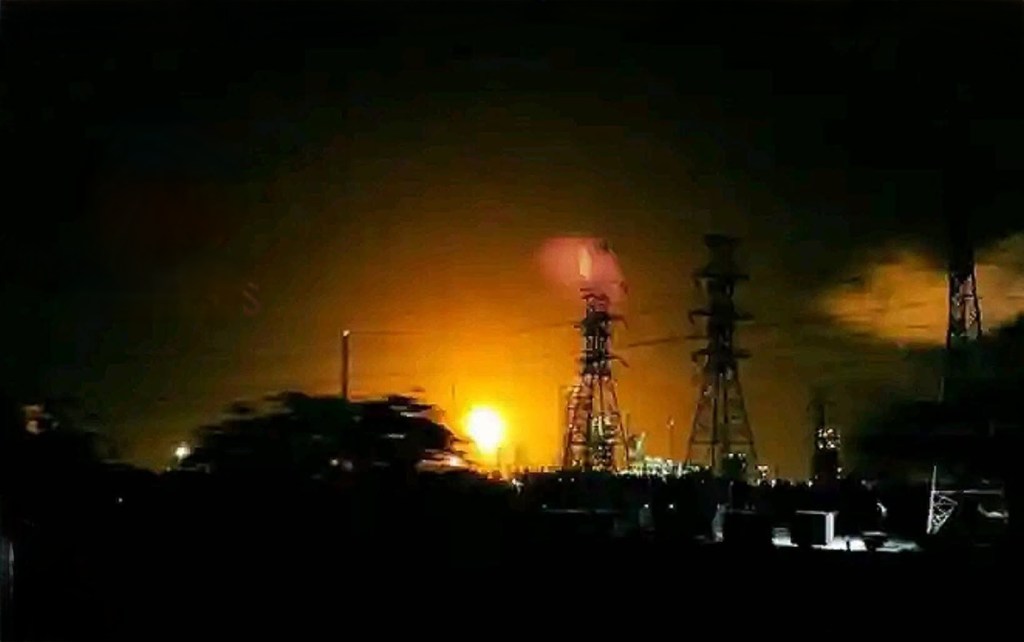
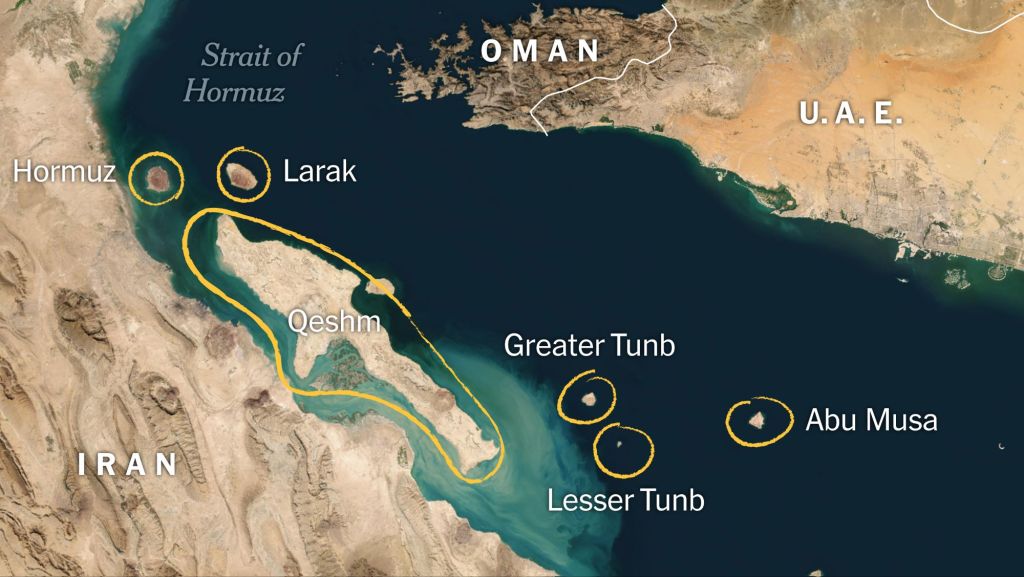
United States Central Command confirmed that American forces struck two launchers on Larak Island late on 30 August. The island lies near the narrowest section of the Strait of Hormuz, the waterway through which a substantial share of global oil trade normally passes and which has remained heavily restricted since the conflict intensified in February. American spokesmen asserted that Islamic Revolutionary Guard Corps units had been preparing to fire rockets fitted with sea mines into the strait. Iranian sources reported explosions in the vicinity and later confirmed that the attack caused deaths and injuries among military personnel and civilians. The Islamic Revolutionary Guard Corps described the operation as an act of desperation by an adversary facing internal difficulties and declining regional influence, and it promised a response that would include definite punishment for the aggressor.
The strike ended a roughly one-month lull in direct American attacks on Iranian soil. The previous significant actions inside Iran occurred on 29 July, shortly after an Iranian missile strike on a United States base in Jordan that produced acknowledged American casualties. In the intervening period Washington had emphasised economic measures, announcing a campaign of secondary sanctions and financial isolation under the formal designation “Operation Economic Outcast.” Officials presented the economic track as a means of reducing pressure on limited stocks of precision munitions and interceptors while maintaining coercive leverage. The return to kinetic action against a site so closely linked to Hormuz control indicates that economic instruments alone have not yet secured the desired restraint on Iranian operations in the waterway.
Iranian retaliation followed within hours. The Islamic Revolutionary Guard Corps announced a combined missile and drone operation, codenamed “Punishment of the Aggressor,” directed at the King Hussein and Al Azraq bases in Jordan. Iranian statements claimed that technical and repair infrastructure as well as fighter-deployment sites had been destroyed and that significant damage had been inflicted. Explosions were reported near Aqaba and at Muwaffaq Salti Air Base, both of which host United States personnel. American sources told Fox News that nearly all of the incoming missiles had been intercepted by Patriot batteries and that no major impacts had been recorded. Iranian accounts and open-source footage present a more contested picture of the engagement, consistent with earlier exchanges in which the effectiveness of air-defence systems against massed Iranian missiles has varied. Separate Iranian outlets claimed launches toward American vessels in the Strait of Hormuz, though independent verification of those specific claims remained limited.
Iranian forces reportedly attacked Muwaffaq Salti Air Base.
The kinetic exchange coincides with a sharper rhetorical and operational shift in Iranian statements concerning Israel. Major General Mohsen Rezaei, secretary of Iran’s Supreme National Security Council, declared in an interview with Lebanon’s Al-Manar television that Tehran would send Israeli Prime Minister Benjamin Netanyahu “to hell” and that any future conflict would be conducted under different rules. Rezaei identified Beirut and its southern suburbs as Iranian red lines and stated that any country from which United States aircraft or missiles were launched against Iran would be treated as an enemy. He linked the security of Lebanon, Gaza and Syria into a single chain of interconnected conditions, warning that Iranian strikes in a resumed war would be unprecedented in scale. Israeli security services simultaneously evacuated Yair Netanyahu, the prime minister’s son, from Florida after intelligence indicated a significant threat to his life. The Shin Bet confirmed the extraction but did not publicly attribute the threat to Iran in its initial statement; Israeli officials have treated the episode as evidence of an elevated risk environment. Iranian commentary has framed such measures as the logical consequence of a doctrine of targeted killings that has removed senior Iranian and allied commanders.
The sequence underscores several structural features of the confrontation. Control of the Strait of Hormuz remains a core material interest for both parties: for Iran as a source of leverage and potential revenue through regulated transit, and for the United States and its partners as a requirement for stable energy markets and the credibility of naval presence. American claims of having cleared sea mines from international routes in the preceding days sit alongside the decision to strike launchers allegedly preparing new mining attempts, suggesting that the physical contest over the waterway continues. Iranian willingness to fire at American facilities in Jordan, even when interception rates are contested, demonstrates a residual capacity and political incentive to impose costs on forward-deployed forces. The simultaneous pursuit of economic isolation and selective kinetic strikes creates a hybrid pressure campaign whose components can reinforce or undermine one another depending on the adversary’s ability to absorb losses and sustain its own operations. The addition of explicit threats against the Israeli leadership and the reported targeting of family members further expands the contest beyond the immediate Gulf theatre into the domain of personal and political deterrence.
Former American officials have noted the risk that successful Iranian strikes producing United States casualties could re-expand the conflict on terms less favourable to Washington. The present exchange has not yet produced such casualties on the American side, yet the pattern of action and reaction remains intact. Production of advanced munitions on both sides, the finite nature of interceptor inventories, and the political difficulty of accepting visible setbacks in a chokepoint of global economic significance all point toward continued low-level kinetic activity punctuated by periods of relative restraint. Whether the latest cycle remains limited or expands will depend on the accuracy of further Iranian launches, the resilience of American air defences in Jordan and the Gulf, the capacity of economic measures to constrain Iranian resources, and the degree to which threats against political leadership are translated into operational action. For the moment the reopening of direct strikes on Iranian territory, the reciprocal targeting of American positions, and the explicit linkage of the conflict to Israeli leadership have returned the confrontation to a broader and more unstable equilibrium.
Authored By: Global GeoPolitics
If you prefer to make a one time donation in support of my work, you can do so by clicking any link below:
https://donate.stripe.com/7sY8wPfvi864don0k3awo07 |
https://buymeacoffee.com/ggtv |
https://ko-fi.com/globalgeopolitics |
Bitcoin: 3NiK8BoRZnkwJSHZSekuXKFizGPopkE7ns
References
Al-Manar Television (2026) Exclusive interview with Major General Mohsen Rezaei, Secretary of the Supreme National Security Council of Iran, 27 August. Beirut: Al-Manar TV. Available at: https://english.almanar.com.lb/article/121187/ (Accessed: 31 August 2026).
Axios (2026) Reporting on United States Central Command confirmation of the strike on Larak Island and statements by Capt. Tim Hawkins, 30 August. Available at:
(Accessed: 31 August 2026).
Fars News Agency (2026) Statements by the Islamic Revolutionary Guard Corps on the attack on Larak Island, casualties, and the operation “Punishment of the Aggressor”, 30–31 August. Tehran: Fars News Agency.
Islamic Revolutionary Guard Corps (2026) Official statement on the United States strike on Larak Island and subsequent response, 30 August. Tehran: IRGC Public Relations.
Reuters (2026) ‘Iran’s IRGC Says It Launched Attack on Two US Bases in Jordan’, 30 August. Available at: https://www.usnews.com/news/world/articles/2026-08-30/irans-irgc-says-it-launched-attack-on-two-us-bases-in-jordan (Accessed: 31 August 2026).
Shin Bet (Israel Security Agency) (2026) Official statement confirming a significant threat to Yair Netanyahu and his urgent evacuation from the United States, 29–30 August. Jerusalem: Shin Bet.
The Jerusalem Post (2026) ‘Shin Bet: Netanyahu’s son evacuated after significant Iranian threat’, 29 August. Available at: https://www.jpost.com/israel-news/article-906963 (Accessed: 31 August 2026).
Fox News (2026) Reporting on interception claims regarding Iranian missiles directed at United States positions in Jordan, 30 August.
Press TV (2026) Reports of missile launches toward United States vessels in the Strait of Hormuz, 30 August. Tehran: Press TV.
IRNA (2026) ‘IRGC vows response to US attack on Larak Island’, 30 August. Tehran: Islamic Republic News Agency. Available at: https://en.irna.ir/news/86250409/IRGC-vows-response-to-US-attack-on-Larak-Island (Accessed: 31 August 2026).


Leave a Reply