
How the US is converting civilian industry to arms production and draining its clients to sustain primacy
Editorial Analysis | October 2026
The United States has entered a phase of imperial decline in which the strategies employed to sustain global primacy are themselves accelerating the erosion of the material foundations upon which that primacy rests. The 2025 National Security Strategy, published under the second Trump administration, represents an explicit articulation of this dilemma and an attempt to resolve it through the systematic extraction of resources from client states and the conversion of domestic industrial capacity to military production. The strategy demands that allies and partners assume a greater share of the burden of collective defence while the United States provides what it describes as critical but more limited support, a formulation that in practice means that allies must increase military spending, purchase American weapons, and align their foreign policies with American objectives while receiving diminishing returns in terms of security guarantees. The burden-sharing network that the strategy formalises is not a partnership among equals but a hierarchical arrangement in which the hegemon extracts resources from subordinates, and its logic replicates the administrative mechanisms through which the British Empire managed its colonies during the period of its own decline.
The empirical evidence for this interpretation is substantial and derives from official documents, corporate announcements, and the observable behaviour of American client states. The 2025 National Security Strategy states that allies must increase defence spending to five per cent of GDP and that the United States will provide critical but more limited support, a formulation that shifts the costs of imperial maintenance onto the subordinates while preserving American control over strategic direction. The Quad, comprising the United States, Japan, India, and Australia, and AUKUS, comprising the United States, the United Kingdom, and Australia, function as minilateral arrangements that securitise China’s rise as an existential challenge rather than a normal feature of a multipolar world, thereby justifying the diversion of resources from social programmes to military expenditure. The coalition of the willing for Ukraine, which includes Canada and Japan among its members, serves a similar function in relation to Russia, and the proposed European Union associate membership for Canada represents an attempt to institutionalise the subordination of a sovereign state to the strategic objectives of the American-led bloc. The Mecca Joint Defence Agreement, signed by Saudi Arabia, Turkey, and Pakistan on 7 August 2026, formalises a security arrangement that American officials have welcomed as consistent with their objectives of consolidating client states in West Asia, even as Turkish officials insist that the agreement does not target any specific country.
The conversion of General Motors production capacity to the manufacture of Patriot missile components illustrates the material process through which the American economy is being restructured to serve military rather than civilian purposes. General Motors delivered its first batch of castings for the outer shell of PAC-3 missiles to Lockheed Martin on 28 August 2026, only twenty-two days after signing a partnership agreement, and the company is using underutilised computer numerical controlled machining equipment that was previously employed for prototyping and mould making to produce these components in quantities that Lockheed Martin could not achieve without investing in similar equipment. This development is not an isolated incident but part of a broader pattern in which car factories across Europe and the United States are converting unused production capacity to build components for weapons and munitions, a process that is occurring not through the operation of free market forces but through the deliberate management of economic conditions that render civilian production unviable. The destruction of the Nord Stream pipelines, which investigative journalist Seymour Hersh has attributed to American Navy divers operating under the cover of NATO exercises, eliminated Europe’s access to affordable Russian energy and thereby made any economic activity other than military industrial production prohibitively expensive. The American role in the 2014 overthrow of the Ukrainian government, which the National Endowment for Democracy supported through tens of millions of dollars in funding for opposition groups and which Victoria Nuland, the American Assistant Secretary of State for European Affairs, openly acknowledged when she stated that the United States had invested more than five billion dollars in Ukraine’s European aspirations, created the conditions for the war that has subsequently served as the justification for the militarisation of the European economy.
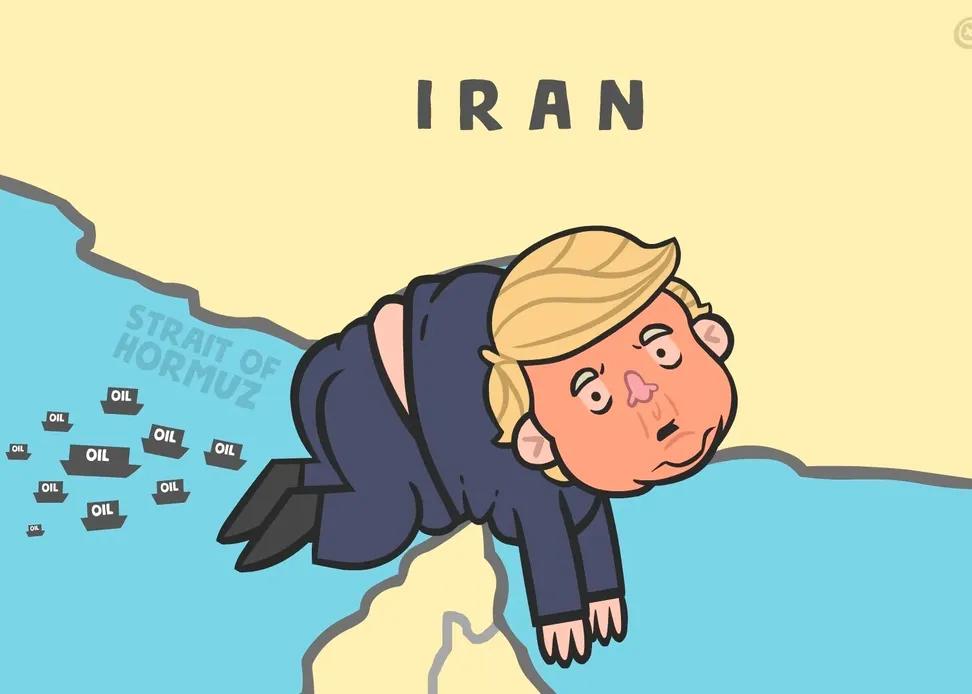
The historical parallel with the British Empire is instructive because it demonstrates that the cannibalisation of colonies and domestic foundations is a recurring pattern in the terminal phase of hegemonic decline. Piers Brendon’s study of the British Empire documents that the empire was fundamentally weak despite its apparent power, that it operated on a shoestring with the help of local elites, and that it spread itself too thin while facing wars, economic crises, and domestic discord, collapsing within a generation and leaving unfinished business in Rhodesia, the Falklands, and Hong Kong. The British Empire likewise misappropriated national resources and industry in a desperate bid to maintain global primacy rather than acknowledge the unsustainable nature of its position, and the consequence was that it lost its empire and was left without the socio-economic foundation to function as a sovereign nation-state, spending the entirety of its post-empire period as an extension of American empire. The United States is following a similar trajectory, and the New York Times has acknowledged that the American-Israeli attack on Iran has turned into a watershed in the decline of the American empire, overextending American military power dangerously at a moment when the means available to the hegemon are no longer adequate to its ends.
The class analysis of this process reveals that the costs of imperial cannibalisation are borne disproportionately by the working classes of both the United States and its client states, while the benefits accrue to a narrow stratum of defence contractors, financial institutions, and the professional-managerial class that staffs the national security apparatus. The conversion of civilian industry to arms production entails the destruction of jobs in sectors that produce use-values for the population and their replacement with jobs in sectors that produce instruments of destruction, and the workers who are displaced from civilian production do not automatically find employment in the defence sector, which is capital-intensive and requires different skills. The burden-sharing network imposes fiscal costs on client states that are borne by their populations through reductions in social spending, public services, and economic development, while the contracts for the weapons that these states are compelled to purchase flow to American corporations whose shareholders and executives constitute a fraction of the capitalist class that benefits from the arrangement. The professional-managerial class that staffs the think tanks, intelligence agencies, and policy positions generates the intellectual justifications for this system, earning salaries and institutional prestige in exchange for their analytical labour, and the revolving door between government service and the defence industry ensures that the personnel who design the policies are the same individuals who profit from their implementation.
The game-theoretic analysis of the burden-sharing network reveals the strategic logic that drives the behaviour of both the hegemon and its clients. The hegemon faces a choice between bearing the costs of imperial maintenance itself or compelling its clients to bear those costs, and the latter option is preferable because it preserves the hegemon’s resources while maintaining its control. The clients face a choice between compliance and defection, and compliance is preferable when the costs of defection, which include the loss of security guarantees, access to American markets, and the protection of the dollar system, exceed the costs of compliance. The equilibrium of the game is one in which the hegemon extracts resources from clients who comply because they perceive no viable alternative, but this equilibrium is unstable because the clients’ costs of compliance increase as the hegemon’s demands escalate, and the emergence of alternative sources of security and economic partnership, particularly from China and Russia, reduces the cost of defection. The American strategy of cannibalising its proxies is therefore self-undermining because it accelerates the erosion of the client states’ willingness to comply and creates incentives for them to seek alternatives that the multipolar world is increasingly able to provide.
The materialist analysis of this process must begin by identifying the crisis of overaccumulation that drives the conversion of civilian industry to military production. The American economy cannot generate sufficient profitable investment opportunities in civilian sectors because the rate of profit has been declining and the market is saturated, and the shift to arms production represents a response to this crisis in which capital seeks to realise value through the production of commodities that are not sold on the market but financed through state expenditure. This is a form of what Marx described as the absorption of surplus value by the state, and it represents the last resort of a system that has exhausted the possibilities of productive investment. The defence contractors that receive the state contracts are not engaged in productive activity in the sense of creating use-values that satisfy human needs, but in the destruction of use-values and the creation of instruments of death, and the profits that they realise are a form of redistribution from the working class, which pays taxes, to the capitalist class, which receives the contracts. The burden-sharing network extends this mechanism internationally by compelling client states to purchase American weapons with resources that could have been used for domestic development, and the result is the transfer of surplus value from the populations of the client states to the shareholders of the American defence corporations.
The conclusion that emerges from this analysis is that the American strategy of cannibalising its proxies and itself is not a rational response to the challenges of a multipolar world but a manifestation of the structural contradictions of a declining hegemon. The United States cannot match the productive capacity of China or the industrial mobilisation of Russia, and it therefore seeks to destroy the foundations of the multipolar order rather than compete with it on the basis of productive superiority. The conversion of civilian industry to arms production, the extraction of resources from client states, and the destabilisation of regions that refuse to submit to American demands are all expressions of a strategy that is designed to prevent the emergence of alternatives rather than to construct a viable future. The working class of the United States and the populations of the client states bear the costs of this strategy through austerity, inflation, and the destruction of public services, while the defence contractors and financial institutions that profit from perpetual conflict accumulate wealth that is measured in the billions. The task of the working class is not to choose between American and Chinese hegemony but to build a system in which the means of production are controlled by the producers and the surplus that labour generates is used to meet human needs rather than to finance perpetual war. The cannibalisation of empire will continue until the forces that benefit from it are confronted by the forces that bear its costs, and the outcome of that confrontation will determine whether the transition to a multipolar world is managed in a relatively stable manner or accompanied by the destruction and destitution that the dying hegemon is prepared to inflict.
Authored By: Global GeoPolitics
Thank you for visiting. This is a reader-supported publication. If you believe journalism should serve the public, not the powerful, and you’re in a position to help, becoming a PAID SUBSCRIBER truly makes a difference. Alternatively you can support by way of a cup of coffee:
https://buymeacoffee.com/ggtv |
https://ko-fi.com/globalgeopolitics |
Bitcoin: 3NiK8BoRZnkwJSHZSekuXKFizGPopkE7ns
References
Air University (2026) U.S. Approach to Strategic Partnerships, Burden Sharing, and Technical Interoperability. Montgomery, AL: Air University. Available at: https://www.airuniversity.af.edu/Office-of-Sponsored-Programs/Research/Article-Display/Article/3484106/us-approach-to-strategic-partnerships-burden-sharing-and-technical-interoperabi/ (Accessed: 4 October 2026).
Anadolu Agency (2026) ‘Mecca Joint Defense Agreement does not target any country: Turkish foreign minister’, Anadolu Agency, 8 August. Available at: https://mobil.aa.com.tr/en/turkiye/mecca-joint-defense-agreement-does-not-target-any-country-turkish-foreign-minister/4022116 (Accessed: 4 October 2026).
Bloomberg (2026) ‘GM Defense Delivers First Patriot Missile Parts to Lockheed’, Bloomberg, 17 September. Available at: https://www.bloomberg.com/news/articles/2026-09-17/gm-defense-delivers-first-patriot-missile-parts-to-lockheed (Accessed: 4 October 2026).
Brendon, P. (2007) The Decline and Fall of the British Empire, 1781–1997. London: Jonathan Cape. Available at: https://archive.org/details/declinefallofbri0000bren (Accessed: 4 October 2026).
China.org.cn (2014) ‘American neo-conservatives and regime change’, China.org.cn, 13 March. Available at: http://www.china.org.cn/opinion/2014-03/13/content_31776696_2.htm (Accessed: 4 October 2026).
International Affairs (2026) ‘NYT: America is officially an Empire in decline’, International Affairs, 5 May. Available at: https://en.interaffairs.ru/article/nyt-america-is-officially-an-empire-in-decline/ (Accessed: 4 October 2026).
Sputnik (2026) ‘德媒:美国起初不反对破坏“北溪”管道 但此后改变想法’, Sputnik, 19 February. Available at: https://cdn.sputniknews.cn/20260219/1069850674.html (Accessed: 4 October 2026).
The White House (2025) National Security Strategy of the United States of America. Washington, DC: The White House. Available at: https://www.whitehouse.gov/wp-content/uploads/2025/12/2025-National-Security-Strategy.pdf (Accessed: 4 October 2026).
Ukrinform (2025) ‘Zelensky: Ukraine and partners considering several blocks of security guarantees’, Ukrinform, 16 December. Available at: https://www.ukrinform.net/rubric-polytics/4170018-zelensky-ukraine-and-partners-considering-several-blocks-of-security-guarantees.html (Accessed: 4 October 2026).
United States Department of Defense (2026) 2026 National Defense Strategy. Washington, DC: Department of Defense. Available at: https://www.defense.gov/National-Defense-Strategy/ (Accessed: 4 October 2026)


Leave a comment