
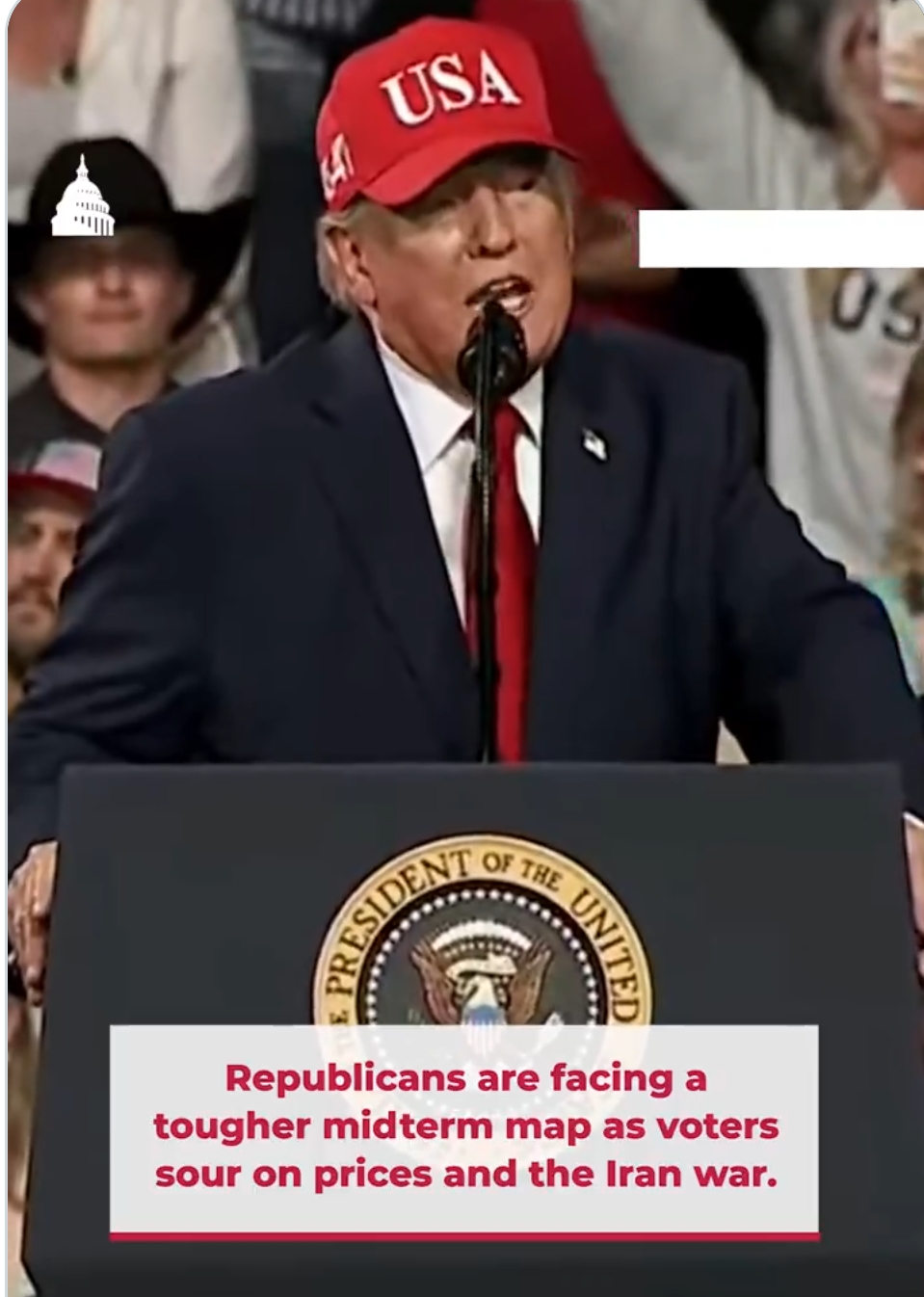
The United States has not suspended intelligence sharing with Ukraine, the war in Ukraine is a proxy war against Russia that began in 2014 and continues to escalate, and the midterm elections are scripted performances designed to prevent the public from recognising the corporate interests that actually determine policy
Editorial Analysis | October 2026
The political theatre that has dominated Western discourse on Ukraine and Russia for more than a decade has served to obscure rather than illuminate the material realities of the conflict, and the current iteration of that theatre is no exception. The narrative that the United States is abandoning Ukraine, that President Trump is seeking peace, and that the forthcoming midterm elections represent an opportunity to change course is contradicted by the observable behaviour of the United States and by the institutional arrangements through which the war is prosecuted. The United States has not suspended intelligence sharing with Ukraine, and the claims that it has are false, manufactured to create plausible deniability for further escalations that are already being prepared. The war in Ukraine is a United States proxy war against Russia that was started in 2014 and has been consistently escalated under every administration since, including the administrations of Obama, Trump, and Biden. The midterm elections are mechanisms of control over the American population, not vehicles for self-determination, and they cannot change the course of any war because the corporate interests that determine policy remain constant regardless of electoral outcomes.
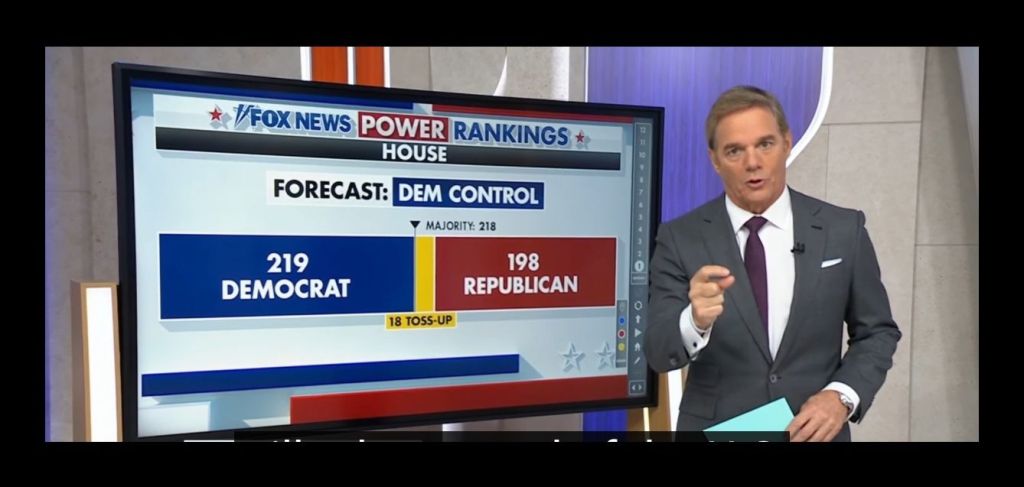
The claim that the United States has suspended intelligence sharing with Ukraine is contradicted by the documentary record and by the observable behaviour of the Ukrainian military, which continues to conduct strikes that would be impossible without American targeting information. The New York Times has reported extensively on the role of the Central Intelligence Agency and the United States military in enabling Ukrainian drone strikes on Russian oil facilities and tankers, describing the campaign as one that has been supercharged by American intelligence support. The claim that the United States has suspended this support is therefore false on its face, and the question that should be asked is not why the United States would suspend intelligence sharing but why it would claim to do so. The answer to that question is that the claim of suspension creates plausible deniability for further escalations that are already being prepared. If the United States can claim to have reduced its involvement, it can deny responsibility for attacks that are carried out with its intelligence and its weapons, and it can create the political space for actions that would otherwise provoke a direct confrontation with Russia.
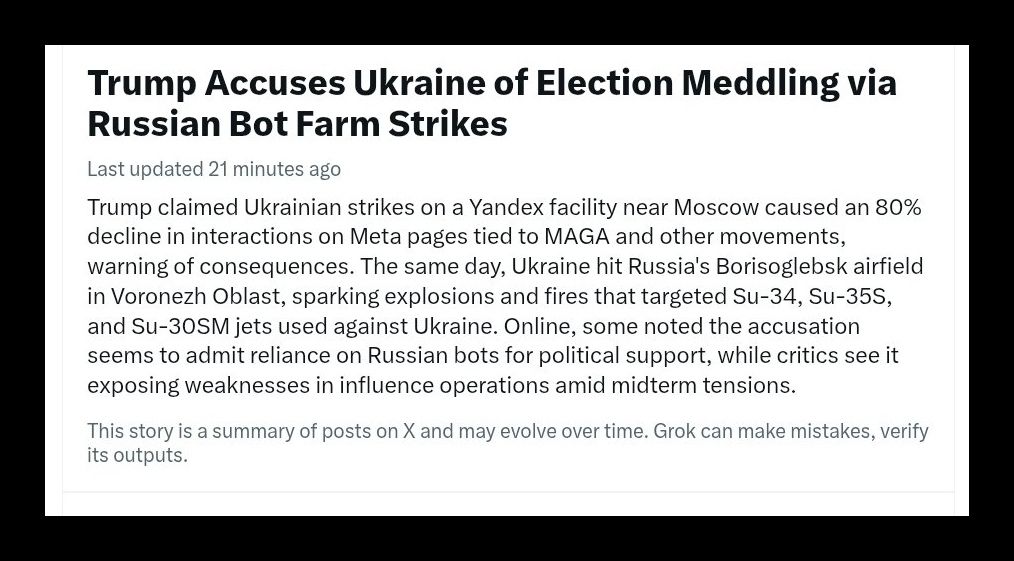
The war in Ukraine is a United States proxy war against Russia that was started in 2014 when the United States supported the violent overthrow of Ukraine’s elected government and subsequently took control of its intelligence agencies and military. The evidence for this is documented in American media and official statements, and the pattern of American involvement in the conflict has been consistent across successive administrations. The 2019 RAND Corporation report on extending Russia explicitly identified the provision of lethal aid to Ukraine as a mechanism for raising costs on Russia as part of a broader strategy of overextension and collapse. The war that began in 2022 was the culmination of a process that was set in motion more than a decade earlier, and the United States has consistently escalated its involvement rather than seeking a negotiated settlement. The claim that the United States is now seeking peace is contradicted by the continuation of intelligence sharing, the provision of advanced weapons systems, and the pressure on European allies to increase their military spending and assume greater responsibility for the conflict.
The midterm elections in the United States are meaningless exercises in political theatre that serve to distract the public from the corporate interests that actually determine policy. The elections are scripted from the beginning, and the outcomes are predetermined by the structural power of the corporations that fund both political parties and shape the parameters of acceptable discourse. The 2006 elections demonstrate this reality, because the Democratic Party won control of Congress on a platform of ending the war in Iraq, and the war continued for another fifteen years. The United States withdrew its uniformed troops from Iraq in 2026, but it continues to control Iraq through covert networks, through the oil revenue that is held in the Federal Reserve Bank of New York, and through the political and economic leverage that it exercises over the Iraqi government. The elections are not a mechanism for changing policy but a mechanism for legitimising the status quo, and the public is manipulated into focusing on politicians and elections to prevent it from recognising the corporate interests that are the actual source of the problems it faces.
The corporate interests that determine United States policy include the arms manufacturers, the banks, the oil companies, the pharmaceutical industry, the technology corporations, and the equity firms such as BlackRock and Vanguard that hold vast portfolios across all of these sectors. These interests play musical chairs not only between companies within industries but across different industries and shareholders, and the same individuals often sit on the boards of multiple corporations that appear to be competitors. The elections are there to distract the public from this reality, and the political circus that surrounds them is designed to engage the public emotionally and absorb its time and energy. The public is the hamster on the wheel, expending enormous energy while going absolutely nowhere, and the cage is constructed by the corporate interests that benefit from the public’s inability to recognise the true nature of its confinement.
The burden-shedding strategy that the United States is pursuing in Ukraine is designed to force Europe to bear the costs of a conflict that serves American interests, and the evidence for this is provided by official Pentagon statements and by the 2025 National Security Strategy. The strategy has been described by defence analysts as a shift from burden-sharing, in which allies contribute to a common effort, to burden-shedding, in which the hegemon transfers primary responsibility to its subordinates while retaining strategic control. European NATO members increased defence spending by 12.9 per cent in 2024 and 12.3 per cent in 2025, and Germany’s budget alone grew by 23.2 per cent in 2026. NATO’s total European defence spending reached $638 billion in 2026, more than double the level in 2020. The working class of Europe is paying for this increase through cuts to international aid, unemployment benefits, pensions, housing, and parental benefits, and the social welfare system invented by Otto von Bismarck is being dismantled to finance the war effort.
The beneficiaries of the burden-shedding strategy are the defence contractors that manufacture the weapons being sold to Europe, and the evidence for this is provided by NATO Secretary General Mark Rutte, who confirmed that European and Canadian orders for United States weapons total $300 billion. The profits flow to the shareholders and executives of the arms manufacturers, and the political class that authorises the expenditures receives campaign contributions and post-government employment. The working class of Europe bears the costs through austerity and the erosion of public services, and the working class of Ukraine bears the costs through conscription, displacement, injury, and death. The United States suffers no comparable costs because it is geographically remote from the conflict and because its economy benefits from the arms sales and the energy exports that replace Russian supplies to Europe.
The realist perspective on this situation emphasises the structural pressures that drive states to pursue power and security in an anarchic international system, and the behaviour of the United States is consistent with the logic of hegemonic stability. The United States, as the established hegemon, seeks to maintain its position of primacy against rising challengers, and the expansion of NATO to Russia’s borders, the political capture of Ukraine, and the imposition of sanctions on Russia are measures designed to weaken a potential rival. The security dilemma operates because the measures that the United States takes to increase its own security are perceived by Russia as threats, and Russia responds with measures that the United States perceives as further threats, leading to a spiral of escalation. The United States has demonstrated that it is willing to bear the costs of this escalation because it believes that the alternative, the emergence of a multipolar world in which its primacy is constrained, is worse.
The game-theoretic analysis of the situation reveals the strategic interaction between the United States, Russia, Europe, and Ukraine as a multi-player game in which each actor seeks to maximise its interests while minimising its risks. The United States has chosen a strategy of burden-shedding, in which it transfers the costs of the conflict to its European allies while retaining strategic control. Europe has accepted this arrangement because it fears Russian expansion and because its political class is integrated with the American-led order. Ukraine has no choice but to continue fighting because the alternative, capitulation to Russia, is unacceptable to its political class and to the Western powers that support it. The equilibrium of the game is unstable because the United States cannot accept a multipolar world and is willing to take increasingly desperate measures to prevent it, while Russia cannot accept continued subordination to American primacy and is building the capacity to resist it.
The materialist analysis of this situation must identify the class forces and material interests that structure the conflict, and the war in Ukraine is a project of the American capitalist class, specifically the defence contractors, energy corporations, and financial institutions that profit from the conflict. The defence contractors benefit from the increased demand and higher prices that conflict generates, the energy corporations benefit from the disruption of Russian energy exports to Europe, and the financial institutions benefit from the debt that is incurred to finance the war. The working class of the United States and Europe bears the costs through inflation, austerity, and the diversion of resources from social provision to military spending. The working class of Ukraine bears the costs through conscription, displacement, injury, and death. The working class of Russia bears the costs of a war that was imposed on it by the expansion of NATO and the political capture of Ukraine by the United States.
The solution to this situation is not to be found in elections, which are designed to prevent the working class from recognising its true interests, but in the organisation of the working class as a class, independently of the political parties that serve the capitalist class. The working class must build the institutions, unions, cooperatives, community organisations, and political parties that are genuinely accountable to their members, that can challenge the power of the capitalist class. The working class must recognise that its enemy is not the workers of other countries but the capitalist class of all countries, and it must build the solidarity and the organisation necessary to end the system of exploitation and war that the capitalist class has created. The alternative to the American strategy of destruction is not a negotiated settlement between the existing powers, which would merely rearrange the terms of imperial competition, but the construction of a socialist world order in which the means of production and reproduction are controlled by the producers and in which the technological and material resources of humanity are directed toward meeting human needs rather than enriching the oligarchy and waging war.
Authored By: Global GeoPolitics
Thank you for visiting. This is a reader-supported publication. If you believe journalism should serve the public, not the powerful, and you’re in a position to help, becoming a PAID SUBSCRIBER truly makes a difference. Alternatively you can support by way of a cup of coffee:
https://buymeacoffee.com/ggtv |
https://ko-fi.com/globalgeopolitics |
Bitcoin: 3NiK8BoRZnkwJSHZSekuXKFizGPopkE7ns
References
Anadolu Agency (2026) ‘Pentagon says future Ukraine support must not rely on significant US contributions’, Anadolu Agency, 15 October. Available at: https://www.aa.com.tr (Accessed: 15 October 2026).
Berletic, B. (2026) ‘US Elections, Ukraine, and the Political Circus’, The New Atlas, 15 October. Available at: https://www.youtube.com/@TheNewAtlas (Accessed: 15 October 2026).
Congressional Research Service (2024) U.S. Military Spending: Overview and Trends. Washington, DC: CRS. Available at: https://crsreports.congress.gov/product/pdf/IF/IF10511 (Accessed: 15 October 2026).
Dobbins, J., Cohen, R.S., Chandler, N., Frederick, B., Geist, E., DeLuca, P., et al. (2019) Extending Russia: Competing from Advantageous Ground. Santa Monica, CA: RAND Corporation. Available at: https://www.rand.org/pubs/research_reports/RR3063.html (Accessed: 15 October 2026).
Federal Reserve Bank of New York (2026) Iraqi Oil Revenue Holdings. New York: FRBNY. Available at: https://www.newyorkfed.org (Accessed: 15 October 2026).
NATO (2026) Defence Expenditure of NATO Countries (2014-2026). Brussels: NATO. Available at: https://www.nato.int/cps/en/natohq/news_235875.htm (Accessed: 15 October 2026).
New York Times (2024) ‘CIA and US Military Supercharge Ukrainian Drone Strikes on Russian Oil’, New York Times, 10 October. Available at: https://www.nytimes.com (Accessed: 15 October 2026).
Reuters (2026) ‘NATO’s Rutte says European orders for US weapons total $300 billion’, Reuters, 10 October. Available at: https://www.reuters.com (Accessed: 15 October 2026).
US Department of Defense (2025) National Security Strategy. Washington, DC: White House. Available at: https://www.whitehouse.gov (Accessed: 15 October 2026).
US Department of State (2024) Ukraine: U.S. Security Cooperation. Washington, DC: State Department. Available at: https://www.state.gov (Accessed: 15 October 2026).,


Leave a Reply