
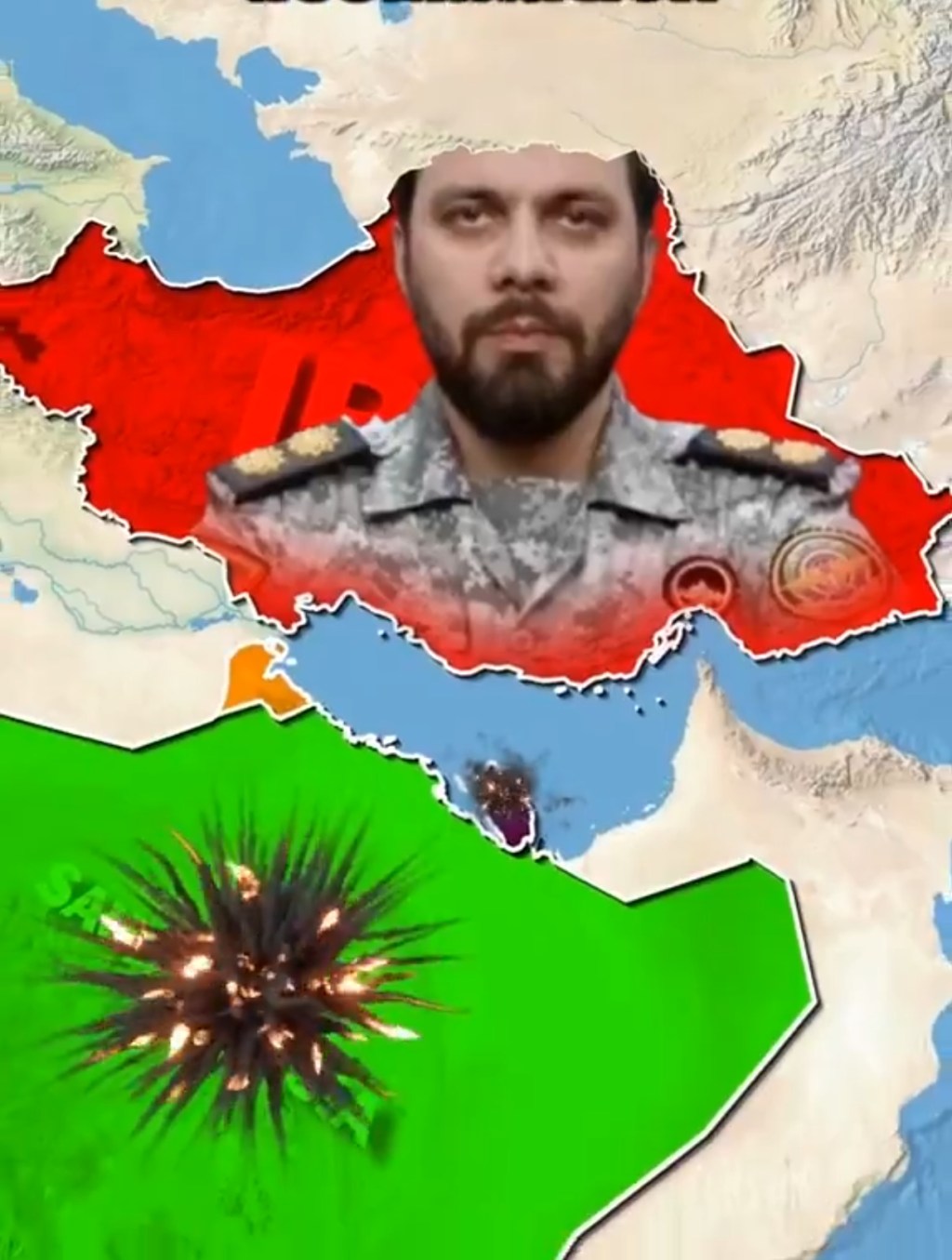
Washington says it wants diplomacy, but the demands being placed on Tehran look more like surrender terms than the foundation for lasting peace.
The United States says it still wants diplomacy with Iran. Officials continue talking about negotiations, peace, and “de-escalation.” But behind the language of diplomacy, the reality looks very different. The conditions Washington is demanding from Tehran do not resemble a fair compromise, they resemble surrender terms. That is why the current US-Iran negotiations increasingly look less like an effort to avoid war and more like political preparation for another round of military strikes.
For months, Washington has insisted that Iran hand over enriched uranium, reduce its nuclear infrastructure, accept continued sanctions pressure, and abandon influence across the region, including Lebanon and the Strait of Hormuz. In return, Iran is being offered only partial sanctions relief and vague promises about future stability. No sovereign state would easily accept those terms.
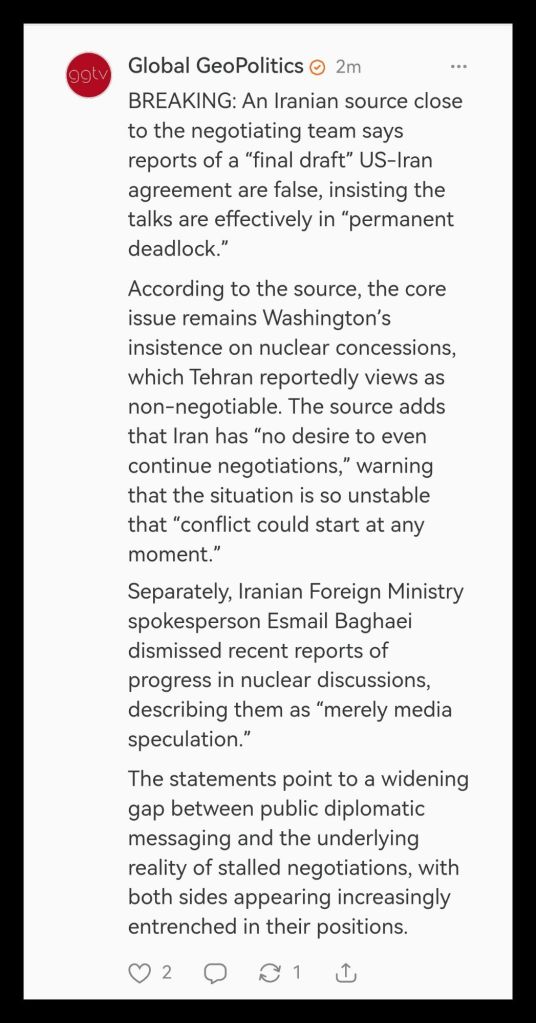
As former US Secretary of State Henry Kissinger once warned, “No country can act wisely simultaneously in every part of the globe at every time.” Yet Washington continues trying to dominate every strategic region at once, from Eastern Europe to the South China Sea to the Persian Gulf, while expecting rivals to simply comply. Iran’s leaders see the American demands as an attempt to force geopolitical submission, not peace.
The Strait of Hormuz remains the center of this confrontation. Nearly one-third of the world’s seaborne oil passes through that narrow waterway. Whoever controls Hormuz holds enormous leverage over global energy markets and international trade. For Iran, the strait is not just geography, it is one of the few strategic cards Tehran possesses against overwhelming US military and economic power.
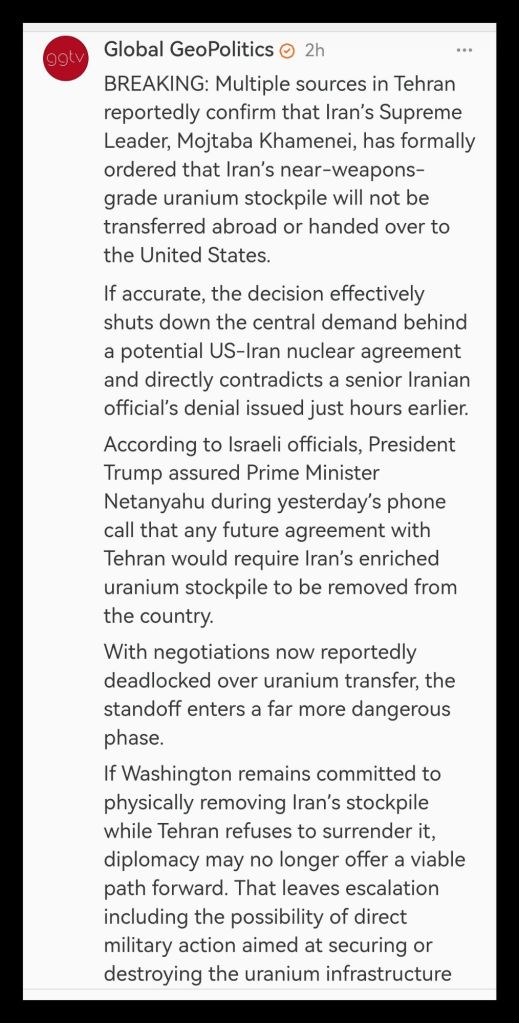
For Washington, however, freedom of navigation through Hormuz is about maintaining American dominance in the Middle East. Accepting Iranian influence there would signal that US power in the region is no longer absolute. That is why both sides are moving toward positions that are almost impossible to reconcile. Iran refuses to appear weak after years of sanctions, assassinations, cyberattacks, and military pressure. The United States refuses to accept any outcome that could be viewed as a strategic victory for Tehran.
This pattern is not new. The Iraq War followed a nearly identical script. Washington claimed diplomacy had failed, insisted Saddam Hussein possessed weapons of mass destruction, and argued military action was the “last resort.” Years later, no WMD stockpiles were ever found, but the war devastated Iraq and destabilized the entire region. Now many analysts see echoes of that same playbook emerging again. First comes economic pressure. Then diplomatic isolation. Then impossible demands. Finally, when negotiations collapse, military action is framed as unavoidable.
Even the language being used sounds familiar. US officials repeatedly claim Iran is the obstacle to peace while presenting terms Tehran could never politically accept without humiliating itself domestically. This creates a strategic narrative: Washington can later argue that it “tried diplomacy” and that Iran rejected peace.
Political scientist John Mearsheimer has long argued that great powers behave according to strategic interests, not moral ideals. “States pay attention to the balance of power,” he wrote, “not justice.” That logic is clearly visible in the current standoff. The conflict is not simply about nuclear enrichment; it is about who will shape the future balance of power in the Middle East.
Iran understands that if it surrenders its nuclear leverage and regional influence, it risks becoming strategically defenseless. Libya remains a warning. After Muammar Gaddafi gave up his weapons programs and normalized relations with the West, NATO later helped overthrow his government in 2011. Iranian leaders openly reference Libya as proof that surrendering deterrence can invite regime collapse rather than security.
Meanwhile, the United States faces its own pressures. Washington’s credibility as the dominant power in the Middle East has already been weakened by the wars in Iraq and Afghanistan, the rise of China, and growing cooperation between Iran, Russia, and China. A direct confrontation with Tehran is therefore about more than Iran alone. It is also about preserving American influence in a rapidly changing global order.
Russia and China are watching carefully. Both powers oppose another major US-led intervention in the region because instability threatens energy markets and could expand American military presence near their strategic interests. Beijing especially depends heavily on Gulf oil supplies and has invested heavily in regional infrastructure through the Belt and Road Initiative.
At the same time, Gulf monarchies fear a regional war that could devastate oil production, trigger missile strikes, and destroy investor confidence across the Persian Gulf. That is why diplomacy continues publicly even as military preparations quietly continue in the background.
The most dangerous part of the current situation is that both sides believe compromise would look like weakness. Iran cannot politically afford to appear defeated after years of resistance. Washington cannot politically afford to look like it backed down from its own ultimatums. That leaves the negotiations trapped between two incompatible goals. Therefore, the result is not genuine peace talks, but a strategic pause.
“We are witnessing an unprecedented epic of resistance by the Iranian nation against two global terrorist armies.”
Historian Thucydides once wrote, “The strong do what they can and the weak suffer what they must.” More than two thousand years later, that brutal logic still shapes international politics. The United States and Iran are not negotiating as equal powers searching for mutual understanding. They are maneuvering for leverage before the next phase of confrontation.
And that is why the current calm feels less like peace and more like the silence before another storm.
Authored By: Global GeoPolitics
If you prefer to make a one time donation in support of my work, you can do so by clicking any link below:
https://buymeacoffee.com/ggtv |
https://ko-fi.com/globalgeopolitics |
Bitcoin: 3NiK8BoRZnkwJSHZSekuXKFizGPopkE7ns


Leave a comment